


US wants to send team of experts inside China for COVID-19 probe: President Donald Trump

News Network
April 20, 2020

Washington, Apr 20: The US wants to send a team of experts to China to investigate coronavirus, President Donald Trump has said, a day after he warned Beijing of "consequences" if it was knowingly responsible for the spread of COVID-19 which has killed more than 165,000 people globally, including over 41,000 in America.

Describing the coronavirus as a plague, Trump, during his White House news conference on Sunday, said that he is not happy with China where the pandemic emerged in December last year in the central Chinese city of Wuhan.

“We spoke to them (Chinese) a long time ago about going in. We want to go in. We want to see what's going on. And we weren't exactly invited, I can tell you that,” the President told reporters.

“I was very happy with the (trade) deal (with China), very happy with everything and then we found out about the plague and since we found out about that I'm not happy,” he said.

The US has launched an investigation into whether the deadly virus "escaped" from the Wuhan Institute of Virology.

He has repeatedly expressed disappointment over China's handling of the coronavirus disease, alleged non-transparency and initial non-cooperation from Beijing with Washington on dealing with the crisis.

“Based on an investigation, we are going to find out,” Trump told reporters.

A day earlier, he warned China that it should face consequences if it was "knowingly responsible" for the spread of the novel coronavirus, upping the ante on Beijing over its handling of the COVID-19 pandemic.

“If they (China) were knowingly responsible… then there should be consequences. You're talking about, you know, potentially lives like nobody's seen since 1917,” Trump said on Saturday.

The opposition Democratic Party said that Trump has falsely claimed he acted early by restricting travel from China when it was little too late and he continued to downplay the virus throughout February.

The number of COVID-19 deaths in the US crossed 41,000 and the total infections were more than 764,000 so far.

New York, the epicentre of the deadly COVID-19 in the US, has 2,42,000 cases and over 17,600 fatalities so far. It has registered a 50-percent decline in new cases over an eight-day period.

The novel virus, which emerged in China in December last year, has killed over 160,000 and infected more than 2.3 million people worldwide.

Comments

Add new comment

  • Coastaldigest.com reserves the right to delete or block any comments.
  • Coastaldigset.com is not responsible for its readers’ comments.
  • Comments that are abusive, incendiary or irrelevant are strictly prohibited.
  • Please use a genuine email ID and provide your name to avoid reject.
News Network
March 24,2020

New Delhi, Mar 24: Reports of a person in China dying due to a virus called hantavirus have spread panic at a time when the world is battling the pandemic of novel coronavirus, which began in China.

The novel coronavirus has killed over 16,000 people around the world and the outbreak is yet to be brought under control.

This morning, hantavirus became one of the top trends on Twitter after the Chinese state media tweeted about one person in the country dying due the virus. However, it turns out, hantavirus is not a new virus and has been infecting humans for decades.

Global Times, a state-run English-language newspaper, wrote on Twitter on Tuesday, "A person from Yunnan Province died while on his way back to Shandong Province for work on a chartered bus on Monday. He was tested positive for hantavirus. Other 32 people on bus were tested."

Global Times's hantavirus report on Twitter has been shared over 6,000 times.

On Tuesday, hantavirus was one of the top trends on Twitter.

WHAT IS HANTAVIRUS?

Some people are calling it a new virus but so is not the case. United States's National Center for Biotechnology Information (NCBI) in a journal writes that currently, the hantavirus genus includes more than 21 species.

"Hantaviruses in the Americas are known as 'New World' hantaviruses and may cause hantavirus pulmonary syndrome [HPS]," CDC says. "Other hantaviruses, known as 'Old World' hantaviruses, are found mostly in Europe and Asia and may cause hemorrhagic fever with renal syndrome [HFRS]."

Any man, woman, or child who is around mice or rats that carry harmful hantaviruses can get HPS.

People get HPS when they breath in hantaviruses. This can happen when rodent urine and droppings that contain a hantavirus are stirred up into the air. People can also become infected when they touch mouse or rat urine, droppings, or nesting materials that contain the virus and then touch their eyes, nose, or mouth. They can also get HPS from a mouse or rat bite.

In the US, 10 confirmed cases of hantavirus infection in people who visited Yosemite National Park in California, US, in November 2012, were reported. Similarly, in 2017, CDC assisted health officials in investigating an outbreak of Seoul virus infection that infected 17 people in seven states.

WHAT ARE THE SYMPTOMS OF HANTAVIRUS?

If people get HPS, they will feel sick one to five weeks after they were around mice or rats that carried a hantavirus.

At first people with HPS will have:

Fever
Severe muscle aches
Fatigue

After a few days, they will have a hard time breathing. Sometimes people will have headaches, dizziness, chills, nausea, vomiting, diarrhoea, and stomach pain.

Usually, people do not have a runny nose, sore throat, or a rash.

Comments

Add new comment

  • Coastaldigest.com reserves the right to delete or block any comments.
  • Coastaldigset.com is not responsible for its readers’ comments.
  • Comments that are abusive, incendiary or irrelevant are strictly prohibited.
  • Please use a genuine email ID and provide your name to avoid reject.
News Network
June 11,2020

Jun 11: The total death toll in the US from the novel coronavirus pandemic could hit the grim figure of 200,000 by September and expecting a dramatic decrease in COVID-19 cases in the country will be a "wishful thinking , an eminent Indian-American professor has warned.

Ashish Jha, the head of Harvard's Global Health Institute, told CNN on Wednesday that he is not trying to scare people to stay at home rather urged everyone to wear masks, adhere to the social distancing rules and called for ramping up testing and tracing infrastructure.

Anybody who's expecting a dramatic decrease in cases is almost surely engaging in wishful thinking. And if it (COVID numbers) stays just flat for the next three months, we're going to hit 200,000 deaths sometime in September and that is just awful, Jha said.

Jha said the 200,000 death toll is not just a guess . Currently 800-1000 people are dying daily in America from the virus and all data suggest that the situation is going to get worse.

We're gonna have increases, but even if we assume that it's going to be flat all summer, that nothing is going to get worse... even if we pick that low number of 800 a day, that is 25,000 (deaths) a month in three and a half months. We're going to add another 88,000 people and we will hit 200,000 sometime in September, Jha said.

The United States is by far the hardest-hit country in the global pandemic, in terms of both confirmed infections and deaths.

According to data by the Johns Hopkins University, the number of coronavirus cases in the US currently is nearly two million and about 112,900 people have died in the country, the most in the world.

When asked about an improvement in states like New York, which had been the epicenter of the COVID19 pandemic in the US, Jha said while coronavirus cases are declining in New York, New Jersey, Connecticut and Massachusetts, the numbers are increasing in states such as Arizona, Florida, Texas, North and South Carolina while the country as a whole is pretty flat.

He said, people should take measures as that will help suppress the virus and ensure people could get back outside safely but he voiced concern that this was not the situation in reality.

We're not doing that and so we're going to unfortunately have another 25,000 deaths a month until September, and then it'll keep going. It's not going to magically disappear. We've got a turn around. This is not the future I want, he said.

Jha said he had expected the situation to improve in the summer months but on the contrary the numbers have continued to rise even in the warm weather.

Summer was supposed to be our better months - warmer weather, people outside, a little less transmission. This is not the time (summer) I was expecting a lot more cases. We're seeing a lot more cases, especially in states like Arizona where the numbers look really scary, he said.

Jha added that he was hopeful that maybe the summer months would give us more of a break. I think I may have been too optimistic on that.

Comments

Add new comment

  • Coastaldigest.com reserves the right to delete or block any comments.
  • Coastaldigset.com is not responsible for its readers’ comments.
  • Comments that are abusive, incendiary or irrelevant are strictly prohibited.
  • Please use a genuine email ID and provide your name to avoid reject.
News Network
July 27,2020

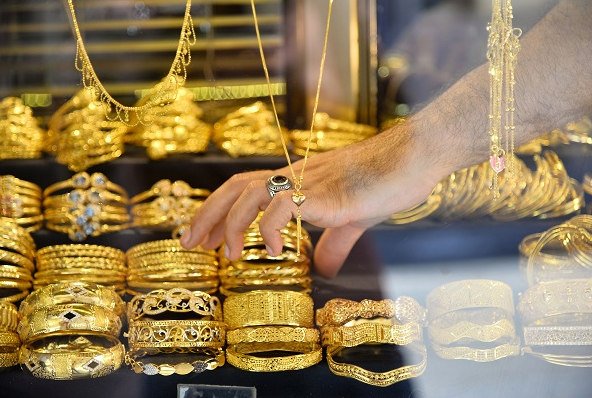
Tokyo, Jul 27: Gold hit an all-time high on Monday as tit-for-tat consulate closures in China and the United States rattled investors, boosting the allure of safe-haven assets, although sentiment was mixed with tech gains supporting some Asian stocks.

MSCI's ex-Japan Asia-Pacific index rose 1.3 percent as Taiwan's TSMC, Asia's third-largest company by market capitalisation, rose almost 10 percent.

The chipmaker's gains boosted other tech stocks in the region and came after rival Intel signalled it may give up manufacturing its own components due to delays in new 7-nanometer chip technology.

Also soothing sentiment, Chinese shares eked out gains after big falls late last week, with CSI300 index rising 0.5 percent.

S&P500 futures were last up 0.4 percent in choppy trade while Japan's Nikkei fell 0.5 percent, resuming trade after a long weekend and catching up with falls in global shares late last week.

Global shares had lost steam last week after Washington ordered China's consulate in Houston to close, prompting Beijing to react in kind by closing the US consulate in Chengdu.

US Secretary of State Mike Pompeo took fresh aim at China last week, saying Washington and its allies must use "more creative and assertive ways" to press the Chinese Communist Party to change its ways.

"US President (Donald) Trump used to say China's President Xi Jinping is a great leader. But now Pompeo's wording is becoming so aggressive that markets are starting to worry about further escalation," said Norihiro Fujito, chief investment strategist at Mitsubishi Securities.

Gold rose 1.0 percent to a record high of $1,920.9 per ounce, surpassing a peak touched in September 2011, as Sino-US tensions boosted the allure of safe-haven assets, especially those not tied to any specific country.

The yellow metal is also helped by aggressive monetary easing adopted by many central banks around the world since the pandemic plunged the global economy into a recession.

Some investors fret such an unprecedented level of money-printing could eventually lead to inflation.

MORE STIMULUS

Hopes of a quick US economic recovery are fading as coronavirus infections showed few signs of slowing.

That means the economy could capitulate without fresh support from the government, with some of earlier steps such as enhanced jobless benefits due to expire this month.

Investors hope US Congress will agree on a deal before its summer recess but there are some sticking points including the size of the stimulus and enhanced unemployment benefits.

US Treasury Secretary Steve Mnuchin said the package will contain extended unemployment benefits with 70 percent "wage replacement".

Democrats, who control the House of Representatives, want enhanced benefits of $600 per week to be extended and look to much bigger stimulus compared with the Republicans' $1 trillion plan.

Investors are looking to corporate earnings from around the world for hints on the pace of recovery in the global economy.

"It looks like rising coronavirus cases are starting to slow down recovery in many countries," said Masahiro Ichikawa, senior strategist at Sumitomo Mitsui DS Asset Management.

Concerns about the US economic outlook started to weigh on the dollar, reversing its inverse correlation with the economic well-being over the past few months.

The dollar index dropped 0.3 percent to its lowest level in nearly two years.

The euro gained 0.3 percent to $1.1693, hitting a 22-month high of $1.16590 as sentiment on the common currency improved after European leaders reached a deal on a recovery fund in a major step towards more fiscal co-operation.

Against the yen, the dollar slipped 0.5 percent to 105.605 yen, a four-month low while the British pound hit a 4 1/2-month high of $1.2832.

Oil prices dipped on worries about the worsening Sino-US relations.

Brent futures fell 0.46 percent to $43.14 per barrel while US crude futures lost 0.44 percent to $41.11.

Comments

Add new comment

  • Coastaldigest.com reserves the right to delete or block any comments.
  • Coastaldigset.com is not responsible for its readers’ comments.
  • Comments that are abusive, incendiary or irrelevant are strictly prohibited.
  • Please use a genuine email ID and provide your name to avoid reject.