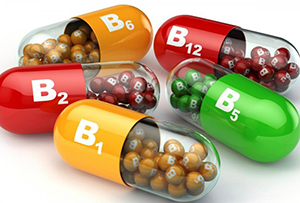
Vitamin B can protect your heart from air pollution

April 13, 2017

Washington D.C, Apr 13: You may want to take a diet rich in B vitamins as a recent study has suggested that it can help keep you from succumbing to air-pollution-induced heart problems.vitamin

In the research conducted at Columbia University's Mailman School of Public Health, healthy non-smokers who took vitamin B supplements nearly reversed any negative effects on their cardiovascular and immune systems, weakening the effects of air pollution on heart rate by 150 percent, total white blood count by 139 percent, and lymphocyte count by 106 percent.

This is the first clinical trial to evaluate whether B vitamin supplements change the biologic and physiologic responses to ambient air pollution exposure. The study initiates a course of research for developing preventive pharmacological interventions using B vitamins to contain the health effects of air pollution.

"Ambient PM2.5 pollution is one of the most common air pollutants and has a negative effect on cardiac function and the immune system," said principal investigator Jia Zhong. "For the first time, our trial provides evidence that B-vitamin supplementation might attenuate the acute effects of PM2.5 on cardiac dysfunction and inflammatory markers."

Researchers recruited ten healthy, 18 to 60-year-old, non-smoking volunteers who were not on any form of B vitamin supplements or other medication. All volunteers received a placebo for four weeks preceding a two-hour exposure experiment to concentrated ambient PM2.5, after which they were administered B vitamin supplements for four weeks before the next two-hour exposure experiment to PM2.5. A particle-free two-hour exposure was included to provide baseline data. The controlled exposure experiments were conducted from July 2013 to February 2014 at the same time of day and adjusted for season, temperature, and humidity.

"Our results showed that a two-hour exposure to concentrated ambient PM2.5 had substantial physiologic impacts on heart rate, heart rate variability, and white blood counts. Further, we demonstrated that these effects are nearly reversed with four-week B-vitamin supplementation," noted researcher Andrea Baccarelli.

The findings are published online in the Nature Publishing Group journal, Scientific Reports.

Comments

Add new comment

  • Coastaldigest.com reserves the right to delete or block any comments.
  • Coastaldigset.com is not responsible for its readers’ comments.
  • Comments that are abusive, incendiary or irrelevant are strictly prohibited.
  • Please use a genuine email ID and provide your name to avoid reject.
News Network
February 22,2020

Feb 22: The subjective feeling of well-being experienced by many people with the practice of meditation is associated with specific changes in the brain, according to a study which may lead to better clinical recommendations of the practice.

The study, published in the journal Brain and Cognition, examined the effects of the technique known as Transcendental Meditation (TM), which consists of the silent repetition of a meaningless sound.

In the study, the researchers from the IMT School for Advanced Studies Lucca in Italy, enrolled 34 healthy young volunteers and divided them in two groups.

They said the first group practised TM 40 minutes per day in two sessions of 20 minutes each, one in the morning and the other in the evening.

The second group, the scientists said, did not change its daily routine.

Using questionnaires, they also measured the anxiety and stress levels of all the participants at the beginning of the study, as well as the subjects' ability to manage stressful situations.

According to the researchers, the participants were also subjected to a functional magnetic resonance imaging (fMRI) brain scan, in order to measure the organ's activity at rest, and changes in the excitation among different cerebral areas.

They repeated the tests after three months, at the end of the study.

According to the study, the levels of anxiety and stress perceived by the subjects who followed the meditation program were significantly reduced in comparison with those of the volunteers who did not practice TM.

"Magnetic resonance imaging also shows that the reduction of anxiety levels is associated with specific changes in the connectivity between different cerebral areas, such as precuneus, left parietal lobe and insula, which all have an important role in the modulation of emotions and inner states," said study co-author Giulia Avvenuti from the IMT School for Advanced Studies Lucca.

"In the control group, instead, none of these changes was observed. The fact that Transcendental Meditation has measurable effects on the 'dialogue' between brain structures involved in the modulation of affective states opens new perspectives for the understanding of brain-mind relationships," said Pietro Pietrini, IMT School's Director, and co-author of the study.

"It also extends the results of recent research suggesting that drugs therapies and psychotherapy leverage on the same biological mechanism," Pietrini said.

According to the researchers, even a few months of practice of TM can have positive effects which can be correlated with measurable changes in the brain.

Comments

Add new comment

  • Coastaldigest.com reserves the right to delete or block any comments.
  • Coastaldigset.com is not responsible for its readers’ comments.
  • Comments that are abusive, incendiary or irrelevant are strictly prohibited.
  • Please use a genuine email ID and provide your name to avoid reject.
Agencies
April 21,2020

The Lockdown is not a cure but a critical strategy to prevent the geographical spread of COVID-19.

While pandemics at this level involves actual life threatening situations for individual's or significant others in one's immediate circle, it envisages a marked disruption in routine life. Even after the pandemic has been contained and will come to pass; it's aftermath will leave a trailblazer which demands planning and implementation of a post pandemic reconstruction of society with potentially traumatic experiences varying in intensity, multiplicity and duration.

Degree of Trauma

It would do well for each one of us to realise that the pandemic is "potentially traumatic", since not everyone will experience COVID -19 as a traumatic event in their lives. Yet, there will be those who may develop post pandemic stress reactions, depression and related dysfunction and pathological reactions while still other exhibit healthy reactions to the same set of circumstances.

"Psychological reactions to the pandemic can be distilled into four distinct prototypical patterns, namely, Resilience, Recovery, Chronic and Delayed patterns which may vary in intensity, multiplicity, and duration. Resilient individual have an ability to bounce back from adversity and experience modest or little disruption in normal functioning and are able to maintain a relatively stable, healthy levels of psychological functioning even after enduring the pandemic. Recovery pattern is characterised by relatively rapid reduction in symptoms and return to normal functioning whereas chronic pattern is characterised by symptoms and dysfunction of a long duration," says Pune-based military psychologist Lt Col Dr Samir Rawat.

Challenges at the Individual and Community Levels

From a psychological perspective, post pandemic reconstruction would entail catering to the problems, concerns and needs of those adversely impacted by the COVID -19 with stress symptoms typically characterised by individual's experiencing an overwhelming trauma of the pandemic (for example, recurring nightmares/ breaking into a cold sweat, flashback of stressful events, increasing irritability, low frustration tolerance or emotional numbing).

It could also manifest in depressive symptoms which may result in lack of interest or diminished pleasure in activities and things which you earlier liked to do, feelings of worthlessness or even survivor guilt in case of a loss of a loved one due to COVID-19, fleeting thoughts of death and suicidal ideation. Physical symptoms, on the other hand could be a decrease in appetite, weight and sleep problems, inability to focus and lack of concentration.

Undoubtedly, the pandemic will cause a financial loss of varying magnitude to many, especially the marginalised and economically disadvantaged strata of daily wage earners; it will also lead to loss of jobs (already beginning to show), homelessness, occupational difficulties and new challenges in interpersonal relations at work and on the home front, besides physical health problems and psychological barriers with new norms of accepted social behaviour (social distancing, handshakes, an obsession for cleanliness to name a few).

Emotional battles

Many factors may influence whether individuals come out stronger and more resilient or surrender to the pandemic. Emotion Regulation is one such long term critical factor that can play an important role in contributing to varying degrees of adaptation with negative or positive outcomes. While we know that primary emotions are fear, anger, disgust, joy, anticipation, acceptance, sadness and surprise, other basic emotions include wonder, love, desire, joy, hatred, sadness, attachment, disgust, rage and even expectancy .

To be able to regulate these emotions and avoid negativity , especially on social media platforms is likely to increase efforts in emotion regulation which involves initiating, increasing or maintaining an emotional response.

This means by regulating or on the other hand by stopping, decreasing or avoiding an emotional response, that is, by down-regulating, depending on the individual's objectives and goals or his /her ability to regulate emotions in the valued and given direction.

"One of the best ways to regulate emotions is through cognitive restructuring wherein we change the way we think; after all it is not the event but the interpretation of the event which is perceived as stressful and finding meaning promotes resilience and reduces risk and vulnerability to stress," advises Dr Rawat.

Adding, "Clearly, we need to have a psychological plan to prevent, mitigate and minimise negative outcomes by post pandemic reconstruction of society at an individual and community level all over the country; this has to be integrated by all leaders across verticals in diverse domains."


Comments

Add new comment

  • Coastaldigest.com reserves the right to delete or block any comments.
  • Coastaldigset.com is not responsible for its readers’ comments.
  • Comments that are abusive, incendiary or irrelevant are strictly prohibited.
  • Please use a genuine email ID and provide your name to avoid reject.
Agencies
July 8,2020

Probiotics that broaden the mix of helpful bacteria in the gut may help to ease depression, say researchers.

Foods that broaden the profile of helpful bacteria in the gut are collectively known as probiotics. These "good bacteria" can be taken as supplements, or found naturally in yoghurts or fermented foods.

For the findings, the research team from the University of Brighton in the UK searched for relevant studies published in English between 2003 and 2019, which looked at the potential therapeutic contribution of pre-and probiotics in adults with depression and/or anxiety disorders.

Out of an initial haul of 71 studies, just seven met all the criteria for inclusion. All 7 investigated at least one probiotic strain; four looked at the effect of combinations of multiple strains.In all, 12 probiotic strains featured in the selected studies, primarily Lactobacillus acidophilus, Lactobacillus casei, and Bifidobacterium bifidium.

One study looked at combined pre-probiotic treatment, while one looked at prebiotic therapy by itself. The studies varied considerably in their design, methods used, and clinical considerations, but all of them concluded that probiotic supplements either alone or in combination with prebiotics may be linked to measurable reductions in depression.

And every study showed a significant fall or improvement in anxiety symptoms and clinically relevant changes in biochemical measures of anxiety or depression with probiotic or combined pre-probiotic use.

Of the 12 different probiotics investigated, 11 were potentially useful, the findings showed.'Probiotics may help reduce the production of inflammatory chemicals, such as cytokines, as is the case in inflammatory bowel disease, the researchers suggested.

"They may help direct the action of tryptophan, a chemical thought to be important in the gut-brain axis in psychiatric disorders," they added.

In this way, with a better understanding of the mechanisms, probiotics may prove to be a useful tool across a wide range of conditions," the authors wrote.

Comments

Add new comment

  • Coastaldigest.com reserves the right to delete or block any comments.
  • Coastaldigset.com is not responsible for its readers’ comments.
  • Comments that are abusive, incendiary or irrelevant are strictly prohibited.
  • Please use a genuine email ID and provide your name to avoid reject.