



Walnuts can help reduce stress in young men

November 19, 2016

Nov 19: A handful of walnuts every day can help young men happily tackle life's daily stress as this nutrient-dense snack can lead to a happier state-of-mind, suggests a new study.
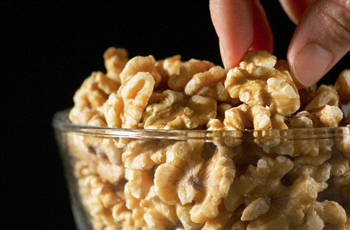
WalnutsThe researchers found a significant improvement in mood in young, healthy males who consumed walnuts every day for eight weeks.

"In the past, studies on walnuts have shown beneficial effects on many health outcomes like heart disease, diabetes and obesity," said researcher Peter Pribis, Professor at University of New Mexico in the US.

"Our study was different because we focused on cognition, and in this controlled randomised trial (CRT) we measured mood outcomes in males and females," Pribis added.

The participants of the study were 64 students between the ages of 18-25.

The participants were asked to eat three slices of banana bread every day for sixteen weeks -- eight weeks of banana bread with walnuts and eight weeks of banana bread without walnuts.

The nuts were finely ground into the dough so the two banana breads were similar in taste and appearance. While eating banana bread with walnuts the participants consumed half a cup of walnuts daily.

The mood of the students was measured at the end of each eight-week period.

"We used a validated questionnaire called Profiles of Mood States (POMS)," Pribis said.

"It is one of the most widely used and accepted mood scales in studies on cognition. The test has six mood domains: tension, depression, anger, fatigue, vigor, confusion and also provides a Total Mood Disturbance score (TMD)," Pribis explained.

The researchers found that consumption of walnuts led to a significant improvement in mood in young, healthy males.

"In non-depressed healthy young males, walnuts seem to have the ability to improve mood," the study, published in the journal Nutrients, said.

"There was a meaningful, 28 per cent improvement of mood in young men," Pribis pointed out.

There are several nutrients in walnuts that could be responsible for the improved mood like alpha-Linolenic acid, vitamin E, folate, polyphenols or melatonin, the researchers said.

"However we did not observe any improvement of mood in females. Why this is we do not know," Pribis said.


Comments

Add new comment

  • Coastaldigest.com reserves the right to delete or block any comments.
  • Coastaldigset.com is not responsible for its readers’ comments.
  • Comments that are abusive, incendiary or irrelevant are strictly prohibited.
  • Please use a genuine email ID and provide your name to avoid reject.
Agencies
May 30,2020

Drinking coffee may help reduce the risk of certain digestive disorders, including gallstone disease and pancreatitis, a new study has suggested.

The study from the Institute for Scientific Information on Coffee (ISIC) also highlighted other beneficial effects that coffee consumption may have on the process of digestion, including supporting gut microflora and promoting gut motility.

"Data indicates benefits against common digestive complaints such as constipation, as well as a potential reduction in the risk of more serious conditions like chronic liver diseases," said study author Carlo La Vecchia from the University of Milan in Italy.

Gallstone disease is a common digestive disorder, caused by the accumulation of gallstones in the gallbladder or bile duct, which affects approximately 10-15 per cent of the adult population.

While the mechanism by which coffee may protect against gallstone disease is not yet known, it has been observed that the risk for the condition declines with increasing daily consumption of coffee, the researchers said.

Caffeine is thought to play a role in these associations, as the same effect is not observed with decaffeinated coffee.

A common question among consumers and focus area for research is whether coffee is associated with heartburn or gastro-oesophageal reflux disease (GORD).

While a small number of studies have suggested an association between coffee drinking and GORD, the majority of studies reviewed suggest that coffee is not a major trigger of these conditions.

The report also reviewed a growing area of health and nutrition research, namely: the effect of coffee on the gut microflora (microorganism populations).

Recent studies suggest that populations of the beneficial gut bacteria Bifidobacterium spp, increase after drinking coffee.

The findings showed the dietary fibre and polyphenols found in coffee, support the healthy growth of microflora populations.

Additional research findings highlighted that coffee consumption is thought to stimulate digestion by encouraging the release of gastric acid, bile and pancreatic secretions.

Coffee is one of the most widely researched components of the diet, and its effect on digestion remains a growing area of research, the researchers noted.

Comments

Add new comment

  • Coastaldigest.com reserves the right to delete or block any comments.
  • Coastaldigset.com is not responsible for its readers’ comments.
  • Comments that are abusive, incendiary or irrelevant are strictly prohibited.
  • Please use a genuine email ID and provide your name to avoid reject.
Agencies
July 8,2020

Probiotics that broaden the mix of helpful bacteria in the gut may help to ease depression, say researchers.

Foods that broaden the profile of helpful bacteria in the gut are collectively known as probiotics. These "good bacteria" can be taken as supplements, or found naturally in yoghurts or fermented foods.

For the findings, the research team from the University of Brighton in the UK searched for relevant studies published in English between 2003 and 2019, which looked at the potential therapeutic contribution of pre-and probiotics in adults with depression and/or anxiety disorders.

Out of an initial haul of 71 studies, just seven met all the criteria for inclusion. All 7 investigated at least one probiotic strain; four looked at the effect of combinations of multiple strains.In all, 12 probiotic strains featured in the selected studies, primarily Lactobacillus acidophilus, Lactobacillus casei, and Bifidobacterium bifidium.

One study looked at combined pre-probiotic treatment, while one looked at prebiotic therapy by itself. The studies varied considerably in their design, methods used, and clinical considerations, but all of them concluded that probiotic supplements either alone or in combination with prebiotics may be linked to measurable reductions in depression.

And every study showed a significant fall or improvement in anxiety symptoms and clinically relevant changes in biochemical measures of anxiety or depression with probiotic or combined pre-probiotic use.

Of the 12 different probiotics investigated, 11 were potentially useful, the findings showed.'Probiotics may help reduce the production of inflammatory chemicals, such as cytokines, as is the case in inflammatory bowel disease, the researchers suggested.

"They may help direct the action of tryptophan, a chemical thought to be important in the gut-brain axis in psychiatric disorders," they added.

In this way, with a better understanding of the mechanisms, probiotics may prove to be a useful tool across a wide range of conditions," the authors wrote.

Comments

Add new comment

  • Coastaldigest.com reserves the right to delete or block any comments.
  • Coastaldigset.com is not responsible for its readers’ comments.
  • Comments that are abusive, incendiary or irrelevant are strictly prohibited.
  • Please use a genuine email ID and provide your name to avoid reject.
Agencies
July 30,2020

New York, Jul 30: Can the coronavirus spread through the air? Yes, it's possible.

The World Health Organisation recently acknowledged the possibility that Covid-19 might be spread in the air under certain conditions.

Recent Covid-19 outbreaks in crowded indoor settings — restaurants, nightclubs and choir practices — suggest the virus can hang around in the air long enough to potentially infect others if social distancing measures are not strictly enforced.

Experts say the lack of ventilation in these situations is thought to have contributed to spread, and might have allowed the virus to linger in the air longer than normal.

In a report published in May, researchers found that talking produced respiratory droplets that could remain in the air in a closed environment for about eight to 14 minutes.

The WHO says those most at risk from airborne spread are doctors and nurses who perform specialized procedures such as inserting a breathing tube or putting patients on a ventilator.

Medical authorities recommend the use of protective masks and other equipment when doing such procedures.

Scientists maintain it's far less risky to be outside than indoors because virus droplets disperse in the fresh air, reducing the chances of Covid-19 transmission.

Comments

Add new comment

  • Coastaldigest.com reserves the right to delete or block any comments.
  • Coastaldigset.com is not responsible for its readers’ comments.
  • Comments that are abusive, incendiary or irrelevant are strictly prohibited.
  • Please use a genuine email ID and provide your name to avoid reject.