


We came to US to become Americans not Indian-Americans: Jindal

January 16, 2015

Washington, Jan 16: Asserting that he didn't believe in hyphenated identities, Louisiana Governor Bobby Jindal has said that his parents came to the US from India four decades ago to become Americans and not Indian-Americans.bobby jindal
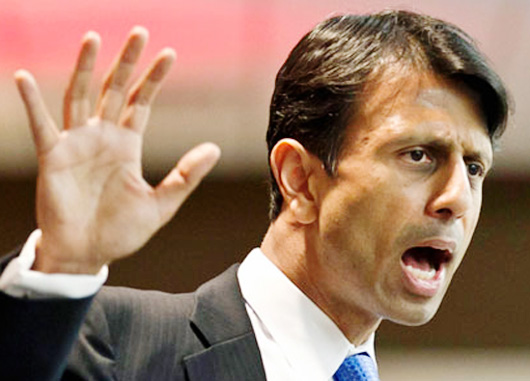
He invoked his ethnic heritage to make a call for immigrant assimilation in the multi-cultural American society and said people who talked about skin pigmentation were the "most dim-witted lot" around.

"My parents came in search of the American Dream, and they caught it. To them, America was not so much a place, it was an idea. My dad and mom told my brother and me that we came to America to be Americans. Not Indian-Americans, simply Americans," Jindal said in a prepared remarks that he is scheduled to deliver next week.

Jindal, the first Indian-American Governor of any American state, is scheduled to address the Henry Jackson Society on Monday in London.

Releasing the prepared remarks of Jindal's speech, his office said the Louisiana Governor will call for immigrant assimilation to strengthen countries and protect freedom.

"If we wanted to be Indians, we would have stayed in India. It's not that they are embarrassed to be from India, they love India. But they came to America because they were looking for greater opportunity and freedom," Jindal said, explaining the reason why he does not like to be called or described as an Indian-American.

"I do not believe in hyphenated Americans. This view gets me into some trouble with the media back home. They like to refer to Indian-Americans, Irish-Americans, African-Americans, Italian-Americans, Mexican-Americans, and all the rest. To be clear – I am not suggesting for one second that people should be shy or embarrassed about their ethnic heritage," he said.

"I am explicitly saying that it is completely reasonable for nations to discriminate between allowing people into their country who want to embrace their culture, or allowing people into their country who want to destroy their culture, or establish a separate culture within," he said.

"It is completely reasonable and even necessary for a sovereign nation to discriminate between people who want to join them and people who want to divide them. And immigration policy should have nothing at all to do with the colour of anyone's skin. I find people who care about skin pigmentation to be the most dim-witted lot around. I want nothing to do with that," he said.

Jindal said his objective in this speech is to speak clearly about what he believes to be America's proper role in international affairs; to speak bluntly about the nature of the threats being faced and the recent tragic events in France; and to suggest what he think is the way forward.

"The first step for America, and for any nation that wants to protect its own freedom and encourage it everywhere is to have a strong economy. When the United States became a major economic power at the end of the 19th century, it had the means to become a major military power and to become a leader in the free world," Jindal said.

The Governor said the first tenet of American foreign policy must always be freedom, and the relentless pursuit of freedom for our people, and for all people, regardless of race, creed, religion, ethnicity, or any other artificial divisions, which humans use to divide one from another.

"America must always be a beacon of freedom throughout the world. I'm not naive enough to suggest that the entire world will ever be free, but I'm also completely opposed to ever giving up on the notion that all people everywhere in the world deserve and desire to be free," he said.

"The next principle is of course security. America must and will pay any price to defend itself and to defend its allies. No two countries are the same, but those countries that value freedom and democracy and civility and decency must band together, and must defend each other," he said.

"Those countries that desire security and harbour no ill- will toward their neighbours must stick together in an increasingly dangerous world. The third principle that is crucial is truth. We must speak the truth, to each other, and to our own countrymen," he said.

"When a country or a movement is behaving badly on the international stage, we must not pretend otherwise. You cannot remedy a problem if you will not name it and define it. One of the most prominent examples in our day is ISIS and all forms of radical Islam. These people have no legitimate claim, they have no justification for their cowardly, barbaric, and inhuman behaviour, and we must not pretend otherwise," Jindal said.

Comments

Add new comment

  • Coastaldigest.com reserves the right to delete or block any comments.
  • Coastaldigset.com is not responsible for its readers’ comments.
  • Comments that are abusive, incendiary or irrelevant are strictly prohibited.
  • Please use a genuine email ID and provide your name to avoid reject.
News Network
January 21,2020

Beijing, Jan 21: The Chinese official investigating a pneumonia outbreak stemming from a new coronavirus said the disease can spread from person to person but can be halted with increased vigilance, as authorities on Tuesday confirmed a fourth death.

Zhong Nanshan said there was no danger of a repeat of the Severe Acute Respiratory Syndrome (SARS) epidemic that killed nearly 800 people globally during a 2002-2003 outbreak, which started in China, as long as precautions were taken.

"It took only two weeks to identify the novel coronavirus," state news agency Xinhua quoted Zhong as saying late on Monday.

The outbreak was still in its early stages and China had good surveillance and quarantine systems to help control it, he added.

The outbreak has spread from the central city of Wuhan to cities including Beijing and Shanghai, with more than 200 cases reported so far. Four cases have been reported outside China - in South Korea, Thailand and Japan.

Australia on Tuesday said it would screen passengers on flights from Wuhan amid rising concerns that the virus will spread globally as Chinese travellers take flights abroad for the Lunar New Year holiday starting this week.

Authorities around the globe, including in the United States and many Asian countries, have stepped up screening of travellers from Wuhan.

Chinese authorities confirmed a total of 217 cases of the virus in China as of 6 p.m. (1000 GMT) on Monday, state television reported, 198 of which were in Wuhan.

A fourth person died on Jan. 19, the Wuhan Municipal Health Commission said. The 89-year-old man, who had underlying health diseases including coronary heart disease, developed symptoms on Jan. 13 and was admitted to hospital five days later, it added.

Zhong, who is renowned in China for his work fighting SARS in 2003, confirmed that the virus can pass from person-to-person.

Fifteen medical workers in Wuhan had been diagnosed with pneumonia, with one other suspected case, the Wuhan Municipal Health Commission said. Of the infected staff, one was in critical condition.

In Shanghai, officials on Tuesday confirmed a second case involving a 35-year-man who had visited Wuhan in early January, and said they were monitoring four other suspected cases.

The virus causes a type of pneumonia and belongs to the same family of coronaviruses as SARS. Symptoms include fever and difficulty in breathing, which are similar to many other respiratory diseases and pose complications for screening efforts.

The World Health Organisation (WHO) said on Monday an animal source appeared most likely to be the primary origin of the outbreak and that some "limited human-to-human transmission" occurred between close contacts.

The Geneva-based U.N. agency convened an emergency committee for Wednesday to assess whether the outbreak constitutes an international health emergency and what measures should be taken to manage it.

So far, the WHO has not recommended trade or travel restrictions, but a panel of independent experts could do so or make other recommendations to limit spread.

Comments

Add new comment

  • Coastaldigest.com reserves the right to delete or block any comments.
  • Coastaldigset.com is not responsible for its readers’ comments.
  • Comments that are abusive, incendiary or irrelevant are strictly prohibited.
  • Please use a genuine email ID and provide your name to avoid reject.
News Network
May 8,2020

May 8: Thousands of migrants have been stranded “all over the world” where they face a heightened risk of COVID-19 infection, the head of the UN migration agency International Organization for Migration (IOM) has said.

IOM Director-General António Vitorino said that more onerous health-related travel restrictions might discriminate disproportionately against migrant workers in future.

“Health is the new wealth,” Vitorino said, citing proposals by some countries to introduce the so-called immunity passports and use mobile phone apps designed to prevent the spread of the new coronavirus.

“In lots of countries in the world, we already have a system of screening checks to identify the health of migrants, above all malaria, tuberculosis… HIV-AIDS, and now I believe that there will be increased demands in health controls for regular migrants,” he said on Thursday.

Travel restrictions to try to limit the spread of the pandemic has left people on the move more vulnerable than ever and unable to work to support themselves, Vitorino told journalists via videoconference.

“There are thousands of stranded migrants all over the world.

 “In South-East Asia, in East Africa, in Latin America, because of the closing of the borders and with the travel restrictions, lots of migrants who were on the move; some of them wanted to return precisely because of the pandemic,” he said.

They are blocked, some in large groups, some in small, in the border areas, in very difficult conditions without access to minimal care, especially health screening, Vitorino said.

“We have been asking the governments to allow the humanitarian workers and the health workers to have access to (them),” he said.

Turning to Venezuelan migrants, who are believed to number around five million amidst a worsening economic crisis in the country, the IOM chief said “thousands… have lost their jobs in countries like Ecuador and Colombia and are returning back to Venezuela in large crowds without any health screening and being quarantined when they go back”.

In a statement, the IOM highlighted the plight of migrants left stranded in the desert in west, central and eastern Africa, either after having been deported without the due process, or abandoned by the smugglers.

The IOM’s immediate priorities for migrants include ensuring that they have access to healthcare and other basic social welfare assistance in their host country.

Among the UN agency’s other immediate concerns is preventing the spread of new coronavirus infection in more than 1,100 camps that it manages across the world.

They include the Cox’s Bazar complex in Bangladesh, home to around one million mainly ethnic Rohingya from Myanmar, the majority having fled persecution.

So far, no cases of infection have been reported there, the IOM chief said, adding that preventative measures have been communicated to the hundreds of thousands of camp residents, while medical capacity has been boosted.

Beyond the immediate health threat of COVID-19 infection, migrants also face growing stigmatization from which they need protection, Vitorino said.

Allowing hate speech and xenophobic narratives to thrive unchallenged also threatens to undermine the public health response to COVID-19, he said, before noting that migrant workers make up a significant percentage of the health sector in many developed countries including the UK, the US and Switzerland.

Populist narratives targeting migrants as carriers of disease could also destabilise national security through social upheaval and countries’ post-COVID economic recovery by removing critical workers in agriculture and service industries, he said.

Remittances have already seen a 30 per cent drop during the pandemic, Vitorino said, citing the World Bank data, meaning that some USD 20 billion has not been sent home to families in countries where up to 15 per cent of their gross domestic product comes from pay packets earned abroad.

Vitorino, in a plea, urged to give the health of migrants as much attention as that of the host populations in all countries.

“It is quite clear that health is the new wealth and that health concerns will be introduced in the mobility systems - not just for migration - but as a whole; where travelling for business or professional reasons, health will be the new gamechanger in town.

“If the current pandemic leads to a two or even three-tier mobility system, then we will have to try to solve the problem – the problem of the pandemic - but at the same time we have created a new problem of deepening the inequalities,” he said.

Comments

Add new comment

  • Coastaldigest.com reserves the right to delete or block any comments.
  • Coastaldigset.com is not responsible for its readers’ comments.
  • Comments that are abusive, incendiary or irrelevant are strictly prohibited.
  • Please use a genuine email ID and provide your name to avoid reject.
News Network
February 16,2020

Munich, Feb 16: Iran's foreign minister said Saturday that US President Donald Trump is receiving bad advice if he believes an American "maximum pressure" campaign against his country will cause the government in Tehran to collapse.

Foreign Minister Mohammad Javad Zarif told a group of top defense officials and diplomats at the Munich Security Conference that the information provided to the president has dissuaded Trump from accepting offers from other leaders to mediate between Washington and Tehran.

"President Trump has been convinced that we are about to collapse so he doesn't want to talk to a collapsing regime," Zarif said.

To support his argument, the Iranian minister cited Trump's decision to pull out unilaterally in 2018 from Iran's nuclear deal with the US and other world powers. Trump said the landmark 2015 accord didn't address Iran's ballistic missile program or regional activities and needed to be renegotiated.

Since then, the Trump administration's re-imposition of US sanctions in a campaign of so-called "maximum pressure" have taken a severe toll on the Iranian economy and sent Iran's currency plunging.

"I believe President Trump, unfortunately, does not have good advisers," Zarif said. "He's been wanting for Iran to collapse since he withdrew from the nuclear deal." Zarif also said the killing of Iranian Gen. Qassem Soleimani in a US drone strike in Iraq on January 3 was a miscalculation by Washington that has galvanized support for Iran instead of increasing pressure on the regime.

The Iran nuclear deal, known as the Joint Comprehensive Plan of Action or JCPOA, promised Iran economic incentives in exchange for curbs on its nuclear program. It was intended to prevent Tehran from developing a nuclear bomb, which Iran insists it does not want to do.

Since the US withdrawal, the deal's other signatories - Germany, France, Britain, Russia and China - have unsuccessfully struggled to come up with ways to offset the effects of the new American sanctions.

Washington has pressured the other countries - so far without success - to abandon the deal entirely US Secretary of State Mike Pompeo said at the Munich Security Conference earlier Saturday that while there may be disagreements on what to do with the JCPOA, "when I talk to my counterparts here in Europe, everybody gets it."

"Everyone understands that these are folks who continue to build out their nuclear program," Pompeo said. "So there's a common understanding about the threat; we have tactical differences on how to proceed."

In recent months, Iran has steadily violated the limitations the deal placed on the amount of enriched uranium and heavy water it can stockpile, the number and type of centrifuges it can operate, and the purity of the uranium it enriches.

Iranian officials insist the moves are intended only to put pressure on the countries that remain part of the deal to provide economic help to Iran and that all the measures taken are fully reversible.

Zarif rejected Trump's suggestion of negotiating a new deal, saying the one negotiated during the Obama administration was the only vehicle for talks on Iran's nuclear program.

"There is no point in talking over something you already talked about. You don't buy a horse twice," he said.

"It's not about opening talks with the United States. It's about bringing the United States to the negotiating table that's already there," Zarif said.

Comments

Add new comment

  • Coastaldigest.com reserves the right to delete or block any comments.
  • Coastaldigset.com is not responsible for its readers’ comments.
  • Comments that are abusive, incendiary or irrelevant are strictly prohibited.
  • Please use a genuine email ID and provide your name to avoid reject.