



Wearable device can reduce fat, treat type 2 diabetes

November 13, 2016

Tokyo, Nov 13: Scientists from Japan have developed a wearable medical device that can help diabetic elderly or overweight people to lose fat and treat type 2 diabetes. The device developed by Kumamoto University affects visceral fat loss and improves blood glucose (sugar) by helping overweight or elderly people exercise, which is effective for the treatment of diabetes. Type 2 diabetes is a disease of systemic organ failure due to chronic hyperglycemia and inflammation from the accumulation of excess visceral fat.
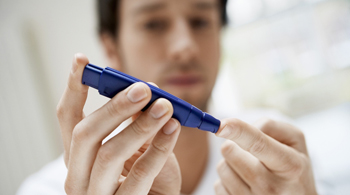
diabetes-Metabolic disorders such as hyperglycemia attenuate stress resistance in the human body and exacerbate insulin resistance. The heat shock response (HSR) is activated as a response to stress in the human body, but its function decreased in those with type 2 diabetes.

A research team from the university has found that by restoring the function of HSP72 — the main protein of HSR — improved glucose-related abnormalities. The researchers developed a belt-type medical device that uses a special type of rubber.

“This device is very easy to use since it simply attaches to the abdomen and it has a low-impact on the patient. One can expect the effects to be similar to exercise therapy,” Tatsuya Kondo, who led the research, said in a statement.

The team then performed a clinical trial of MES + HS on 40 obese men suffering from type 2 diabetes. Results showed a decrease fasting glucose levels, a loss of visceral fat, improve insulin resistance and a significant improvement in glycated hemoglobin (HbA1c) values.

“Even in patients who have difficulty exercising, such as those who are overweight, elderly, or have some form of disability, this device can be expected to provide acceptable treatment in addition to conventional diabetic medical care,” Tatsuya added.

The research appeared in journal Scientific Reports.

Comments

Add new comment

  • Coastaldigest.com reserves the right to delete or block any comments.
  • Coastaldigset.com is not responsible for its readers’ comments.
  • Comments that are abusive, incendiary or irrelevant are strictly prohibited.
  • Please use a genuine email ID and provide your name to avoid reject.
Agencies
May 19,2020

Researchers have found that patients with peripheral artery disease or stroke were less likely to receive recommended treatments to prevent heart attack than those with coronary artery disease. All three are types of atherosclerotic cardiovascular disease.

Depending on the location of the blockage, atherosclerosis increases the risk for three serious conditions: coronary artery disease, stroke and peripheral artery disease.

"Our study highlights the need for public health campaigns to direct equal attention to all three major forms of atherosclerotic cardiovascular disease," said senior study author Erin Michos from the Johns Hopkins University in the US.

"We need to generate awareness among both clinicians and patients that all of these diseases should be treated with aggressive secondary preventive medications, including aspirin and statins, regardless of whether people have heart disease or not," Michos added.

Since atherosclerosis can affect arteries in more than one part of the body, medical guidelines are to treat coronary artery disease, stroke and peripheral artery disease similarly with lifestyle changes and medication, including statins to lower cholesterol levels and aspirin to prevent blood clots.

Lifestyle changes include eating a healthy diet, being physically active, quitting smoking, controlling high cholesterol, controlling high blood pressure, treating high blood sugar and losing weight.

What was unclear was if people with stroke and peripheral artery disease received the same treatments prescribed for those with coronary artery disease.

This study compared more than 14,000 US adults enrolled in the 2006-2015 Medical Expenditure Panel Survey, a national survey of patient-reported health outcomes and conditions, and health care use and expenses.

Slightly more than half of the patients were men, the average age was 65, and all had either coronary artery disease, stroke or peripheral artery disease.

These individuals were the representative of nearly 16 million US adults living with one of the three forms of atherosclerotic cardiovascular disease.

Compared to participants with coronary artery disease, participants with peripheral artery disease were twice more likely to report no statin use and three times more likely to report no aspirin use.

Additionally, people with peripheral artery disease had the highest, annual, total out-of-pocket expenditures among the three atherosclerotic conditions.

The findings showed that participants with stroke were more than twice as likely to report no statin or aspirin use.

Moreover, those with stroke were more likely to report poor patient-provider communication, poor health care satisfaction and more emergency room visits.

"Our study highlights a missed opportunity for implementing life-saving preventive medications among these high-risk individuals," Michos said.

The study was presented in the virtual conference at the American Heart Association's Quality of Care & Outcomes Research Scientific Sessions 2020.

Comments

Add new comment

  • Coastaldigest.com reserves the right to delete or block any comments.
  • Coastaldigset.com is not responsible for its readers’ comments.
  • Comments that are abusive, incendiary or irrelevant are strictly prohibited.
  • Please use a genuine email ID and provide your name to avoid reject.
Agencies
May 30,2020

Drinking coffee may help reduce the risk of certain digestive disorders, including gallstone disease and pancreatitis, a new study has suggested.

The study from the Institute for Scientific Information on Coffee (ISIC) also highlighted other beneficial effects that coffee consumption may have on the process of digestion, including supporting gut microflora and promoting gut motility.

"Data indicates benefits against common digestive complaints such as constipation, as well as a potential reduction in the risk of more serious conditions like chronic liver diseases," said study author Carlo La Vecchia from the University of Milan in Italy.

Gallstone disease is a common digestive disorder, caused by the accumulation of gallstones in the gallbladder or bile duct, which affects approximately 10-15 per cent of the adult population.

While the mechanism by which coffee may protect against gallstone disease is not yet known, it has been observed that the risk for the condition declines with increasing daily consumption of coffee, the researchers said.

Caffeine is thought to play a role in these associations, as the same effect is not observed with decaffeinated coffee.

A common question among consumers and focus area for research is whether coffee is associated with heartburn or gastro-oesophageal reflux disease (GORD).

While a small number of studies have suggested an association between coffee drinking and GORD, the majority of studies reviewed suggest that coffee is not a major trigger of these conditions.

The report also reviewed a growing area of health and nutrition research, namely: the effect of coffee on the gut microflora (microorganism populations).

Recent studies suggest that populations of the beneficial gut bacteria Bifidobacterium spp, increase after drinking coffee.

The findings showed the dietary fibre and polyphenols found in coffee, support the healthy growth of microflora populations.

Additional research findings highlighted that coffee consumption is thought to stimulate digestion by encouraging the release of gastric acid, bile and pancreatic secretions.

Coffee is one of the most widely researched components of the diet, and its effect on digestion remains a growing area of research, the researchers noted.

Comments

Add new comment

  • Coastaldigest.com reserves the right to delete or block any comments.
  • Coastaldigset.com is not responsible for its readers’ comments.
  • Comments that are abusive, incendiary or irrelevant are strictly prohibited.
  • Please use a genuine email ID and provide your name to avoid reject.
Agencies
January 11,2020

Europe, Jan 11: Researchers have revealed the people who drink tea at least three times a week have healthy years of life and longer life expectancy.

The research was published in the European Journal of Preventive Cardiology, a journal of the European Society of Cardiology (ESC).

Dr Xinyan Wang, who is the author of the study, said: "Habitual tea consumption is associated with lower risks of cardiovascular disease and all-cause death. The favourable health effects are the most robust for green tea and for long-term habitual tea drinkers."
The analysis that was conducted included about 100,902 participants of the China-PAR project2 with no history of heart attack, stroke, or cancer.

Participants were classified into two groups: Habitual tea drinkers and never or non-habitual tea drinkers and followed-up for a median of 7.3 years.

The analyses estimated that 50-year-old habitual tea drinkers would develop coronary heart disease and stroke 1.41 years later and live 1.26 years longer than those who never or seldom drank tea. Compared with never or non-habitual tea drinkers, the habitual tea consumers had a 20 per cent lower risk of incident heart disease and stroke, 22 per cent lower risk of fatal heart disease and stroke, and 15 per cent decreased risk of all-cause death.

The potential influence of changes in tea drinking behaviour was suspected in a subset of 14,081 participants with assessments at two-time points. The average duration between the two surveys was 8.2 years, and the median follow-up after the second survey was 5.3 years.

Habitual tea drinkers who maintained their habit in both surveys had a 39 per cent lower risk of incident heart disease and stroke, 56 per cent lower risk of fatal heart disease and stroke, and 29 per cent decreased risk of all-cause death compared to consistent never or non-habitual tea drinkers.

Senior author Dr Dongfeng Gu said: "The protective effects of tea were most pronounced among the consistent habitual tea drinking group. Mechanism studies have suggested that the main bioactive compounds in tea, namely polyphenols, are not stored in the body long-term. Thus, frequent tea intake over an extended period may be necessary for the cardioprotective effect."

In a subanalysis by type of tea, drinking green tea was linked with approximately 25 per cent lower risks for incident heart disease and stroke, fatal heart disease and stroke, and all-cause death. However, no significant associations were observed for black tea.
Dr Gu noted that a preference for green tea is unique to East Asia.

Two factors may be at play. First, green tea is a rich source of polyphenols which protect against cardiovascular disease and its risk factors including high blood pressure and dyslipidaemia. Black tea is fully fermented and during this process, polyphenols are oxidised into pigments and may lose their antioxidant effects. Second, black tea is often served with milk, which previous research has shown may counteract the favourable health effects of tea on vascular function.

Gender-specific analyses showed that the protective effects of habitual tea consumption were pronounced and robust across different outcomes for men, but only modest for women. Dr Wang said: "One reason might be that 48 per cent of men were habitual tea consumers compared to just 20 per cent of women. Secondly, women had a much lower incidence of, and mortality from, heart disease and stroke. These differences made it more likely to find statistically significant results among men."

She said: "The China-PAR project is ongoing, and with more person-years of follow-up among women the associations may become more pronounced."

In conclusion, the authors have found that randomised trials are required to validate the results and to illustrate nutritional guidelines and advice for lifestyle.

Comments

Add new comment

  • Coastaldigest.com reserves the right to delete or block any comments.
  • Coastaldigset.com is not responsible for its readers’ comments.
  • Comments that are abusive, incendiary or irrelevant are strictly prohibited.
  • Please use a genuine email ID and provide your name to avoid reject.