What did Colonialism do to India?

[email protected] ( Ram Puniyani)
August 19, 2015

A video of Shashi Tharoor speaking at Oxford on a debate related to the colonial period has been ‘viral’ on the social circuit for a while. In this video Tharoor makes a passionate plea to the British that they make reparations for the losses to Indian economy during the British rule. He puts the blame of India’s economic decline on the British and also recounts Jalianwala Bag, Bengal famine as the major highlight of British rule which reflected the attitude of British towards this colony of theirs’. Tharoor points out that resources from India were used by British to build there economic prosperity and to fund their Industrial revolution.
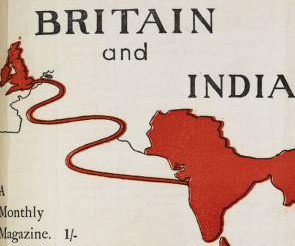
brindiaHowever, Dr. Manmohan Singh (2005), the previous prime minister, had made a very different kind of argument. In this Dr. Singh as a guest of British Government extols the virtue of British rule and gives them the credit for rule of law, constitutional government, and free press as the contributions which India benefitted from.

So where does the truth lie? Not only the context and tone of the speeches by these two Congressmen is totally different, the content is also totally on different tracks. Dr. Singh as the guest of the British Government is soft and behaving as an ideal guest and points out the contributions of the British rule and there is some truth in that. Tharoor as an Indian citizen with memory of the past; is narrating the plunder which this country suffered due to the British rule. He is also on the dot. These are two aspects of the same canvass. What Tharoor is saying is the primary goal of British and what Dr. Sigh is stating is an incidental offshoot.

British (East India Company) did come here looking for markets for their industrial products, gradually went on defeating one after another king, ruling in different areas and brought the whole subcontinent under a single rule, which became one of the ‘Jewel in the Crown’ for British as the whole wealth, raw material, resources from India were pumped out to Britain. In order to achieve this goal they did go on to introduce railways, communication network-postal, telegraph-telephone and modern administrative system and modern education to create the assistants for their officers ruling here.

The lacuna in our systems were primarily because the primary goal of British was to plunder the country and as an incidental thing; as by product; the new institutions, rule of law and later some reforms against ghastly social practices also began (like abolition of Sati). Perceptions do matter while Singh and Tharoor are talking of the same phenomenon from two different angles. The third angle is the one that was articulated by British themselves. British presented their rule as part of “Civilizing mission of the East”! There is very little truth in this, but it can be said that British also did help in the process of social reforms at times.

The major point which is unseen in these perceptions is one which had dangerous consequence on the social-political scenario and that was- British planted the seeds of divisive politics. As such broadly speaking the colonial-imperialist rule sows the seeds of ‘divide and rule’ and in this subcontinent they did it with gay abandon. In the wake of 1857 revolt, when the British East India Company’s rule was shaken, British identified existence of two major religious communities where the wedge could be driven. This is where they introduced communal historiography as a part of ‘divide and rule’ policy. James Mill with his ‘History of British India’ periodized the history on communal lines (Ancient Hindu Period, medieval Muslim period and modern British period). Supplementing this were Elliot and Dawson with ‘History of India as told by her historians’, which reduced the history to the eulogizing account of the courtiers of the kings. These played a major role in deepening the communal understanding of the past.

At social level we see emergence of modern classes, industrialists-workers and modern educated classes while the old classes of feudal lords and kings survive though with some reduced influence. The modern classes came forward to build up anti colonial movement; this movement led by Gandhi with people from all regions, religions, men and women both is what built modern India on the infrastructure of industrialization-modern education. This movement tied the people together in the bond of ‘Indian-ness’ and had imbibed the values of the central pillars of transformations of caste and gender relations. The latter aspects most highlighted by Jotirao Phule, Bhimrao Ambedkar and Periyar Ramasamy Niacker on one side and introduction of girls education with Savitribai Phule opening the girls school on the other. This group underlined that ‘India is a nation in the making’.

On the other hand the declining sections of landlords-kings, both Hindu and Muslim, threatened by the modern changes and seeing the rise of their vassals who were escaping from their grip, shouted that their religion is in danger. They upheld the communal historiography introduced by British. Muslim elite gradually came to form Muslim League. For them the raison d’être of their coming together was Islam being in danger. They held that here the Muslim Nation had been there since the time Muhammad bin Kasim had won over Sindh from Hindu Daher in eighth century and so they have to work for creation of a Muslim nation. That’s how they remained aloof from the freedom movement, which was aiming at the Secular democratic India.

The Hindu landlords Kings in due course came to form Hindu Mahasabha and then RSS. For them this had been a Hindu nation from times immemorial and Muslims and Christians are the alien invaders. They also remained aloof from freedom movement and harped on building Hindu nation in contrast to the goal set by National movement, that of secular democratic India. They constructed their own history of a glorious past of the Hindu rulers and its corruption by the Muslim invaders. Gradually they came to construct the ideology that all the ills of Hindu society are due to the Muslim invaders.

While the national movement brought together the people of all the regions, religions, castes: women and men both, the communal streams nurtured the seeds of divisiveness sown by British, and this is what led to communal violence and later the tragic partition of the country. Here also what is generally analyzed mostly is the fault of leader A or B for partition while overlooking the fact that partition was the part of continuing British policy, to have their interests preserved in the sub continent and that’s how they played their cards well enough to create a situation where partition became an inevitable calamity.

If one has to point the major problem which the British rule introduced; apart from the impact on the socio economic life of the sub continent; it is undeniably letting the feudal classes-kingdoms to continue in the face of changing scenario of industrialization-modern education. So in the sub continent on one side we see the emergence of the values of Liberty, Equality, and Fraternity as an ideology of the emerging classes, while the feudal ideology of ‘caste and gender hierarchy’ persists as the flag-mast of declining sections of society which came to be represented in the communal organizations, Muslim League, Hindu Mahasabha and RSS. These declining groups construct the ideology of ‘Religion based Nation state’ which is a unique synthesis of feudal values with the modern concept of nation state, their communal politics is a modern phenomena but derives its identity from as ancient as time as possible. As neither Hindu nor Muslim nor Christian Kings were ‘religious nationalist’ so to say; as actually they presided over on the empires based on taxation of the toiling peasants in their kingdoms. Their goals of power-wealth were written on their sleeves; sometimes they adorned the masks of Dharmyudh, Jihad or Crusade for their ambitions of expanding power.

So during freedom movement we see those working for anti colonial movement are saying, ‘India as a nation in the making’ the concept which runs parallel to modernization in transport, industrialization, education and administration in particular. Muslim League said we have been a Muslim nation from eight century and Hindu Mahasabha-RSS asserting that we are a Hindu nation from times immemorial Muslim league derives identity from the Kings’ rule while Hindu Mahasbha-RSS project the concept of nation to times when people were having pastoral pattern and later made a transition to settled agriculture. For the communalists the major transition of industrialization and modern education is of no consequence.

While the declining classes do eulogize the kings of their religions, it is interesting that none of the kings in the history set out to spread his religion, they set out to expand their empires. To make this rule grounded there of course is an exception, Emperor Ashok who did spread his religion.

Today we cannot say what might have been the course of History had India not been colonized, what patterns of Industrialization-modernization would have taken place, but one thing can be hypothesized that this communal politics, abuse of religions’ identity for political goals might not have been here to torment us, to kill and maim the innocents, may not have been ruling our streets and asserting for authoritarian structures right within the democratic institutions which the country has nourished from last six decades.

So while Tharoor and earlier Manmohan Singh are pointing to two supplementary aspects of British rule, we also need to delve deeper and see the result of their policies which gave rise to communal politics, the politics which is tormenting South Asia as a whole and India is witnessing the worst in the form of Hindu Nationalism, Hindutva which is dominating the political ideology.

Comments

Add new comment

  • Coastaldigest.com reserves the right to delete or block any comments.
  • Coastaldigset.com is not responsible for its readers’ comments.
  • Comments that are abusive, incendiary or irrelevant are strictly prohibited.
  • Please use a genuine email ID and provide your name to avoid reject.
Ram Puniyani
February 4,2020

As democracy is seeping in slowly all over the world, there is an organization which is monitoring the degree of democracy in the individual countries, The Economist Intelligence Unit. As such in each country there are diverse factors which on one hand work to deepen it, while others weaken it. Overall there is a march from theoretical democracy to substantive one. The substantive democracy will herald not just the formal equality, freedom and community feeling in the country but will be founded on the substantive quality of these values. In India while the introduction of modern education, transport, communication laid the backdrop of beginning of the process, the direction towards deepening of the process begins with Mahatma Gandhi when he led the non-cooperation movement in 1920, in which average people participated. The movement of freedom for India went on to become the ‘greatest ever mass movement’ in the World.

The approval and standards for democracy were enshrined in Indian Constitution, which begins ‘We the people of India’, and was adopted on 26th January 1950. With this Constitution and the policies adopted by Nehru the process of democratization started seeping further, the dreaded Emergency in 1975, which was lifted later restored democratic freedoms in some degree. This process of democratisation is facing an opposition since the decade of 1990s after the launch of Ram Temple agitation, and has seen the further erosion with BJP led Government coming to power in 2014. The state has been proactively attacking civil liberties, pluralism and participative political culture with democracy becoming flawed in a serious way. And this is what got reflected in the slipping of India by ten places, to 51st, in 2019. On the index of democracy India slipped down from the score of 7.23 to 6.90. The impact of sectarian BJP politics is writ on the state of the nation, country.

Ironically this lowering of score has come at a time when the popular protests, the deepening of democracy has been given a boost and is picking up with the Shaheen Bagh protests. The protest which began in Shaheen Bagh, Delhi in the backdrop of this Government getting the Citizenship amendment Bill getting converted into an act and mercilessly attacking the students of Jamia Milia Islamia, Aligarh Muslim University along with high handed approach in Jamia Nagar and neighbouring areas.  From 15th December 2019, the laudable protest is on.

It is interesting to note that the lead in this protest has been taken by the Muslim women, from the Burqa-Hijab clad to ‘not looking Muslim’ women and was joined by students and youth from all the communities, and later by the people from all the communities. Interestingly this time around this Muslim women initiated protest has contrast from all the protests which earlier had begun by Muslims. The protests opposing Shah Bano Judgment, the protests opposing entry of women in Haji Ali, the protests opposing the Government move to abolish triple Talaq. So far the maulanas from top were initiating the protests, with beard and skull cap dominating the marches and protests. The protests were by and large for protecting Sharia, Islam and were restricted to Muslim community participating.

This time around while Narendra Modi pronounced that ‘protesters can be identified by their clothes’, those who can be identified by their external appearance are greatly outnumbered by all those identified or not identified by their appearance.

The protests are not to save Islam or any other religion but to protect Indian Constitution. The slogans are structured around ‘Defence of democracy and Indian Constitution’. The theme slogans are not Allahu Akbar’ or Nara-E-Tadbeer’ but around preamble of Indian Constitution. The lead songs have come to be Faiz Ahmad Faiz’s ‘Hum Dekhenge’, a protest against Zia Ul Haq’s attempts to crush democracy in the name of religion. Another leading protest song is from Varun Grover, ‘Tanashah Aayenge…Hum Kagaz nahin Dikhayenge’, a call to civil disobedience against the CAA-NRC exercise and characterising the dictatorial nature of the current ruling regime.

While BJP was telling us that primary problem of Muslim women is Triple talaq, the Muslim women led movements has articulated that primary problem is the very threat to Muslim community. All other communities, cutting across religious lines, those below poverty line, those landless and shelter less people also see that if the citizenship of Muslims can be threatened because of lack of some papers, they will be not far behind in the victimization process being unleashed by this Government.

While CAA-NRC has acted as the precipitating factor, the policies of Modi regime, starting from failure to fulfil the tall promises of bringing back black money, the cruel impact of demonetisation, the rising process of commodities, the rising unemployment, the divisive policies of the ruling dispensation are the base on which these protest movements are standing. The spread of the protest movement, spontaneous but having similar message is remarkable. Shaheen Bagh is no more just a physical space; it’s a symbol of resistance against the divisive policies, against the policies which are increasing the sufferings of poor workers, the farmers and the average sections of society.

What is clear is that as identity issues, emotive issues like Ram Temple, Cow Beef, Love Jihad and Ghar Wapasi aimed to divide the society, Shaheen Bagh is uniting the society like never before. The democratisation process which faced erosion is getting a boost through people coming together around the Preamble of Indian Constitution, singing of Jan Gan Man, waving of tricolour and upholding the national icons like Gandhi, Bhagat Singh, Ambedkar and Maulana Azad. One can feel the sentiments which built India; one can see the courage of people to protect what India’s freedom movement and Indian Constitution gave them.

Surely the communal forces are spreading canards and falsehood against the protests. As such these protests which is a solid foundation of our democracy. The spontaneity of the movement is a strength which needs to be channelized to uphold Indian Constitution and democratic ethos of our beloved country.

Comments

Add new comment

  • Coastaldigest.com reserves the right to delete or block any comments.
  • Coastaldigset.com is not responsible for its readers’ comments.
  • Comments that are abusive, incendiary or irrelevant are strictly prohibited.
  • Please use a genuine email ID and provide your name to avoid reject.
Ram Puniyani
August 9,2020

Contrary to present impression that Muslims are separatists due to whom the partition of India took place, the truth is that Muslims contributed to freedom movement and upheld India’s composite culture in equal measure. The partition process, mainly due to British policy of ‘divide and rule’ well assisted by Hindu and Muslim communalists is being hidden from the popular vision in India and Muslims in general are held responsible for the same. Not only that the communal historiography introduced by British to pursue their policies has become the bedrock of communal politics and worsening of the perceptions about Muslims is in progress in India.

Yet another example of this has been a series of tweets by the bureaucrat, who is close to retirement, K. Nageshwar Rao. Contrary to the service rules he has made statements, through his tweets which are appreciative of RSS-BJP and demonise the stalwarts Muslim leaders who not only contributed to the freedom movement but also later gave valuable service in laying the foundation of Independent India. As per Rao, his tweets he accuses Maulana Azad and the other Muslim Education ministers of “deracination of Hindus”. After naming “Maulana Abul Kalam Azad — 11 years (1947-58)”; “Humayun Kabir, M C Chagla & Fakruddin Ali Ahmed — 4 years (1963-67)”; and, “Nurul Hassan — 5 years (1972-77)”, he posts: “Remaining 10 years other Leftists like VKRV Rao.”

He points out that their policies were meant to “1. Deny Hindus their knowledge, 2. Vilify Hinduism as collection of superstitions, 3. Abrahamise Education, 4. Abrahamise Media & Entertainment, 5. Shame Hindus about their identity!  and 6. Bereft of the glue of Hinduism Hindu society dies.”

Then he goes on to praise RSS-BJP for bringing the glory back to Hindus. These statements of his on one hand promote the Hate and on the other tantamount to political statement, which civil servants should not by making. CPM politburo member Brinda Karat has written a letter to Home Minister Amit Shah to take suitable action against the erring bureaucrat.

Rao begins with Maulana Abul kalam Azad. Surely Azad was one of the major leaders of freedom movement, who was also the youngest President of INC, in 1923 and later between 1940 to 1945. He opposed the partition process tooth and nail till the very last. As the Congress President in 1923 he wrote a remarkable Para, symbolizing the urge for Hindu Muslim unity, “If an angel descends from heaven and offers me Swaraj in 24 hours on condition that I give up Hindu Muslim Unity, I will refuse. Swaraj we will get sooner or later; its delay will be a loss for India, but loss of Hindu Muslim unity will be a loss for human kind”. His biographer Syeda Hamid points out “He spoke without an iota of doubt about how debacle of Indian Muslims has been the result of the colossal mistakes committed by Muslim League’s misguided leadership. He exhorted Muslims to make common cause with their Hindu, Sikh, Christian fellow countrymen.” He was the one who promoted the translation of Hindu scriptures Ramayan and Mahabharat in to Persian.

Surely Mr. Rao, neither has read Azad or read about him nor knows his contributions to making of Modern India. While today, the ideological formation to which Mr. Rao seems to be pledging his commitment is critical of all that happened during Nehru era, it was during this period when as education minister Azad was shepherding the formations of IITs, Academies of Science, Lalit kala Academies. It was during this period that the efforts to promote Indian composite culture were undertaken through various steps.

The other stalwarts who are under the hammer have been outstanding scholars and giants in their own field of education. Humayun Kabir, Nurul Hasan, Dr.Zakir Husssain gave matchless ideas and practical contributions in different fields of education. One can say that contrary to the accusations, India could match up to the Computer era, software and associate things, due to creation of large manpower in these areas mainly due to these foundations which were laid down particularly in the field of education during this period.

The charge that these ‘Muslim’ education ministers white washed the bloody Islamic rule is a blind repetition of the offshoot of communal historiography introduced by British. While Kings were ruling for power and wealth, their courts had Hindus and Muslim both officers. The jaundiced vision sees this as a bloody Islamic rule but as a matter of fact the syncretic culture and traditions developed precisely this period. It was during this period that Bhakti Traidtion with Kabir, Tukaram, Namdeo, Tulsidas flourished. It was during this period that humane values of Sufi saints reached far and wide. It was during this period that poets like Rahim and Raskhan produced their classic literature n praise of Hindu Gods.

We also need to remind ourselves that large number of Muslims participated in the freedom Movement. Two scholars Shamsul Islam and Nasir Ahmad have come out with books on the myriad such freedom fighters, to recall just a few names. Khan Abdul Gaffar Khan, Zakir Hussain, Syed Mohammad Sharfuddin Kadri, Bakht Khan, Muzzafar Ahmad, Mohammad Abdir Rahman,, Abbas Ali, Asaf Ali, Yusuf Mehrali, Maulana Mazahrul Hague.

These are just a few of the names. The movement, led by Gandhi, definitely laid the foundations where composite Indian culture and respect for all religions, others’ religion was paramount and this is what created Indian fraternity, one of the values which finds its place in the preamble of Indian Constitution.

This blaming of Education ministers who were Muslims is an add-on to the process of Islamophobia in India. So for there have been many actions of Muslim kings which are selectively presented as being bloody, now the post Independent History, where glorious contributions have been made by Muslim leaders are being used to further deepen the divisive process. We need to pay respects to builders of modern India, irrespective of their religion.

Comments

Add new comment

  • Coastaldigest.com reserves the right to delete or block any comments.
  • Coastaldigset.com is not responsible for its readers’ comments.
  • Comments that are abusive, incendiary or irrelevant are strictly prohibited.
  • Please use a genuine email ID and provide your name to avoid reject.