



Who is behind ISIS?

[email protected] (Yvonne Ridley)
August 24, 2014

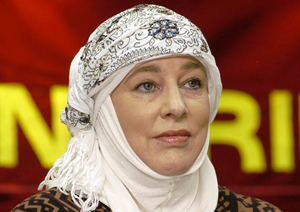
I have no idea where the Islamic State/ISIS/ISIL or whatever name it uses came from, and I'm just as baffled by the roots of its violent ideology. Yvonne RidleyWhile I never pretend to speak for the diverse community of Muslims living in Britain today, I reckon my views on this will be echoed by the majority who have watched with growing concern the unprecedented rise of this group.
However, just as unprecedented is the childish invective being spewed out by Islamophobes, racists and so-called terrorism experts encouraged by some sections of the British media. They have not helped at all.

While I've blocked most of the jack-booted trolls who patrol Twitterland demanding that anyone who is or even looks like a Muslim should launch an immediate protest march against ISIS, I'm amazed that similar rhetoric is being pushed by elements of the media.

There are many reasons why I've not spoken out against ISIS. For a start, I'm not sure who it is, where it came from or how it is funded. I've not seen such a militarily- and strategically-savvy fighting force emerge in the Middle East before, other than the highly disciplined and much feared Hezbollah. I, like many others, want to know a little bit more about ISIS before making public comments.

Secondly, why should I organise a march against ISIS? I am not responsible for its actions, just as my Jewish friends are not responsible – and nor should they be - for the actions of that other group of violent psychos in the Middle East, the Israeli military. While ISIS enforcers wield head- and limb-chopping knives, Israel drops bombs called Daisy Cutters which also decapitate and maim anyone caught in the fallout.

Thirdly, my silence over ISIS does not mean that I support the group even if some fools take my silence as a sign that I do. Only when I ask some male tweeters to apologise on behalf of rapists, on the grounds that every rapist is a man so they must all be somehow culpable, does the penny drop; occasionally I'll get a muffled apology.

And finally, even if I jumped up and down and declared that "ISIS is the scum of the earth", exactly what would that achieve anyway? I hardly think its leader Abu Bakr Al-Baghdadi is going to lose any sleep over Yvonne Ridley's views.

There are few certainties in the chaos that is now the Middle East. However, what I can say with authority is that the world would never have heard of ISIS had widow-makers George W Bush and Tony Blair not launched their illegal war in Iraq in 2003. The world would also never have seen ISIS develop into the full blown monster that it is if the West had, at the very least, introduced a no-fly zone in Syria after the chemical weapons were unleashed on civilians by Bashar Al-Assad's forces exactly a year ago this week.

The question to ask is this: Who really benefits from the unfolding ISIS spectacle? The big winners are sitting within the Assad regime. It is that regime which was, by the way, suspected of capturing US journalist James Foley who went missing in north-west Syria on 12 November 2012. How on earth did he slip out of the Syrian government's hands into those of the murderous head-chopping maniacs of ISIS?

The former head of the British Army says that the West should sit down and negotiate with Assad to get rid of ISIS, but what if ISIS was created by Assad and his ally Iran, which has members of the elite Republican Guard in parts of Syria?

As crazy as it sounds, that would explain why Nouri Al-Maliki's Iraqi army fell away so easily in the face of ISIS leaving behind a massive arsenal of weapons for the militia to use. It is virtually inconceivable for a trained fighting force to leave all of its kit behind before doing a runner, just as it's virtually inconceivable that a crack fighting force like ISIS could emerge from a rag tag bunch of ill-disciplined rebel fighters buoyed-up by disaffected youngsters from Europe and beyond.

Make no mistake, ISIS's domination of Iraq is nothing short of breath-taking; it has achieved in a matter of weeks what the US and its allies failed to do in 10 years of occupation. This hasn't happened by accident; military victories on this scale take strategic planning and inside help. So who, exactly, is behind ISIS?

Comments

Add new comment

  • Coastaldigest.com reserves the right to delete or block any comments.
  • Coastaldigset.com is not responsible for its readers’ comments.
  • Comments that are abusive, incendiary or irrelevant are strictly prohibited.
  • Please use a genuine email ID and provide your name to avoid reject.
Agencies
June 22,2020

New delhi, Jun 22: As consumer sentiment runs high amid growing chorus for boycotting Chinese goods in the country, the fluid market situation offers new opportunities for various smartphone makers, especially the non-Chinese ones like Samsung, Apple, Nokia, Asus and others, to realign their strategies and regain the lost market share in the face of fierce Chinese competition.

The challenge here would be not to look "opportunistic" and leverage the current explosive situation on just riding on the anti-Chinese sentiment but to offer real challenges in the form of top-end devices with solid internals at affordable price points, feel industry experts.

"The current market conditions in India are fluid and open up new opportunities for smartphone original equipment manufacturers (OEMs) to focus and leverage," Prabhu Ram, Head-Industry Intelligence Group, CyberMedia Research (CMR), told IANS.

In the first quarter (January-March) this year, Samsung's shipments were driven by its upgraded A and M series (A51, A20s, A30s, and M30s).

According to Counterpoint Research, Samsung managed to hold third position in Q1 2020 due to launches across several price tiers, especially in the affordable premium segment (S10 Lite, Note 10 Lite).

The South Korean smartphone maker last week announced a Rs 4,000 price drop on its popular Galaxy Note10 Lite smartphone that will now cost Rs 37,999 (6GB variant).

Earlier this month, Samsung launched two new smartphones, Galaxy M11 and Galaxy M01, with powerful batteries under Rs 15,000 in India.

Galaxy M11 comes in two variants. The 3GB+32GB will be priced at Rs 10,999 while the higher 4GB+64GB variant will be available for Rs 12,999.

Samsung has also launched an affordable Galaxy A21s smartphone with quad-camera system and 5,000mAh battery at a starting price of Rs 16,499.

Also read: Boycott China? OnePlus 8 Pro sold out within minutes of going on sale

On the other hand, Apple grew a strong 78 per cent YoY driven by strong shipments of iPhone 11 and multiple discounts on platforms like Flipkart and Amazon in Q1, according to Counterpoint.

Apple has also brought its cheapest yet powerful new iPhone SE that costs Rs 38,900 (64GB) in India with a special offer from HDFC Bank. The new iPhone SE is powered by the Apple-designed A13 Bionic, the fastest chip in a smartphone and features the best single-camera system ever in an iPhone.

According to Tarun Pathak, Associate Director, Counterpoint Research, consumer sentiments are running high and a section of users will look for alternatives, benefitting global and Indian brands.

"However, we do not think non-Chinese brands will run aggressive campaigns based on the situation as it might look like being opportunistic," Pathak told media.

It may actually let brands of Chinese origin try to run aggressive campaigns on their presence and scale.

"Some of these Chinese brands have been active in scaling up local value addition, creating jobs and investing in research and development," Pathak noted.

On Saturday, market leader Xiaomi said that it is "more Indian" than any other smartphone brand.

The company's India head Manu Kumar Jain said that the company's mobile phone R&D centre and product team is in India, it employs 50,000 people in the country, the entire leadership team is Indian and that the company pays its taxes in India.

Earlier, Realme India CEO Madhav Sheth who is also very active on social media said that Realme is an Indian startup.

In his latest episode of Ask Madhav' series on YouTube, Sheth said: "I can proudly say Realme is an Indian startup, which is now a global MNC (multinational corporation)".

Comments

Add new comment

  • Coastaldigest.com reserves the right to delete or block any comments.
  • Coastaldigset.com is not responsible for its readers’ comments.
  • Comments that are abusive, incendiary or irrelevant are strictly prohibited.
  • Please use a genuine email ID and provide your name to avoid reject.
Agencies
March 7,2020

New Delhi, Mar 7: The Union government has issued a Global Invite for Expression of Interest for disinvestment in Bharat Petroleum Corporation Limited (BPCL) from prospective bidders with a minimum net worth of $10 billion as of Saturday.

The EoI submissions can be made till May 2, whereas investor queries will be entertained till April 4.

Another condition pertains to a maximum of four members are permitted in a consortium, and the lead member must hold 40 per cent in proportion. Other members of the consortium must have a minimum $1 billion net worth.

The EOI allows changes in the consortium within 45 days, though the lead member cannot be changed.

The GoI proposes to disinvest its entire shareholding in BPCL comprising 1,14,91,83,592 equity shares held through the Ministry of Petroleum and Natural Gas, which constitutes 52.98 per cent of BPCL's equity share capital, along with the transfer of management control to the strategic buyer (except BPCL's equity shareholding of 61.65 per cent in Numaligarh Refinery Limited (NRL) and management control thereon).

The shareholding of BPCL in NRL will be transferred to a Central Public Sector Enterprise operating in the oil and gas sector under the Ministry and accordingly is not a part of the proposed transaction.

Comments

Add new comment

  • Coastaldigest.com reserves the right to delete or block any comments.
  • Coastaldigset.com is not responsible for its readers’ comments.
  • Comments that are abusive, incendiary or irrelevant are strictly prohibited.
  • Please use a genuine email ID and provide your name to avoid reject.
Agencies
January 16,2020

Claiming that e-commerce giants like Amazon import as much as 80 per cent of the items sold on their platforms, small manufacturers' body has said that their business models do not benefit local industry and are creating jobs of delivery boys only.

"Neither manufacturers nor traders are getting any benefit from the business models of Amazon and Flipkart because they largely import their products from China and Korea and sell here. Nearly 80 per cent of their products are imported," said Anil Bhardwaj, Secretary General, Federation of Indian Micro and Small & Medium Enterprises (FISME).

Bhardwaj said that the global e-commerce players generally source and sell products through their own preferred suppliers and as a result a large number of local manufacturers and traders get crowded out.

He listed out deep discounting and buying products from preferred companies as unfair practices.

"Even if they buy products from local suppliers the commission charged is very high," Bhardwaj said adding that the issues related to unfair practices have been raised with Commerce Ministry on multiple occasions.

FISME maintains that the technology-driven retail is way forward and one cannot be oblivious of the benefits it brings to consumers but at the same time the local industry can also not be ignored given its role in job creation.

"If both traders and local manufacturers are crowded out then how would the local industry survive and employment be generated?" asked Bhardwaj.

As Amazon Founder and CEO Jeff Bezos is currently on his three-day visit to India, the local traders are up in arms against the "unfair" trade practices of the tech giant. Delhi-based Confederation of All India Traders (CAIT) has launched a countrywide protest against the company and has organised protests across 300 cities.

In a setback to Amazon and Walmart-backed Flipkart, the fair market watchdog Competition Commission of India (CCI) has ordered probe into the business operations of both the companies on multiple counts including deep-discounts and exclusive tie-up with preferred sellers.

"For the first time some concrete step has been taken against Amazon and Flipkart who are continuously violating the FDI policy in indulging in a vicious racket of controlling and monopolising not only the e-commerce but even the retail trade as well," CAIT National Secretary General Praveen Khandelwal said after the CCI order.

Comments

Add new comment

  • Coastaldigest.com reserves the right to delete or block any comments.
  • Coastaldigset.com is not responsible for its readers’ comments.
  • Comments that are abusive, incendiary or irrelevant are strictly prohibited.
  • Please use a genuine email ID and provide your name to avoid reject.