



Who is behind ISIS?

[email protected] (Yvonne Ridley)
August 24, 2014

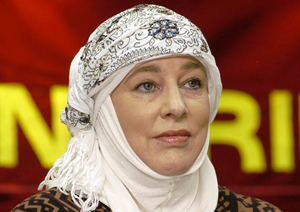
I have no idea where the Islamic State/ISIS/ISIL or whatever name it uses came from, and I'm just as baffled by the roots of its violent ideology. Yvonne RidleyWhile I never pretend to speak for the diverse community of Muslims living in Britain today, I reckon my views on this will be echoed by the majority who have watched with growing concern the unprecedented rise of this group.
However, just as unprecedented is the childish invective being spewed out by Islamophobes, racists and so-called terrorism experts encouraged by some sections of the British media. They have not helped at all.

While I've blocked most of the jack-booted trolls who patrol Twitterland demanding that anyone who is or even looks like a Muslim should launch an immediate protest march against ISIS, I'm amazed that similar rhetoric is being pushed by elements of the media.

There are many reasons why I've not spoken out against ISIS. For a start, I'm not sure who it is, where it came from or how it is funded. I've not seen such a militarily- and strategically-savvy fighting force emerge in the Middle East before, other than the highly disciplined and much feared Hezbollah. I, like many others, want to know a little bit more about ISIS before making public comments.

Secondly, why should I organise a march against ISIS? I am not responsible for its actions, just as my Jewish friends are not responsible – and nor should they be - for the actions of that other group of violent psychos in the Middle East, the Israeli military. While ISIS enforcers wield head- and limb-chopping knives, Israel drops bombs called Daisy Cutters which also decapitate and maim anyone caught in the fallout.

Thirdly, my silence over ISIS does not mean that I support the group even if some fools take my silence as a sign that I do. Only when I ask some male tweeters to apologise on behalf of rapists, on the grounds that every rapist is a man so they must all be somehow culpable, does the penny drop; occasionally I'll get a muffled apology.

And finally, even if I jumped up and down and declared that "ISIS is the scum of the earth", exactly what would that achieve anyway? I hardly think its leader Abu Bakr Al-Baghdadi is going to lose any sleep over Yvonne Ridley's views.

There are few certainties in the chaos that is now the Middle East. However, what I can say with authority is that the world would never have heard of ISIS had widow-makers George W Bush and Tony Blair not launched their illegal war in Iraq in 2003. The world would also never have seen ISIS develop into the full blown monster that it is if the West had, at the very least, introduced a no-fly zone in Syria after the chemical weapons were unleashed on civilians by Bashar Al-Assad's forces exactly a year ago this week.

The question to ask is this: Who really benefits from the unfolding ISIS spectacle? The big winners are sitting within the Assad regime. It is that regime which was, by the way, suspected of capturing US journalist James Foley who went missing in north-west Syria on 12 November 2012. How on earth did he slip out of the Syrian government's hands into those of the murderous head-chopping maniacs of ISIS?

The former head of the British Army says that the West should sit down and negotiate with Assad to get rid of ISIS, but what if ISIS was created by Assad and his ally Iran, which has members of the elite Republican Guard in parts of Syria?

As crazy as it sounds, that would explain why Nouri Al-Maliki's Iraqi army fell away so easily in the face of ISIS leaving behind a massive arsenal of weapons for the militia to use. It is virtually inconceivable for a trained fighting force to leave all of its kit behind before doing a runner, just as it's virtually inconceivable that a crack fighting force like ISIS could emerge from a rag tag bunch of ill-disciplined rebel fighters buoyed-up by disaffected youngsters from Europe and beyond.

Make no mistake, ISIS's domination of Iraq is nothing short of breath-taking; it has achieved in a matter of weeks what the US and its allies failed to do in 10 years of occupation. This hasn't happened by accident; military victories on this scale take strategic planning and inside help. So who, exactly, is behind ISIS?

Comments

Add new comment

  • Coastaldigest.com reserves the right to delete or block any comments.
  • Coastaldigset.com is not responsible for its readers’ comments.
  • Comments that are abusive, incendiary or irrelevant are strictly prohibited.
  • Please use a genuine email ID and provide your name to avoid reject.
Agencies
June 9,2020

New Zealand's research institute in Antarctica is scaling back the number of projects planned for the upcoming season, in an effort to keep the continent free of coronavirus, it was reported on Tuesday.

The government agency, Antarctica New Zealand, told the BBC on Tuesday that it was dropping 23 of the 36 research projects.

Only long-term science monitoring, essential operational activity and planned maintenance will go ahead.

The upcoming research season runs from October to March.

"As COVID-19 sweeps the planet, only one continent remains untouched and (we) are focused on keeping it that way," Antarctica New Zealand told the BBC.

The organisation's chief executive Sarah Williamson said the travel limits and a strict managed isolation plan were the key factors for keeping Scott Base - New Zealand's research facility - virus free.

"Antarctica New Zealand is committed to maintaining and enhancing the quality of New Zealand's Antarctic scientific research. However, current circumstances dictate that our ability to support science is extremely limited this season" she said.

Earlier in April, Australia announced that it would scale back its activity in the 2020-21 summer season.

This included decreasing operational capacity and delaying work on some major projects.

Comments

Add new comment

  • Coastaldigest.com reserves the right to delete or block any comments.
  • Coastaldigset.com is not responsible for its readers’ comments.
  • Comments that are abusive, incendiary or irrelevant are strictly prohibited.
  • Please use a genuine email ID and provide your name to avoid reject.
News Network
May 30,2020

May 30: Patients undergoing surgery after contracting the novel coronavirus are at an increased risk of postoperative death, according to a new study published in The Lancet journal which may lead to better treatment guidelines for COVID-19.

In the study, the scientists, including those from the University of Birmingham in the UK, examined data from 1,128 patients from 235 hospitals from a total of 24 countries.

Among COVID-19 patients who underwent surgery, they said the death rates approach those of the sickest patients admitted to intensive care after contracting the virus.

The scientists noted that SARS-CoV-2 infected patients who undergo surgery, experience substantially worse postoperative outcomes than would be expected for similar patients who do not have the infection.

According to the study, the 30-day mortality among these patients was nearly 24 per cent.

The researchers noted that mortality was disproportionately high across all subgroups, including those who underwent elective surgery (18.9 per cent), and emergency surgery (25.6 per cent).

Those who underwent minor surgery, such as appendicectomy or hernia repair (16.3 per cent), and major surgery such as hip surgery or for colon cancer also had higher mortality rates (26.9 per cent), the study said.

According to the study, the mortality rates were higher in men versus women, and in patients aged 70 years or over versus those aged under 70 years.

The scientists said in addition to age and sex, risk factors for postoperative death also included having severe pre-existing medical problems, undergoing cancer surgery, undergoing major procedures, and undergoing emergency surgery.

"We would normally expect mortality for patients having minor or elective surgery to be under 1 per cent, but our study suggests that in SARS-CoV-2 patients these mortality rates are much higher in both minor surgery (16.3%) and elective surgery (18.9%)," said study co-author Aneel Bhangu from the University of Birmingham.

Bhangu said these mortality rates are greater than those reported for even the highest-risk patients before the pandemic.

Citing an example from the 2019 UK National Emergency Laparotomy Audit report, he said the 30-day mortality was 16.9 per cent in the highest-risk patients.

Based on an earlier study across 58 countries, Bhangu said the 30-day mortality was 14.9 per cent in patients undergoing high-risk emergency surgery.

"We recommend that thresholds for surgery during the SARS-CoV-2 pandemic should be raised compared to normal practice," he said.

"For example, men aged 70 years and over undergoing emergency surgery are at particularly high risk of mortality, so these patients may benefit from their procedures being postponed," Bhangu added.

The study also noted that patients undergoing surgery are a vulnerable group at risk of SARS-CoV-2 exposure in hospital.

It noted that the patients may also be particularly susceptible to subsequent pulmonary complications, due to inflammatory and immunosuppressive responses to surgery and mechanical ventilation.

The scientists found that overall in the 30 days following surgery 51 per cent of patients developed a pneumonia, acute respiratory distress syndrome, or required unexpected ventilation.

Nearly 82 per cent of the patients who died had experienced pulmonary complications, the researchers said.

"Worldwide an estimated 28.4 million elective operations were cancelled due to disruption caused by COVID-19," said co-author Dmitri Nepogodiev from the University of Birmingham.

"Our data suggests that it was the right decision to postpone operations at a time when patients were at risk of being infected with SARS-CoV-2 in hospital," Nepogodiev said.

According to the researchers, there's now an urgent need for investment by governments and health providers in to measures which ensure that as surgery restarts patient safety is prioritised.

They said this includes the provision of adequate personal protective equipment (PPE), establishment of pathways for rapid preoperative SARS-CoV-2 testing, and consideration of the role of dedicated 'cold' surgical centres.

Comments

Add new comment

  • Coastaldigest.com reserves the right to delete or block any comments.
  • Coastaldigset.com is not responsible for its readers’ comments.
  • Comments that are abusive, incendiary or irrelevant are strictly prohibited.
  • Please use a genuine email ID and provide your name to avoid reject.
Agencies
July 4,2020

Twitter has joined efforts to do away with racially loaded terms such as master, slave and blacklist from its coding language in the wake of the death of African-American George Floyd and ensuing Black Lives Matter protests.

The project started even before the current movement for racial justice escalated following the death of 46-year-old George Floyd in police custody in May.

The use of terms such as "master" and "slave" in programming language originated decades ago. While "master" is used to refer to the primary version of a code, "slave" refers to the replicas. Similarly, the term "Blacklist" is used to refer to items which are meant to be automatically denied.

The efforts to change these terms in favour of more inclusive language at Twitter were initiated by Regynald Augustin and Kevin Oliver and the microblogging platform is now backing their efforts.

"Inclusive language plays a critical role in fostering an environment where everyone belongs. At Twitter, the language we have been using in our code does not reflect our values as a company or represent the people we serve. We want to change that. #WordsMatter," Twitter's engineering team said in a post on Thursday.

As per the recommendations from the team, the term "whitelist" could be replaced by "allowlist" and "blacklist" by "denylist".

Similarly, "master/slave" could be replaced by "leader/follower", "primary/replica" or "primary/standby".

Twitter, however, is not the first to start a project to bring inclusivity in programming language.

According to a report in CNET, the team behind the Drupal online publishing software started using "primary/replica" in place of "master/slave" as early as in 2014.

The use of the terms "master/slave" was also dropped by developers of the Python programming language in 2018.

Now similar efforts are underway at Microsoft's Github and LinkedIn divisions as well, said the report.

Comments

Add new comment

  • Coastaldigest.com reserves the right to delete or block any comments.
  • Coastaldigset.com is not responsible for its readers’ comments.
  • Comments that are abusive, incendiary or irrelevant are strictly prohibited.
  • Please use a genuine email ID and provide your name to avoid reject.