


Will business conditions improve in Saudi?

October 11, 2016

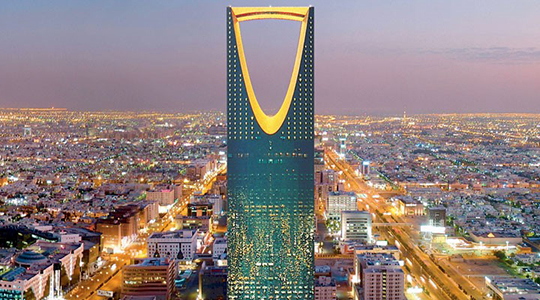
Riyadh, Oct 11: In a recent poll, 50% of respondents in Saudi Arabia expect business conditions to improve in one year.
1riyadh 1

A survey conducted by Bayt.com, the Middle East’s number one job site, and YouGov, a leading market research agency, showed that 40% of the respondents expect the country’s economy to improve in the next six months.

“Despite the negative feelings that have characterized the past few months, there are sparks of optimism among respondents that economic conditions in their countries will improve in the future,” said Suhail Al-Masri, VP of Employer Solutions, Bayt.com.

Overall, only 20% of respondents in the Kingdom of Saudi Arabia believe that their country’s economy has improved compared to 6 months earlier, while 26% claim that it has remained the same. 42% of the respondents believe their country’s economy has receded. When asked about future expectations, 40% of respondents were optimistic about the economy improving, and a lower number believed the opposite to be true (25%). Nevertheless, 21% of the respondents don’t expect any change in the economy.

In terms of business conditions, almost one in four KSA respondents (27%) believe that business conditions are presently good. Conversely, 31% believe that conditions are average, while 40% believe that they are bad.
Regarding expectations for business conditions in a year’s time, 50% of KSA respondents are optimistic, 19% expect the situation to remain unaltered, while 20% are not confident at all, stating that the business conditions have the potential to get worse.

When it comes to job availability, 34% state that there are few jobs available across few industries, while 27% of respondents believe there are few jobs available across various industries. About 16% of KSA respondents claim that there are plenty of jobs available but across a few industries only, while a minor 12% state that there are plenty of jobs available across a wide variety of industries.

When it comes to future availability of jobs, a general negative outlook prevails amongst KSA consumers, where 33% of the respondents believe there will be a decrease of jobs available in their country over the next six months, and 25% state that the availability won’t change. However, 28% are still positive about this, stating that job availability will increase.

Less than 1 in 5 respondents (19%) believe that their current financial position is better now than it was six months ago, while 35% believe that it has remained the same. On a positive note, almost 43% KSA respondents expect their financial situation to improve in the next six months, while 26% say that it will remain the same.

Considering the opinions on the future cost of living, the majority of respondents (65%) expect the cost of living to increase in the next six months. On the other hand, only 6% of them expect it to decrease. When asked about the situation of their current savings compared to last year’s, 16% of KSA respondents claim that their savings have increased, while a quarter (25%) claim that savings have remained the same. 55%, however, believe that their savings have decreased in the same period.

The survey further revealed that 38% of KSA respondents are planning to buy a vehicle for personal use in the next 12 months. Conversely, 51% are not planning on buying a vehicle at all. Of those who are planning on purchasing a vehicle, 45% are planning to buy a new vehicle, while 34% claim to be looking for a used car.

When it comes to investing in property in the next 12 months, more than a quarter of KSA respondents say that they are planning to purchase property (29%). 54% of respondents, however, are not. Of those who are planning on making a property investment, 56% will be looking to buy new property, while 15% will invest in pre-owned estate. Almost half of Saudi Arabia respondents are looking to purchase an apartment (35%), while around a quarter will buy a villa/townhouse/bungalow (31%). 35% will invest in commercial property.

In KSA, 23% of employed respondents feel that the number of employees in their companies has increased over the past six months, while 50% believe the opposite to be true. Over the course of the next six months, 25% of employed KSA respondents expect the number of employees in their organization to increase, while 26% expect this number to remain the same. Conversely, 40% say that the number of employees in their company will decrease.

With regards to satisfaction levels, 42% of employed KSA respondents are satisfied with their career growth opportunities, while 38% are dissatisfied. When it comes to compensation, almost a third of KSA respondents (34%) are satisfied, while almost half of them (43%) are dissatisfied with their current compensation levels. The majority of respondents (53%) are satisfied with the non-monetary benefits they receive, and 40% are satisfied with the level of job security in their current organization.

Comments

Add new comment

  • Coastaldigest.com reserves the right to delete or block any comments.
  • Coastaldigset.com is not responsible for its readers’ comments.
  • Comments that are abusive, incendiary or irrelevant are strictly prohibited.
  • Please use a genuine email ID and provide your name to avoid reject.
Saudi Gazette
May 27,2020

Riyadh, May 27: Following the announcement of easing of lockdown measures, which includes reopening of all mosques for daily congressional as well as Friday prayers across the Kingdom except the holy city of Makkah, the Ministry of Islamic Affairs, Call and Guidance has set mandatory guidelines.

In a circular issued to mosque staff, Minister of Islamic Affairs, Call and Guidance Sheikh Abdullatif Al-Asheikh has instructed that all mosques must comply with the following precautionary measures and instructions:

1. Open mosques 15 minutes before the Adhan and close them 10 minutes after prayer

2. Reduce the waiting period between the Adhan and Iqamah to 10 minutes

3. Open windows and doors from entering time to the end of the prayer

4. Remove copies of Holy Qur’an and other books temporarily from mosques

5. Ensure attendees keep a distance of two meters between each other

6. Ensure one space is left between each row

7. Close all water coolers and refrigerators

8. Do not allow distribution of water or food in mosques

9. Close toilets and places of ablution

Precautionary measures on Friday prayers are as follows:

1. Open mosques 20 minutes before Friday prayer and closing them 20 minutes after prayer.

2. Friday sermon with prayer should not exceed 15 minutes.

The circular also stipulates to keep the suspension of the religious courses, programs and lectures, as well as the memorizing Holy Qur'an sessions in the mosques and to continue education and lectures remotely until further notice.

The circular pointed out that the imams of mosques should urge the worshipers to take the following precautionary measures:

1. Wear a face mask

2. Bring their own prayer rugs and not leave them after the prayer

3. Prevent accompanying children under 15 years of age from entering mosques

4. Perform ablution at home

5. Avoid crowding when entering or exiting mosques

Meanwhile, the spokesman of the Ministry of Interior clarified later in the day that people are allowed to perform congressional prayers in their locality during the time of curfew.

Comments

Add new comment

  • Coastaldigest.com reserves the right to delete or block any comments.
  • Coastaldigset.com is not responsible for its readers’ comments.
  • Comments that are abusive, incendiary or irrelevant are strictly prohibited.
  • Please use a genuine email ID and provide your name to avoid reject.
KT
May 18,2020

May 18: As the UAE authorities have asked all residents to avoid gatherings, it is clear that - for the first time - it's going to be a #StayHome Eid. But experts say that although it will be different, the celebration will be just as meaningful.

It is important to remember that the Eid prayer can be performed at home either individually or with family members under the sane roof, said Dr Mohammed Eyada Ayoub Alkobaisi, a Grand Mufti with the Islamic Affairs and Charitable Activities Department in Dubai.

Dr Alkobaisi said this prayer is a highly recommended Sunnah or practice urged by the Prophet Muhammad (Peace be upon him).

"Eid Prayer must be performed openly, unless we are prevented for an acceptable reason, such as fear for self, wellbeing, property, etc." Under the current circumstances, prayers can be offered from home, he said.

But what the faithful will likely miss is listening to the khutbah or the sermon of Eid with a crowd. The sight of people pouring out into the streets and coming together for prayer and worship would not be unfolding this time.

Dr Sheikh Mohamed Ashmawy, an Islamic researcher, said that in this time of Covid, doing away with several Eid traditions would be necessary for everyone's safety.

"The ban is is line with the ongoing preventive measures to curb the spread of Covid-19," he said.

However, it doesn't mean people can't celebrate and exchange heartfelt greetings, he added.

"We can greet each other remotely on the phone or via social media networks."

Islamic researcher Sheikh Mohamed Wasfi said audio-visual smart apps have made communication much easier, even bringing people closer than before.

"Of course, families and friends wish to hug, shake hands and see each other personally, but this will be a big risk these days," he said.

Sheikh Asadullah Del Mohamed, an imam, reminded that banquets, parties and visits are discouraged to avoid crowds and gathering.

Recently, 30 people from two families tested positive for the virus after breaking social distancing rules and holding a gathering.

Faithful's sentiments

Ibrahim Abdelkader, an Egyptian auditor, said that while it would be sad to spend Eid Al Fitr at home, he understood that it is for everyone's safety.

"Better to stay home than be sorry," said Ahmad Jamil, a Syrian resident.

Rashid Saeed, an Emirati national, said people are advised to just check on each other by phone or video and voice call apps.

"While Eid prayers is banned in congregation, it's not acceptable at all for some people to carelessly gather and exchange visits," he said.

Abdullah Al Saleh, an Emirati national, said he and all his relatives used to gather for breakfast after the Eid prayer - but this time, they are ready to do it in their own homes.

Mohamed Ibrahim, another Emirati, said he would surely miss seeing his kids happily prancing around with their new clothes and enjoying the outdoors like every year.

"But, I agree as it is for their health, safety and wellbeing," he said.

THINGS TO REMEMBER IN CELEBRATING EID THIS YEAR

>Perform the Eid prayer at home, individually or with family members living with you

>Exchange greetings with loved ones and friends via phone calls or online

>No hugs

>No handshakes

>No gatherings

>No visits to other homes

Comments

Add new comment

  • Coastaldigest.com reserves the right to delete or block any comments.
  • Coastaldigset.com is not responsible for its readers’ comments.
  • Comments that are abusive, incendiary or irrelevant are strictly prohibited.
  • Please use a genuine email ID and provide your name to avoid reject.
Agencies
July 16,2020

Riyadh, Jul 16: Prince Abdul Aziz bin Saud bin Naif, minister of interior and chairman of the Hajj Supreme Committee, chaired a virtual meeting on Wednesday with the heads of  security agencies and officials in charge of this year’s Hajj season.

During the meeting, the minister and security officials discussed organizational issues related to Hajj, including preventive and precautionary steps related to fighting the coronavirus disease, procedures related to pilgrims commuting to the holy sites, and mechanisms to facilitate performing the Hajj rituals.

Prince Abdul Aziz confirmed abiding by the directives of King Salman and Crown Prince Mohammed bin Salman to take all precautions to preserve the safety of the pilgrims, and facilitate their performance of their Hajj rituals, according to the highest health standards to contain the new coronavirus pandemic.

Saudi Arabia has decided to allow only a limited number of domestic pilgrims to perform Hajj this year in the wake of the COVID-19 outbreak.

Only those expatriates between the ages of 20 and 50 who are not suffering from any chronic diseases can apply for the pilgrimage.

Earlier, the Ministry of Hajj and Umrah said that requests from people of 160 nationalities in the Kingdom have been screened electronically to select who will perform Hajj this year.

Of the pilgrims who will receive approval, 70 percent will be non-Saudis residing in the Kingdom and the remaining 30 percent will be Saudi citizens.

Meanwhile, the Ministry of Interior said that anyone found entering the sites of Hajj (Mina, Muzdalifah and Arafat) without a permit from July 18 till the end of Dhu Al-Hijjah 12 will be issued with a fine of SR10,000 ($2,600).

The fine will be doubled if the offence is repeated. Security personnel will be posted on roads leading to the holy sites to ensure that anyone who breaks the law will be stopped and fined.

Around 2.5 million foreign and domestic pilgrims performed Hajj last year.

Comments

Add new comment

  • Coastaldigest.com reserves the right to delete or block any comments.
  • Coastaldigset.com is not responsible for its readers’ comments.
  • Comments that are abusive, incendiary or irrelevant are strictly prohibited.
  • Please use a genuine email ID and provide your name to avoid reject.