


Will Congress field U T Ifthikar from Kasaragod LS seat?

coastaldigest.com web desk
March 13, 2019

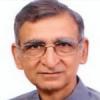
Kasaragod/Mangaluru, Mar 13: The Indian National Congress, which has been trying to wrest Kasaragod Lok Sabha constituency from the Communist Party of India (Marxist) for past three decades, is reportedly mulling to field U T Ifthikar Ali, younger brother of Karnataka’s minister for urban development and Dakshina Kannada district in-charge U T Khader, in the 17th Lok Sabha elections.  The coastal district of Kerala will go to polls on April 23.

According to party sources, Ifthikar’s name is among a few shortlisted Congress leaders’ names being considered by the high command to be fielded from Kasaragod. The list of aspirants from this segment also includes former Kasaragod MP B Rama Rai, senior advocate Subbaiah Rai and former Kannur MP Abdulla Kutty.

In 2014 Lok Sabha polls Congress had lost to CPI (M) leader  P Karunakaran with a small margin of around six thousand votes in Kasaragod, which has around 13.5 lakh voters including around 60 percent of Hindus and 30 percent of Muslims. Hence Congress is likely to prefer Ifthikar, whose family is known for promoting secularism and communal harmony in coastal Karnataka, sources said.

Even though Ifthikar, who is the Syndicate member of the prestigious Rajiv Gandhi University of Health Sciences, Karnataka, is currently based in Mangaluru, he is not a stranger for the people of Kasaragod district as his family hails from Uppala region.

On the other hand Kasaragod too shares close ties with Mangaluru. In fact prior to the implementation of States Reorganisation Act, 1956, the present Legislative Assembly seats of Manjeswar, Kasaragod, Udma and Kanhangad in Kasaragod district were part of South Kanara (South) LS constituency of erstwhile Madras State. In 1956, South Kanara (South) LS constituency was replaced by Mangaluru LS constituency, which gradually became Dakshina Kannada constituency. The parts of Kasaragod and Hosdurg (Kanhangad) seats were merged with Kerala and became a part of Kasaragod LS constituency. Kasaragod still has a considerable number of Kannadigas that share an emotional bond with Karnataka.

Despite, hailing from a politically influential family, Ifthikar has so far refrained from electoral politics. However, elections are not new for him. He has been the “poll strategist” for his elder brother who has registered four successive victories in Mangaluru assembly constituency after the demise of his father and four-time MLA U T Fareed in 2007. Besides, Ifthikar enjoys close contact with several bigwigs of Congress including its supremo Rahul Gandhi and former union minister Ghulam Nabi Azad. He also has maintained a good relationship with several prominent NRI businessmen from Kasaragod district and heads of educational institutions, hospitals in the region.

He is also a known personality in health, social, educational fields in costal belt of Karnataka and is president of Dakshina Kannada Physiotherapy Teachers Association, Sport & Fitness Training Federation of India and executive committee member of the Indian Association of Physiotherapy. As chairman of U T Fareed Foundation, he has undertaken many charity activities. Being a social activist he is involved in various social service activities.

While contacted, Ifthikar told coastaldigest.com that he has been associated with Congress since his college days and that he would not hesitate to jump into poll fray from Kasaragod if the party high command wishes. “I will abide by the high command’s decision,” he said.
Comments

Kannadiga
 - 
Wednesday, 13 Mar 2019

Kasargod will witness real development if a Kannadiga becomes its MP. Malayalees are showing step-motherly attitude towards the people of Kasargod.

Unni Krishna
 - 
Wednesday, 13 Mar 2019

Not a bad choice. Kasaragod also need some respite from communist politics. Let Congress field this handsome gentleman.

Anand T
 - 
Wednesday, 13 Mar 2019

UTI is the best choice for Kasaragod district. Efficient and people friendly. 

Add new comment

  • Coastaldigest.com reserves the right to delete or block any comments.
  • Coastaldigset.com is not responsible for its readers’ comments.
  • Comments that are abusive, incendiary or irrelevant are strictly prohibited.
  • Please use a genuine email ID and provide your name to avoid reject.
Ram Puniyani
June 29,2020

In Minneapolis, US an African American, George Floyd lost his life as the white policeman, Derek Chauvin, caught hold of him and put his knee on his neck. This is a technique developed by Israel police. For nine long minutes the knee of the while policeman was on the neck of George, who kept shouting, I can’t breathe.

Following this gruesome murder America erupted with protests, ‘Black lives matter’. The protestors were not just African Americans but also a large section of whites. Within US one police Chief apologized for the act of this. In a touching gesture of apology the police force came on its knees. This had reverberations in different parts of the World.

The act was the outcome of the remnants of the racial hatred against blacks by the whites. It is the hatred and the perceptions which are the roots of such acts of violence. What was also touching that the state of democracy in US is so deep that even the police apologized, the nation, whites and blacks, stood up as a sensitive collective against this violence.

US is not the only country where the brutal acts of violence torment the marginalized sections of society. In India there is a list of dalits, minorities and adivasis who are regularly subjected to such acts. But the reaction is very different. We have witnessed the case of Tabrez Ansari, who was tied to the pole by the mob and beaten ruthlessly. When he was taken to police station, police took enough time to take him to hospital and Tabrez died.

Mohsin Sheikh, a Pune techie was murdered by Hindu Rashtra Sena mob, the day Modi came to power in 2014. Afrazul was killed by Shambhulal Regar, videotaped the act released on social media. Regar believed that Muslims are indulging in love Jihad, so deserve such a fate. Mohammad Akhlaq is one among many names who were mob lynched on the issue of beef cow. The list can fill pages after pages.

Recently a young dalit boy was shot dead for the crime of entering a temple. In Una four dalits were stripped above waste and beaten mercilessly. Commenting on this act the Union Minister Ramvilas Paswan commented that it is a minor incident. Again the list of atrocities against dalits is long enough. The question is what Paswan is saying is the typical response to such gruesome murders and tortures. In US loss of one black life, created the democratic and humane response. In India there is a general silence in response to these atrocities. Some times after a good lapse of time, the Prime Minister will utter, ‘Mother Bharati has lost a son’. Most of the time victim is blamed. Some social groups raise their voice in some fora but by and large the deafening silence from the country is the norm.

India is regarded as the largest democracy. Democracy is the rule of law, and the ground on which the injustices are opposed. In America though the present President is insensitive person, but its institutions and processes of democratic articulations are strong. The institutions have deepened their roots and though prejudices may be guiding the actions of some of the officers like the killer of George, there are also police officers who can tell their President to shut up if he has nothing meaningful to say on the issue. The prejudices against Blacks may be prevalent and deep in character, still there are large average sections of society, who on the principles of ‘Black lives matter’. There are large sections of vocal population who can protest the violation of basic norms of democracy and humanism.

In India by contrast there are multiple reasons as to why the lives of Tabrez Ansari, Mohammad Akhlaq, Una dalit victims and their likes don’t matter. Though we claim that we are a democracy, insensitivity to injustices is on the rise. The strong propaganda against the people from margins has become so vicious during last few decades that any violence against them has become sort of a new normal. The large populace, though disturbed by such brutalities, is also fed the strong dose of biases against the victims. The communal forces have a great command over effective section of media and large section of social media, which generates Hate against these disadvantaged groups, thereby the response is muted, if at all.

As such also the process of deepening of our democracy has been weak. Democracy is a dynamic process; it’s not a fixed entity. Decades ago workers and dalits could protest for their rights. Now even if peasants make strong protests, dominant media presents it as blocking of traffic! How the roots of democracy are eroded and are visible in the form where the criticism of the ruling dispensation is labelled as anti National..

Our institutions have been eroded over a period of time, and these institutions coming to the rescue of the marginalized sections have been now become unthinkable. The outreach of communal, divisive ideology, the ideology which looks down on minorities, dalits and Adivasis has risen by leaps and bounds.

The democracy in India is gradually being turned in to a hollow shell, the rule of law being converted in to rule of an ideology, which does not have faith in Indian Constitution, which looks down upon pluralism and diversity of this country, which is more concerned for the privileges of the upper caste, rich and affluent. The crux of the matter is the weak nature of democracy, which was on way to become strong, but from decades of 1980s, as emotive issues took over, the strength of democracy started dwindling, and that’s when the murders of the types of George Floyd, become passé. One does complement the deeper roots of American democracy and its ability to protect the democratic institutions, which is not the case in India, where protests of the type, which were witnessed after George Floyd’s murder may be unthinkable, at least in the present times. 

Comments

Add new comment

  • Coastaldigest.com reserves the right to delete or block any comments.
  • Coastaldigset.com is not responsible for its readers’ comments.
  • Comments that are abusive, incendiary or irrelevant are strictly prohibited.
  • Please use a genuine email ID and provide your name to avoid reject.
coastaldigest.com news network
May 10,2020

In a shocking incident, a pharmacist-cum-production manager of an Ayurvedic product company in Chennai’s T.Nagar died after drinking a chemical preparation he reportedly formulated for tackling the Coronavirus.

The managing director of the company, who is an ophthamologist by qualification, was hospitalised after he fainted soon after he ingested the chemical component.

The deceased, K.Sivanesan, 47, of Perungudi, was with Chennai-based Sujatha Biotech, an Ayurvedic and herbal products company which was founded 30 years ago. It has a plant in Kashipur, Uttarakhand, where Sivanesan was working. Sivanesan had devised formulas of various products and used to visit his managing director Dr. Rajkumar frequently in the city.

Due to the lockdown, Sivanesan came to Chennai and stayed with his family in Perungudi. On Thursday morning, he procured the chemical component from a market in Parry’s Corner.

First he gave a small amount powder he derived from the chemical to 67 years-old Rajkumar who fainted after tasting it.

Even as he was being resuscitated, Sivanesan went into the kitchen of the house and gulped it in liquid form after adding water to it. He could not be revived.

Deputy Commissioner of Police, T.Nagar, Ashok Kumar, said, “Our investigation revealed that Sivanesan died after drinking the preparation he claimed would help COVID-19 patients. His managing director fainted after tasting it initially. Further investigation is on.”

Sivanesan was rushed to a private hospital in T.Nagar and declared dead by the doctors there. Later his body was shifted to Government Royapettah Hospital for post-mortem. Teynampet police registered a case under section 174 of Criminal Procedure Code for unnatural death.

N.S.Vasan, designer-cum-media manager of the company said, “Due to the lockdown, Sivanesan stayed in the city and one day told us he heard of some medicine from U.S. President Donald Trump’s recent speech for curing Coronavirus. He said it would bring more immunity and help to prevent COVID-19. Deciding to test the effect of the medicine, he went to Parry’s Corner and bought the powder.” He added that Sivanesan must have taken a heavy dosage of the ‘drug’ and he was killed instantly.

Comments

Add new comment

  • Coastaldigest.com reserves the right to delete or block any comments.
  • Coastaldigset.com is not responsible for its readers’ comments.
  • Comments that are abusive, incendiary or irrelevant are strictly prohibited.
  • Please use a genuine email ID and provide your name to avoid reject.
News Network
June 6,2020

Bengaluru, Jun 6: Karnataka Chief Minister B S Yediyurappa on Saturday said hotels and restaurants would be allowed to re-open, but the precautionary measures laid down by the Centre against coronavirus were mandatory.

The Chief Minister on Friday held a meeting with the tourism and transport department, also stakeholders, regarding revival of tourism in the state.

Hotels associations and transport companies have said they would follow the guidelines issued by the government, an official press release said here.

The Karnataka government had said it would go by the Centre's direction on opening religious places of worship, shopping malls, hotels, restaurants and other hospitality services on June 8.

Buses, hotels and taxi owners association placed some demands at the meeting, the release said, adding that Yediyurappa informed them that he would examine their demands and take appropriate decisions.

The Chief Minister also released a handout regarding the guidelines that need to be followed as the tourism department is opening hotels, guest houses and tourist destinations.

Deputy Chief Minister Laxman Savadi, Tourism Minister C T Ravi and senior officials of the department participated in the meeting.

The government had, on Thursday, said safaris, trekking, jungle lodges and resorts in areas that fall outside the COVID-19 containment zones can re-open provided they adhere to social distancing, hygiene as issued by the governments.

Comments

Add new comment

  • Coastaldigest.com reserves the right to delete or block any comments.
  • Coastaldigset.com is not responsible for its readers’ comments.
  • Comments that are abusive, incendiary or irrelevant are strictly prohibited.
  • Please use a genuine email ID and provide your name to avoid reject.
