Will delay G7 summit and invite other countries including India: Donald Trump

Agencies
May 31, 2020

Washington, May 31: US President Donald Trump said Saturday he will delay the G7 summit scheduled to take place in June and invite other countries -- including India and Russia -- to join the meeting.

"I don't feel that as a G7 it properly represents what's going on in the world. It's a very outdated group of countries," Trump told reporters on Air Force One.

He said he would like to invite Russia, South Korea, Australia and India to join an expanded summit in the fall.

It could happen in September, either before or after the UN General Assembly, Trump said, adding that "maybe I'll do it after the election."

Americans head to the polls in early November to choose a new president, with Trump keen for a return to normalcy after the coronavirus pandemic and a healthy economy as voters cast their ballots.

Describing the event as a "G-10 or G-11", Trump said he had "roughly" broached the topic with leaders of the four other countries.

Leaders from the Group of Seven, which the United States heads this year, had been scheduled to meet by videoconference in late June after COVID-19 scuttled plans to gather in-person at Camp David, the US presidential retreat outside Washington.

Trump created suspense last week, however, when he announced that he might hold the huge gathering in-person after all, "primarily at the White House" but also potentially parts of it at Camp David.

German Chancellor Angela Merkel became the first leader to decline the in-person invitation outright.

"Considering the overall pandemic situation, she cannot agree to her personal participation, to a journey to Washington," her spokesman said Saturday.

Her response followed ambivalent to positive reactions to the invitation from Britain, Canada and France.

The 65-year-old chancellor is the oldest G7 leader after Trump, who is 73. Japan's Shinzo Abe, also 65, is several months younger than Merkel. Their age puts them at higher risk from the coronavirus.

The G7 major advanced countries -- Britain, Canada, France, Germany, Italy, Japan and the United States -- hold annual meetings to discuss international economic coordination.

Russia was thrown out of what was the G8 in 2014 after it seized Ukraine's Black Sea peninsula of Crimea, an annexation never recognized by the international community.

The work of the G7 is now more important than ever as countries struggle to repair coronavirus-inflicted damage.

The White House had previously said the huge diplomatic gathering would be a "show of strength" when world economies are gradually reemerging from shutdowns.

The United States is the worst-hit country for COVID-19 infections, recording more than 1.7 million cases and over 103,680 deaths.

Comments

Add new comment

  • Coastaldigest.com reserves the right to delete or block any comments.
  • Coastaldigset.com is not responsible for its readers’ comments.
  • Comments that are abusive, incendiary or irrelevant are strictly prohibited.
  • Please use a genuine email ID and provide your name to avoid reject.
Agencies
July 29,2020

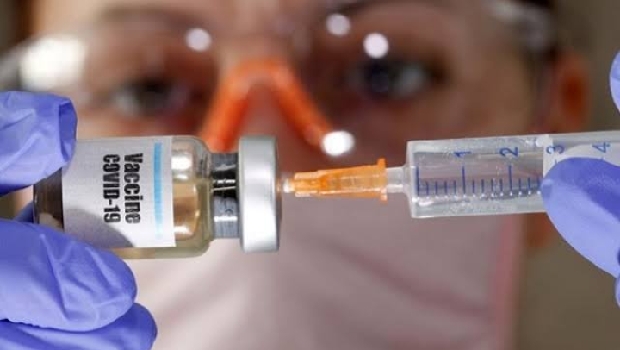
If everything goes as Russia’s expectation, it will be world’s first country to approve a coronavirus vaccine for widespread in the second week of August despite safety and efficacy concerns, according to a report. The adenoviral vector-based vaccine developed by Russian military and government researchers is currently in phase 2 trials.

According to a report from CNN, Russian officials are hoping to get approval for the COVID-19 vaccine developed by the Moscow-based Gamaleya Institute on Agust 10 or even before that. The officials told the outlet that the vaccine will be approved for public use with frontline healthcare workers receiving it first.

“It’s a Sputnik moment,” said Kirill Dmitriev, head of Russia’s sovereign wealth fund, which is financing Russian vaccine research, referring to the successful 1957 launch of the world’s first satellite by the Soviet Union, according to CNN.

“Americans were surprised when they heard Sputnik’s beeping. It’s the same with this vaccine. Russia will have got there first,” he was quoted as saying.

However, Russia is yet to release the scientific data on its coronavirus vaccine trials, hence, questions remain about the safety and efficacy of the vaccine, said the report. The vaccine is in the second phase of testing with developers planning to launch the phase 3 trials sometime after August 3.

Earlier, Interfax reported, citing Health Minister Mikhail Murashko, that the vaccine will be widely used in parallel with phase 3 trials. He said the country plans to vaccinate medics who are at high-risk for COVID-19 next month before clinical trials are completed.

Murashko added that individuals at higher risk of getting infected with the coronavirus such as older people or those with health conditions will also be prioritised for the vaccine, although he did not estimate or reveal when that would happen. The minister added 800 people will be recruited for the phase 3 trials.

Meanwhile, health officials were more cautious considering the fact that human testing of the vaccine is incomplete, and the state registration is expected to begin after August 3, reported The Moscow Times.

On Monday, Moderna and Pfizer announced the commencement of the final phase 3 trials of their candidate vaccines against the SARS-CoV-2 virus, which has so far claimed at least 654,477 lives and infected 16,514,500 people worldwide. 

Researchers will recruit up to 30,000 volunteers in separate trials both backed by the US government. India's first indigenous coronavirus vaccine, COVAXIN, is undergoing phase 1 human clinical trials across the country. More than 150 COVID-19 vaccines are being developed all over the world with at least six candidates already in late-stage clinical trials.

Comments

Add new comment

  • Coastaldigest.com reserves the right to delete or block any comments.
  • Coastaldigset.com is not responsible for its readers’ comments.
  • Comments that are abusive, incendiary or irrelevant are strictly prohibited.
  • Please use a genuine email ID and provide your name to avoid reject.
Agencies
May 10,2020

Paris, May 10: The number of coronavirus cases worldwide topped four million as some of the hardest-hit countries readied Sunday to lift lockdown restrictions despite concern about a second wave of infections.

Governments around the world are trying to stop the spread of the deadly disease while scrambling for ways to relieve pressure on their economies, which are facing a historic downturn with millions pushed into unemployment.

Despite the intense political pressure to reopen, nations are also keen to avoid second waves of infections that could overwhelm healthcare systems, with reminders over the weekend of the threat posed by the virus.

In the United States, media reported Saturday that the nation's top infectious disease expert, Anthony Fauci, was among three members of the White House coronavirus task force who will self-isolate after potential exposure.

And in South Korea, the capital Seoul shut all bars and clubs on Saturday as more than 50 cases were linked to a man who tested positive after spending time in one of the city's busiest nightlife districts.

Despite the risks, some governments in hard-hit Europe have said are signs of progress that justify cautious steps towards normality.

Officials in France on Saturday said the day's death toll of 80 was the lowest since early April, while nursing home fatalities also fell sharply as the nation prepared to relax curbs on public movement imposed eight weeks ago.

The easing, to begin Monday, has brought mixed reactions.

"I've been scared to death" about the reopening, said Maya Flandin, a bookshop manager from Lyon. "It's a big responsibility to have to protect my staff and my customers."

French health officials have warned that social distancing must be kept up even as restrictions are eased.

In Spain, about half the population will be allowed out on Monday for limited socialisation, and restaurants will be able to offer some outdoor service as the country begins a phased transition set to last through June.

With lingering fears of a resurgence, authorities excluded Madrid and Barcelona -- two COVID-19 hotspots -- from the first phase.

Belgium is also easing some restrictions on Monday, and in some parts of Germany, bars and restaurants reopened on Saturday with further easing set for Monday.

In Britain, Prime Minister Boris Johnson is expected Sunday to lay out a plan for the nation to emerge out of its current lockdown.

Media reports have suggested that Britain may introduce a mandatory 14-day quarantine for international arrivals to stop the spread of the virus.

Global economic figures are pointing to the most acute downturn in nearly a century, with businesses forced to shut and supply lines badly disrupted, and pressure is growing on leaders around the world to find a way out as the worldwide death toll topped 277,000 and infections crossed four million.

In the United States, the country with the highest death toll and where more than 20 million people have lost their jobs, President Donald Trump has insisted that next year would be "phenomenal" for the economy, urging reopening despite the virus still claiming well over 1,000 lives daily in the country.

The scale of the challenge was brought in sharp focus over the weekend as US media reported that top disease expert Anthony Fauci, who has become the trusted face of the government response to the pandemic, is going to self-isolate after possible exposure to an infected White House staffer.

Fauci told CNN that he will undergo a "modified quarantine" as he had not been in close proximity to the staffer, the network reported. He will remain at home teleworking, and will wear a mask for two weeks.

Robert Redfield, the director of the Centers for Disease Control and Prevention, and Stephen Hahn, the commissioner of the Food and Drug Administration, will also self-isolate, CNN added.

All three will still testify at Tuesday's Senate coronavirus hearing, with Redfield and Hahn participating via video link, according to Senator Lamar Alexander, chairman of the chamber's health committee.

It is believed Fauci will attend wearing a mask, CNN reported.

President Trump has faced sharp criticism from his predecessor Barack Obama, who said on a leaked tape that Trump's handling of the crisis was an "absolute chaotic disaster".

With people wearying of being indoors and under economic pressure, anti-lockdown protests have been held in a number of countries in recent weeks, with some demonstrators arguing that such restrictions violate their rights and others promoting conspiracy theories about the pandemic.

Ten people were arrested and a police officer injured in Melbourne, Australia, on Sunday in the latest such protest, where around 150 people gathered to demand an end to the shutdown.

Participants were promoting a number of conspiracy theories, such as linking 5G cellular communications to the disease.

Australian chief medical officer Brendan Murphy said there was "a lot of very silly misinformation out there", including the 5G allegation.

"I have unfortunately received a lot of communication from these conspiracy theorists myself," he said.

"It is complete nonsense. 5G has got nothing at all to do with coronavirus."

Comments

Add new comment

  • Coastaldigest.com reserves the right to delete or block any comments.
  • Coastaldigset.com is not responsible for its readers’ comments.
  • Comments that are abusive, incendiary or irrelevant are strictly prohibited.
  • Please use a genuine email ID and provide your name to avoid reject.
Agencies
July 2,2020

Ramallah, Jul 2: Several world countries renew a call for Israel to halt contentious plans to annex parts of the occupied Palestinian territory after the regime delayed the implementation of the land garb bid in the face of a series of stumbling blocks, including internal rifts, global criticisms and the US’s failure to give Tel Aviv the go-ahead for the move.

Israel's ruling coalition, led by Prime Minister Benjamin Netanyahu, had announced July 1 as the date to begin moving forward with the plan to impose Tel Aviv’s “sovereignty” over about a third of the West Bank, including settlements and the fertile Jordan Valley.

Without clarifications, the regime, however, failed to launch the scheme on the set date amid widening differences between Netanyahu and his coalition partner, minister of military affairs Benny Gantz.

Meanwhile, there are signs that the administration of US President Donald Trump, a staunch Israel supporter, has cooled its backing for the Israeli move amid what is believed to be troubles at home and fears that it might hurt the president’s chances of re-election besides international pressure.

On Wednesday, Netanyahu's office said in a statement that he would continue to discuss a possible West bank annexation with the US administration.

“In the coming days there will be additional discussions,” the statement said.

Labor, Social Affairs and Social Services Minister Ofir Akunis said the Israel would annex portions of the West Bank in July but only after the US president issued a declaration on the matter.

The annexation “will only happen after a declaration by Trump,” he told Israeli Army Radio.

Trump had already given Tel Aviv the green light for the land grab in his self-proclaimed “deal of the century,” which was unveiled in January with the aim of re-drawing the Middle East map.

However, the Trump administration has so far refrained from offering official support for the annexation sought by Netanyahu and his right-wing allies.

Unlike the US, several countries, including some of Israel’s allies, have expressed their opposition to Israel’s planned push to consolidate its occupation of Palestine.

Germany passes anti-annexation resolution

On Wednesday, the German parliament approved a resolution calling on the government to dissuade Israel from annexing the West Bank.

The motion, which was brought in the German legislature by the three parties in Chancellor Angela Merkel's coalition, was approved without opposing votes. 

Berlin should use its “special relations and contacts [with Tel Aviv] to express to the Israeli government our concerns and our urgent demand to refrain from an annexation of parts of the West Bank and from the continued expansion of settlements, both of which contradict international law,” read the resolution.

Speaking at the parliamentary debate before the vote, German Foreign Minister Heiko Maas said, “We reject unilateral changes of borders, and we won’t recognize them.”

He also stressed that peace “cannot be achieved through unilateral steps but only through serious negotiations.”

France warns of consequences

Similarly, French Foreign Minister, Jean-Yves Le Drian warned that any Israeli annexation would be a violation of international law and would bring about consequences.

“Annexation of Palestinian territories, whatever the perimeters, would seriously throw into question the parameters to resolve the conflict,” he told a parliamentary hearing. 

The top diplomat added, “An annexation decision could not be left without consequences and we are examining different options at a national level and also in coordination with our main European partners.”

Australia raises concerns

Additionally, Australian Foreign Minister Marise Payne voiced worries about the Israeli scheme, saying she had directly expressed this view to Israeli Foreign Minister Gabi Ashkenazi.

“We are following with concern possible moves towards the unilateral annexation or change in status of territory on the West Bank,” she said in a statement.

“The focus needs to be on a return to direct and genuine negotiations between Israel and the Palestinians for a durable and resilient peace arrangement, as soon as possible,” Payne added.

Vatican summons US, Israeli envoys

Meanwhile, the Vatican announced on Wednesday that it had summoned the American and Israeli ambassadors to protest Israel’s annexation bid.

In separate meetings, Vatican Secretary of State Cardinal Pietro Parolin told Israeli Ambassador Oren David and US Ambassador Callista Gingrich of concerns “regarding possible unilateral actions that may further jeopardize the search for peace between Israelis and Palestinians, as well as the delicate situation in the Middle East,”

“As already declared … the Holy See reiterates that ... Israel and the State of Palestine have the right to exist and to live in peace and security, within internationally recognized borders,” the Vatican said in a statement.

“It thus appeals to the parties to do everything possible to reopen the process of direct negotiation, on the basis of the relevant Resolutions of the United Nations,” it added.

Amnesty urges firm action

Amnesty International called on the international community to take firm action against Israel’s annexation plan and its “law of the jungle” mentality.

“Members of the international community must enforce international law and restate that annexation of any part of the occupied West Bank is null and void,” said Saleh Higazi, deputy regional director for Amnesty Middle East and North Africa.

“They must also work to immediately stop the construction or expansion of illegal Israeli settlements and related infrastructure in the Occupied Palestinian Territories as a first step towards removing Israeli civilians living in such settlements,” he added.

Palestinians mark ‘Day of Rage'

Also on Wednesday, Palestinians held “Day of Rage” rallies both in the West Bank and the Gaza Strip against the Israeli expansionism.

In Gaza city, several thousand protesters gathered, some brandishing Palestinian national flags and placards condemning Trump.

Some demonstrators carried signs in English reading, “We Can’t Breathe Since 1948” and “Palestinian Lives Matter,” in reference to the American Black Lives Matter movement.

“The occupation has killed us and killed our children and deprived us of a good life. May God grant the Resistance victory,” a protester told the al-Aqsa TV.

“The resistance must be revived,” Gaza protester Rafeeq Inaiah told media persons. “Israel is afraid of force.”

Similar demonstrations also took place in the West Bank cities of Ramallah and Jericho.

Comments

Add new comment

  • Coastaldigest.com reserves the right to delete or block any comments.
  • Coastaldigset.com is not responsible for its readers’ comments.
  • Comments that are abusive, incendiary or irrelevant are strictly prohibited.
  • Please use a genuine email ID and provide your name to avoid reject.