


Women might be allowed to get licenses but ... can’t drive

June 21, 2014

Women get licenses

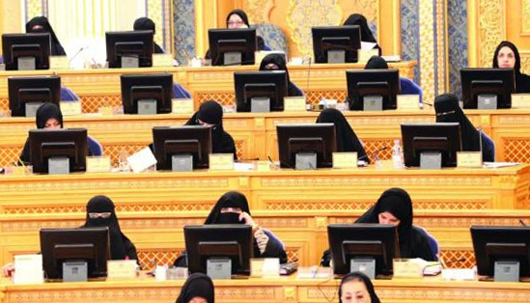
Riyadh, Jun 21: The Shoura Council is studying a proposal to allow Saudi women to apply for international driving licenses in the Kingdom, which would allow them to drive abroad but with the ban still in place in the Kingdom.

Latifa Al-Shaalan and Haya Al-Manei, two of the 30 women members of the council, have called for the council to consider this proposal, according to a report in a local newspaper on Friday.

The two women had filed a recommendation with the council nine months ago to allow women to drive.

Article 23 of the council's framework legislation allows members to propose new laws or amend existing ones.

Sources said the proposal calls for the amendment of Article 36 of the country's traffic legislation, which is related to drivers’ licenses. The proposal states that a driver's license is a right of men and women.

According to sources, the advisory administration at the Shoura is studying the new proposal, and has not yet referred it to the relevant committee, which might be the security committee.

Journalist Abdullah Al-Alami said the application is an extension of an earlier one presented by other women members of the council. “This doesn’t mean that women would be allowed to drive, it is only related to allowing women to get an international license, instead of travelling to other countries to get one,” he said.

He hoped that the advisory administration at the council would be more flexible when dealing with these demands, because it would benefit citizens.

The news comes months after several Saudi women activists defied the ban by driving in Riyadh and in various parts of the Kingdom over the past few years.

Comments

Add new comment

  • Coastaldigest.com reserves the right to delete or block any comments.
  • Coastaldigset.com is not responsible for its readers’ comments.
  • Comments that are abusive, incendiary or irrelevant are strictly prohibited.
  • Please use a genuine email ID and provide your name to avoid reject.
News Network
March 6,2020

Riyadh, Mar 6: Saudi Arabia on Thursday emptied Islam's holiest site for sterilisation over fears of the new coronavirus, an unprecedented shutdown state media said will last while the year-round Umrah pilgrimage is suspended.

The kingdom halted the pilgrimage for its own citizens and residents on Wednesday, on top of restrictions announced last week on foreign pilgrims to stop the disease from spreading.

State television relayed images of an empty white-tiled area surrounding the Kaaba -- a large black cube structure inside Mecca's Grand Mosque -- which is usually packed with tens of thousands of pilgrims.

As a "precautionary measure", the area will remain closed as long as the umrah suspension lasts but prayers will be allowed inside the mosque, state-run Saudi Press Agency cited a mosque official as saying.

Additionally, the Grand Mosque and the Prophet's Mosque in the city of Medina will be closed an hour after the evening "Isha" prayer and will reopen an hour before the dawn "Fajr" prayer to allow cleaning and sterilisation, the official added.

A group of cleaners was seen scrubbing and mopping the tiles around the Kaaba, a structure draped in gold-embroidered gold cloth towards which Muslims around the world pray.

A Saudi official told news agency the decision to close the area was "unprecedented".

On Wednesday, Saudi Arabia suspended the umrah for its own citizens and residents over fears of the coronavirus spreading to Islam's holiest cities.

The move came after authorities last week suspended visas for the umrah and barred citizens from the six-nation Gulf Cooperation Council from entering Mecca and Medina.

Saudi Arabia on Thursday declared three new coronavirus cases, bringing the total number of reported infections to five.

The umrah, which refers to the Islamic pilgrimage to Mecca that can be undertaken at any time of year, attracts millions of Muslims from across the globe annually.

The decision to suspend the umrah mirrors a precautionary approach across the Gulf to cancel mass gatherings from concerts to sporting events.

It comes ahead of the holy fasting month of Ramadan starting in late April, which is a favoured period for pilgrimage.

It is unclear how the coronavirus will affect the hajj, due to start in late July.

Some 2.5 million faithful travelled to Saudi Arabia from across the world in 2019 to take part in the hajj, which is one of the five pillars of Islam as Muslim obligations are known.

The event is a massive logistical challenge for Saudi authorities, with colossal crowds cramming into relatively small holy sites, making attendees vulnerable to contagion.

Already reeling from slumping oil prices, the kingdom risks losing billions of dollars annually from religious tourism as it tightens access to the sites.

Comments

Add new comment

  • Coastaldigest.com reserves the right to delete or block any comments.
  • Coastaldigset.com is not responsible for its readers’ comments.
  • Comments that are abusive, incendiary or irrelevant are strictly prohibited.
  • Please use a genuine email ID and provide your name to avoid reject.
Agencies
July 23,2020

Abu Dhabi, Jul 23: Muslims in the United Arab Emirates have been asked to perform Eid Al-Adha prayers at home even as mosques will be allowed to operate at an increased capacity of 50 percent from Aug. 3.

Mosques in the UAE have been operating at 30 percent capacity after they reopened on July 1.

Announcing the move, Dr. Saif Al Dhaheri, the official spokesman for the National Emergency, Crisis and Disasters Management Authority, stated that after assessing the situation and coordinating with the concerned authorities, it was decided that Eid Al-Adha prayers would be conducted in homes and takbeers broadcast through visual and audio means.

He also announced that the Emirates Fatwa Council has recommended that donations and sacrifices should be to official charitable causes in the country only.

Al Dhaheri advised the public to donate during this time to the official charitable bodies in the country with sacrifices and donations, through smart applications concerned with sacrifices or through slaughterhouses outlined by the local authorities that guarantee the application of precautionary and preventive measures and provide remote services without the need to enter livestock markets or slaughterhouses.

Al Dhaheri stressed the need to avoid family visits and gatherings, and replace them using electronic means of communication or phone contact, as well as refraining from distributing Eid gifts and money to children and individuals during this occasion recommending to instead use of electronic alternatives.

Al Dhaheri pointed out that it is necessary to avoid visiting pregnant women, children and those with chronic diseases who are most vulnerable to COVID-19 and not to allow them to leave the home and avoid going out to public places to preserve their health and safety.

Comments

Add new comment

  • Coastaldigest.com reserves the right to delete or block any comments.
  • Coastaldigset.com is not responsible for its readers’ comments.
  • Comments that are abusive, incendiary or irrelevant are strictly prohibited.
  • Please use a genuine email ID and provide your name to avoid reject.
News Network
May 20,2020

Cairo, May 20: A senior Kuwaiti lawmaker has called for imposing a tax on expatriates’ remittances to shore up the country’s finances.

MP Khalil Al Saleh, the head of the parliament’s Human Resources Committee, has presented a draft law on the proposed tax to the legislature.

“Imposing fees on expatriates’ transfers will have a role in improving the state's revenues and diversify sources of income,” he told Al Rai newspaper.

Migrant workers transfer about 4.2 billion dinars annually from Kuwait, he added, citing figures from Kuwait’s Central Bank.

“This system is in effect in most countries of the world and in more than one Gulf country. Expats there have not objected to it. Allowing this money to exit the country is very dangerous and has a direct effect on economy,” MP Al Saleh said.

“We do not target brotherly expats because imposing symbolic fees on financial transfers will not affect their money, but will have a positive effect on the state’s sources,” he said. “This has become a necessity after the money transferred outside Kuwait has reached 4.2 billion dinars annually without the state [Kuwait] making any benefit from this.”

Foreign workers make up 3.3 million of Kuwait’s 4.6 million population.

Several Kuwaiti public figures have recently pushed for redrawing the demographic imbalance in the country, accusing expatriates of straining health facilities and increasing the Covid-19 threat.

Comments

Add new comment

  • Coastaldigest.com reserves the right to delete or block any comments.
  • Coastaldigset.com is not responsible for its readers’ comments.
  • Comments that are abusive, incendiary or irrelevant are strictly prohibited.
  • Please use a genuine email ID and provide your name to avoid reject.