



G20 likely to boost IMF resources by $400bn-$500bn

April 14, 2012
eco_G20-likely


Jeddah, April 14: The Kingdom and other new members of G20 should ask for more voting power at key global groupings such as the International Monetary Fund, a top Saudi economic analyst said yesterday as reports emerged that the world's 20 biggest economies are likely to agree to increase the resources of the IMF by between $400 and $500 billion.

G20 finance ministers are set to meet in Washington soon to discuss the IMF's call for more resources from January after the euro zone increased the size of its own crisis-fighting funds in March in response to G20 pressure.

Sami A. Al-Nwaisir, chairman of the board of ALSAMI Holding Group, said G20 members such as Saudi Arabia, Turkey, India, South Africa, etc. "should ask for more voting power and more concessions to better and favorable deal in trade and legal issues."

Al-Nwaisir added: "Once this is clear I think we would look at the world as small village but that notion should start from the people who originated the IMF first then other members of the G20 will follow."

In an exclusive report earlier yesterday, Reuters said the G20 economies are likely to agree to increase the resources between $400 billion and $500 billion, rather than the $600 billion initially sought by the IMF

"It is clear that the global imbalances are among the chief causes and manifestations of the structural problems that gave us the global economic crisis," Jarmo T. Kotilaine, chief economist at the National Commercial Bank, said in his reaction to the new report,

He added: "The IMF has already played an important role in supporting the EU in its efforts to contain the euro zone crisis. But this challenging time for the global economy is far from over and many of the structural weaknesses have proven remarkably persistent, which continues to pose risks for any recovery."

Kotilaine added: "The IMF will need additional resources to play an effective role in the process. Combining its capital increase with a more formal recognition of the changing balance of global economic power makes every sense."

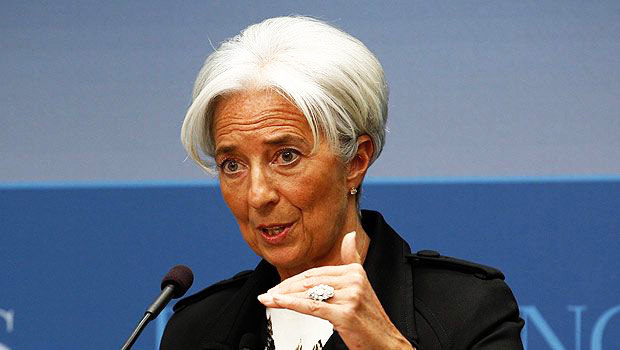
IMF Managing Director Christine Lagarde, quoted by Reuters, said on Thursday that reaching an agreement on additional resources could take some time, a sign that next week's meeting may not be the last word.

Commenting on the latest developments, Al-Nwaisir explained: "The European countries only should increase their contribution. This should happen without asking other members of IMF to bear the expenses of bill that they have nothing to do with, in the first place, as this is a structural problem in the European economy".

He added: "What we are witnessing now is an attempt to raise new funds from new members of G20. I think this is too expensive bill for the new members to swallow while they see double standards in the approach of financial remedies in Europe."

He said the IMF handled almost the same problem in 1997 in a different way than now.

"In 1997, when the Asian crisis happened with Malaysia and other Asian countries the IMF's prescription was different than now with that of the European situation. The IMF asked the Asian countries at that time that they should work harder, change the structure of their economies and improve working habits and place their economies under very tough rules and regulations. The IMF should ask the European countries to take similar measures as they did for the Asian countries in 1997," Al-Nwaisir added.

Comments

Add new comment

  • Coastaldigest.com reserves the right to delete or block any comments.
  • Coastaldigset.com is not responsible for its readers’ comments.
  • Comments that are abusive, incendiary or irrelevant are strictly prohibited.
  • Please use a genuine email ID and provide your name to avoid reject.
June 25,2020

Islamabad, Jun 25: The coronavirus cases in Pakistan crossed the 192,000-mark after 4,044 new Covid-19 infections were detected in the last 24 hours, the health ministry said on Thursday.

According to the Ministry of National Health Services, 148 more people died due to the deadly virus in the country, taking the death toll to 3,903.

With the detection of 4,044 new cases in the last 24 hours, the coronavirus tally in the country now stands at 192,970, it said.

Sindh reported a maximum number of 74,070 infections, followed by 71,191 in Punjab, 23,887 in Khyber-Pakhtunkhwa, 11,710 in Islamabad, 9,817 in Balochistan, 1,365 in Gilgit-Baltistan and 930 in Pakistan-occupied Kashmir.

A total of 81,307 patients have recovered so far from the disease.

Health authorities have so far conducted 1,171,976 coronavirus tests, including 21,835 in the last 24 hours.

Comments

Add new comment

  • Coastaldigest.com reserves the right to delete or block any comments.
  • Coastaldigset.com is not responsible for its readers’ comments.
  • Comments that are abusive, incendiary or irrelevant are strictly prohibited.
  • Please use a genuine email ID and provide your name to avoid reject.
Agencies
July 29,2020

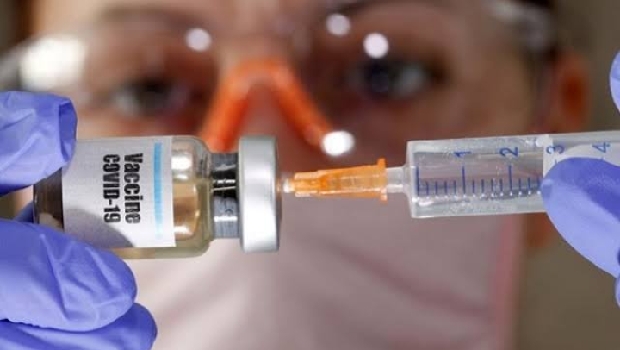
If everything goes as Russia’s expectation, it will be world’s first country to approve a coronavirus vaccine for widespread in the second week of August despite safety and efficacy concerns, according to a report. The adenoviral vector-based vaccine developed by Russian military and government researchers is currently in phase 2 trials.

According to a report from CNN, Russian officials are hoping to get approval for the COVID-19 vaccine developed by the Moscow-based Gamaleya Institute on Agust 10 or even before that. The officials told the outlet that the vaccine will be approved for public use with frontline healthcare workers receiving it first.

“It’s a Sputnik moment,” said Kirill Dmitriev, head of Russia’s sovereign wealth fund, which is financing Russian vaccine research, referring to the successful 1957 launch of the world’s first satellite by the Soviet Union, according to CNN.

“Americans were surprised when they heard Sputnik’s beeping. It’s the same with this vaccine. Russia will have got there first,” he was quoted as saying.

However, Russia is yet to release the scientific data on its coronavirus vaccine trials, hence, questions remain about the safety and efficacy of the vaccine, said the report. The vaccine is in the second phase of testing with developers planning to launch the phase 3 trials sometime after August 3.

Earlier, Interfax reported, citing Health Minister Mikhail Murashko, that the vaccine will be widely used in parallel with phase 3 trials. He said the country plans to vaccinate medics who are at high-risk for COVID-19 next month before clinical trials are completed.

Murashko added that individuals at higher risk of getting infected with the coronavirus such as older people or those with health conditions will also be prioritised for the vaccine, although he did not estimate or reveal when that would happen. The minister added 800 people will be recruited for the phase 3 trials.

Meanwhile, health officials were more cautious considering the fact that human testing of the vaccine is incomplete, and the state registration is expected to begin after August 3, reported The Moscow Times.

On Monday, Moderna and Pfizer announced the commencement of the final phase 3 trials of their candidate vaccines against the SARS-CoV-2 virus, which has so far claimed at least 654,477 lives and infected 16,514,500 people worldwide. 

Researchers will recruit up to 30,000 volunteers in separate trials both backed by the US government. India's first indigenous coronavirus vaccine, COVAXIN, is undergoing phase 1 human clinical trials across the country. More than 150 COVID-19 vaccines are being developed all over the world with at least six candidates already in late-stage clinical trials.

Comments

Add new comment

  • Coastaldigest.com reserves the right to delete or block any comments.
  • Coastaldigset.com is not responsible for its readers’ comments.
  • Comments that are abusive, incendiary or irrelevant are strictly prohibited.
  • Please use a genuine email ID and provide your name to avoid reject.
News Network
January 8,2020

New Delhi, Jan 8: Iran will welcome any peace initiative by India for de-escalating its tensions with the US after the killing of Iranian military commander Qasem Soleimani, the Iranian envoy here said on Wednesday.

His comments come hours after Iran launched missile strikes against two US military bases in Iraq in retaliation to the killing of its top commander General Qassem Soleimani.

"India usually plays a very good role in (maintaining) peace in the world. At the same time, India belongs to this region. We welcome all initiatives from all countries, especially India as a good friend for us, to not allow escalation (of tensions)," Iranian Ambassador to India Ali Chegeni told reporters after a condolence meeting for Solemani at the country's embassy here.

"We are not for war, we are looking for peace and prosperity for everybody in this region. We welcome any Indian initiative or any project that can help peace and prosperity in this world," he said.

On the Iranian attack on US targets in Iraq, Chegeni said his country retaliated under its right to defend.

Amid spiralling US-Iran tensions over the killing of Soleimani, External Affairs Minister S Jaishankar on Sunday had a conversation with his Iranian counterpart Javad Zarif and US Secretary of State Mike Pompeo, voicing India's concerns over the escalation of tensions.

Comments

Add new comment

  • Coastaldigest.com reserves the right to delete or block any comments.
  • Coastaldigset.com is not responsible for its readers’ comments.
  • Comments that are abusive, incendiary or irrelevant are strictly prohibited.
  • Please use a genuine email ID and provide your name to avoid reject.