



G20 likely to boost IMF resources by $400bn-$500bn

April 14, 2012
eco_G20-likely


Jeddah, April 14: The Kingdom and other new members of G20 should ask for more voting power at key global groupings such as the International Monetary Fund, a top Saudi economic analyst said yesterday as reports emerged that the world's 20 biggest economies are likely to agree to increase the resources of the IMF by between $400 and $500 billion.

G20 finance ministers are set to meet in Washington soon to discuss the IMF's call for more resources from January after the euro zone increased the size of its own crisis-fighting funds in March in response to G20 pressure.

Sami A. Al-Nwaisir, chairman of the board of ALSAMI Holding Group, said G20 members such as Saudi Arabia, Turkey, India, South Africa, etc. "should ask for more voting power and more concessions to better and favorable deal in trade and legal issues."

Al-Nwaisir added: "Once this is clear I think we would look at the world as small village but that notion should start from the people who originated the IMF first then other members of the G20 will follow."

In an exclusive report earlier yesterday, Reuters said the G20 economies are likely to agree to increase the resources between $400 billion and $500 billion, rather than the $600 billion initially sought by the IMF

"It is clear that the global imbalances are among the chief causes and manifestations of the structural problems that gave us the global economic crisis," Jarmo T. Kotilaine, chief economist at the National Commercial Bank, said in his reaction to the new report,

He added: "The IMF has already played an important role in supporting the EU in its efforts to contain the euro zone crisis. But this challenging time for the global economy is far from over and many of the structural weaknesses have proven remarkably persistent, which continues to pose risks for any recovery."

Kotilaine added: "The IMF will need additional resources to play an effective role in the process. Combining its capital increase with a more formal recognition of the changing balance of global economic power makes every sense."

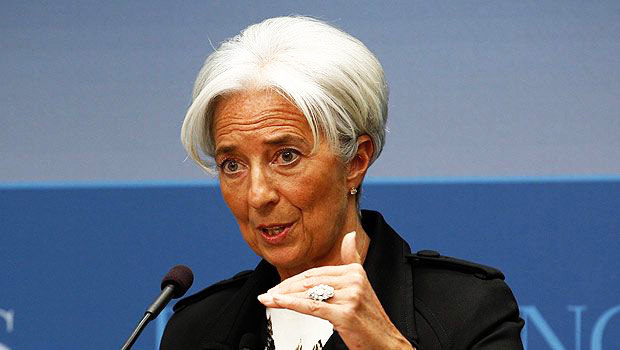
IMF Managing Director Christine Lagarde, quoted by Reuters, said on Thursday that reaching an agreement on additional resources could take some time, a sign that next week's meeting may not be the last word.

Commenting on the latest developments, Al-Nwaisir explained: "The European countries only should increase their contribution. This should happen without asking other members of IMF to bear the expenses of bill that they have nothing to do with, in the first place, as this is a structural problem in the European economy".

He added: "What we are witnessing now is an attempt to raise new funds from new members of G20. I think this is too expensive bill for the new members to swallow while they see double standards in the approach of financial remedies in Europe."

He said the IMF handled almost the same problem in 1997 in a different way than now.

"In 1997, when the Asian crisis happened with Malaysia and other Asian countries the IMF's prescription was different than now with that of the European situation. The IMF asked the Asian countries at that time that they should work harder, change the structure of their economies and improve working habits and place their economies under very tough rules and regulations. The IMF should ask the European countries to take similar measures as they did for the Asian countries in 1997," Al-Nwaisir added.


Comments

Add new comment

  • Coastaldigest.com reserves the right to delete or block any comments.
  • Coastaldigset.com is not responsible for its readers’ comments.
  • Comments that are abusive, incendiary or irrelevant are strictly prohibited.
  • Please use a genuine email ID and provide your name to avoid reject.
Agencies
January 11,2020

Washington, Jan 11: US President Donald Trump has signed an executive order imposing another set of crippling sanctions against Iran, targeting several of its top leaders, military commanders, and its infrastructure industry, according to a statement from the White House on Friday.

Trump said the executive order authorises the imposition of sanctions against any individual or entity operating in the construction, manufacturing, textiles, or mining sectors of the Iranian economy or anyone assisting those who engage in this sanctioned business.

The sanctions are the latest in a series of retaliatory measures between the two nations.

Iran's powerful military commander Qasem Soleimani was killed last Friday in US drone strikes, ordered by President Trump, bringing the entire Gulf region close to a full-blown conflict.

Regional tensions remained high after Iran on Wednesday fired missiles at two bases in Iraq used by US forces.

"Today, I am holding the Iranian regime responsible for attacks against United States personnel and interests by denying it substantial revenue that may be used to fund and support its nuclear program, missile development, terrorism and terrorist proxy networks, and malign regional influence," said Trump on Friday, after signing the executive order.

"This order will have a major impact on the Iranian economy, authorising powerful secondary sanctions on foreign financial institutions.

"The Iranian regime has threatened United States military service members, diplomats, and civilians, as well as the citizens and interests of our allies and partners, through military force and proxy groups. The United States will continue to counter the Iranian regime's destructive and destabilising behaviour," the president said.

Trump said the economic sanctions will remain till the Iranian regime changes its behaviour.

Earlier at a White House news conference, Treasury Secretary Steven Mnuchin, along with cabinet colleague Secretary of State Mike Pompeo, said the US will continue its economic and diplomatic sanctions on Iran till Tehran announces it will not pursue the nuclear weapons program and stop its destabilising behaviour in the region.

The eight senior Iranian regime officials against whom sanctions have been issued include Ali Shamkhani, the Secretary of Iran's Supreme National Security Council, Mohammad Reza Ashtiani, the Deputy Chief of Staff of Iranian armed forces, and Gholamreza Soleimani, the head of the Basij militia of the Islamic Revolutionary Guards Corps (IRGC).

The sanction on the Iranian officials would mean denial of visa to the US and seizure of assets, among others.

In addition, the treasury designated 17 Iranian metals producers and mining companies, a network of three China-and Seychelles-based entities, and a vessel involved in the purchase, sale, and transfer of Iranian metals products, as well as in the provision of critical metals production components to Iranian metal producers.

"The United States is targeting senior Iranian officials for their involvement and complicity in Tuesday's ballistic missile strikes," Mnuchin said.

"We are also designating Iran's largest metals manufacturers, and imposing sanctions on new sectors of the Iranian economy including construction, manufacturing, and mining. These sanctions will continue until the regime stops the funding of global terrorism and commits to never having nuclear weapons," he added.

Pompeo told reporters that Iran was planning "broad, large-scale attacks" against American interests in the Middle East, including embassies.

The latest round of sanctions are aimed at striking at the heart of Iran's internal security apparatus, he said.

"The president has been very clear: we will continue to apply economic sanctions until Iran stops its terrorist activities and commits that it will never have nuclear weapons," Mnuchin said.

Comments

Add new comment

  • Coastaldigest.com reserves the right to delete or block any comments.
  • Coastaldigset.com is not responsible for its readers’ comments.
  • Comments that are abusive, incendiary or irrelevant are strictly prohibited.
  • Please use a genuine email ID and provide your name to avoid reject.
News Network
July 18,2020

Global coronavirus infections passed 14 million on Friday, according to a Reuters tally, marking the first time there has been a surge of 1 million cases in under 100 hours.

The first case was reported in China in early January and it took three months to reach 1 million cases. It has taken just four days to climb to 14 million cases from 13 millionrecorded on July 13.

The United States, with more than 3.6 million confirmed cases, is still seeing huge daily jumps in its first wave of Covid-19 infections. The United States reported a daily global record of more than 77,000 new infections on Thursday, while Sweden has reported 77,281 total cases since the pandemic began.

Despite the surging cases, a cultural divide is growing in the country over wearing masks to slow the spread of the virus, a precaution routinely taken in many other nations.

U.S. President Donald Trump and his followers have resisted a full-throated endorsement of masks and have been calling for a return to normal economic activity and reopening schools despite the surging cases.

COVID-19 Pandemic Tracker: 15 countries with the highest number of coronavirus cases, deaths

Other hard-hit countries have “flattened the curve” and are easing lockdowns put in place to slow the spread of the novel virus while others, such as the cities of Barcelona and Melbourne, are implementing a second round of local shutdowns.

The number of cases globally is around triple that of severe influenza illnesses recorded annually, according to the World Health Organization.

The pandemic has now killed more than 590,000 people in almost seven months, edging towards the upper range of yearly influenza deaths reported worldwide. The first death was reported on Jan. 10 in Wuhan, China before infections and fatalities then surged in Europe and later in the United States.

The Reuters tally, which is based on government reports, shows the disease is accelerating the fastest in the Americas, which account for more than half the world’s infections and half its deaths.
In Brazil, more than 2 million people have tested positive including President Jair Bolsonaro, and more than 76,000 people have died.

India, the only other country with more than 1 millioncases, has been grappling with an average of almost 30,000 new infections each day for the last week.

Those countries were the main drivers behind the World Health Organization on Friday reporting a record one-day increase in global coronavirus cases of 237,743.

In countries with limited testing capacity, case numbers reflect only a proportion of total infections. Experts say official data likely under-represents both infections and deaths.

Comments

Add new comment

  • Coastaldigest.com reserves the right to delete or block any comments.
  • Coastaldigset.com is not responsible for its readers’ comments.
  • Comments that are abusive, incendiary or irrelevant are strictly prohibited.
  • Please use a genuine email ID and provide your name to avoid reject.
News Network
June 19,2020

United Nations, Jun 19: Half of the world's children -- one billion every year -- are affected by physical, sexual or psychological violence, suffering injuries and death because countries have failed to follow established strategies to protect them, the first report of its kind from the UN has said, with experts noting that the coronavirus-related lockdowns have left far too many youngsters stuck with their abusers.

While nearly all countries (88 per cent) have laws in place to protect minors, less than half (47 per cent) say they strongly enforce them, said the Global Status Report on Preventing Violence Against Children 2020 launched on Thursday.

Because countries have failed to follow established strategies to protect children, about one billion are affected each year by physical, sexual or psychological violence, it said.

"There is never any excuse for violence against children," WHO Director-General Tedros Adhanom Ghebreyesus said.

"We have evidence-based tools to prevent it, which we urge all countries to implement. Protecting the health and well-being of children is central to protecting our collective health and well-being, now and for the future," he said.

The report -- launched by the World Health Organisation, the UNICEF, the UNESCO, the Special Representative of the UN Secretary-General on Violence against Children and the End Violence Partnership -- charted progress in 155 countries against the "INSPIRE" framework, a set of seven strategies for preventing and responding to violence against children.

The report signaled a clear need in all countries to scale up efforts to implement them. It included the first ever global homicide estimates specifically for children under 18 years of age -- previous estimates were based on data that included 18 to 19-year olds.

According to the findings, in 2017, around 40,000 children were victims of homicide.

"Violence against children has always been pervasive, and now things could be getting much worse," UNICEF Executive Director Henrietta Fore said.

"Lockdowns, school closures and movement restrictions have left far too many children stuck with their abusers, without the safe space that school would normally offer. It is urgent to scale up efforts to protect children during these times and beyond, including by designating social service workers as essential and strengthening child helplines," she said.

UNESCO Director-General Audrey Azoulay said during the COVID-19 pandemic, and the related school closures, "we have seen a rise in violence and hate online – and this includes bullying".

"Now, as schools begin to re-open, children are expressing their fears about going back to school. It is our collective responsibility to ensure that schools are safe environments for all children. We need to think and act collectively to stop violence at school and in our societies at large," Azoulay said.

Stay-at-home measures including school closures have limited the usual sources of support for families and individuals such as friends, extended family or professionals.

This further erodes victims’ ability to successfully cope with crises and the new routines of daily life. Spikes in calls to helplines for child abuse and intimate partner violence have been observed, the report said.

While online communities have become central to maintain many children's learning, support and play, an increase in harmful online behaviors including cyberbullying, risky online behavior and sexual exploitation have been identified.

“Whilst this report was being finalised, confinement measures and the disrupted provision of already limited child protection services exacerbated the vulnerability of children to various forms of violence," said Najat Maalla M’jid, Special Representative of the UN Secretary-General on Violence against Children.

Of the INSPIRE strategies, only access to schools through enrolment showed the most progress with 54 per cent of the countries reporting that a sufficient number of children in need were being reached in this way.

Between 32 per cent and 37 per cent of the countries considered that victims of violence could access support services, while 26 per cent of the countries provided programmes on parent and caregiver support; 21 per cent of the countries had programmes to change harmful norms; and 15 per cent of the countries had modifications to provide safe physical environments for children, the report said.

Although a majority of countries (83 per cent) have national data on violence against children, only 21 per cent used these to set baselines and national targets to prevent and respond to violence against children, it added.

The report said about 80 per cent of countries have national plans of action and policies but only one-fifth have plans that are fully funded or have measurable targets. A lack of funding combined with inadequate professional capacity are likely contributing factors and a reason why implementation has been slow.

"Ending violence against children is the right thing to do, a smart investment to make - and it's possible. We can and must create a world where every child can thrive," Howard Taylor of the End Violence Partnership said.

Comments

Add new comment

  • Coastaldigest.com reserves the right to delete or block any comments.
  • Coastaldigset.com is not responsible for its readers’ comments.
  • Comments that are abusive, incendiary or irrelevant are strictly prohibited.
  • Please use a genuine email ID and provide your name to avoid reject.