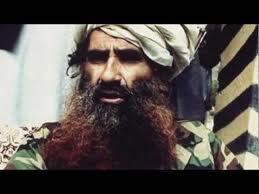
'Squeeze' Haqqani network, US cautions Pak

April 18, 2012

haqqani

Washington/Islamabad, April 18: The United States has said that it will continue to press Islamabad to "squeeze" the al-Qaida linked Haqqani network , as Afghanistan blamed the Pakistan-based group for the latest attacks in Kabul.

Declaring "there were indications of Haqqani involvement" in the weekend attacks in the Afghan capital, secretary of state Hillary Clinton said that she had pressed Pakistan to "squeeze" the Haqqani network when she visited Islamabad last October.

"I will continue to make that point, and press it hard," Clinton was quoted by Fox News as saying. She described the Pakistan-based outfit as a "determined foe" .

Afghan interior minister Bismillah Mohammadi said that one of the militants arrested during the latest attacks on the Afghan capital and three other cities had told the authorities that al-Qaida linked Haqqani network was behind the assaults.

The secretary of state said she had spoken to her Pakistani counterpart Hina Rabbani Khar to urge her for a commitment to work closely for peace and stability in Afghanistan and also discussed the recent terrorist attacks in Kabul.

The telephonic talks between Clinton and Khar come a day ahead of a crucial meeting of Pakistan's top civilian and military leadership, who are expected to take a final decision on re-opening of logistic supply lines to Nato troops in Pakistani media reports said that the meeting will formally announce reopening of Nato supply route.

In Washington, state department spokesperson Mark Toner said, "They (Clinton and Khar) did discuss next steps in the US-Pakistani dialogue in light of this parliamentary review.

"We recognize that this has been a long and difficult road for Pakistan. It speaks to the strength of Pakistan's democratic institutions that this parliamentary review's taken place and that the government has come up with recommendations. I think it's incumbent on us now to engage with them in a discussion about some of those recommendations ," he said.

Pak to decide on Nato routes today

Pakistan PM Yousaf Raza Gilani is to chair a crucial meeting of ministers and generals to take a final decision on reopening of logistic supply lines to Nato troops in Afghanistan. The meeting will also be attended by chairman Joint Chiefs of Staff Committee, Gen Shamim Wyeen, army chief Gen Ashfaq Parvez Kayani and air force and naval chiefs. Local media quoted sources as saying that the meeting will formally announce reopening of Nato supply route.

Comments

Add new comment

  • Coastaldigest.com reserves the right to delete or block any comments.
  • Coastaldigset.com is not responsible for its readers’ comments.
  • Comments that are abusive, incendiary or irrelevant are strictly prohibited.
  • Please use a genuine email ID and provide your name to avoid reject.
News Network
June 2,2020

Minneapolis, Jun 2: An official autopsy released Monday ruled that George Floyd, the African-American man whose death at police hands set off unrest across the United States, died in a homicide involving "neck compression".

George, 46, died of "cardiopulmonary arrest complicating law enforcement subdual, restraint, and neck compression," and the manner of death was "homicide," the Hennepin County Medical Examiner in Minneapolis said in a statement.

Floyd's other significant health conditions were listed as "arteriosclerotic and hypertensive heart disease; fentanyl intoxication; recent methamphetamine use."

The statement added that the "manner of death is not a legal determination of culpability or intent."

It emphasized that under Minnesota state law "the Medical Examiner is a neutral and independent office and is separate and distinct from any prosecutorial authority or law enforcement agency."

Comments

Add new comment

  • Coastaldigest.com reserves the right to delete or block any comments.
  • Coastaldigset.com is not responsible for its readers’ comments.
  • Comments that are abusive, incendiary or irrelevant are strictly prohibited.
  • Please use a genuine email ID and provide your name to avoid reject.
Agencies
March 1,2020

Washington, Mar 1: Beginning April 1, Indians wishing to immigrate to America will now have to pay an additional $50,000 for the EB-5 or the US investor visa, a media report said.

Although, this additional tax would impact all visa categories, it will predominantly create a barrier for people investing in the EB-5 visa programme, the American Bazaar daily said in the report on Friday.

In 2019, the EB-5 investor visa programme, for the first time since the 1990's, increased the minimum investment amount to $900,000.

With this increase in minimum investment, the new 5 per cent additional tax would mean that applicants would have to pay the extra $50,000, when they move money to an escrow account in the US to fulfil their application criterion.

"The changes to the tax on remittances is a reminder to Indians to carefully plan their tax position before making the move to the US," the American Bazaar quoted Mark Davies, Global Chairman, Davies & Associates LLC, as saying.

"People seeking to emigrate who do not wish to pay this tax at source and rather account for it later may wish to move their money ahead of the new rules coming into effect.

"It is possible to pre-emptively move money into an escrow account in the US until such a time as they are ready to proceed with emigration process," he added.

Comments

Add new comment

  • Coastaldigest.com reserves the right to delete or block any comments.
  • Coastaldigset.com is not responsible for its readers’ comments.
  • Comments that are abusive, incendiary or irrelevant are strictly prohibited.
  • Please use a genuine email ID and provide your name to avoid reject.
News Network
February 26,2020

Feb 26: Looking out over the world’s largest cricket stadium, the seats jammed with more than 100,000 people, India’s prime minister heaped praise on his American visitor.

“The leadership of President Trump has served humanity,” Prime Minister Narendra Modi said Monday, highlighting Trump’s fight against terrorism and calling his 36-hour visit to India a watershed in India-U.S. relations.

The crowds cheered. Trump beamed.

“The ties between India and the U.S. are no longer just any other partnership,” Modi said. “It is a far greater and closer relationship.”

India, it seems, loves Donald Trump. It seemed obvious from the thousands who turned out to wave as his motorcade snaked through the city of Ahmedabad, and from the tens of thousands who filled the city’s new stadium. It seemed obvious from the hug that Modi gave Trump after he descended from Air Force One, and from the hundreds of billboards proclaiming Trump’s visit.

But it’s not so simple.

Because while Trump is genuinely popular in India, his clamorous and carefully choreographed welcome was also about Asian geopolitics, China’s growing power and a masterful Indian politician who gave his American visitor exactly what he wanted.

Modi “is doing this not necessarily because he loves Trump,” said Tanvi Madan, the director of the India Project at the Brookings Institution in Washington, D.C. “It’s very much about Trump as the leader of the U.S. and recognizing what it is that Trump himself likes.”

Trump likes crowds — big crowds — and the foot soldiers of India’s political parties have long known how to corral enough people to make any politician look popular. In a city like Ahmedabad, the capital of Modi’s home state of Gujarat and the center of his power base, it wouldn’t take much effort to fill a cavernous sports stadium. It was more surprising that a handful of seats remained empty, and that some in the stands had left even before Trump had finished his speech.

For India, good relations with the U.S. are deeply important: They signal that India is a serious global player, an issue that has long been important to New Delhi, and help cement an alliance that both nations see as a counterweight to China’s rise.

“For both countries, their biggest rival is China,” said John Echeverri-Gent, a professor at the University of Virginia whose research often focuses on India. “China is rapidly expanding its presence in the Indian Ocean, which India has long considered its backyard and its exclusive realm for security concerns.”

“It’s very clearly a major concern for both India and the United States,” he said.

Trump isn’t the first U.S. president that Modi has courted. In 2015, then-President Barack Obama was the first American chief guest at India’s Republic Day parade, a powerful symbolic gesture. Obama also got a Modi hug, and the media in both countries were soon writing about the two leaders’ “bromance.”

Trump is popular in India, even if some of that is simply because he’s the U.S. president. A 2019 Pew Research Center poll showed that 56% of Indians had confidence in Trump’s abilities in world affairs, one of only a handful of countries where he has that level of approval. But Obama was also popular: Before he left office, he had 58% approval in world affairs among Indians.

The Pew poll also indicated that Trump’s support was higher among supporters of Modi’s Hindu nationalist party.

That’s not surprising. Both men have fired up their nationalist bases with anti-Muslim rhetoric and government policies, from Trump’s travel bans to Modi’s crackdown in Kashmir, India’s only Muslim-majority state.

And Trump’s Indian support is far from universal. Protests against his trip roiled cities from New Delhi to Hyderabad to the far northeastern city of Gauhati, although those demonstrations were mostly overshadowed by protests over a new Indian citizenship law that Modi backs.

Modi, who is widely popular in India, has faced weeks of protests over the law, which provides fast track naturalization for some foreign-born religious minorities — but not Muslims. While Trump talked about ties with India on Tuesday, Hindus and Muslims fought in violent clashes that left at least 10 people dead over two days.

In some ways, Modi and Trump are powerful echoes of each other.

They have overlapping political styles. Both are populists who see themselves as brash, rule-breaking outsiders who disdain their countries’ traditional elites. Both are seen by their critics as having authoritarian leanings. Both surround themselves with officials who rarely question their decisions.

But are they friends?

Trump says yes. “Really, we feel very strongly about each other,” he said at a New Delhi press briefing.

But many observers aren’t so sure.

“The question is how much of this is real chemistry, as opposed to what I’d call planned chemistry” orchestrated for diplomatic reasons, said Madan. “It’s so hard to know if you’re not in the room.”

Certainly, Modi understands America’s importance to India. While the two countries continue to bicker about trade issues, the prime minister organized a welcome that impressed even India’s news media, which have watched countless choreographed mass political rallies.

“There is no other country for whose leader India would hold such an event, and for which an Indian prime minister would lavish such rhetoric,” the Hindustan Times said in an editorial.

“The spectacle and the sound were worth a thousand agreements.”

Comments

Add new comment

  • Coastaldigest.com reserves the right to delete or block any comments.
  • Coastaldigset.com is not responsible for its readers’ comments.
  • Comments that are abusive, incendiary or irrelevant are strictly prohibited.
  • Please use a genuine email ID and provide your name to avoid reject.