



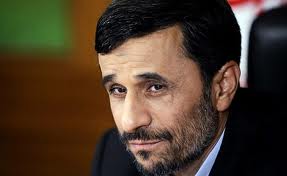
US joins chorus against Ahmadinejad's visit

April 19, 2012

Ahmadinejad

Washington, April 19: The world condemnation of Iranian President Mahmoud Ahmadinejad's recent visit to the UAE's Abu Mousa island and his provocative remarks continued to escalate on Wednesday with the United States


and Arab forums joining the chorus. The US urged Iran to enter talks with the UAE over the territorial disputes as it criticised President Ahmadinejad for visiting a contested island.


State Department spokesman Mark Toner said the US supported ‘a peaceful resolution' over the three islands of Abu Mousa and the Greater and Lesser Tunbs and backed the UAE's call for the issue to be resolved through talks or at the International Court of Justice.


‘The United States appreciates the UAE's efforts in this regard and urges Iran to respond positively to the UAE's initiative to resolve the issue through direct negotiations,' Toner said in a statement.


‘Actions such as the April 11 visit by Iranian President Ahmadinejad to the Abu Mousa island only complicate efforts to settle the issue,' he said.


In Cairo, the Arab Parliament urged Iran to stop provocative acts over the issue. Arab Parliament Speaker Ali Salem Al Dakbasi reiterated in a statement the Pan-Arab body's complete denunciation and rejection of statements by Iranian Foreign Minister Ali Akbar Salehi and former Revolutionary Guard chief Mohsen Rezai who is the current Secretary of the Expediency Discernment Council.


‘While the Arab Gulf states tackle the issue of the three occupied islands of the UAE in a positive, rational and civilised way, the Iranians act in a provocative way which we reject,' Al Dakbasi said.


He accused Iran of using irresponsible threats and statements in an attempt to distract attention from its occupation of another country's territory, adding that this is not the respectable and civilised manner of treating neighbours.


‘If Iran has historical rights to the three UAE's islands, why wouldn't it accept arbitration by the international law and the referral of the whole issue to International Court of Justice,' Al Dakbasi asked.


‘All Arabs back the UAE's defence of its historical rights and full sovereignty on the three islands,' he said, adding: ‘This visit has exposed Teheran's false claims regarding its friendship and peaceful relations with the Gulf countries.'


In New York, the Arab Group at the United Nations, in a letter to Secretary-General Ban Ki-moon, condemned Ahmadinejad's visit to Abu Mousa Island which is occupied by Iran since 1971, and called for an end to the Iranian occupation.


The letter, addressed by the UAE's permanent representative to UN Ahmed Abdul Rahman Al Jaramain, expressed the Arab Group's concern over the first visit by any top-level Iranian official to the island, stressing that the visit is a flagrant violation of the principles of the international law.


It renewed full support of the Arab Group member countries to the full sovereignty of the UAE over the three islands, in addition to supporting all peaceful measures and means adopted to restore its sovereignty over the occupied islands.


Comments

Add new comment

  • Coastaldigest.com reserves the right to delete or block any comments.
  • Coastaldigset.com is not responsible for its readers’ comments.
  • Comments that are abusive, incendiary or irrelevant are strictly prohibited.
  • Please use a genuine email ID and provide your name to avoid reject.
News Network
March 5,2020

Washington, Feb 5: Experts warned a US government panel last night that India's Muslims face risks of expulsion and persecution under the country’s new Citizenship Amendment Act (CAA) which has triggered major protests.

The hearing held inside Congress was called by the US Commission on International Freedom, which has been denounced by the Indian government as biased.

Ashutosh Varshney, a prominent scholar of sectarian violence in India, told the panel that the law championed by prime minister Narendra Modi's government amounted to a move to narrow the democracy's historically inclusive and secular definition of citizenship.

"The threat is serious, and the implications quite horrendous," said Varshney, a professor at Brown University.

"Something deeply injurious to the Muslim minority can happen once their citizenship rights are taken away," he said.

Varshney warned that the law could ultimately lead to expulsion or detention -- but, even if not, contributes to marginalization.

"It creates an enabling atmosphere for violence once you say that a particular community is not fully Indian or its Indianness in grave doubt," he said.

India's parliament in December passed a law that fast-tracks citizenship for persecuted non-Muslim minorities from neighboring countries.

Responding to criticism at the time from the US commission, which advises but does not set policy, India's External Affairs Ministry said the law does not strip anyone's citizenship and "should be welcomed, not criticized, by those who are genuinely committed to religious freedom."

Fears are particularly acute in Assam, where a citizens' register finalized last year left 1.9 million people, many of them Muslims, facing possible statelessness.

Aman Wadud, a human rights lawyer from Assam who traveled to Washington for the hearing, said that many Indians lacked birth certificates or other documentation to prove citizenship and were only seeking "a dignified life."

The hearing did not exclusively focus on India, with commissioners and witnesses voicing grave concern over Myanmar's refusal to grant citizenship to the Rohingya, the mostly Muslim minority that has faced widespread violence.

Gayle Manchin, the vice chair of the commission, also voiced concern over Bahrain's stripping of citizenship from activists of the Shiite majority as well as a new digital ID system in Kenya that she said risks excluding minorities.

More than 40 people were killed last week in New Delhi in sectarian violence sparked by the citizenship law.

India on Tuesday lodged another protest after the UN human rights chief, Michele Bachelet, sought to join a lawsuit in India that challenges the citizenship law's constitutionality.

Comments

Add new comment

  • Coastaldigest.com reserves the right to delete or block any comments.
  • Coastaldigset.com is not responsible for its readers’ comments.
  • Comments that are abusive, incendiary or irrelevant are strictly prohibited.
  • Please use a genuine email ID and provide your name to avoid reject.
News Network
January 3,2020

New Delhi, Jan 3: US aviation regulator Federal Aviation Administration on Thursday warned America's airlines and their pilots that there is risk involved in operating flights in Pakistan airspace due to "extremist or militant activity", according to an official document.

"Exercise caution during flight operations. There is a risk to US civil aviation operating in the territory and airspace of Pakistan due to extremist/militant activity," said the US Federal Aviation Administration (FAA) in a notice to airmen (NOTAM) dated December 30, 2019.

The NOTAM is applicable to all US-based airlines and US-based pilots.

The US regulator said in its NOTAM that there continues to be a risk to US civil aviation sector from attacks against airports and aircraft in Pakistan, particularly for aircraft on the ground and aircraft operating at low altitudes, including during the arrival and departure phases of flights.

"The ongoing presence of extremist/militant elements operating in Pakistan poses a continued risk to US civil aviation from small-arms fire, complex attacks against airports, indirect weapons fire, and anti-aircraft fire, any of which could occur with little or no warning," it said.

The FAA said that while, to date, there have been no reports of man-portable air defense systems or Manpads being used against the civil aviation sector in Pakistan, some extremist or terrorist groups operating there are suspected of having access to these Manpads.

"As a result, there is potential risk for extremists/militants to target civil aviation in Pakistan with Manpads," it said.

The regulator added that pilots or airlines must report safety or security incidents - which may happen in Pakistan - to the FAA.

Pakistan on July 16 last year opened its airspace for India after about five months of restrictions imposed in the wake of a standoff with New Delhi.

Following the Balakot airstrikes by the Indian Air Force, Pakistan had closed its airspace on February 26 last year.

Pakistan in October last year had denied India's request to allow Prime Minister Narendra Modi's VVIP flight to use its airspace for his visit to Saudi Arabia over the Jammu and Kashmir issue.

Comments

Add new comment

  • Coastaldigest.com reserves the right to delete or block any comments.
  • Coastaldigset.com is not responsible for its readers’ comments.
  • Comments that are abusive, incendiary or irrelevant are strictly prohibited.
  • Please use a genuine email ID and provide your name to avoid reject.
News Network
February 17,2020

Feb 17: Chinese authorities on Monday reported a slight upturn in new virus cases and 105 more deaths for a total of 1,770 since the outbreak began two months ago.

The 2,048 new cases followed three days of declines but was up by just 39 cases from the previous day’s figure. Another 10,844 people have recovered from COVID-19, a disease caused by the new coronavirus, and have been discharged from hospitals, according to Monday’s figures.

The update followed the publication late Saturday in China’s official media of a recent speech by President Xi Jinping in which he indicated for the first time that he had led the response to the outbreak from early in the crisis. While the reports were an apparent attempt to demonstrate the Communist Party leadership acted decisively from the start, it also opened Xi up to criticism over why the public was not alerted sooner.

In his speech, Xi said he gave instructions on fighting the virus on Jan. 7 and ordered the shutdown of the most-affected cities that began on Jan. 23.

The disclosure of his speech indicates top leaders knew about the outbreak’s potential severity at least two weeks before such dangers were made known to the public. It was not until late January that officials said the virus can spread between humans and public alarm began to rise.

New cases in other countries are raising growing concerns about containment of the virus.

Taiwan on Sunday reported its first death from COVID-19, the fifth fatality outside of mainland China. Taiwan’s Central News Agency, citing health minister Chen Shih-chung, said the man who died was in his 60s and had not traveled overseas recently and had no known contact with virus patients.

Japanese Prime Minister Shinzo Abe convened an experts meeting to discuss containment measures in his country, where more than a dozen cases have emerged in the past few days without any obvious link to China.

“The situation surrounding this virus is changing by the minute,” Abe said.

Japanese Health Minister Katsunobu Kato said the country is “entering into a phase that is different from before,” requiring new steps to stop the spread of the virus.

Japan now has 413 confirmed cases, including 355 from a quarantined cruise ship, and one death from the virus. Its total is the highest number of cases among about two dozen countries outside of China where the illness has spread.

Hundreds of Americans from the cruise ship took charter flights home, as Japan announced another 70 infections had been confirmed on the Diamond Princess. Canada, Hong Kong and Italy were planning similar flights.

The 300 or so Americans flying on U.S.-government chartered aircraft back to the U.S. will face another 14-day quarantine at Travis Air Force Base in California and Lackland Air Force Base in Texas. The U.S. Embassy said the departure was offered because people on the ship were at a high risk of exposure to the virus. People with symptoms were banned from the flights.

About 255 Canadians and 330 Hong Kong residents are on board the ship or undergoing treatment in Japanese hospitals. There are also 35 Italians, of which 25 are crew members, including the captain.

In China’s Hubei province, where the outbreak began in December, all vehicle traffic will be banned in another containment measure. It expands a vehicle ban in the provincial capital, Wuhan, where public transportation, trains and planes have been halted for weeks.

Exceptions were being made for vehicles involved in epidemic prevention and transporting daily necessities.

Hubei has built new hospitals with thousands of patient beds and China has sent thousands of military medical personnel to staff the new facilities and help the overburdened health care system.

Last Thursday, Hubei changed how it recognized COVID-19 cases, accepting a doctor’s diagnosis rather than waiting for confirmed laboratory test results, in order to treat patients faster. The tally spiked by more than 15,000 cases under the new method.

Comments

Add new comment

  • Coastaldigest.com reserves the right to delete or block any comments.
  • Coastaldigset.com is not responsible for its readers’ comments.
  • Comments that are abusive, incendiary or irrelevant are strictly prohibited.
  • Please use a genuine email ID and provide your name to avoid reject.