Suu Kyi sworn in to Myanmar's parliament

May 2, 2012

su_ki


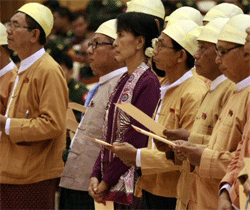
Naypyitaw, May 2: Opposition leader Aung San Suu Kyi was sworn in to Myanmar's military-backed parliament today, taking public office for the first time since launching her struggle against authoritarian rule nearly a quarter century ago.


The 66-year-old opposition leader's entry into the legislature heralds a new political era in Myanmar, cementing a risky detente between her party and the reformist government of President Thein Sein, which inherited power from the army last year.

Suu Kyi's National League for Democracy party will occupy too few seats to have any real power in the ruling-party dominated assembly, however, and there are fears the presence of the opposition lawmakers could simply legitimize the regime without any change.

But the new lawmakers are also likely to bring a level of public debate to the legislative body that has never been seen as they prepare for the next general election in 2015.

The swearing-in ceremony took place in the capital, Naypyitaw, which was built by the former army junta. With white roses in her hair, Suu Kyi stood along with several dozen of her party's lawmakers as the speaker of the lower house asked them to read the oath.

Suu Kyi's ascent marks an astonishing reversal of fortune for a woman who became one of the world's most prominent prisoners of conscience, held under house arrest for much of the last two decades.

When the 1991 Nobel Peace Prize winner was finally released in late 2010, just after a vote her party boycotted that was deemed neither free nor fair, few could have imagined she would make the leap from democracy advocate to elected official in less than 18 months.


Comments

Add new comment

  • Coastaldigest.com reserves the right to delete or block any comments.
  • Coastaldigset.com is not responsible for its readers’ comments.
  • Comments that are abusive, incendiary or irrelevant are strictly prohibited.
  • Please use a genuine email ID and provide your name to avoid reject.
News Network
July 27,2020

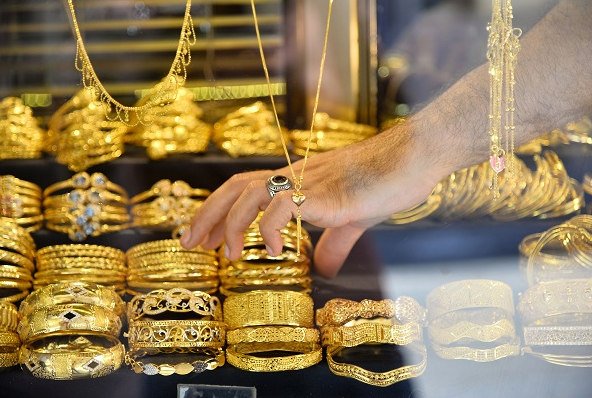
Tokyo, Jul 27: Gold hit an all-time high on Monday as tit-for-tat consulate closures in China and the United States rattled investors, boosting the allure of safe-haven assets, although sentiment was mixed with tech gains supporting some Asian stocks.

MSCI's ex-Japan Asia-Pacific index rose 1.3 percent as Taiwan's TSMC, Asia's third-largest company by market capitalisation, rose almost 10 percent.

The chipmaker's gains boosted other tech stocks in the region and came after rival Intel signalled it may give up manufacturing its own components due to delays in new 7-nanometer chip technology.

Also soothing sentiment, Chinese shares eked out gains after big falls late last week, with CSI300 index rising 0.5 percent.

S&P500 futures were last up 0.4 percent in choppy trade while Japan's Nikkei fell 0.5 percent, resuming trade after a long weekend and catching up with falls in global shares late last week.

Global shares had lost steam last week after Washington ordered China's consulate in Houston to close, prompting Beijing to react in kind by closing the US consulate in Chengdu.

US Secretary of State Mike Pompeo took fresh aim at China last week, saying Washington and its allies must use "more creative and assertive ways" to press the Chinese Communist Party to change its ways.

"US President (Donald) Trump used to say China's President Xi Jinping is a great leader. But now Pompeo's wording is becoming so aggressive that markets are starting to worry about further escalation," said Norihiro Fujito, chief investment strategist at Mitsubishi Securities.

Gold rose 1.0 percent to a record high of $1,920.9 per ounce, surpassing a peak touched in September 2011, as Sino-US tensions boosted the allure of safe-haven assets, especially those not tied to any specific country.

The yellow metal is also helped by aggressive monetary easing adopted by many central banks around the world since the pandemic plunged the global economy into a recession.

Some investors fret such an unprecedented level of money-printing could eventually lead to inflation.

MORE STIMULUS

Hopes of a quick US economic recovery are fading as coronavirus infections showed few signs of slowing.

That means the economy could capitulate without fresh support from the government, with some of earlier steps such as enhanced jobless benefits due to expire this month.

Investors hope US Congress will agree on a deal before its summer recess but there are some sticking points including the size of the stimulus and enhanced unemployment benefits.

US Treasury Secretary Steve Mnuchin said the package will contain extended unemployment benefits with 70 percent "wage replacement".

Democrats, who control the House of Representatives, want enhanced benefits of $600 per week to be extended and look to much bigger stimulus compared with the Republicans' $1 trillion plan.

Investors are looking to corporate earnings from around the world for hints on the pace of recovery in the global economy.

"It looks like rising coronavirus cases are starting to slow down recovery in many countries," said Masahiro Ichikawa, senior strategist at Sumitomo Mitsui DS Asset Management.

Concerns about the US economic outlook started to weigh on the dollar, reversing its inverse correlation with the economic well-being over the past few months.

The dollar index dropped 0.3 percent to its lowest level in nearly two years.

The euro gained 0.3 percent to $1.1693, hitting a 22-month high of $1.16590 as sentiment on the common currency improved after European leaders reached a deal on a recovery fund in a major step towards more fiscal co-operation.

Against the yen, the dollar slipped 0.5 percent to 105.605 yen, a four-month low while the British pound hit a 4 1/2-month high of $1.2832.

Oil prices dipped on worries about the worsening Sino-US relations.

Brent futures fell 0.46 percent to $43.14 per barrel while US crude futures lost 0.44 percent to $41.11.

Comments

Add new comment

  • Coastaldigest.com reserves the right to delete or block any comments.
  • Coastaldigset.com is not responsible for its readers’ comments.
  • Comments that are abusive, incendiary or irrelevant are strictly prohibited.
  • Please use a genuine email ID and provide your name to avoid reject.
News Network
January 27,2020

Shanghai, Jan 27: The death toll from a coronavirus outbreak in China rose to 81 on Monday, as the government extended the Lunar New Year holiday and more big businesses shut down or told staff to work from home in an effort to curb the spread.

Chinese Premier Li Keqiang visited the central city of Wuhan, the epicenter of the outbreak, as the government sought to signal it was responding seriously to the crisis.

The total number of confirmed cases in China rose about 30% to 2,744, about half of them in Hubei province, whose capital is Wuhan.

As worries grew around the world, Chinese-ruled Hong Kong, which has had eight confirmed cases, banned entry to people who had visited Hubei in the past 14 days. The ban did not cover Hong Kong residents.

The number of deaths from the flu-like virus in Hubei climbed to 76 from 56, health officials said, with five deaths elsewhere in China, including the southern island province of Hainan, which reported its first fatality on Monday.

While a small number of cases have been confirmed in more than 10 countries, linked to people who traveled from Wuhan, no deaths have been reported elsewhere.

Li is the most senior leader to visit Wuhan since the outbreak began. Clad in a blue protective suit and mask, he inspected efforts to contain the epidemic and spoke to patients and medical staff, the government said.

The government is extending the week-long Lunar New Year holiday by three days to February 2, in a bid to slow the spread of the virus. The Lunar New Year is usually a time for millions of people to travel, but many have had to cancel their plans because of travel curbs over the virus.

Incubation

Wuhan is already in virtual lockdown and severe limits on movement are in place in several other Chinese cities.

The city of 11 million clamped down further on Monday, announcing the suspension of visa and passport services until January 30.

Despite the curbs, the mayor of Wuhan said on Sunday that five million people had left the city for holidays and other reasons.

Images from Wuhan showing hospital corridors packed with people seeking treatment have circulated on social media, along with complaints of soaring prices for essentials such as vegetables.

Chinese leaders have urged transparency in the crisis, after public trust was eroded by the cover-up of the spread of Severe Acute Respiratory Syndrome (SARS), a coronavirus that originated in China and killed nearly 800 people globally in 2002 and 2003.

Much is not known about the newly identified coronavirus, including how easily it spreads and just how dangerous it is. It can cause pneumonia, which has been deadly in some cases.

National Health Commission minister Ma Xiaowei said on Sunday the incubation period could range from one to 14 days, and the virus was infectious during incubation, unlike SARS.

That compares with a World Health Organization (WHO) estimate of two to 10 days for the incubation period.

“Understanding the time when infected patients may transmit the virus to others is critical for control efforts,” the WHO said.

The virus is believed to have originated late last year in a Wuhan market illegally selling wildlife. It has spread to other cities, including Beijing and Shanghai, as well as more than 10 countries including France, Japan and the United States.

‘Overwhelmed’

Australia confirmed its fifth case on Monday involving a woman on the last flight out of Wuhan to Sydney before China’s travel ban.

Health minister Greg Hunt told the Australian Broadcasting Corporation (ABC) authorities aimed to get about 100 Australian children and young people out of Wuhan.

One father of two, Nathan Wang, told the ABC his wife was stuck in Wuhan with the children. “We absolutely want the children to come back, because hospitals in Wuhan are overwhelmed,” he said.

Airports around the world have stepped up screening of passengers from China, although some health experts have questioned its effectiveness.

Last week the WHO stopped short of calling the outbreak a global health emergency, but some health experts question whether China can contain the epidemic.

WHO Director-General Tedros Adhanom Ghebreyesus is due to travel to Beijing to meet officials and health experts.

Australia, France, Italy, Japan and the United States have all said they are working to evacuate citizens from Wuhan.

Some of China’s biggest companies have been affected, with hotpot restaurant chain Haidilao International Holding shutting branches nationwide from Sunday until Friday.

Gaming giant Tencent Holdings Ltd advised staff to work from home until February 7, and e-commerce firm Alibaba removed vendors’ offers of overpriced face masks from its online Taobao marketplace as prices surged.


Comments

Add new comment

  • Coastaldigest.com reserves the right to delete or block any comments.
  • Coastaldigset.com is not responsible for its readers’ comments.
  • Comments that are abusive, incendiary or irrelevant are strictly prohibited.
  • Please use a genuine email ID and provide your name to avoid reject.
News Network
March 4,2020

London, Mar 4: The UK government has reiterated its concern over the potential impact of the Citizenship Amendment Act (CAA) and said it is continuing to follow the events in India closely.

In response to an urgent question on “Recent Violence in India” tabled by Pakistani-origin Opposition Labour Party MP Khalid Mahmood in the House of Commons on Tuesday, UK’s Minister of State in the Foreign and Commonwealth Office (FCO) Nigel Adams said the UK engages with India at all levels, including on human rights, and also referred to the country's "proud history" of inclusive government and religious tolerance.

"The UK government also have concerns about the potential impact of the legislation (CAA),” said Adams, the Minister for Asia who was standing in for UK Foreign Secretary Dominic Raab, who is on a visit to Turkey.

"It is because of our close relationship with the government of India that we are able to discuss difficult issues with them and make clear our concerns where we have them, including on the rights of minorities. We will continue to follow events closely and to raise our concerns when we have with them,” said the minister.

While Mahmood, who had tabled the urgent question for an FCO statement, described the government response as “facile”, another Pakistani-origin MP Nusrat Ghani called on the government to relay the UK Parliament's concerns to the Indian authorities.

British Sikh Labour MP Tanmanjeet Singh Dhesi said the violence had brought back “painful personal memories” from the 1984 Sikh riots while he was studying in India and fellow Sikh MP Preet Kaur Gill also referenced 1984 in her intervention.

Other MPs sought to highlight the steps taken by the Indian authorities to restore “peace and tranquillity” in Delhi.

“He will be aware that it is not just Muslims who have been killed; Hindus have also been killed as part of the riots,” said Conservative Party MP Bob Blackman.

Scottish National Party (SNP) MP Alyn Smith sought the UK government’s intervention to share best practice around countering the online disinformation campaign being used in India to “inflame tensions”.

“We are in constant contact on these issues, and we know how important this is to Members of Parliament and their constituents, who may have family in the area,” said Adams, in his response.

Comments

Add new comment

  • Coastaldigest.com reserves the right to delete or block any comments.
  • Coastaldigset.com is not responsible for its readers’ comments.
  • Comments that are abusive, incendiary or irrelevant are strictly prohibited.
  • Please use a genuine email ID and provide your name to avoid reject.