World has become more peaceful in 2012, says study

June 13, 2012

world_become_very_peace


London, June 13: Despite an escalating conflict in Syria and mounting civil unrest in Europe, the world became a more peaceful place in the last year, said a study marking particular improvement in Africa.

The Global Peace Index, produced by the Australia and US-based Institute for Economics and Peace, showed its first improvement in two years. For the first time, sub-Saharan Africa was no longer the world's least peaceful region, losing that dubious distinction to West Asia and North Africa in the aftermath of the “Arab Spring”. The survey studied 23 indicators across 158 countries, ranging from measures of civil unrest and crime to military spending, involvement in armed conflict and relations with neighbors. Aside from the deterioration in West Asia, every other region in the world showed at least some form of improvement.

Overall, survey founder Steve Killelea — an Australian entrepreneur who created the initial index six years ago — said there appeared to be several key drivers. Overall, global military spending looked to be beginning to fall - in part a consequence of the global financial crisis — while relations between countries were broadly improving, with leaders increasingly turning to diplomacy not violence.

“The improvement in relation with the states and a greater reluctance to resort to war is very profound, particularly in Africa,” he said. “You've seen a very significant reduction in conflict ... When I first went to Uganda 15 years or so ago, for example, they were fighting four wars. Now they are fighting none.”

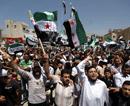
The sharpest deterioration in peace, the report showed, took place in Syria, with several other countries in the region falling down the list. The uprising against Syrian leader Bashar al-Assad has become increasingly bloody particularly in recent weeks.

Last year's report showed violence linked to the “Arab Spring” had made the world a less peaceful place, while the 2010 study showed economic hardship driving up global unrest. Those two years undid three years of improvements, with the level of global peace in 2012 now almost exactly that of six years earlier, Killelea said. Somalia remained the world's least peaceful place, the report added.


Comments

Add new comment

  • Coastaldigest.com reserves the right to delete or block any comments.
  • Coastaldigset.com is not responsible for its readers’ comments.
  • Comments that are abusive, incendiary or irrelevant are strictly prohibited.
  • Please use a genuine email ID and provide your name to avoid reject.
News Network
January 25,2020

Beijing, Jan 25: The death toll due to the novel coronavirus (2019-nCoV) outbreak in China has soared to 41, while the number of infected persons were 1,287, the National Health Commission said on Saturday.

The Commission said that 444 fresh cases were reported since Friday, with 237 patients in serious conditions, while 38 had been cured and discharged from hospitals, reports Efe news.

Health authorities have carried out check-ups on 15,197 people who have come into close contact with the infected persons. Nearly 14,000 of them continue to be monitored for symptoms.

The others cases outside of China were reported in France (two), Australia (one), Thailand (four including two cured), Japan (two including one cured), South Korea (two), the US (two), Vietnam (two), Singapore (three), Nepal (one), Hong Kong (five), Macao (two) and Taiwan (three).

The symptoms of the new coronavirus, provisionally designated by the World Health Organization as 2019-nCoV, are similar to those of cold but may be accompanied by fever and fatigue, dry cough and dyspnea (shortness of breath).

The WHO has so far to declared the outbreak as an international health emergency.

Strict measures were being carried out in China, which include complete suspension of transport in around a dozen cities in Hubei province and also cancelling Chinese New Year celebrations.

Traditional events at Lama Temple and Ditan Park in Beijing were cancelled due to the risk of spreading the virus, authorities reported Friday, while the famous Forbidden City has also been closed indefinitely.

Wuhan, the capital of Hubei, where the virus was first reported, has been on lockdown since Thursday to prevent further spread of the virus and the city's authorities have begun to build a "special hospital" with 1,000 beds for infected patients.

"Construction of the special hospital with a capacity of 1,000 beds for patients with #nCoV2019 has begun in Wuhan," official China Daily said on Twitter.

The hospital in Wuhan will be based on the model of a similar facility that was built in just seven days in Beijing to deal with SARS in 2003.

Comments

Add new comment

  • Coastaldigest.com reserves the right to delete or block any comments.
  • Coastaldigset.com is not responsible for its readers’ comments.
  • Comments that are abusive, incendiary or irrelevant are strictly prohibited.
  • Please use a genuine email ID and provide your name to avoid reject.
Agencies
June 24,2020

Seoul, Jun 24: North Korea on Wednesday said leader Kim Jong Un suspended a planned military retaliation against South Korea, possibly slowing the pressure campaign it has waged against its rival amid stalled nuclear negotiations with the Trump administration.

Last week, the North had declared relations with the South as fully ruptured, destroyed an inter-Korean liaison office in its territory and threatened unspecified military action to censure Seoul for a lack of progress in bilateral cooperation and for activists floating anti-Pyongyang leaflets across the border.

Analysts say North Korea, after weeks deliberately raising tensions, may be pulling away just enough to make room for South Korean concessions.

Pyongyang's official Korean Central News Agency said Kim presided by video conference over a meeting Tuesday of the ruling Workers' Party's Central Military Commission, which decided to postpone plans for military action against the South brought up by the North's military leaders.

KCNA didn't specify why the decision was made. It said other discussions included bolstering the country's "war deterrent".

Yoh Sang-key, spokesman of South Korea's Unification Ministry, said Seoul was "closely reviewing" the North's report but didn't further elaborate.

Yoh also said it was the first report in state media of Kim holding a video conferencing meeting, but he didn't provide a specific answer when asked whether that would have something to do with the coronavirus.

The North says there hasn't been a single COVID-19 case on its territory, but the claim is questioned by outside experts.

Kim Dong-yub, an analyst from Seoul's Institute for Far Eastern Studies, said it's likely that the North is waiting for further action from the South to salvage ties from what it sees as a position of strength, rather than softening its stance on its rival.

"What's clear is that the North said (the military action) was postponed, not cancelled," said Kim, a former South Korean military official who participated in inter-Korean military negotiations.

Other experts say the North would be seeking something major from the South, possibly a commitment to resume operations at a shuttered joint factory park in Kaesong, which was where the liaison office was located, or restart South Korean tours to the North's Diamond Mountain resort.

Those steps are prohibited by the international sanctions against the North over its nuclear weapons programme.

The public face of the North's recent bashing of the South has been Kim Yo Jong, the powerful sister of leader Kim Jong Un, who has been confirmed as his top official on inter-Korean affairs.

Issuing harsh statements through state media, she had said the North's demolishing of the liaison office would be just the first in a series of retaliatory action against the enemy South and that she would leave it to the North's military to come up with the next steps.

The General Staff of the North's military has said it would send troops to the mothballed inter-Korean cooperation sites in Kaesong and Diamond Mountain and restart military drills in frontline areas.

Such steps would nullify a set of deals the Koreas reached during a flurry of diplomacy in 2018 that prohibited them from taking hostile action against each other.

Also condemning the South over North Korean refugees floating anti-Pyongyang leaflets across the border, the North said Monday it printed 12 million of its own propaganda leaflets to be dropped over the South in what would be its largest ever anti-Seoul leafleting campaign.

It wasn't immediately clear whether Kim's decision to hold back military action would affect the country's plans for leafleting. The North's military had said it would open border areas on land and sea and provide protection for civilians involved in the leafleting campaigns.

The North has a history of dialling up pressure against the South when it fails to get what it wants from the United States. The North's recent steps came after months of frustration over Seoul's unwillingness to defy US-led sanctions and restart the inter-Korean economic projects that would breathe life into its broken economy.

Nuclear negotiations between Pyongyang and Washington largely stalled after Kim's second summit with President Donald Trump last year in Vietnam, where the Americans rejected North Korea's demands for major sanctions relief in exchange for a partial surrender of its nuclear capabilities.


Comments

Add new comment

  • Coastaldigest.com reserves the right to delete or block any comments.
  • Coastaldigset.com is not responsible for its readers’ comments.
  • Comments that are abusive, incendiary or irrelevant are strictly prohibited.
  • Please use a genuine email ID and provide your name to avoid reject.
Agencies
April 28,2020

United Nations, Apr 28: UN chief Antonio Guterres has warned that extremist groups are taking advantage of the COVID-19 lockdowns and intensifying efforts on social media to recruit youths online by exploiting their anger and despair, asserting that the world cannot afford a lost generation due to the unprecedented global health crisis.

The UN Secretary-General made the remarks on Monday during a video conference to review the five years since its adoption of a landmark resolution on youth, peace and security.

We can already see such groups taking advantage of the COVID-19 lockdowns, intensifying their efforts on social media to spread hatred and to recruit young people who may be spending more time at home and online, he said.

Guterres told the Security Council that even before the current crisis, young people were facing enormous challenges.

Listing startling numbers, he said one of every five young people was already not in education, training or employment and one of every four is affected by violence or conflict. Every year, 12 million girls become mothers while they themselves are still children.

These frustrations and, frankly, failures to address them by those in power today, fuel declining confidence in political establishments and institutions. And when such a cycle takes hold, it is all too easy for extremist groups to exploit the anger and despair, and the risk of radicalisation climbs, he said.

Issuing a call to action on youth, peace and security, Guterres said the world cannot afford a lost generation of youth, their lives set back by COVID-19 and their voices stifled by a lack of participation. Let us do far more to tap their talents as we tackle the pandemic and chart a recovery that leads to a more peaceful, sustainable and equitable future for all.

With over 1.54 billion children and youth out-of-school and young people acutely feeling the impact of the COVID-19 crisis, Guterres said countries must do more to harness the talents of young people to address the crisis and its aftermath.

In presenting his first report on the Security Council resolution, the UN chief said youth were already confronting numerous challenges even before the pandemic, including in accessing education, or through being affected by violence and conflict. Those pressing for peace or upholding human rights have been threatened.

Despite these obstacles, young people across the world have joined the common fight against the coronavirus disease, supporting both frontline workers and people in need. And they continue to push for change.

UN Youth Envoy Jayathma Wickramanayake spoke of the need for more meaningful partnerships between young people and the civil society organisations and government institutions that work on the youth, peace and security (YPS) agenda.

To date, there are no national action plans on YPS but I'm pleased to note that in some countries, these are in the process of development, she said.

For a national roadmap to be successful, a participatory, transparent and youth-led process with adequate resources are needed, she said.

Issuing his four-point call to action for the Council, Guterres urged members to do more to address the various challenges facing young people.

He also called for investment in youth participation, but also in their organisations and initiatives.

We must strengthen human rights protections and protect the civic space on which youth participation depends, he said. And fourth, we must emerge from the COVID-19 crisis with a determination to recover better - massively increasing our investment in young people's capacities as we deliver the Sustainable Development Goals.

Comments

Add new comment

  • Coastaldigest.com reserves the right to delete or block any comments.
  • Coastaldigset.com is not responsible for its readers’ comments.
  • Comments that are abusive, incendiary or irrelevant are strictly prohibited.
  • Please use a genuine email ID and provide your name to avoid reject.