


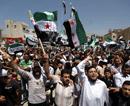
World has become more peaceful in 2012, says study

June 13, 2012

world_become_very_peace


London, June 13: Despite an escalating conflict in Syria and mounting civil unrest in Europe, the world became a more peaceful place in the last year, said a study marking particular improvement in Africa.

The Global Peace Index, produced by the Australia and US-based Institute for Economics and Peace, showed its first improvement in two years. For the first time, sub-Saharan Africa was no longer the world's least peaceful region, losing that dubious distinction to West Asia and North Africa in the aftermath of the “Arab Spring”. The survey studied 23 indicators across 158 countries, ranging from measures of civil unrest and crime to military spending, involvement in armed conflict and relations with neighbors. Aside from the deterioration in West Asia, every other region in the world showed at least some form of improvement.

Overall, survey founder Steve Killelea — an Australian entrepreneur who created the initial index six years ago — said there appeared to be several key drivers. Overall, global military spending looked to be beginning to fall - in part a consequence of the global financial crisis — while relations between countries were broadly improving, with leaders increasingly turning to diplomacy not violence.

“The improvement in relation with the states and a greater reluctance to resort to war is very profound, particularly in Africa,” he said. “You've seen a very significant reduction in conflict ... When I first went to Uganda 15 years or so ago, for example, they were fighting four wars. Now they are fighting none.”

The sharpest deterioration in peace, the report showed, took place in Syria, with several other countries in the region falling down the list. The uprising against Syrian leader Bashar al-Assad has become increasingly bloody particularly in recent weeks.

Last year's report showed violence linked to the “Arab Spring” had made the world a less peaceful place, while the 2010 study showed economic hardship driving up global unrest. Those two years undid three years of improvements, with the level of global peace in 2012 now almost exactly that of six years earlier, Killelea said. Somalia remained the world's least peaceful place, the report added.



Comments

Add new comment

  • Coastaldigest.com reserves the right to delete or block any comments.
  • Coastaldigset.com is not responsible for its readers’ comments.
  • Comments that are abusive, incendiary or irrelevant are strictly prohibited.
  • Please use a genuine email ID and provide your name to avoid reject.
Agencies
August 5,2020

Ninety per cent of a sample group of coronavirus-recovered patients from a prominent hospital in China's Wuhan city where the pandemic broke out have reported lung damage and five per cent of them are again in quarantine after testing positive for the virus, according to a media report on Wednesday.

A team at the Zhongnan Hospital of Wuhan University led by Peng Zhiyong, director of the hospital's Intensive Care Unit, has been conducting follow-up visits with '100 recovered patients' since April.

The first phase of this one-year programme finished in July. The average age of the patients in the study is 59.

According to the first phase results, 90 per cent of the patients' lungs are still in a damaged state, which means their lungs ventilation and gas exchange functions have not recovered to the level of healthy people, state-run Global Times reported.

Peng's team conducted a six-minute walking test with the patients. They found that the recovered patients could only walk 400 metres in six minutes while their healthy peers could walk 500 metres in the same period.

Some recovered patients have to rely on oxygen machines even three months after being discharged from the hospital, Liang Tengxiao, a doctor from the Dongzhimen Hospital, Beijing University of Chinese Medicine, was quoted as saying by the report.

Liang's team is also conducting follow-up visits with recovered patients aged above 65.

The results also showed that antibodies against the novel coronavirus in 10 per cent of the 100 patients have disappeared.

Five per cent of them received negative results in Covid-19 nucleic acid tests but positive results in Immunoglobulin M (IgM) tests, and thus have to be quarantined again, the report said.

IgM is usually the first antibody produced by the immune system when a virus attacks. A positive result in an IgM test usually means that a person has just been infected by the virus.

It is still unclear if this means these people have been infected again.

The 100 patients' immune systems have not fully recovered as they showed a low level of B cells -- - a primary force for killing viruses in the human body -- but a high level of T cells which only recognise viral antigens outside infected cells.

"The results revealed that the patients’ immune systems are still recovering," Peng said.

The patients also suffered from depression and a sense of stigma. Most of the recovered patients told the team that their families were not willing to have dinner with them at the same table, the report said.

Less than half of the recovered patients have returned to work, it said.

The findings are significant as the coronavirus first emerged in Wuhan city.

Hubei province for which Wuhan is the provincial capital has reported a total of 68,138 confirmed Covid-19 cases till now. The disease has claimed 4,512 lives in the province, according to the official data.

China reported 27 new confirmed Covid-19 cases on Tuesday, including 22 locally-transmitted cases, the National Health Commission (NHC) said on Wednesday.

Comments

Add new comment

  • Coastaldigest.com reserves the right to delete or block any comments.
  • Coastaldigset.com is not responsible for its readers’ comments.
  • Comments that are abusive, incendiary or irrelevant are strictly prohibited.
  • Please use a genuine email ID and provide your name to avoid reject.
News Network
April 22,2020

London, Apr 22: The UK government on Tuesday announced a 20 million pounds funding for a University of Oxford project working on developing a vaccine against the novel coronavirus, which is now ready for acceleration as it begins human trials from Thursday.

UK Health Secretary Matt Hancock told the daily Downing Street briefing that the Department for Health was “throwing everything” at trying to find a vaccine because it is a critical aspect of the COVID-19 pandemic fight and lifting the strict lockdown measures in place to curb its spread.

Another 22.5 million pounds is being made available to Imperial College London to support its phase-two clinical trials for them to begin the work on a very large phase three trial.

"Normally it would take years to get to this point," said Hancock.

"The UK is at the forefront of the global effort – we've put in more money than any other into the global search for a vaccine. Nothing about this is inevitable. Vaccine production is a matter of trial and error. But the UK will throw everything it has at trying to find one,” he said.

The announcement came as Britain had another major daily leap in the hospital death toll from coronavirus, up by 823 to hit 17,337 on Tuesday.

But the Cabinet minister said the government's plan to control the rapid spread of the virus and prevent the state-funded National Health Service (NHS) from being overwhelmed is working as the number of hospitalisations with COVID-19 was showing a downward trajectory.

In reference to a major issue in the last few weeks of a critical shortage of personal protective equipment (PPE) for doctors and nurses on the frontlines of COVID-19 treatment, the minister said the supply problems are being addressed by actively engaging with thousands of companies, including 159 UK manufacturers.

“We are determined to get people the PPE they need. This is a 24/7 operation, one of the biggest cross-government operation I have ever seen," said Hancock.

Comments

Add new comment

  • Coastaldigest.com reserves the right to delete or block any comments.
  • Coastaldigset.com is not responsible for its readers’ comments.
  • Comments that are abusive, incendiary or irrelevant are strictly prohibited.
  • Please use a genuine email ID and provide your name to avoid reject.
News Network
March 25,2020

Beijing, Mar 25: Around 5,000 people have signed up for the phase I clinical trial of recombinant novel coronavirus vaccine in Chinese city Wuhan where the virus first emerged late last year.

The recruitment for participants ended this week with nearly 5,000 volunteers signing up for the trial, state-run Beijing News reported on Wednesday.

A single-centre, open and dose-escalation phase I clinical trial for recombinant novel coronavirus vaccine (adenoviral vector) will be tested in healthy adults aged between 18 and 60 years, according to the ChiCTR (China Clinical Trial Register).

The trial, led by experts from the Academy of Military Medical Sciences, gained its approval on March 16 and the research is expected to last half a year.

Requiring at least 108 participants, the trial will be conducted in Wuhan, capital of Hubei province, the region worst-affected by the virus in the country, state-run China Daily reported.

Participants will experience 14-day quarantine restrictions after being vaccinated and their health condition will be recorded every day.

Chinese scientists are hastening the development of COVID-19 vaccines through five approaches --- inactivated vaccines, genetic engineering subunit vaccines, adenovirus vector vaccines, nucleic acid vaccines and vaccines using attenuated influenza virus as vectors.

So far, most teams are expected to complete preclinical research in April and some are moving forward faster, Wang Junzhi, an academician with the Chinese Academy of Engineering said.

Wang noted that research and development of COVID-19 vaccines in China is not slower than foreign counterparts and has been carried out in a scientific, standardised and orderly way.

China has stepped up the process to finalise vaccines to counter COVID-19 after Kaiser Permanente research facility in Seattle and Washington stole the march and began human trials.

China lifted tough restrictions on the Hubei province on Wednesday after a months-long lockdown as the country reported no new domestic cases.

But there were another 47 imported infections from overseas, the National Health Commission said. In total, 474 imported infections have been diagnosed in China -- mostly Chinese nationals returning home.

Comments

Y UDAYA CHANDAR
 - 
Monday, 13 Apr 2020

Dear Sir,


I am 77 but a very healthy person with remarkable immunity. I contracted Malaria fever in 1994 because of mosquito biting and I have not been sick anytime there after, not even for ordinary fever in the last 26 years.


I am sure you would like to conduct the trials on persons of varying criteria. I am sure you don't want to carry out the trials on perfectly healthy young individuals only. 


I am certain that  you want to try the vaccine on a 'common man' from 'general public.' I am ready for the trial and you can take me. I will be delighted. 


If you are not handling this matter kindly forward this mail to the correct agency.


I look forward to hearing from you.


Best regards.


If you are not moving forward, you are really moving backward.

Y Udaya Chandar


Add new comment

  • Coastaldigest.com reserves the right to delete or block any comments.
  • Coastaldigset.com is not responsible for its readers’ comments.
  • Comments that are abusive, incendiary or irrelevant are strictly prohibited.
  • Please use a genuine email ID and provide your name to avoid reject.