World has become more peaceful in 2012, says study

June 13, 2012

world_become_very_peace


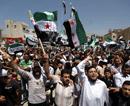
London, June 13: Despite an escalating conflict in Syria and mounting civil unrest in Europe, the world became a more peaceful place in the last year, said a study marking particular improvement in Africa.

The Global Peace Index, produced by the Australia and US-based Institute for Economics and Peace, showed its first improvement in two years. For the first time, sub-Saharan Africa was no longer the world's least peaceful region, losing that dubious distinction to West Asia and North Africa in the aftermath of the “Arab Spring”. The survey studied 23 indicators across 158 countries, ranging from measures of civil unrest and crime to military spending, involvement in armed conflict and relations with neighbors. Aside from the deterioration in West Asia, every other region in the world showed at least some form of improvement.

Overall, survey founder Steve Killelea — an Australian entrepreneur who created the initial index six years ago — said there appeared to be several key drivers. Overall, global military spending looked to be beginning to fall - in part a consequence of the global financial crisis — while relations between countries were broadly improving, with leaders increasingly turning to diplomacy not violence.

“The improvement in relation with the states and a greater reluctance to resort to war is very profound, particularly in Africa,” he said. “You've seen a very significant reduction in conflict ... When I first went to Uganda 15 years or so ago, for example, they were fighting four wars. Now they are fighting none.”

The sharpest deterioration in peace, the report showed, took place in Syria, with several other countries in the region falling down the list. The uprising against Syrian leader Bashar al-Assad has become increasingly bloody particularly in recent weeks.

Last year's report showed violence linked to the “Arab Spring” had made the world a less peaceful place, while the 2010 study showed economic hardship driving up global unrest. Those two years undid three years of improvements, with the level of global peace in 2012 now almost exactly that of six years earlier, Killelea said. Somalia remained the world's least peaceful place, the report added.


Comments

Add new comment

  • Coastaldigest.com reserves the right to delete or block any comments.
  • Coastaldigset.com is not responsible for its readers’ comments.
  • Comments that are abusive, incendiary or irrelevant are strictly prohibited.
  • Please use a genuine email ID and provide your name to avoid reject.
News Network
June 26,2020

Washington, Jun 26: The US is reviewing its global deployment of forces to ensure it is postured appropriately to counter the People's Liberation Army, given the increasing threat posed by China to Asian countries like India, Malaysia, Indonesia, and the Philippines, Secretary of State Mike Pompeo said on Thursday.

Mr Pompeo made those remarks in response to a question during the virtual Brussels Forum 2020 of the German Marshall Fund.

"We're going to make sure we're postured appropriately to counter the PLA. We think that the challenge of our times, and we're going to make sure we have resources in place to do that," Mr Pompeo said.
 
The force posture review is being done at the direction of President Donald Trump, as part of which the US is reducing the number of its troops in Germany from about 52,000 to 25,000, he said.

Mike Pompeo said that the force posture would be dictated by the ground realities.

"In certain places there will be fewer American resources. There'll be other places - I just talked about the threat from the Chinese Communist Party, so now threats to India, threats to Vietnam, threats to Malaysia, Indonesia, South China Sea challenges, the Philippines," he said.

"To the extent that that changed, the difference in what the US decided to do impacts adversely a threat some place, it may be that other nations need to step up and take responsibility for their own defense in ways that they hadn't done previously. So, we want to do this in full consultation with all of our partners all around the world, and certainly our friends in Europe," Mr Pompeo said.

President Trump is being criticised for reducing troops from Germany. His critics say that this will increase the threat from Russia to Europe.

Mike Pompeo, however, did not agree with that argument.

It has been a long time since there has been a strategic review of our force posture all across the world. The US undertook that starting about 2.5 years ago, whether that was our forces in Africa, our forces in Asia, the force we have in the Middle East and in Europe, he said.

"We began to say these are often decisions that were made in a different time. Should we reallocate those a different way? Should we have a different composition of those forces? Everyone always wants to talk about ground troops. I get it. I was a young tank officer. You described that. There's nothing I like as much as a good M1 tank.

"But it's often the case that the capacity to deter Russia or other adversaries isn''t determined any longer by just having a bunch of folks garrisoned someplace. So, we really went to back fundamentally relook, what is the nature of the conflict, what''s the nature of the threat, and how should we allocate our resources, whether that''s our resources in the intelligence community, our resources from the Air Force or the Marines and Army," Mr Pompeo said.

Last week, Mike Pompeo criticised the Chinese Army for "escalating" the border tension with India and militarising the strategic South China Sea. He also described the ruling Communist Party of China (CPC) as a "rogue actor".

"Our broad set of allocation of security apparatus, our ability to counter cyber threats, how do we allocate them? What''s the best way to do this? And the decision that you see the president made with respect to Germany is an outcome from a collective set of decisions about how we''re going to posture our resources around the world," said the top American diplomat on Thursday.

Changes in force posture is being taken in consultations with allies and friends, Mr Pompeo said.

"President Trump has spoken to this. (Defense) Secretary (Mark) Esper will be in London today and in Brussels tomorrow. We''ll talk about our plan and how we''re thinking about delivering it," he said.

"But you should understand this, and I hope our European partners will understand this as well. When you see what we ultimately conclude, how we ultimately deliver on the statements of the president made, that they''re aimed squarely at what we believe to be democracies'' fundamental interest and certainly America's most fundamental interest," Mr Pompeo said.

Earlier this month, Mike Pompeo had said that China's actions, be it on the India border, or in Hong Kong or in the South China Sea, were part of the behaviour of the ruling Communist Party in Beijing in the recent past.

China has been fast expanding military and economic influence in the Indo-Pacific region, triggering concern in various countries of the region and beyond.

China is engaged in hotly contested territorial disputes in both the South China Sea and the East China Sea. Beijing has built up and militarised many of the islands and reefs it controls in the region. Both areas are stated to be rich in minerals, oil and other natural resources and are vital to global trade.


Comments

Add new comment

  • Coastaldigest.com reserves the right to delete or block any comments.
  • Coastaldigset.com is not responsible for its readers’ comments.
  • Comments that are abusive, incendiary or irrelevant are strictly prohibited.
  • Please use a genuine email ID and provide your name to avoid reject.
News Network
February 28,2020

Washington, Feb 28: US intelligence agencies are monitoring the global spread of coronavirus and the ability of governments to respond, sources familiar with the matter said on Thursday, warning that there were concerns about how India would cope with a widespread outbreak.

While there are only a few known cases in India, one source said the country's available countermeasures and the potential for the virus to spread given India's dense population was a focus of serious concern.

US intelligence agencies are also focusing on Iran, where the country's deputy health minister has fallen ill during a worsening outbreak.

US Secretary of State Mike Pompeo said on Tuesday the United States was "deeply concerned" Tehran may have covered up details about the spread of coronavirus. A US government source said Iran's response was considered ineffective because the government only has minimal capabilities to respond to the outbreak.

Another source said US agencies were also concerned about the weak ability of governments in some developing countries to respond to an outbreak.

The US House of Representatives Intelligence Committee has received a briefing on the virus from the spy agencies. "The Committee has received a briefing from the IC (intelligence community) on coronavirus, and continues to receive updates on the outbreak on a daily basis," an official of the House Intelligence Committee told Reuters.

"Addressing the threat has both national security and economic dimensions, requiring a concerted government-wide effort and the IC is playing an important role in monitoring the spread of the outbreak, and the worldwide response," the official added.

A source familiar with the activities of the Senate Intelligence Committee, led by Republican Senator Richard Burr and Democratic Senator Mark Warner, said the panel was receiving daily updates. The role of US intelligence agencies in responding to the coronavirus epidemic at this point principally involves monitoring the spread of the illness around the world and assessing the responses of governments.

They are working closely with health agencies, such as the US Center for Disease Control, in sharing information they collect and targeting further intelligence gathering.

One source said US agencies would use a wide range of intelligence tools, ranging from undercover informants to electronic eavesdropping tools, to track the virus' impact.

Comments

Add new comment

  • Coastaldigest.com reserves the right to delete or block any comments.
  • Coastaldigset.com is not responsible for its readers’ comments.
  • Comments that are abusive, incendiary or irrelevant are strictly prohibited.
  • Please use a genuine email ID and provide your name to avoid reject.
News Network
April 22,2020

London, Apr 22: The UK government on Tuesday announced a 20 million pounds funding for a University of Oxford project working on developing a vaccine against the novel coronavirus, which is now ready for acceleration as it begins human trials from Thursday.

UK Health Secretary Matt Hancock told the daily Downing Street briefing that the Department for Health was “throwing everything” at trying to find a vaccine because it is a critical aspect of the COVID-19 pandemic fight and lifting the strict lockdown measures in place to curb its spread.

Another 22.5 million pounds is being made available to Imperial College London to support its phase-two clinical trials for them to begin the work on a very large phase three trial.

"Normally it would take years to get to this point," said Hancock.

"The UK is at the forefront of the global effort – we've put in more money than any other into the global search for a vaccine. Nothing about this is inevitable. Vaccine production is a matter of trial and error. But the UK will throw everything it has at trying to find one,” he said.

The announcement came as Britain had another major daily leap in the hospital death toll from coronavirus, up by 823 to hit 17,337 on Tuesday.

But the Cabinet minister said the government's plan to control the rapid spread of the virus and prevent the state-funded National Health Service (NHS) from being overwhelmed is working as the number of hospitalisations with COVID-19 was showing a downward trajectory.

In reference to a major issue in the last few weeks of a critical shortage of personal protective equipment (PPE) for doctors and nurses on the frontlines of COVID-19 treatment, the minister said the supply problems are being addressed by actively engaging with thousands of companies, including 159 UK manufacturers.

“We are determined to get people the PPE they need. This is a 24/7 operation, one of the biggest cross-government operation I have ever seen," said Hancock.

Comments

Add new comment

  • Coastaldigest.com reserves the right to delete or block any comments.
  • Coastaldigset.com is not responsible for its readers’ comments.
  • Comments that are abusive, incendiary or irrelevant are strictly prohibited.
  • Please use a genuine email ID and provide your name to avoid reject.