



Five Indian-Americans in Forbes list of US' richest

September 20, 2012

New York, September 20: Five Indian-Americans, including Silicon Valley venture capitalist Vinod Khosla and founder of IT major Syntel, Bharat Desai, have been named among the richest people in the US by Forbes, a list of 400 billionaires topped by Microsoft founder Bill Gates. See images


Gates, 56, whose net worth grew $7 billion from a year earlier to $66 billion in 2012, topped the list for the 19th year in a row.

He is followed by Berkshire Hathaway Inc.'s Buffett (No. 2) with $46 billion, also up $7 billion from last year, and Oracle Corp's Larry Ellison (No. 3) with $41 billion, up $8 billion—and the biggest dollar gainer this year.

Desai with a net worth of $2 billion as of September 2012 has been ranked 239 in Forbes' annual list released yesterday.

Desai, 59, started Syntel in 1980 with his wife while earning his MBA from the University of Michigan. An IIT Mumbai alumnus, Desai stepped down as chief executive of the firm in 2009 but remains chairman.

Founder and chairman of the Symphony Technology Group, Romesh Wadhwani is ranked 250 with a net worth $1.9 billion.

Google board member and shareholder Kavitark Ram Shriram occupies the 298th rank with a net worth of $1.6 billion. Manoj Bhargava, founder and CEO of the popular energy drink '5-hour energy' is ranked 311 and has a $1.5 billion net worth.

He is followed by Khosla on the 328th rank and a $1.4 billion net worth.

The net worth of the richest Americans grew by 13 per cent in the past year to $1.7 trillion, Forbes magazine said in a statement.

A graduate of Carnegie Mellon University and IIT Mumbai, Wadhwani, 65, developed business software firm Aspect Development which he sold in 2000 during the height of the tech bubble for $9.3 billion.

A "notable" newcomer on the list, Bhargava, 59, is a Princeton University drop out who "chose one of the roads less traveled to the American Dream".

Described as a math whiz, Bhargava lived as a monk in the mountains of India for 12 years before returning to the US to forge a successful career in plastics.

Forbes said Stanford and IIT alumnus Khosla, 57, "isn't afraid to fail”. His firm also had a stake in social enterprise software company Yammer, which was purchased by Microsoft in July for $1.2 billion.

A Google board member and large shareholder, Shriram, 55, has stakes in online outsourcer 24/7 Customer and serendipitous website picker StumbleUpon.

He also invested in Inkling, which makes interactive textbooks for the iPad.

He serves as a trustee at Stanford University, where he and his wife endowed the Shriram Family Professorship in Science Education.


Facebook founder Mark Zuckerberg has been pushed down in the rankings to the No. 36 spot with his estimated net worth falling by about $8 billion to $9.4 billion since Facebook went public in May.
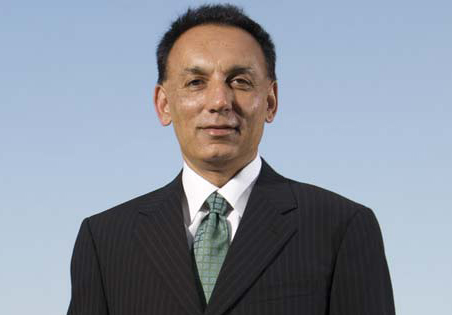
bharat_desai

Bharat Desai | Rank: 239 | Net worth: $2 billion

Desai, 59, is the chairman and co-founder of Syntel, which he started in 1980 with his wife while earning his MBA from the University of Michigan. An IIT Mumbai alumnus, Desai stepped down as chief executive of the firm in 2009.
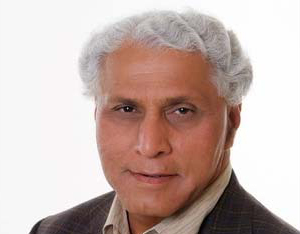
romesh-wadhwani

Romesh Wadhwani | Rank: 250 | Net worth: $1.9 billion

Wadhwani, 65, is the founder and chairman of Symphony Technology Group, a private equity firm that invests in software and software services companies.
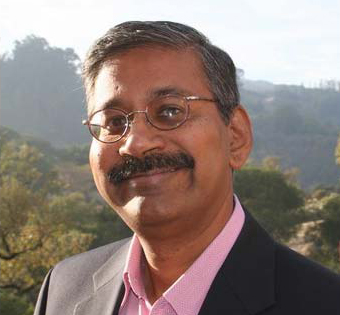
kavitark-ram-shriram

Kavitark Ram Shriram | Rank: 298 | Net worth: $1.6 billion

Shriram, 55, is a Google board member and shareholder. He also has stakes in online outsourcer 24/7 Customer and website picker StumbleUpon. He was one of the first people to write a check to Google co-founders Sergey Brin and Larry Page in 1998.
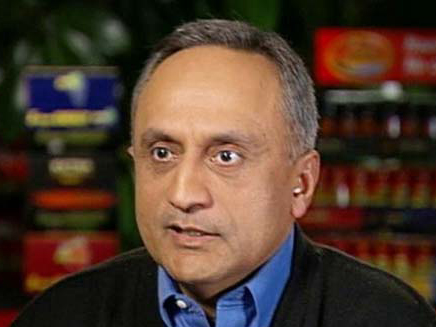
manoj-bhargava

Manoj Bhargava | Rank: 311 | Net worth: $1.5 billion

Bhargava, 59, is the founder and CEO of the popular energy drink brand '5-hour energy'. He is a Princeton University drop out who "chose one of the roads less travelled to the American Dream".
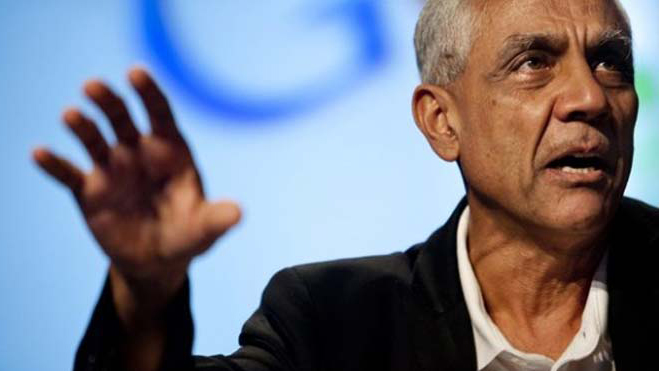
vinod-khosla

Vinod Khosla | Rank: 328 | Net Worth: $1.4 billion

Khosla, 57, is a partner at Khosla Ventures. The Stanford and IIT alumnus "isn't afraid to fail, and has staked a big claim in clean tech—including on some companies he refers to as science experiments".


Comments

Add new comment

  • Coastaldigest.com reserves the right to delete or block any comments.
  • Coastaldigset.com is not responsible for its readers’ comments.
  • Comments that are abusive, incendiary or irrelevant are strictly prohibited.
  • Please use a genuine email ID and provide your name to avoid reject.
News Network
June 2,2020

Minneapolis, Jun 2: An official autopsy released Monday ruled that George Floyd, the African-American man whose death at police hands set off unrest across the United States, died in a homicide involving "neck compression".

George, 46, died of "cardiopulmonary arrest complicating law enforcement subdual, restraint, and neck compression," and the manner of death was "homicide," the Hennepin County Medical Examiner in Minneapolis said in a statement.

Floyd's other significant health conditions were listed as "arteriosclerotic and hypertensive heart disease; fentanyl intoxication; recent methamphetamine use."

The statement added that the "manner of death is not a legal determination of culpability or intent."

It emphasized that under Minnesota state law "the Medical Examiner is a neutral and independent office and is separate and distinct from any prosecutorial authority or law enforcement agency."

Comments

Add new comment

  • Coastaldigest.com reserves the right to delete or block any comments.
  • Coastaldigset.com is not responsible for its readers’ comments.
  • Comments that are abusive, incendiary or irrelevant are strictly prohibited.
  • Please use a genuine email ID and provide your name to avoid reject.
News Network
June 20,2020

Sao Paulo, June 20: Brazil’s government confirmed on Friday that the country has risen above 1 million confirmed coronavirus cases, second only to the United States.

The country’s health ministry said that the total now stood at 10,32,913, up more than 50,000 from Thursday. The ministry said the sharp increase was due to corrections of previous days’ underreported numbers.

Brazilian President Jair Bolsonaro still downplays the risks of the virus after nearly 50,000 deaths from COVID-19 in three months, saying the impact of social isolation measures on the economy could be worse than the disease itself.

Specialists believe the actual number of cases in Brazil could be up to seven times higher than the official statistic. Johns Hopkins University says Brazil is performing an average of 14 tests per 1,00,000 people each day, and health experts say that number is up to 20 times less than needed to track the virus.

Official data show a downward trend of the virus in Brazil’s north, including the hard-hit region of the Amazon, a plateau in cases and deaths in the countries’ biggest cities near the Atlantic coast, but a rising curve in the south.

In the Brazilian countryside, which is much less prepared to handle a crisis, the pandemic is clearly growing. Many smaller cities have weaker health care systems and basic sanitation that’s insufficient to prevent contagion.

“There is a lot of regional inequality in our public health system and a shortage of professionals in the interior,” said Miguel Lago, executive director of Brazil’s Institute for Health Policy Studies, which advises public health officials.

That creates many health care deserts, with people going long distances to get attention. When they leave the hospital, the virus can go with them.

The cattle-producing state of Mato Grosso was barely touched by the virus when it hit the nation’s biggest cities in March. Sitting far from the coast, between the Bolivian border and Brazil’s capital of Brasilia, its 33 lakh residents led a mostly normal life until May. But now its people live under lockdown and meat producers have dozens of infected workers.

In Tangará da Serra, a city of 1,03,000 people in Mato Grosso, the mayor decided Friday to forbid the sale of alcoholic drinks for two weeks as an incentive for people to stay home.

Fᢩo Junqueira said the measure was needed after a spike in COVID-19 cases that filled 80% of the city’s 54 intensive care beds. The city has had nearly 300 cases of the disease, plus three fatalities.

In Rondonópolis, only 300 miles away from Tangará da Serra and home to a thriving economy, health authorities closed the local meatpacking industry after 92 cases were confirmed there. The city of 1,44,000 inhabitants counted 21 deaths from the virus and more than 600 cases. The mayor has also decided to limit sales of alcoholic beverages.

Even regions once considered examples of successful efforts against the virus are now struggling.

Porto Alegre, home to about 14 lakh people, had success in slowing the virus’ spread over the last three months. But now its mayor is considering increasing social isolation measures after ICU occupancy in the city jumped to 80% this month.

We were already making projections for schools to come back, Mayor Nelson Marchezan Jr. told The Associated Press. Now the trend is to impose more restrictions. Outside Sao Paulo city, five regions of the state’s countryside will have to close shops starting Monday due to a rise in coronavirus cases. Governor João Doria announced the decision Friday.

Dr. Mike Ryan, the World Health Organization’s executive director, said at a news conference that Brazil needs to increase its efforts to stop the spread of infections.

“The epidemic is still quite severe in Brazil. I believe health workers are working extremely hard and under pressure to be able to deal with the number of cases that they see on a daily basis,” Dr. Ryan said.

“Certainly the rise is not as exponential as it was previously, so there are some signs that the situation is stabilising. But we’ve seen this before in other epidemics in other countries.”

Margareth Dalcolmo, a clinical researcher and professor of respiratory medicine at the state-funded Oswaldo Cruz Foundation in Rio de Janeiro, believes the reopening in major cities and the virus traveling by road into Brazil’s heartland will keep the pressure on the country’s health system.

“The risk in the interior now is very big,” she said. “Our health system just can’t solve the most serious cases of COVID in many places of the countryside.”

Comments

Add new comment

  • Coastaldigest.com reserves the right to delete or block any comments.
  • Coastaldigset.com is not responsible for its readers’ comments.
  • Comments that are abusive, incendiary or irrelevant are strictly prohibited.
  • Please use a genuine email ID and provide your name to avoid reject.
Agencies
May 25,2020

The Japan government on Monday decided to lift the state of emergency for COVID-19 in Tokyo and four other prefectures of the country, the only places where the measure implemented to curb the pandemic had remained in force.

The lifting of the alert was backed by the coronavirus advisory panel and will be formally approved by the government later day, the economic revitalization minister and head of the working group to coordinate Japan's fight against COVID-19, Yasutoshi Nishimura, said.

The Japanese authorities made the decision after taking into account the number of infections and the situation of the health system in Tokyo, the three neighbouring prefectures of Chiba, Kanagawa and Saitama and the northern Hokkaido, the only ones where the state of emergency declared more than a month ago to control the pandemic remained in effect, reports Efe news.

The health alert was initially declared in Tokyo and six other prefectures on April 17 and subsequently extended across the country.

It allowed local authorities to ban large-scale public events and close bars and restaurants at night, among other measures, while the government has launched a campaign to encourage teleworking and staying at home.

The government resorted to this measure for the first time in the country's recent history to contain the spread of the virus and is now withdrawing it after a sustained slowdown in infections throughout the archipelago, where around 16,600 confirmed COVID-19 cases and 839 deaths have been recorded, according to the latest data.

The group of experts advising the government appreciated the efforts made by citizens to comply with the recommendations to achieve the target of reducing interpersonal contact by 80 percent, top government spokesperson Yoshihide Suga said at a press conference on Monday.

The recommendation for citizens to avoid unnecessary trips outside and the request for non-essential businesses to close were not mandatory nor accompanied by fines or other penalties for non-compliance, unlike the stricter containment measures implemented in other countries.

The government plans to formally approve the lifting of the state of emergency on Monday after consulting with other political parties in parliament and another meeting with the advisory panel, following which Japanese Prime Minister Shinzo Abe will hold a press conference.

The government had already decided to lift the emergency in 39 prefectures on May 14 after they reported a marked decrease in the number of infections, leaving out the more populated regions such as Tokyo and Osaka.

To avoid new outbreaks of the virus, Abe has urged people to become accustomed to a "new lifestyle" that includes maintaining social distancing, the use of masks outside as well as a series of guidelines for the reopening of shops, restaurants and public facilities.

Comments

Add new comment

  • Coastaldigest.com reserves the right to delete or block any comments.
  • Coastaldigset.com is not responsible for its readers’ comments.
  • Comments that are abusive, incendiary or irrelevant are strictly prohibited.
  • Please use a genuine email ID and provide your name to avoid reject.