


Five Indian-Americans in Forbes list of US' richest

September 20, 2012

New York, September 20: Five Indian-Americans, including Silicon Valley venture capitalist Vinod Khosla and founder of IT major Syntel, Bharat Desai, have been named among the richest people in the US by Forbes, a list of 400 billionaires topped by Microsoft founder Bill Gates. See images


Gates, 56, whose net worth grew $7 billion from a year earlier to $66 billion in 2012, topped the list for the 19th year in a row.

He is followed by Berkshire Hathaway Inc.'s Buffett (No. 2) with $46 billion, also up $7 billion from last year, and Oracle Corp's Larry Ellison (No. 3) with $41 billion, up $8 billion—and the biggest dollar gainer this year.

Desai with a net worth of $2 billion as of September 2012 has been ranked 239 in Forbes' annual list released yesterday.

Desai, 59, started Syntel in 1980 with his wife while earning his MBA from the University of Michigan. An IIT Mumbai alumnus, Desai stepped down as chief executive of the firm in 2009 but remains chairman.

Founder and chairman of the Symphony Technology Group, Romesh Wadhwani is ranked 250 with a net worth $1.9 billion.

Google board member and shareholder Kavitark Ram Shriram occupies the 298th rank with a net worth of $1.6 billion. Manoj Bhargava, founder and CEO of the popular energy drink '5-hour energy' is ranked 311 and has a $1.5 billion net worth.

He is followed by Khosla on the 328th rank and a $1.4 billion net worth.

The net worth of the richest Americans grew by 13 per cent in the past year to $1.7 trillion, Forbes magazine said in a statement.

A graduate of Carnegie Mellon University and IIT Mumbai, Wadhwani, 65, developed business software firm Aspect Development which he sold in 2000 during the height of the tech bubble for $9.3 billion.

A "notable" newcomer on the list, Bhargava, 59, is a Princeton University drop out who "chose one of the roads less traveled to the American Dream".

Described as a math whiz, Bhargava lived as a monk in the mountains of India for 12 years before returning to the US to forge a successful career in plastics.

Forbes said Stanford and IIT alumnus Khosla, 57, "isn't afraid to fail”. His firm also had a stake in social enterprise software company Yammer, which was purchased by Microsoft in July for $1.2 billion.

A Google board member and large shareholder, Shriram, 55, has stakes in online outsourcer 24/7 Customer and serendipitous website picker StumbleUpon.

He also invested in Inkling, which makes interactive textbooks for the iPad.

He serves as a trustee at Stanford University, where he and his wife endowed the Shriram Family Professorship in Science Education.


Facebook founder Mark Zuckerberg has been pushed down in the rankings to the No. 36 spot with his estimated net worth falling by about $8 billion to $9.4 billion since Facebook went public in May.
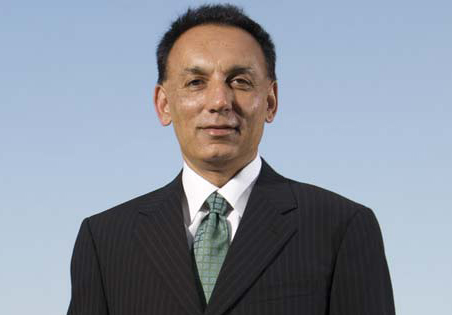
bharat_desai

Bharat Desai | Rank: 239 | Net worth: $2 billion

Desai, 59, is the chairman and co-founder of Syntel, which he started in 1980 with his wife while earning his MBA from the University of Michigan. An IIT Mumbai alumnus, Desai stepped down as chief executive of the firm in 2009.
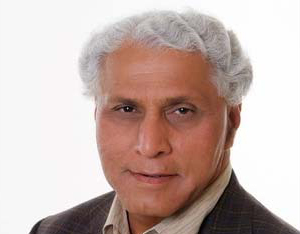
romesh-wadhwani

Romesh Wadhwani | Rank: 250 | Net worth: $1.9 billion

Wadhwani, 65, is the founder and chairman of Symphony Technology Group, a private equity firm that invests in software and software services companies.
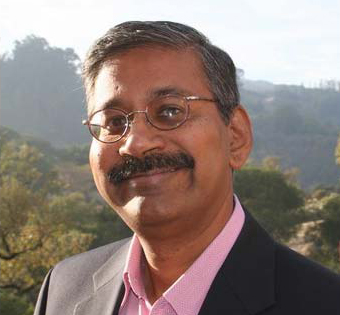
kavitark-ram-shriram

Kavitark Ram Shriram | Rank: 298 | Net worth: $1.6 billion

Shriram, 55, is a Google board member and shareholder. He also has stakes in online outsourcer 24/7 Customer and website picker StumbleUpon. He was one of the first people to write a check to Google co-founders Sergey Brin and Larry Page in 1998.
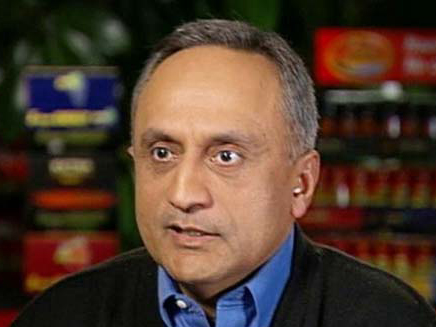
manoj-bhargava

Manoj Bhargava | Rank: 311 | Net worth: $1.5 billion

Bhargava, 59, is the founder and CEO of the popular energy drink brand '5-hour energy'. He is a Princeton University drop out who "chose one of the roads less travelled to the American Dream".
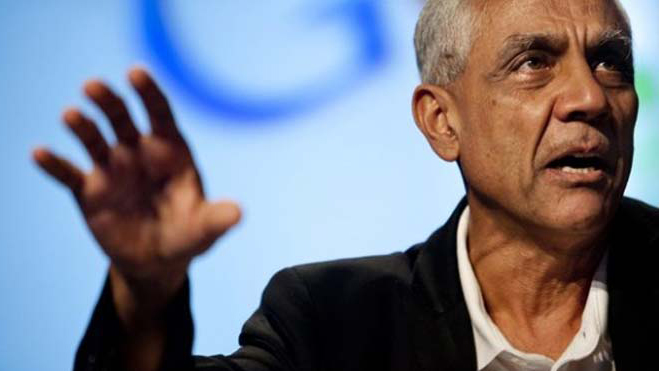
vinod-khosla

Vinod Khosla | Rank: 328 | Net Worth: $1.4 billion

Khosla, 57, is a partner at Khosla Ventures. The Stanford and IIT alumnus "isn't afraid to fail, and has staked a big claim in clean tech—including on some companies he refers to as science experiments".


Comments

Add new comment

  • Coastaldigest.com reserves the right to delete or block any comments.
  • Coastaldigset.com is not responsible for its readers’ comments.
  • Comments that are abusive, incendiary or irrelevant are strictly prohibited.
  • Please use a genuine email ID and provide your name to avoid reject.
News Network
April 24,2020

Washington, Apr 24: The number of coronavirus cases in the US has surpassed 850,000, Johns Hopkins University Coronavirus Resource Center data revealed on Thursday (local time).
The country now has registered 8,56,209 cases overall, according to the data, including 47,272 deaths.

The US currently leads the world in the number of reported COVID-19 deaths and confirmed cases.

There are more than 2.6 million COVID-19 cases around the world and more than 1,85,000 deaths, according to the data.

Comments

Add new comment

  • Coastaldigest.com reserves the right to delete or block any comments.
  • Coastaldigset.com is not responsible for its readers’ comments.
  • Comments that are abusive, incendiary or irrelevant are strictly prohibited.
  • Please use a genuine email ID and provide your name to avoid reject.
Agencies
June 16,2020

India continues to remain ranked 43rd on an annual World Competitiveness Index compiled by Institute for Management Development (IMD) with some traditional weaknesses like poor infrastructure and insufficient education investment keeping its ranking low, the international business school said on Tuesday.

Singapore has retained its top position on the 63-nation list.

Denmark has moved up to the second position (from 8th last year), Switzerland has gained one place to rank 3rd, the Netherlands has retained its 4th place and Hong Kong has slipped to the fifth place (from 2nd in 2019).

The US has moved down to 10th place (from 3rd last year), while China has also slipped from 14th to 20th place. Among the BRICS nations, India is ranked second after China, followed by Russia (50th), Brazil (56th) and South Africa (59th).

India was ranked 41st on the IMD World Competitiveness Ranking, being produced by the business school based in Switzerland and Singapore every year since 1989, but had slipped to 45th in 2017 before improving to 44th in 2018 and then to 43rd in 2019.

While its overall position has remained unchanged in the 2020 list, it has recorded improvements in areas like long-term employment growth, current account balance, high-tech exports, foreign currency reserves, public expenditure on education, political stability and overall productivity, the IMD said.

However, it has moved down in areas like exchange rate stability, real GDP growth, competition legislation and taxes.

Arturo Bris, Head of Competitiveness Center at IMD Business School, said India continues to struggle on the list and the recent country rating downgrade by Moody’s reflects the uncertainties regarding the economy’s future.

"In our ranking this year, we again emphasize the traditional weaknesses of India -- poor infrastructure, an important deficit in education investment, and a health system that does not reach everybody. For India to follow the path of China, it must stress its intangible infrastructure," Bris said.

"In a less global world, with China, USA, and Europe looking inwards, currencies like the rupee (and the Brazilian real for instance) are going to suffer and display high volatilities.

"Moody’s has threatened the country with a downgrade to junk and that would put India in a terrible position to attract foreign capital. So the urgency for the government should be to fix the short-term problems—and this requires to improve the credibility of the government itself," Bris added.

With the exception of Singapore, the Philippines, Taiwan and the Korean Republic, most Asian economies dropped in rankings this year, the IMD said.

The reason for the Asian economies’ less stellar performance as a region, this year is partly the result of the trade frictions between China and the US, particularly because these economies are highly dependent on trade with China.

About Singapore, which moved to the top rank last year, the IMD said its position is largely driven by the relative ease of setting up business, availability of skilled labour and its cutting-edge technological infrastructure.

The IMD said the impact of COVID-19 on the competitiveness ranking has partially been captured by executives’ opinions about the effectiveness of the different health systems.

In the ASEAN countries included in the survey, only Singapore and Thailand have a positive performance in the effectiveness of the health infrastructure.

Comments

Add new comment

  • Coastaldigest.com reserves the right to delete or block any comments.
  • Coastaldigset.com is not responsible for its readers’ comments.
  • Comments that are abusive, incendiary or irrelevant are strictly prohibited.
  • Please use a genuine email ID and provide your name to avoid reject.
Agencies
July 15,2020

Washington, Jul 15: The Trump administration has agreed to rescind its July 6 rule, which temporarily barred international students from staying in the United States unless they attend at least one in-person course, a federal district court judge said on Tuesday.

The U-turn by the Trump administration comes following a nationwide outrage against its July 6 order and a series of lawsuits filed by a large number of educational institutions, led by the prestigious Harvard University and Massachusetts Institute of Technology (MIT), seeking a permanent injunctive relief to bar the Department of Homeland Security (DHS) and the US Immigration and Customs Enforcement (ICE) from enforcing the federal guidelines barring international students attending colleges and universities offering only online courses from staying in the country.

As many as 17 US states and the District of Columbia, along with top American IT companies such as Google, Facebook and Microsoft, joined MIT and Harvard in the US District Court in Massachusetts against the DHS and the ICE in seeking an injunction to stop the entire rule from going into effect.

"I have been informed by the parties that they have come to a resolution. They will return to the status quo," Judge Allison Burroughs, the federal district judge in Boston, said in a surprise statement at the top of the hearing on the lawsuit.

The announcement comes as a big relief to international students, including those from India. In the 2018-2019 academic year, there were over 10 lakh international students in the US. According to a recent report of the Student and Exchange Visitor Program (SEVP), 1,94,556 Indian students were enrolled in various academic institutions in the US in January.

Judge Burroughs said the policy would apply nationwide.

"Both the policy directive and the frequently asked questions would not be enforced anyplace," she said, referring to the agreement between the US government and MIT and Harvard.

Congressman Brad Scneider said this is a great win for international students, colleges and common sense.

"The Administration needs to give us a plan to tackle our public health crisis - it can't be recklessly creating rules one day and rescinding them the next," he said in a tweet.

Last week, more than 136 Congressmen and 30 senators wrote to the Trump administration to rescind its order on international students.

"This is a major victory for the students, organisers and institutions of higher education in the #MA7 and all across the country that stood up and fought back against this racist and xenophobic rule," said Congresswoman Ayanna Pressley.

"Taking online classes shouldn't force international students out of our country," Congressman Mikie Sherrill said in a tweet.

In its July 6 notice, the ICE had said all student visa holders, whose university curricula were only offered online, "must depart the country or take other measures, such as transferring to a school with in-person instruction to remain in lawful status".

"If not, they may face immigration consequences, including but not limited to the initiation of removal proceedings," it had said.

In their lawsuit, the 17 states and the District of Columbia said for many international students, remote learning in the countries and communities they come from would impede their studies or be simply impossible.

The lawsuit alleged that the new rule imposes a significant economic harm by precluding thousands of international students from coming to and residing in the US and finding employment in fields such as science, technology, biotechnology, healthcare, business and finance, and education, and contributing to the overall economy.

In a separate filing, companies like Google, Facebook and Microsoft, along with the US Chamber of Commerce and other IT advocacy groups, asserted that the July 6 ICE directive will disrupt their recruiting plans, making it impossible to bring on board international students that businesses, including the amici, had planned to hire, and disturb the recruiting process on which the firms have relied on to identify and train their future employees.

The July 6 directive will make it impossible for a large number of international students to participate in the CPT and OPT programmes. The US will "nonsensically be sending...these graduates away to work for our global competitors and compete against us...instead of capitalising on the investment in their education here in the US", they said.

Comments

Add new comment

  • Coastaldigest.com reserves the right to delete or block any comments.
  • Coastaldigset.com is not responsible for its readers’ comments.
  • Comments that are abusive, incendiary or irrelevant are strictly prohibited.
  • Please use a genuine email ID and provide your name to avoid reject.