


Five Indian-Americans in Forbes list of US' richest

September 20, 2012

New York, September 20: Five Indian-Americans, including Silicon Valley venture capitalist Vinod Khosla and founder of IT major Syntel, Bharat Desai, have been named among the richest people in the US by Forbes, a list of 400 billionaires topped by Microsoft founder Bill Gates. See images


Gates, 56, whose net worth grew $7 billion from a year earlier to $66 billion in 2012, topped the list for the 19th year in a row.

He is followed by Berkshire Hathaway Inc.'s Buffett (No. 2) with $46 billion, also up $7 billion from last year, and Oracle Corp's Larry Ellison (No. 3) with $41 billion, up $8 billion—and the biggest dollar gainer this year.

Desai with a net worth of $2 billion as of September 2012 has been ranked 239 in Forbes' annual list released yesterday.

Desai, 59, started Syntel in 1980 with his wife while earning his MBA from the University of Michigan. An IIT Mumbai alumnus, Desai stepped down as chief executive of the firm in 2009 but remains chairman.

Founder and chairman of the Symphony Technology Group, Romesh Wadhwani is ranked 250 with a net worth $1.9 billion.

Google board member and shareholder Kavitark Ram Shriram occupies the 298th rank with a net worth of $1.6 billion. Manoj Bhargava, founder and CEO of the popular energy drink '5-hour energy' is ranked 311 and has a $1.5 billion net worth.

He is followed by Khosla on the 328th rank and a $1.4 billion net worth.

The net worth of the richest Americans grew by 13 per cent in the past year to $1.7 trillion, Forbes magazine said in a statement.

A graduate of Carnegie Mellon University and IIT Mumbai, Wadhwani, 65, developed business software firm Aspect Development which he sold in 2000 during the height of the tech bubble for $9.3 billion.

A "notable" newcomer on the list, Bhargava, 59, is a Princeton University drop out who "chose one of the roads less traveled to the American Dream".

Described as a math whiz, Bhargava lived as a monk in the mountains of India for 12 years before returning to the US to forge a successful career in plastics.

Forbes said Stanford and IIT alumnus Khosla, 57, "isn't afraid to fail”. His firm also had a stake in social enterprise software company Yammer, which was purchased by Microsoft in July for $1.2 billion.

A Google board member and large shareholder, Shriram, 55, has stakes in online outsourcer 24/7 Customer and serendipitous website picker StumbleUpon.

He also invested in Inkling, which makes interactive textbooks for the iPad.

He serves as a trustee at Stanford University, where he and his wife endowed the Shriram Family Professorship in Science Education.


Facebook founder Mark Zuckerberg has been pushed down in the rankings to the No. 36 spot with his estimated net worth falling by about $8 billion to $9.4 billion since Facebook went public in May.
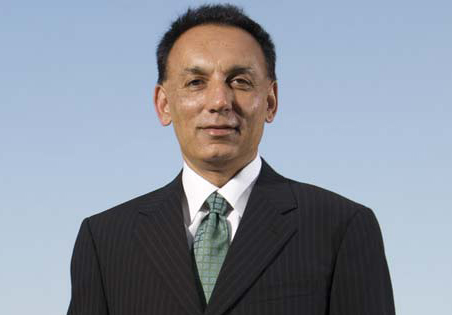
bharat_desai

Bharat Desai | Rank: 239 | Net worth: $2 billion

Desai, 59, is the chairman and co-founder of Syntel, which he started in 1980 with his wife while earning his MBA from the University of Michigan. An IIT Mumbai alumnus, Desai stepped down as chief executive of the firm in 2009.
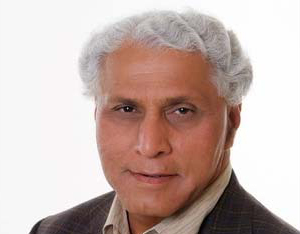
romesh-wadhwani

Romesh Wadhwani | Rank: 250 | Net worth: $1.9 billion

Wadhwani, 65, is the founder and chairman of Symphony Technology Group, a private equity firm that invests in software and software services companies.
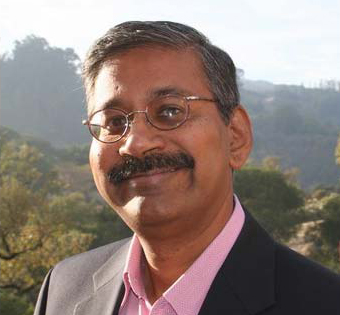
kavitark-ram-shriram

Kavitark Ram Shriram | Rank: 298 | Net worth: $1.6 billion

Shriram, 55, is a Google board member and shareholder. He also has stakes in online outsourcer 24/7 Customer and website picker StumbleUpon. He was one of the first people to write a check to Google co-founders Sergey Brin and Larry Page in 1998.
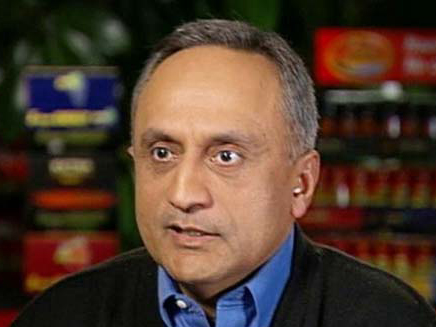
manoj-bhargava

Manoj Bhargava | Rank: 311 | Net worth: $1.5 billion

Bhargava, 59, is the founder and CEO of the popular energy drink brand '5-hour energy'. He is a Princeton University drop out who "chose one of the roads less travelled to the American Dream".
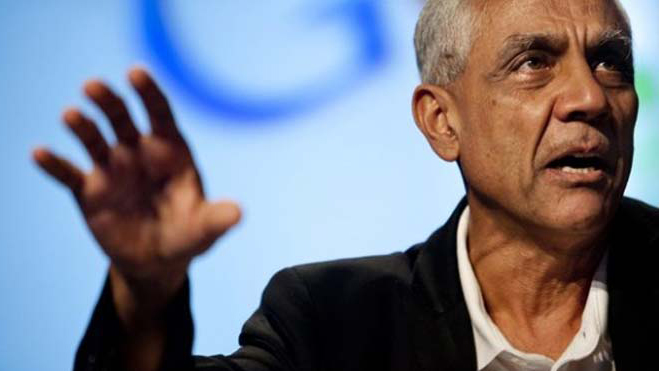
vinod-khosla

Vinod Khosla | Rank: 328 | Net Worth: $1.4 billion

Khosla, 57, is a partner at Khosla Ventures. The Stanford and IIT alumnus "isn't afraid to fail, and has staked a big claim in clean tech—including on some companies he refers to as science experiments".


Comments

Add new comment

  • Coastaldigest.com reserves the right to delete or block any comments.
  • Coastaldigset.com is not responsible for its readers’ comments.
  • Comments that are abusive, incendiary or irrelevant are strictly prohibited.
  • Please use a genuine email ID and provide your name to avoid reject.
News Network
July 1,2020

Jul 1: Hong Kong police moved swiftly on Wednesday against protesters gearing up for the first rally since the introduction of sweeping security legislation, making their first arrest under it and warning of punishment for pro-independence material.

Beijing on Tuesday unveiled the details of the much-anticipated law after weeks of uncertainty, pushing China's freest city and one of the world's most glittering financial hubs onto a more authoritarian path.

As hundreds of protesters gathered downtown for an annual rally marking the 23rd anniversary of the former British colony's handover to China, riot police used pepper spray to arrest at least two people, while one metro station closed.

Police, who earlier banned the rally, cited the law for the first time in confronting protesters and they also made their first arrest under it - a man holding a flag advocating independence.

"You are displaying flags or banners/chanting slogans/or conducting yourselves with an intent such as secession or subversion, which may constitute offences under the ... national security law," police said in a message displayed on a purple banner.

The law will punish crimes of secession, subversion, terrorism and collusion with foreign forces with up to life in prison, heralding a more authoritarian era for the Asian financial hub.

China's parliament adopted it in response to months of pro-democracy protests last year triggered by fears that Beijing was stifling the city's freedoms, guaranteed by a "one country, two systems" formula agreed when it returned to Chinese rule.

Authorities in Beijing and Hong Kong have repeatedly said the legislation is aimed at a few "troublemakers" and will not affect rights and freedoms, nor investor interests.

But critics fear it will crush the freedoms that are seen as key to Hong Kong's success as a financial centre.

"With the release of the full detail of the law, it should be clear to those in any doubt that this is not the Hong Kong they grew up in," said Hasnain Malik, head of equity research, Tellimer in Dubai.

"The difference is that U.S. and China relations are far worse and this could be used as a pretext to impede the role of Hong Kong as a finance hub."

In Beijing, Zhang Xiaoming, executive deputy director of Beijing's Hong Kong and Macau Affairs Office, told reporters suspects arrested by Beijing's new security office in Hong Kong could be tried on the mainland.

He said the mainland's national security office abided by Chinese law and that Hong Kong's legal system could not be expected to implement the laws of the mainland. Article 55 of the law states that Beijing's national security office in Hong Kong could exercise jurisdiction over "complex" or "serious" cases.

Mainland security agencies will also be based in Hong Kong officially for the first time, with powers that go beyond city laws.

"The law is a birthday gift to (Hong Kong) and will show its precious value in the future," Zhang said, adding the law would not be applied retroactively.

On July 1 last year, hundreds of protesters stormed and vandalised the city's legislature to protest against a now-scrapped bill that would have allowed extraditions to mainland China.

Those protests evolved into calls for greater democracy, paralysing parts of the city and paving the way for Beijing's imposition of the law this week.

'INEVITABLE'

Speaking at a flag-raising ceremony to mark the handover anniversary, the city's Beijing-backed leader, Carrie Lam, said the law was the most important development since the city's return to Chinese rule.

"It is also an inevitable and prompt decision to restore stability," Lam said at the same harbour-front venue where 23 years ago the last colonial governor, Chris Patten, a staunch critic of the security law, tearfully handed back Hong Kong to Chinese rule.

Some pro-Beijing officials and political commentators say the law is aimed at sealing Hong Kong's "second return" to the motherland after the first failed to bring residents to heel.

Luo Huining, the head of Beijing's top representative office in Hong Kong, said at the ceremony the law was a "common aspiration" of Hong Kong citizens.

Critics denounced the lack of transparency surrounding the details of the legislation until it was unveiled. It came into force at 11 p.m. (1500 GMT) on Tuesday.

Some pro-democracy activists gave up membership of their groups just before the law came into force, though calling for the campaign for democracy to go on offshore.

"I saw this morning there are celebrations for Hong Kong's handover, but to me it is a funeral, a funeral for 'one country two systems'," said democracy lawmaker Kwok Ka-ki.

Comments

Add new comment

  • Coastaldigest.com reserves the right to delete or block any comments.
  • Coastaldigset.com is not responsible for its readers’ comments.
  • Comments that are abusive, incendiary or irrelevant are strictly prohibited.
  • Please use a genuine email ID and provide your name to avoid reject.
News Network
May 25,2020

Islamabad, May 25: Pakistan’s coronavirus cases on Monday reached 56,349 with 1,748 new patients while the death toll climbed to 1,167, the health ministry said.

The Ministry of National Health Services reported that 22,491 cases were diagnosed in Sindh, 20,077 in Punjab, 7,905 in Khyber-Pakhtunkhwa, 3,407 in Balochistan, 1,641 in Islamabad, 619 in Gilgit-Baltistan and 209 in Pakistan-occupied Kashmir.

So far 1,167 people have died of the COVID-19 including 34 who lost their lives in the last 24 hours. A total of 17,482 patients have recovered from the deadly contagion.

The authorities have conducted 483,656 tests in the country, including 10,049 on Sunday. The trajectory showed that the number was steadily going up with authorities fearing a rise in cases in the wake of the easing of lockdown before Eid which was observed in the country on Sunday.

Comments

Add new comment

  • Coastaldigest.com reserves the right to delete or block any comments.
  • Coastaldigset.com is not responsible for its readers’ comments.
  • Comments that are abusive, incendiary or irrelevant are strictly prohibited.
  • Please use a genuine email ID and provide your name to avoid reject.
News Network
February 26,2020

Feb 26: Looking out over the world’s largest cricket stadium, the seats jammed with more than 100,000 people, India’s prime minister heaped praise on his American visitor.

“The leadership of President Trump has served humanity,” Prime Minister Narendra Modi said Monday, highlighting Trump’s fight against terrorism and calling his 36-hour visit to India a watershed in India-U.S. relations.

The crowds cheered. Trump beamed.

“The ties between India and the U.S. are no longer just any other partnership,” Modi said. “It is a far greater and closer relationship.”

India, it seems, loves Donald Trump. It seemed obvious from the thousands who turned out to wave as his motorcade snaked through the city of Ahmedabad, and from the tens of thousands who filled the city’s new stadium. It seemed obvious from the hug that Modi gave Trump after he descended from Air Force One, and from the hundreds of billboards proclaiming Trump’s visit.

But it’s not so simple.

Because while Trump is genuinely popular in India, his clamorous and carefully choreographed welcome was also about Asian geopolitics, China’s growing power and a masterful Indian politician who gave his American visitor exactly what he wanted.

Modi “is doing this not necessarily because he loves Trump,” said Tanvi Madan, the director of the India Project at the Brookings Institution in Washington, D.C. “It’s very much about Trump as the leader of the U.S. and recognizing what it is that Trump himself likes.”

Trump likes crowds — big crowds — and the foot soldiers of India’s political parties have long known how to corral enough people to make any politician look popular. In a city like Ahmedabad, the capital of Modi’s home state of Gujarat and the center of his power base, it wouldn’t take much effort to fill a cavernous sports stadium. It was more surprising that a handful of seats remained empty, and that some in the stands had left even before Trump had finished his speech.

For India, good relations with the U.S. are deeply important: They signal that India is a serious global player, an issue that has long been important to New Delhi, and help cement an alliance that both nations see as a counterweight to China’s rise.

“For both countries, their biggest rival is China,” said John Echeverri-Gent, a professor at the University of Virginia whose research often focuses on India. “China is rapidly expanding its presence in the Indian Ocean, which India has long considered its backyard and its exclusive realm for security concerns.”

“It’s very clearly a major concern for both India and the United States,” he said.

Trump isn’t the first U.S. president that Modi has courted. In 2015, then-President Barack Obama was the first American chief guest at India’s Republic Day parade, a powerful symbolic gesture. Obama also got a Modi hug, and the media in both countries were soon writing about the two leaders’ “bromance.”

Trump is popular in India, even if some of that is simply because he’s the U.S. president. A 2019 Pew Research Center poll showed that 56% of Indians had confidence in Trump’s abilities in world affairs, one of only a handful of countries where he has that level of approval. But Obama was also popular: Before he left office, he had 58% approval in world affairs among Indians.

The Pew poll also indicated that Trump’s support was higher among supporters of Modi’s Hindu nationalist party.

That’s not surprising. Both men have fired up their nationalist bases with anti-Muslim rhetoric and government policies, from Trump’s travel bans to Modi’s crackdown in Kashmir, India’s only Muslim-majority state.

And Trump’s Indian support is far from universal. Protests against his trip roiled cities from New Delhi to Hyderabad to the far northeastern city of Gauhati, although those demonstrations were mostly overshadowed by protests over a new Indian citizenship law that Modi backs.

Modi, who is widely popular in India, has faced weeks of protests over the law, which provides fast track naturalization for some foreign-born religious minorities — but not Muslims. While Trump talked about ties with India on Tuesday, Hindus and Muslims fought in violent clashes that left at least 10 people dead over two days.

In some ways, Modi and Trump are powerful echoes of each other.

They have overlapping political styles. Both are populists who see themselves as brash, rule-breaking outsiders who disdain their countries’ traditional elites. Both are seen by their critics as having authoritarian leanings. Both surround themselves with officials who rarely question their decisions.

But are they friends?

Trump says yes. “Really, we feel very strongly about each other,” he said at a New Delhi press briefing.

But many observers aren’t so sure.

“The question is how much of this is real chemistry, as opposed to what I’d call planned chemistry” orchestrated for diplomatic reasons, said Madan. “It’s so hard to know if you’re not in the room.”

Certainly, Modi understands America’s importance to India. While the two countries continue to bicker about trade issues, the prime minister organized a welcome that impressed even India’s news media, which have watched countless choreographed mass political rallies.

“There is no other country for whose leader India would hold such an event, and for which an Indian prime minister would lavish such rhetoric,” the Hindustan Times said in an editorial.

“The spectacle and the sound were worth a thousand agreements.”

Comments

Add new comment

  • Coastaldigest.com reserves the right to delete or block any comments.
  • Coastaldigset.com is not responsible for its readers’ comments.
  • Comments that are abusive, incendiary or irrelevant are strictly prohibited.
  • Please use a genuine email ID and provide your name to avoid reject.