


Five Indian-Americans in Forbes list of US' richest

September 20, 2012

New York, September 20: Five Indian-Americans, including Silicon Valley venture capitalist Vinod Khosla and founder of IT major Syntel, Bharat Desai, have been named among the richest people in the US by Forbes, a list of 400 billionaires topped by Microsoft founder Bill Gates. See images


Gates, 56, whose net worth grew $7 billion from a year earlier to $66 billion in 2012, topped the list for the 19th year in a row.

He is followed by Berkshire Hathaway Inc.'s Buffett (No. 2) with $46 billion, also up $7 billion from last year, and Oracle Corp's Larry Ellison (No. 3) with $41 billion, up $8 billion—and the biggest dollar gainer this year.

Desai with a net worth of $2 billion as of September 2012 has been ranked 239 in Forbes' annual list released yesterday.

Desai, 59, started Syntel in 1980 with his wife while earning his MBA from the University of Michigan. An IIT Mumbai alumnus, Desai stepped down as chief executive of the firm in 2009 but remains chairman.

Founder and chairman of the Symphony Technology Group, Romesh Wadhwani is ranked 250 with a net worth $1.9 billion.

Google board member and shareholder Kavitark Ram Shriram occupies the 298th rank with a net worth of $1.6 billion. Manoj Bhargava, founder and CEO of the popular energy drink '5-hour energy' is ranked 311 and has a $1.5 billion net worth.

He is followed by Khosla on the 328th rank and a $1.4 billion net worth.

The net worth of the richest Americans grew by 13 per cent in the past year to $1.7 trillion, Forbes magazine said in a statement.

A graduate of Carnegie Mellon University and IIT Mumbai, Wadhwani, 65, developed business software firm Aspect Development which he sold in 2000 during the height of the tech bubble for $9.3 billion.

A "notable" newcomer on the list, Bhargava, 59, is a Princeton University drop out who "chose one of the roads less traveled to the American Dream".

Described as a math whiz, Bhargava lived as a monk in the mountains of India for 12 years before returning to the US to forge a successful career in plastics.

Forbes said Stanford and IIT alumnus Khosla, 57, "isn't afraid to fail”. His firm also had a stake in social enterprise software company Yammer, which was purchased by Microsoft in July for $1.2 billion.

A Google board member and large shareholder, Shriram, 55, has stakes in online outsourcer 24/7 Customer and serendipitous website picker StumbleUpon.

He also invested in Inkling, which makes interactive textbooks for the iPad.

He serves as a trustee at Stanford University, where he and his wife endowed the Shriram Family Professorship in Science Education.


Facebook founder Mark Zuckerberg has been pushed down in the rankings to the No. 36 spot with his estimated net worth falling by about $8 billion to $9.4 billion since Facebook went public in May.
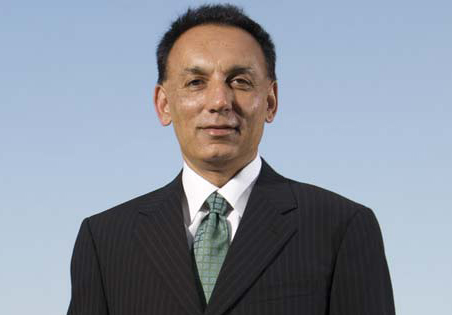
bharat_desai

Bharat Desai | Rank: 239 | Net worth: $2 billion

Desai, 59, is the chairman and co-founder of Syntel, which he started in 1980 with his wife while earning his MBA from the University of Michigan. An IIT Mumbai alumnus, Desai stepped down as chief executive of the firm in 2009.
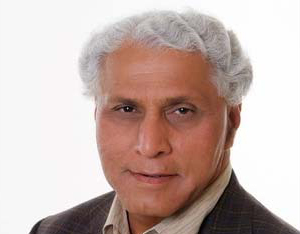
romesh-wadhwani

Romesh Wadhwani | Rank: 250 | Net worth: $1.9 billion

Wadhwani, 65, is the founder and chairman of Symphony Technology Group, a private equity firm that invests in software and software services companies.
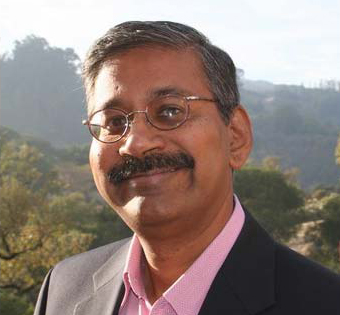
kavitark-ram-shriram

Kavitark Ram Shriram | Rank: 298 | Net worth: $1.6 billion

Shriram, 55, is a Google board member and shareholder. He also has stakes in online outsourcer 24/7 Customer and website picker StumbleUpon. He was one of the first people to write a check to Google co-founders Sergey Brin and Larry Page in 1998.
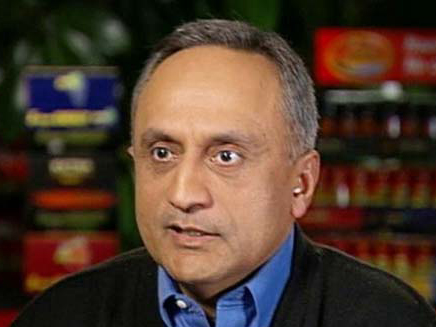
manoj-bhargava

Manoj Bhargava | Rank: 311 | Net worth: $1.5 billion

Bhargava, 59, is the founder and CEO of the popular energy drink brand '5-hour energy'. He is a Princeton University drop out who "chose one of the roads less travelled to the American Dream".
vinod-khosla

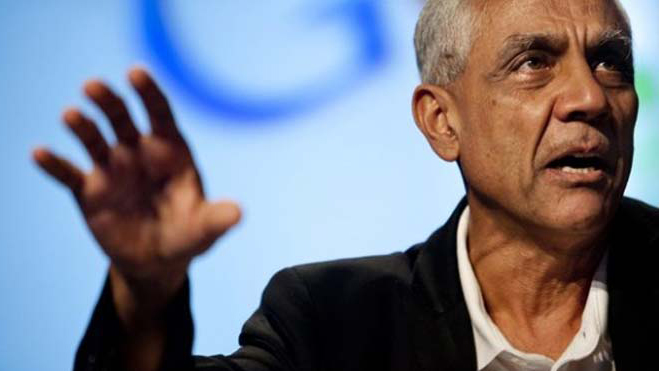
Vinod Khosla | Rank: 328 | Net Worth: $1.4 billion

Khosla, 57, is a partner at Khosla Ventures. The Stanford and IIT alumnus "isn't afraid to fail, and has staked a big claim in clean tech—including on some companies he refers to as science experiments".


Comments

Add new comment

  • Coastaldigest.com reserves the right to delete or block any comments.
  • Coastaldigset.com is not responsible for its readers’ comments.
  • Comments that are abusive, incendiary or irrelevant are strictly prohibited.
  • Please use a genuine email ID and provide your name to avoid reject.
News Network
June 9,2020

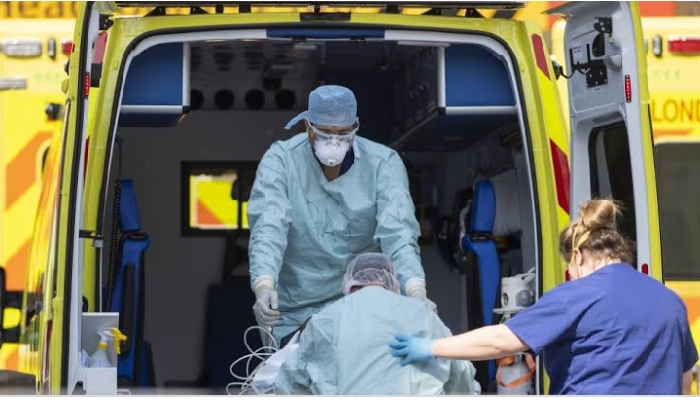
Washington, Jun 9: When epidemiologists talked about "flattening the curve," they probably didn't mean it this way: the US hit its peak coronavirus caseload in April, but since that time the graph has been on a seemingly unending plateau.

That's unlike several other hard-hit countries which have successfully pushed down their numbers of new cases, including Spain and Italy, which now have bell-shaped curves.

Experts say the prolonged nature of the US epidemic is the result of the cumulative impact of regional outbreaks, as the virus that started out primarily on the coasts and in major cities moves inward.

Layered on top of that are the effects of lifting lockdowns in parts of the country that are experiencing rising cases, as well as a lapse in compliance with social distancing guidelines because of economic hardship, and in some cases a belief that the threat is overstated.

"The US is a large country both in geography and population, and the virus is at very different stages in different parts of the country," Tom Frieden, a former director of the Centers for Disease Control and Prevention told AFP.

The US saw more than 35,000 new cases for several days in April. While that figure has declined, it has still been exceeding 20,000 regularly in recent days.

By contrast, Italy was regularly hitting more than 5,000 cases per day in March but is currently experiencing figures in the low hundreds.

"We did not act quickly and robustly enough to stop the virus spreading initially, and data indicate that it travelled from initial hotspots along major transport routes into other urban and rural areas," added Frieden, now CEO of the non-profit Resolve to Save Lives.

To wit: the East Coast states of New York, New Jersey and Massachusetts accounted for about 50 percent of all cases until about a month or so ago -- but now the geographic footprint of the US epidemic has shifted to the Midwest and southeast, including Florida.

Another key problem, said Jennifer Nuzzo, an epidemiologist at Johns Hopkins, is that the United States is still not doing enough testing, contact tracing and isolation.

After coming late to the testing party -- for reasons ranging from technical issues to regulatory hurdles -- the US has now conducted more COVID-19 tests than any other country.

It even has one of the highest per capita rates per country of 62 per 1,000 people, according to the website ourworldindata.org -- better than Germany (52 per 1,000) and South Korea (20 per 1,000).

But according to Nuzzo, these numbers are misleading, because "the amount of testing that a country should do should be scaled to the size of its epidemic.

"The United States has the largest epidemic in the world so obviously we need to do a lot more testing than any other country."

For Johns Hopkins, the more important metric is the positivity rate -- that is, out of all tests conducted, how many came back positive for COVID-19.

As of June 7, the United States had an average daily positivity rate of 14 percent, well above the World Health Organization guideline of 5 percent over two weeks before social distancing guidelines should be relaxed.

By contrast, Germany, which has tested far fewer people in relation to its population, has a positivity rate of 5 percent.

Even if testing were scaled up, carrying out tests in of itself does very little good without the next steps -- finding out who was exposed and then asking them to isolate.

Here also, too many US states are lagging woefully behind.

Texas, which is experiencing a surge in cases after relaxing its lockdown, is a case in point. The state targeted hiring a modest 4,000 tracers by June, but according to local reports is still more than a thousand shy of even that goal.

Opt-in app based efforts have also been slow to get off the ground.

Then there is the fact that some people are growing tired of lockdowns, while others don't have the economic luxury of being able to stay home for prolonged periods.

The government sent some 160 million Americans a single stimulus check of up to $1,200 back in April but it's not clear whether more will be forthcoming.

Still others, particularly in so-called red states under Republican leadership, have chafed under restrictions and mask-wearing guidelines that they see as an affront to their personal freedom.

"The US is kind of on the extreme of the individual liberty side," Sten Vermund, dean of the Yale School of Public Health, told AFP.

Part of this has to do with mixed messaging from Republican leaders, including President Donald Trump, said Nuzzo.

"We have had at the highest political level an assertion that this is a situation that's been overblown, and that maybe certain protective behaviors are not necessary," she said.

More recently, tens of thousands of people across the country have taken to the streets to protest the killing on an unarmed black man by police, risking coronavirus infection to demonstrate against the public health threat of racialized state violence.

Comments

Add new comment

  • Coastaldigest.com reserves the right to delete or block any comments.
  • Coastaldigset.com is not responsible for its readers’ comments.
  • Comments that are abusive, incendiary or irrelevant are strictly prohibited.
  • Please use a genuine email ID and provide your name to avoid reject.
News Network
February 4,2020

Feb 4: Americans on Monday kicked off the first vote of the 2020 presidential race as the midwestern state of Iowa began its caucuses, the closely-watched first step in deciding which Democrat will face incumbent Donald Trump in November's election.

The two frontrunners, left-wing Senator Bernie Sanders and former Vice President Joe Biden face a key test in the sparsely populated state, with a handful of others looking to make their mark to give their campaigns momentum.

The Iowa vote is a critical early look at the viability of the 11 Democratic candidates still in the race - even though just 41 Iowa delegates are up for grabs, a fraction of the 1,991 needed to secure the party nomination in July.

Iowa Democrats filed into nearly 1,700 caucus sites - schools, libraries, churches, mosques and meeting halls with Sanders and Biden in the lead in the state, followed by former South Bend, Indiana mayor Pete Buttigieg and Senator Elizabeth Warren, who is also on the left of the party.

But polling has fluctuated and Iowa's quirky caucus system - where voting is not by secret ballot but by public declaration for a candidate - makes the night hard to predict.

Luke Elzinga, a volunteer for Sanders, appeared early at Lincoln High School in Des Moines which was converted into a caucus location.

"I think he really inspires a lot of young people, a lot of disaffected voters who might not otherwise turn out," Elzinga, 28, told AFP news agency shortly before the caucusing began.

"And so I think he's the best candidate to beat Trump."

Three candidates - Sanders, Warren and Amy Klobuchar - have faced the unprecedented scenario of spending much of the past two weeks tethered to Washington for the impeachment trial of Trump instead of on the campaign trail in Iowa.

Even as candidates sought to make 11th-hour impressions on undecided voters, the senators were obligated to return to Washington for the trial's closing arguments on Monday.

Defeating Trump

In a vote scheduled for Wednesday, Trump is almost certain to be acquitted by the Republican-led upper house on charges of abuse of power and obstruction of Congress.

For Democrats, second-tier hopefuls Klobuchar and tech entrepreneur Andrew Yang look to outpace expectations and seize momentum heading into the next contest in New Hampshire on February 11.

Earlier on Monday Biden - who still holds the lead in national polls - brought pizza to a field office in a strip mall near Des Moines to thank volunteers.

"I'm feeling good about today," he said.

Like many candidates, Biden spent the weekend crisscrossing Iowa in a final push to convince undecided voters he is best placed to accomplish Democrats' number one goal: defeating Trump.

The president has not stood idly by. On Sunday he branded Biden "Sleepy Joe" and described Sanders as "a communist," previewing a likely line of attack were Sanders to win the nomination.

Unlike secret ballot voting, caucus-goers publicly declare their presidential choice by standing together with other supporters of a candidate.

Candidates who reach 15 percent support earn delegates for the nomination race while supporters of candidates who fall short can shift their allegiance to others.

Turnout is critical, and candidates and their representatives will seek to persuade voters on issues including healthcare, taxes and ending Washington corruption.

One key candidate who has opted not to contest in Iowa is billionaire businessman Michael Bloomberg, who entered the race in November but has surged into fourth place in RealClearPolitics' national polling average.

The former New York mayor, who has spent more than $300m on advertising, according to Advertising Analytics, is focused on running a national campaign with particular emphasis on states that vote on "Super Tuesday," on March 3.

Comments

Add new comment

  • Coastaldigest.com reserves the right to delete or block any comments.
  • Coastaldigset.com is not responsible for its readers’ comments.
  • Comments that are abusive, incendiary or irrelevant are strictly prohibited.
  • Please use a genuine email ID and provide your name to avoid reject.
Agencies
August 3,2020

Manila, Aug 2: The number of COVID-19 cases in the Philippines has exceeded the 100,000 marks with a record 5,032 new infections registered on Sunday, the Health Ministry's data showed.

With the total cases now reaching 103,185, the spread of COVID-19 in the Southeast Asian nation is steeply rising. The daily growth rate just this Thursday set a record at over 3,800 cases, the next day there were nearly 4,000 new infections detected and on Saturday, over 4,800 cases were detected.

More than 65,000 people have recovered from the ailment, while 2,059 people have died.

The Philippines' epidemiological dynamic mirrors that of many Southeast Asian nations, where COVID-19 infections have only recently begun to climb. 

Most other nations in Europe and the Americas experienced an initial spread of the virus which later tailed off only to begin climbing again after easing of restrictions.

Comments

Add new comment

  • Coastaldigest.com reserves the right to delete or block any comments.
  • Coastaldigset.com is not responsible for its readers’ comments.
  • Comments that are abusive, incendiary or irrelevant are strictly prohibited.
  • Please use a genuine email ID and provide your name to avoid reject.