



Five Indian-Americans in Forbes list of US' richest

September 20, 2012

New York, September 20: Five Indian-Americans, including Silicon Valley venture capitalist Vinod Khosla and founder of IT major Syntel, Bharat Desai, have been named among the richest people in the US by Forbes, a list of 400 billionaires topped by Microsoft founder Bill Gates. See images


Gates, 56, whose net worth grew $7 billion from a year earlier to $66 billion in 2012, topped the list for the 19th year in a row.

He is followed by Berkshire Hathaway Inc.'s Buffett (No. 2) with $46 billion, also up $7 billion from last year, and Oracle Corp's Larry Ellison (No. 3) with $41 billion, up $8 billion—and the biggest dollar gainer this year.

Desai with a net worth of $2 billion as of September 2012 has been ranked 239 in Forbes' annual list released yesterday.

Desai, 59, started Syntel in 1980 with his wife while earning his MBA from the University of Michigan. An IIT Mumbai alumnus, Desai stepped down as chief executive of the firm in 2009 but remains chairman.

Founder and chairman of the Symphony Technology Group, Romesh Wadhwani is ranked 250 with a net worth $1.9 billion.

Google board member and shareholder Kavitark Ram Shriram occupies the 298th rank with a net worth of $1.6 billion. Manoj Bhargava, founder and CEO of the popular energy drink '5-hour energy' is ranked 311 and has a $1.5 billion net worth.

He is followed by Khosla on the 328th rank and a $1.4 billion net worth.

The net worth of the richest Americans grew by 13 per cent in the past year to $1.7 trillion, Forbes magazine said in a statement.

A graduate of Carnegie Mellon University and IIT Mumbai, Wadhwani, 65, developed business software firm Aspect Development which he sold in 2000 during the height of the tech bubble for $9.3 billion.

A "notable" newcomer on the list, Bhargava, 59, is a Princeton University drop out who "chose one of the roads less traveled to the American Dream".

Described as a math whiz, Bhargava lived as a monk in the mountains of India for 12 years before returning to the US to forge a successful career in plastics.

Forbes said Stanford and IIT alumnus Khosla, 57, "isn't afraid to fail”. His firm also had a stake in social enterprise software company Yammer, which was purchased by Microsoft in July for $1.2 billion.

A Google board member and large shareholder, Shriram, 55, has stakes in online outsourcer 24/7 Customer and serendipitous website picker StumbleUpon.

He also invested in Inkling, which makes interactive textbooks for the iPad.

He serves as a trustee at Stanford University, where he and his wife endowed the Shriram Family Professorship in Science Education.


Facebook founder Mark Zuckerberg has been pushed down in the rankings to the No. 36 spot with his estimated net worth falling by about $8 billion to $9.4 billion since Facebook went public in May.
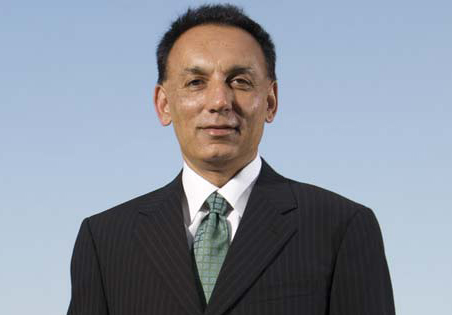
bharat_desai

Bharat Desai | Rank: 239 | Net worth: $2 billion

Desai, 59, is the chairman and co-founder of Syntel, which he started in 1980 with his wife while earning his MBA from the University of Michigan. An IIT Mumbai alumnus, Desai stepped down as chief executive of the firm in 2009.
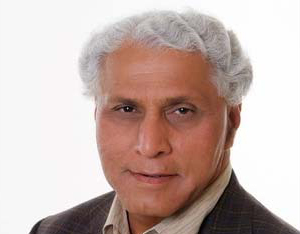
romesh-wadhwani

Romesh Wadhwani | Rank: 250 | Net worth: $1.9 billion

Wadhwani, 65, is the founder and chairman of Symphony Technology Group, a private equity firm that invests in software and software services companies.
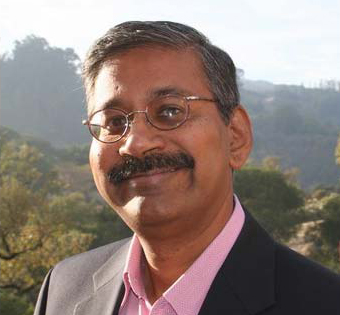
kavitark-ram-shriram

Kavitark Ram Shriram | Rank: 298 | Net worth: $1.6 billion

Shriram, 55, is a Google board member and shareholder. He also has stakes in online outsourcer 24/7 Customer and website picker StumbleUpon. He was one of the first people to write a check to Google co-founders Sergey Brin and Larry Page in 1998.
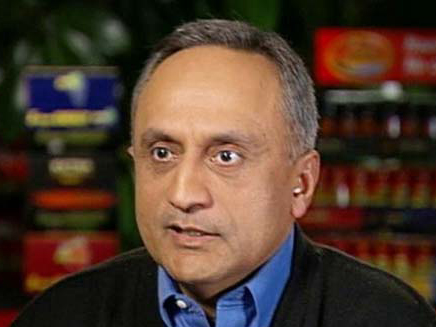
manoj-bhargava

Manoj Bhargava | Rank: 311 | Net worth: $1.5 billion

Bhargava, 59, is the founder and CEO of the popular energy drink brand '5-hour energy'. He is a Princeton University drop out who "chose one of the roads less travelled to the American Dream".
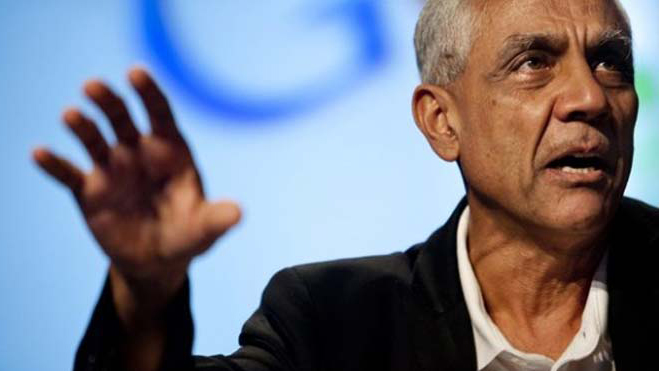
vinod-khosla

Vinod Khosla | Rank: 328 | Net Worth: $1.4 billion

Khosla, 57, is a partner at Khosla Ventures. The Stanford and IIT alumnus "isn't afraid to fail, and has staked a big claim in clean tech—including on some companies he refers to as science experiments".


Comments

Add new comment

  • Coastaldigest.com reserves the right to delete or block any comments.
  • Coastaldigset.com is not responsible for its readers’ comments.
  • Comments that are abusive, incendiary or irrelevant are strictly prohibited.
  • Please use a genuine email ID and provide your name to avoid reject.
News Network
July 3,2020

Jul 3: China under President Xi Jinping has stepped up its "aggressive" foreign policy toward India and "resisted" efforts to clarify the Line of Actual Control that prevented a lasting peace from being realised, according to a report released by a US Congress appointed commission.

The armies of India and China have been locked in a bitter standoff at multiple locations in eastern Ladakh for the last seven weeks, and the tension escalated after 20 Indian soldiers were killed in a violent clash in the Galwan Valley on June 15.

“Under General Secretary of the Chinese Communist Party (CCP) Xi Jinping, Beijing has stepped up its aggressive foreign policy toward New Delhi. Since 2013, China has engaged in five major altercations with India along the Line of Actual Control (LAC),” said a brief issued by US-China Economic and Security Review Commission.

"Beijing and New Delhi have signed a series of agreements and committed to confidence-building measures to stabilise their border, but China has resisted efforts to clarify the LAC, preventing a lasting peace from being realised,” said the report and was prepared at the request of the Commission to support its deliberations.

Authored by Will Green, a Policy Analyst on the Security and Foreign Affairs Team at the Commission, the report says that the Chinese government is particularly fearful of India’s growing relationship with the United States and its allies and partners.

“The latest border clash is part of a broader pattern in which Beijing seeks to warn New Delhi against aligning with Washington,” it said.

After Xi assumed power in 2012, there was a significant increase in clashes, despite the fact that he met Prime Minister Narendra Modi several times and Beijing and New Delhi have agreed to a series of confidence-building mechanisms designed to mitigate tensions.

Prior to 2013, the last major border clash was in 1987. The 1950s and 1960s were a particularly tense period, culminating in 1962 with a war that left thousands of soldiers dead on both sides, according to the records of China's People's Liberation Army, the report said.

“The 2020 skirmish is in line with Beijing’s increasingly assertive foreign policy. The clash came as Beijing was aggressively pressing its other expansive sovereignty claims in the Indo-Pacific region, such as over Taiwan and in the South and East China seas,” it said.

China is engaged in hotly contested territorial disputes in both the South China Sea and the East China Sea. Beijing has built up and militarised many of the islands and reefs it controls in the region. Both areas are stated to be rich in minerals, oil and other natural resources and are vital to global trade.

China claims almost all of the South China Sea. Vietnam, the Philippines, Malaysia, Brunei and Taiwan have counter claims over the area.

Several weeks before the clash in the Galwan Valley, Chinese Defence Minister Wei Fenghe called on Beijing to “use fighting to promote stability” as the country’s external security environment worsened, a potential indication of China’s intent to proactively initiate military tensions with its neighbours to project an image of strength, the report said.

Comments

Add new comment

  • Coastaldigest.com reserves the right to delete or block any comments.
  • Coastaldigset.com is not responsible for its readers’ comments.
  • Comments that are abusive, incendiary or irrelevant are strictly prohibited.
  • Please use a genuine email ID and provide your name to avoid reject.
News Network
July 10,2020

Lahore, Jul 10: The Punjab government enforced smart lockdown in seven cities of the province for 15 days with an immediate effect from Thursday night, The News International reported.

The Primary and Secondary Healthcare Department on Thursday issued a notification under the Punjab Infectious Diseases Ordinance 2020, about enforcement of lockdown in Lahore, Multan, Faisalabad, Gujranwala, Sialkot, Gujrat and Rawalpindi, till July 24 midnight.

In Lahore, the lockdown will be enforced in A2 Block Township, EME Society, Main Bazaar Chungi Amr Sadhu, Punjab Government Servants Housing Scheme, Wapda Town, C-Block Jauhar Town and Green City.

The basic necessities of life will remain available in smart lockdown areas. "The purpose of the smart lockdown is to minimise movement of people in hotspots of positive coronavirus cases," said Capt (retd) Muhammad Usman, Secretary, Primary and Secondary Healthcare Department.

The country registered 2,751 new COVID-19 cases during the last 24 hours, taking the tally to 243,599 on Friday. The province-wise breakup includes 85,261 cases in Punjab, 100,900 cases in Sindh, 29,406 in Khyber Pakhtunkhwa, 11,099 in Balochistan, 13,829 in Islamabad, 1,619 in Gilgit-Baltistan and 1,485 in Pakistan-occupied Kashmir.

The death toll due to the virus reached 5,058 with 75 more deaths reported over the last 24 hours, as per data cited by Radio Pakistan.

Comments

Add new comment

  • Coastaldigest.com reserves the right to delete or block any comments.
  • Coastaldigset.com is not responsible for its readers’ comments.
  • Comments that are abusive, incendiary or irrelevant are strictly prohibited.
  • Please use a genuine email ID and provide your name to avoid reject.
News Network
March 21,2020

United Nations, Mar 21: The UN has called on all nations to stop the use of capital punishment or put a moratorium on it, a day after four men convicted of gang-raping and murdering a 23-year-old woman were hanged in India.

Seven years after the rape and murder of the young medical student, who came to be known as 'Nirbhaya', sent shock waves across the country, the four convicts - Mukesh Singh (32), Pawan Gupta (25), Vinay Sharma (26) and Akshay Kumar Singh (31) - were hanged to death on Friday at 5.30 am in New Delhi's Tihar Jail.

Responding to the hanging, UN Secretary-General Antonio Guterres' spokesperson Stephane Dujarric said the world organisation calls on all nations to stop the use of capital punishment or put a moratorium on it.

"Our position has been clear, is that we call on all States to halt the use of capital punishment or at least put a moratorium on this," Dujarric said at the daily press briefing on Friday.

The horrific gang-rape and murder of the physiotherapy intern on December 16, 2012, who came to be known as Nirbhaya, the fearless, had seared the nation's soul and triggered countrywide outrage.

This was the first time that four men have been hanged together in Tihar Jail, South Asia's largest prison complex that houses more than 16,000 inmates.

The executions were carried out after the men exhausted every possible legal avenue to escape the gallows. Their desperate attempts only postponed the inevitable by less than two months after the first date of execution was set for January 22.

The execution of the four convicts brings the curtains down on the case that shook not just India but also the world with the details of its brutality The widespread protests subsequently paved the way for a change in India's rape laws.

Comments

Add new comment

  • Coastaldigest.com reserves the right to delete or block any comments.
  • Coastaldigset.com is not responsible for its readers’ comments.
  • Comments that are abusive, incendiary or irrelevant are strictly prohibited.
  • Please use a genuine email ID and provide your name to avoid reject.