Pak under fire for delaying visa agreement with India

October 7, 2012
hinaOctober 7: A Pakistani parliamentary panel on Friday criticised the Interior Ministry for the delay in implementing a new visa agreement with India, with its members passing a resolution that called on the cabinet to ratify the pact at the earliest.


Foreign Secretary Jalil Abbas Jillani informed the Foreign Affairs committee of the Senate or upper house of the parliament that the ratification of the visa agreement by the cabinet was pending because the Interior Ministry is yet to complete certain formalities.


The committee's chairman, Haji Mohammad Adeel of the Awami National Party, and other members of the panel were critical of the delays in implementing the agreement.


Presidential spokesman Farhatullah Babar, who is a member of the committee, proposed a resolution that the cabinet should ratify the pact at the earliest and this was passed by the members.


Adeel condemned the delay in implementing the agreement.


Noting that relations between Pakistan and India were improving, he questioned why such an important agreement was being held back.


The Foreign Secretary explained that under the Indian system, the process for implementing the agreement had been finalised before it was signed last month.


On the Pakistani side, the process is completed after the signing, he said. He briefed the panel on all the clauses of the new agreement.


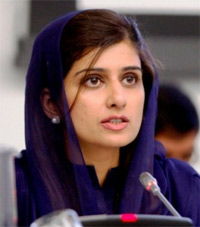
Foreign Minister Hina Rabbani Khar, who too appeared before the committee, said the delay in implementing the pact was only due to “procedural” issues.


Officials assured the panel that the agreement would be forwarded to the cabinet division next week so that the process of ratifying it could be completed.


Farhatullah Babar suggested that provisions for granting visas to reporters should be incorporated in the agreement as the media plays a key role in fostering better relations between the two countries.


Comments

Add new comment

  • Coastaldigest.com reserves the right to delete or block any comments.
  • Coastaldigset.com is not responsible for its readers’ comments.
  • Comments that are abusive, incendiary or irrelevant are strictly prohibited.
  • Please use a genuine email ID and provide your name to avoid reject.
Agencies
July 2,2020

Moscow, Jul 2: Russian voters approved changes to the constitution that will allow President Vladimir Putin to hold power until 2036, but the weeklong plebiscite that concluded Wednesday was tarnished by widespread reports of pressure on voters and other irregularities.

With most of the nation's polls closed and 20% of precincts counted, 72% voted for the constitutional amendments, according to election officials.

For the first time in Russia, polls were kept open for a week to bolster turnout without increasing crowds casting ballots amid the coronavirus pandemic a provision that Kremlin critics denounced as an extra tool to manipulate the outcome.

A massive propaganda campaign and the opposition's failure to mount a coordinated challenge helped Putin get the result he wanted, but the plebiscite could end up eroding his position because of the unconventional methods used to boost participation and the dubious legal basis for the balloting.

By the time polls closed in Moscow and most other parts of Western Russia, the overall turnout was at 65%, according to election officials. In some regions, almost 90% of eligible voters cast ballots.

On Russia's easternmost Chukchi Peninsula, nine hours ahead of Moscow, officials quickly announced full preliminary results showing 80% of voters supported the amendments, and in other parts of the Far East, they said over 70% of voters backed the changes.

Kremlin critics and independent election observers questioned the turnout figures.

We look at neighboring regions, and anomalies are obvious there are regions where the turnout is artificially (boosted), there are regions where it is more or less real, Grigory Melkonyants, co-chair of the independent election monitoring group Golos, told The Associated Press.

Putin voted at a Moscow polling station, dutifully showing his passport to the election worker. His face was uncovered, unlike most of the other voters who were offered free masks at the entrance.

The vote completes a convoluted saga that began in January, when Putin first proposed the constitutional changes.

He offered to broaden the powers of parliament and redistribute authority among the branches of government, stoking speculation he might seek to become parliamentary speaker or chairman of the State Council when his presidential term ends in 2024.

His intentions became clear only hours before a vote in parliament, when legislator Valentina Tereshkova, a Soviet-era cosmonaut who was the first woman in space in 1963, proposed letting him run two more times.

The amendments, which also emphasize the primacy of Russian law over international norms, outlaw same-sex marriages and mention a belief in God as a core value, were quickly passed by the Kremlin-controlled legislature.

Putin, who has been in power for more than two decades longer than any other Kremlin leader since Soviet dictator Josef Stalin said he would decide later whether to run again in 2024.

He argued that resetting the term count was necessary to keep his lieutenants focused on their work instead of darting their eyes in search for possible successors.

Analyst Gleb Pavlovsky, a former Kremlin political consultant, said Putin's push to hold the vote despite the fact that Russia has thousands of new coronavirus infections each day reflected his potential vulnerabilities.

Putin lacks confidence in his inner circle and he's worried about the future, Pavlovsky said.

He wants an irrefutable proof of public support.

Even though the parliament's approval was enough to make it law, the 67-year-old Russian president put his constitutional plan to voters to showcase his broad support and add a democratic veneer to the changes.

But then the coronavirus pandemic engulfed Russia, forcing him to postpone the April 22 plebiscite.

The delay made Putin's campaign blitz lose momentum and left his constitutional reform plan hanging as the damage from the virus mounted and public discontent grew.

Plummeting incomes and rising unemployment during the outbreak have dented his approval ratings, which sank to 59%, the lowest level since he came to power, according to the Levada Center, Russia's top independent pollster.

Moscow-based political analyst Ekaterina Schulmann said the Kremlin had faced a difficult dilemma: Holding the vote sooner would have brought accusations of jeopardizing public health for political ends, while delaying it raised the risks of defeat.

Holding it in the autumn would have been too risky, she said.

In Moscow, several activists briefly lay on Red Square, forming the number 2036 with their bodies in protest before police stopped them.

Some others in Moscow and St. Petersburg staged one-person pickets and police didn't intervene.

Several hundred opposition supporters rallied in central Moscow to protest the changes, defying a ban on public gatherings imposed for the coronavirus outbreak. Police didn't intervene and even handed masks to the participants.

Authorities mounted a sweeping effort to persuade teachers, doctors, workers at public sector enterprises and others who are paid by the state to cast ballots. Reports surfaced from across the vast country of managers coercing people to vote.

The Kremlin has used other tactics to boost turnout and support for the amendments.

Comments

Add new comment

  • Coastaldigest.com reserves the right to delete or block any comments.
  • Coastaldigset.com is not responsible for its readers’ comments.
  • Comments that are abusive, incendiary or irrelevant are strictly prohibited.
  • Please use a genuine email ID and provide your name to avoid reject.
News Network
May 3,2020

London, May 3: The British government had a contingency plan for prime minister Boris Johnson’s death as his condition deteriorated while he battled COVID-19 last month in intensive care, Johnson said in an interview with The Sun newspaper.

Johnson returned to work on Monday, a month after testing positive for COVID-19. Johnson, 55, spent 10 days in isolation in Downing Street from late March, but was then was taken to London’s St Thomas’ Hospital where he received oxygen treatment and spent three nights in intensive care.

“They had a strategy to deal with a ‘death of Stalin’-type scenario,” Johnson, 55, was quoted as saying by The Sun. “It was a tough old moment, I won’t deny it.”

After Johnson was discharged, St Thomas’ said it was glad to have cared for the prime minister, but the hospital has given no details about the gravity of his illness beyond stating that he was treated in intensive care.

Johnson and his fiancée, Carrie Symonds, on Saturday announced the name of their newly born son as Wilfred Lawrie Nicholas, partly as a tribute to two of the intensive care doctors who they said had saved Johnson’s life.

“The doctors had all sorts of arrangements for what to do if things went badly wrong,” Johnson said of his COVID-19 battle. “The bloody indicators kept going in the wrong direction.”

He said doctors discussed invasive ventilation.

“The bad moment came when it was 50-50 whether they were going to have to put a tube down my windpipe,” he said. “That was when it got a bit . . . they were starting to think about how to handle it presentationally.”

Comments

Add new comment

  • Coastaldigest.com reserves the right to delete or block any comments.
  • Coastaldigset.com is not responsible for its readers’ comments.
  • Comments that are abusive, incendiary or irrelevant are strictly prohibited.
  • Please use a genuine email ID and provide your name to avoid reject.
News Network
February 17,2020

Feb 17: Chinese authorities on Monday reported a slight upturn in new virus cases and 105 more deaths for a total of 1,770 since the outbreak began two months ago.

The 2,048 new cases followed three days of declines but was up by just 39 cases from the previous day’s figure. Another 10,844 people have recovered from COVID-19, a disease caused by the new coronavirus, and have been discharged from hospitals, according to Monday’s figures.

The update followed the publication late Saturday in China’s official media of a recent speech by President Xi Jinping in which he indicated for the first time that he had led the response to the outbreak from early in the crisis. While the reports were an apparent attempt to demonstrate the Communist Party leadership acted decisively from the start, it also opened Xi up to criticism over why the public was not alerted sooner.

In his speech, Xi said he gave instructions on fighting the virus on Jan. 7 and ordered the shutdown of the most-affected cities that began on Jan. 23.

The disclosure of his speech indicates top leaders knew about the outbreak’s potential severity at least two weeks before such dangers were made known to the public. It was not until late January that officials said the virus can spread between humans and public alarm began to rise.

New cases in other countries are raising growing concerns about containment of the virus.

Taiwan on Sunday reported its first death from COVID-19, the fifth fatality outside of mainland China. Taiwan’s Central News Agency, citing health minister Chen Shih-chung, said the man who died was in his 60s and had not traveled overseas recently and had no known contact with virus patients.

Japanese Prime Minister Shinzo Abe convened an experts meeting to discuss containment measures in his country, where more than a dozen cases have emerged in the past few days without any obvious link to China.

“The situation surrounding this virus is changing by the minute,” Abe said.

Japanese Health Minister Katsunobu Kato said the country is “entering into a phase that is different from before,” requiring new steps to stop the spread of the virus.

Japan now has 413 confirmed cases, including 355 from a quarantined cruise ship, and one death from the virus. Its total is the highest number of cases among about two dozen countries outside of China where the illness has spread.

Hundreds of Americans from the cruise ship took charter flights home, as Japan announced another 70 infections had been confirmed on the Diamond Princess. Canada, Hong Kong and Italy were planning similar flights.

The 300 or so Americans flying on U.S.-government chartered aircraft back to the U.S. will face another 14-day quarantine at Travis Air Force Base in California and Lackland Air Force Base in Texas. The U.S. Embassy said the departure was offered because people on the ship were at a high risk of exposure to the virus. People with symptoms were banned from the flights.

About 255 Canadians and 330 Hong Kong residents are on board the ship or undergoing treatment in Japanese hospitals. There are also 35 Italians, of which 25 are crew members, including the captain.

In China’s Hubei province, where the outbreak began in December, all vehicle traffic will be banned in another containment measure. It expands a vehicle ban in the provincial capital, Wuhan, where public transportation, trains and planes have been halted for weeks.

Exceptions were being made for vehicles involved in epidemic prevention and transporting daily necessities.

Hubei has built new hospitals with thousands of patient beds and China has sent thousands of military medical personnel to staff the new facilities and help the overburdened health care system.

Last Thursday, Hubei changed how it recognized COVID-19 cases, accepting a doctor’s diagnosis rather than waiting for confirmed laboratory test results, in order to treat patients faster. The tally spiked by more than 15,000 cases under the new method.

Comments

Add new comment

  • Coastaldigest.com reserves the right to delete or block any comments.
  • Coastaldigset.com is not responsible for its readers’ comments.
  • Comments that are abusive, incendiary or irrelevant are strictly prohibited.
  • Please use a genuine email ID and provide your name to avoid reject.