Pak under fire for delaying visa agreement with India

October 7, 2012
hinaOctober 7: A Pakistani parliamentary panel on Friday criticised the Interior Ministry for the delay in implementing a new visa agreement with India, with its members passing a resolution that called on the cabinet to ratify the pact at the earliest.


Foreign Secretary Jalil Abbas Jillani informed the Foreign Affairs committee of the Senate or upper house of the parliament that the ratification of the visa agreement by the cabinet was pending because the Interior Ministry is yet to complete certain formalities.


The committee's chairman, Haji Mohammad Adeel of the Awami National Party, and other members of the panel were critical of the delays in implementing the agreement.


Presidential spokesman Farhatullah Babar, who is a member of the committee, proposed a resolution that the cabinet should ratify the pact at the earliest and this was passed by the members.


Adeel condemned the delay in implementing the agreement.


Noting that relations between Pakistan and India were improving, he questioned why such an important agreement was being held back.


The Foreign Secretary explained that under the Indian system, the process for implementing the agreement had been finalised before it was signed last month.


On the Pakistani side, the process is completed after the signing, he said. He briefed the panel on all the clauses of the new agreement.


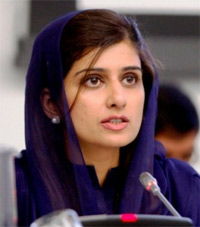
Foreign Minister Hina Rabbani Khar, who too appeared before the committee, said the delay in implementing the pact was only due to “procedural” issues.


Officials assured the panel that the agreement would be forwarded to the cabinet division next week so that the process of ratifying it could be completed.


Farhatullah Babar suggested that provisions for granting visas to reporters should be incorporated in the agreement as the media plays a key role in fostering better relations between the two countries.


Comments

Add new comment

  • Coastaldigest.com reserves the right to delete or block any comments.
  • Coastaldigset.com is not responsible for its readers’ comments.
  • Comments that are abusive, incendiary or irrelevant are strictly prohibited.
  • Please use a genuine email ID and provide your name to avoid reject.
Agencies
January 20,2020

For the first time in the 15 years of the Global Risks Report, the climate change and environment risk has occupied all the top five slots.

According to the 15th edition of the World Economic Forum's (WEF) Global Risks Report, the top five risks in terms of likelihood are extreme weather, climate action failure, natural disasters, biodiversity loss and human-made environmental disasters. They all fall in the one category of climate change and related environmental disasters.

WEF President Borge Brende said the world was feeling long-mounting and interconnected risks.

The report also points to how citizens are protesting across the world as discontent rises with failed systems that are creating inequality. The citizens' discontent had hardened with systems that had failed to promote advancement, it said.

"Disapproval of how governments are addressing profound economic and social issues has sparked protests throughout the world, potentially weakening the ability of governments to take decisive action should a downturn occur. Without economic and social stability, countries could lack the financial resources, fiscal margin, political capital or social support needed to confront key global risks," it said.

Listing the grim scenario, Borge said the global economy was faced with "synchronised slowdown", the past five years had been the warmest on record and cyber attacks were expected to increase this year.

The report warns that while the myriad risks were rising, time was running out on how to prevent them.

Borge said the growing palpability of shared economic, environmental and societal risks indicated that the horizon had shortened for preventing "or even mitigating" some of the direst consequences of global risks.

"It's sobering that in the face of this development, when the challenges before us demand immediate collective action, fractures within the global community appear to only be widening," he said.

The report points to grave concern about the consequences of continued environmental degradation, including the record pace of species decline.

Pointing to an unsettled geopolitical environment, the report said today's risk landscape was one in which new centres of power and influence were forming and old alliance structures and global institutions were being tested.

"While these changes can create openings for new partnership structures in the immediate term, they are putting stress on systems of coordination and challenging norms around shared responsibility. Unless stakeholders adapt multilateral mechanisms for this turbulent period, the risks that were once on the horizon will continue to arrive," it said.

Calling it a "an unsettled world", the WEF report notes that powerful economic, demographic and technological forces were shaping a new balance of power. "The result is an unsettled geopolitical landscape in which states are increasingly viewing opportunities and challenges through unilateral lenses," it said.

"What were once givens regarding alliance structures and multilateral systems no longer hold as states question the value of long-standing frameworks, adopt more nationalist postures in pursuit of individual agendas and weigh the potential geopolitical consequences of economic decoupling. Beyond the risk of conflict, if stakeholders concentrate on immediate geo-strategic advantage and fail to re-imagine or adapt mechanisms for coordination during this unsettled period, opportunities for action on key priorities may slip away," the WEF said.

In a chapter on risks to economic stability and social cohesion, it said a challenging economic climate might persist this year and members of the multi-stakeholder community saw "economic confrontations" and "domestic political polarisation" as the top risks in 2020.

The report also warned of downward pressure on the global economy from macroeconomic fragilities and financial inequality. These pressures continued to intensify in 2019, increasing the risk of economic stagnation.

Low trade barriers, fiscal prudence and strong global investment, once seen as fundamentals for economic growth, are fraying as leaders advance nationalist policies. The margins for monetary and fiscal stimuli are also narrower than before the 2008-2009 financial crisis, creating uncertainty about how well countercyclical policies will work.

The strategic partners for the WEF report included Marsh & McLennan and Zurich Insurance Group. The academic advisers were National University of Singapore, Oxford Martin School, University of Oxford and Wharton Risk Management and Decision Processes Center, University of Pennsylvania.


Comments

Add new comment

  • Coastaldigest.com reserves the right to delete or block any comments.
  • Coastaldigset.com is not responsible for its readers’ comments.
  • Comments that are abusive, incendiary or irrelevant are strictly prohibited.
  • Please use a genuine email ID and provide your name to avoid reject.
News Network
May 20,2020

Washington, May 20: Once dubbed as historic by him, US President Donald Trump on Tuesday said he now feels ‘differently’ about the trade deal he signed with China earlier this year.

He said this while once again venting out his frustration with the Beijing leadership, accusing it of letting coronavirus spread.

Till Tuesday, over 92,000 Americans have died and 1.5 million tested positive for coronavirus that has globally killed around 320,000 people.

The US and China had signed a deal in January to end their 22-month-long trade war during which the two countries slapped tit-for-tat tariff hikes on products worth nearly half a trillion USD.

Under it, Beijing agreed to increase its purchase of US goods by USD 200 billion in 2020-2021.

“I feel differently now about that deal than I did three months ago,” Trump told reporters during a Cabinet meeting at the White House.

“We will see what all happens, but it's been a very disappointing situation. A very disappointing thing happened with China because the plague flowed in and that wasn't supposed to happen and it could have been stopped," he said.

Trump said he was very excited when the trade deal with China was signed.

“But once the virus came in, once the plague, as I called it, came in, I said how did they let that happen? And how come it didn't go into other sections of China? Why did they block it from leaving Wuhan? But they didn't block it from going to the rest of the world, including the United States. Why is that? Beijing doesn't have it. Other places don't have it,” he said.

Trump did not respond to questions on retaliation against China.

Meanwhile, top American senators continued to press the administration that rules of engagement with China needs to change post-coronavirus.

“As we know, they unleashed this virus on America and the world with their classic communist cover-up, deception, continued propaganda campaign, costing now over 90,000 American lives, 35 million Americans losing their jobs so far,” Senator Martha McSally said during a Congressional hearing.

“We don’t know who patient zero is, they destroyed samples, they silenced doctors, they kicked out journalists, they impacted international travel to seed this and their reckless behaviour continues to be the root of all this,” she said.

As a result of coronavirus, the American economy has been thrown into recession; more than 36 million people have lost their job – the worst ever after last century’s great depression.

Many of the US states have now started opening up, after taking necessary precautions.

By conservative estimates, it will take several quarters for the economy to be back on track.

Trump in the last a few weeks has exuded confidence that the economy will be back on track next year.

Comments

Add new comment

  • Coastaldigest.com reserves the right to delete or block any comments.
  • Coastaldigset.com is not responsible for its readers’ comments.
  • Comments that are abusive, incendiary or irrelevant are strictly prohibited.
  • Please use a genuine email ID and provide your name to avoid reject.
Agencies
July 29,2020

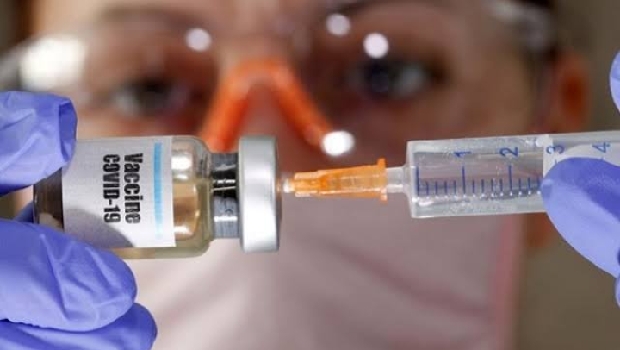
If everything goes as Russia’s expectation, it will be world’s first country to approve a coronavirus vaccine for widespread in the second week of August despite safety and efficacy concerns, according to a report. The adenoviral vector-based vaccine developed by Russian military and government researchers is currently in phase 2 trials.

According to a report from CNN, Russian officials are hoping to get approval for the COVID-19 vaccine developed by the Moscow-based Gamaleya Institute on Agust 10 or even before that. The officials told the outlet that the vaccine will be approved for public use with frontline healthcare workers receiving it first.

“It’s a Sputnik moment,” said Kirill Dmitriev, head of Russia’s sovereign wealth fund, which is financing Russian vaccine research, referring to the successful 1957 launch of the world’s first satellite by the Soviet Union, according to CNN.

“Americans were surprised when they heard Sputnik’s beeping. It’s the same with this vaccine. Russia will have got there first,” he was quoted as saying.

However, Russia is yet to release the scientific data on its coronavirus vaccine trials, hence, questions remain about the safety and efficacy of the vaccine, said the report. The vaccine is in the second phase of testing with developers planning to launch the phase 3 trials sometime after August 3.

Earlier, Interfax reported, citing Health Minister Mikhail Murashko, that the vaccine will be widely used in parallel with phase 3 trials. He said the country plans to vaccinate medics who are at high-risk for COVID-19 next month before clinical trials are completed.

Murashko added that individuals at higher risk of getting infected with the coronavirus such as older people or those with health conditions will also be prioritised for the vaccine, although he did not estimate or reveal when that would happen. The minister added 800 people will be recruited for the phase 3 trials.

Meanwhile, health officials were more cautious considering the fact that human testing of the vaccine is incomplete, and the state registration is expected to begin after August 3, reported The Moscow Times.

On Monday, Moderna and Pfizer announced the commencement of the final phase 3 trials of their candidate vaccines against the SARS-CoV-2 virus, which has so far claimed at least 654,477 lives and infected 16,514,500 people worldwide. 

Researchers will recruit up to 30,000 volunteers in separate trials both backed by the US government. India's first indigenous coronavirus vaccine, COVAXIN, is undergoing phase 1 human clinical trials across the country. More than 150 COVID-19 vaccines are being developed all over the world with at least six candidates already in late-stage clinical trials.

Comments

Add new comment

  • Coastaldigest.com reserves the right to delete or block any comments.
  • Coastaldigset.com is not responsible for its readers’ comments.
  • Comments that are abusive, incendiary or irrelevant are strictly prohibited.
  • Please use a genuine email ID and provide your name to avoid reject.