



CPC to address concerns on rising inequality

[email protected] (The Hindu)
November 13, 2012

China_migran

Beijing, November 13: Top Communist Party of China (CPC) officials on Monday pledged to expand the construction of low-income housing and to provide more support to a job market facing pressures from a continuing slowdown, amid growing public concerns about widening social inequality in the country.

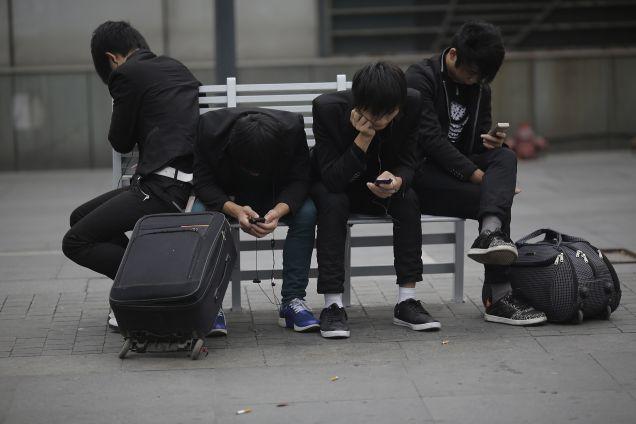
As the Party prepares for leadership change, how it grapples with surging real estate prices, shutting out an increasing number of Chinese from buying homes; and how it will ensure employment for the millions of graduates and migrant workers flooding cities every year, are among its most pressing challenges, say officials and scholars.

Jiang Weixin, who heads the Ministry of Housing and Urban-rural Development, told reporters on Monday at a briefing along the sidelines of the 18th National Congress, which will conclude on Wednesday, that the government plans to build at least five million units of homes next year, following the construction of more than seven million units this past year.

Mr. Jiang acknowledged the problems affecting the provision of housing, starting with widespread complaints about a lack of transparency in the allocation of low-income homes. China plans to build 36 million units under the correct Five-Year Plan (2011-15). In the first year of the plan, the government built 10 million units at a cost of around $ 200 billion.

Rising real estate prices, coupled with problems in the provision of homes, have fuelled anger about the housing sector in recent months. According to China Development Research Foundation report, an official think-tank, local governments were shirking their responsibilities of building low-income housing projects. Instead, they were pursuing more lucrative luxury projects. Recent audits conducted by the central government found that close to three billion Yuan allocated for low-income housing developments had been diverted for other projects.

Assuaging concerns about rising real estate prices, Mr. Jiang said the government would not relax recently enforced property restrictions, such as barring third-home purchases. He said it was also “actively studying” expanding an experimental property tax, the official Xinhua news agency reported.

According to October's figures, housing sales rose 5.6 per cent after 10 months of this year to 4.63 trillion Yuan ($ 735 billion). Property investment accounts for 13% of China's gross domestic output and one-fifth of fixed asset investment, presenting the government with a tough balancing act while introducing cooling measures.

Separately on Monday, a CPC official in charge of employment, Yang Zhiming, warned that the job market in China was “feeling the pressure from the country's economic downshift”. “The impact of economic slowdown on the job market is starting to emerge”, Mr. Yang, who is also the Vice Minister of Human Resources and Social Security, told reporters. He said the growth of newly added jobs had been narrowing since April, exerting pressure on the job market with seven million college graduates estimated to have entered the job market this year. “China will continue to face the problem of labour oversupply for a long time,” he said, with urban employment at 4.1 per cent, below the government's 4.6 per cent target limit. The government, he added, would take steps to “boost labour-intensive industries” and “strategic emerging industries” to accelerate job growth, and would also encourage students to work in less developed central and western China.

Comments

Add new comment

  • Coastaldigest.com reserves the right to delete or block any comments.
  • Coastaldigset.com is not responsible for its readers’ comments.
  • Comments that are abusive, incendiary or irrelevant are strictly prohibited.
  • Please use a genuine email ID and provide your name to avoid reject.
News Network
March 24,2020

New Delhi, Mar 24: Reports of a person in China dying due to a virus called hantavirus have spread panic at a time when the world is battling the pandemic of novel coronavirus, which began in China.

The novel coronavirus has killed over 16,000 people around the world and the outbreak is yet to be brought under control.

This morning, hantavirus became one of the top trends on Twitter after the Chinese state media tweeted about one person in the country dying due the virus. However, it turns out, hantavirus is not a new virus and has been infecting humans for decades.

Global Times, a state-run English-language newspaper, wrote on Twitter on Tuesday, "A person from Yunnan Province died while on his way back to Shandong Province for work on a chartered bus on Monday. He was tested positive for hantavirus. Other 32 people on bus were tested."

Global Times's hantavirus report on Twitter has been shared over 6,000 times.

On Tuesday, hantavirus was one of the top trends on Twitter.

WHAT IS HANTAVIRUS?

Some people are calling it a new virus but so is not the case. United States's National Center for Biotechnology Information (NCBI) in a journal writes that currently, the hantavirus genus includes more than 21 species.

"Hantaviruses in the Americas are known as 'New World' hantaviruses and may cause hantavirus pulmonary syndrome [HPS]," CDC says. "Other hantaviruses, known as 'Old World' hantaviruses, are found mostly in Europe and Asia and may cause hemorrhagic fever with renal syndrome [HFRS]."

Any man, woman, or child who is around mice or rats that carry harmful hantaviruses can get HPS.

People get HPS when they breath in hantaviruses. This can happen when rodent urine and droppings that contain a hantavirus are stirred up into the air. People can also become infected when they touch mouse or rat urine, droppings, or nesting materials that contain the virus and then touch their eyes, nose, or mouth. They can also get HPS from a mouse or rat bite.

In the US, 10 confirmed cases of hantavirus infection in people who visited Yosemite National Park in California, US, in November 2012, were reported. Similarly, in 2017, CDC assisted health officials in investigating an outbreak of Seoul virus infection that infected 17 people in seven states.

WHAT ARE THE SYMPTOMS OF HANTAVIRUS?

If people get HPS, they will feel sick one to five weeks after they were around mice or rats that carried a hantavirus.

At first people with HPS will have:

Fever
Severe muscle aches
Fatigue

After a few days, they will have a hard time breathing. Sometimes people will have headaches, dizziness, chills, nausea, vomiting, diarrhoea, and stomach pain.

Usually, people do not have a runny nose, sore throat, or a rash.

Comments

Add new comment

  • Coastaldigest.com reserves the right to delete or block any comments.
  • Coastaldigset.com is not responsible for its readers’ comments.
  • Comments that are abusive, incendiary or irrelevant are strictly prohibited.
  • Please use a genuine email ID and provide your name to avoid reject.
News Network
May 14,2020

May 14: The UN’s children agency has warned that an additional 6,000 children could die daily from preventable causes over the next six months as the COVID-19 pandemic weakens the health systems and disrupts routine services, the first time that the number of children dying before their fifth birthday could increase worldwide in decades.

As the coronavirus outbreak enters its fifth month, the UN Children’s Fund (UNICEF) requested USD 1.6 billion to support its humanitarian response for children impacted by the pandemic.

The health crisis is “quickly becoming a child rights crisis. And without urgent action, a further 6,000 under-fives could die each day,” it said.

With a dramatic increase in the costs of supplies, shipment and care, the agency appeal is up from a USD 651.6 million request made in late March – reflecting the devastating socioeconomic consequences of the disease and families’ rising needs.

"Schools are closed, parents are out of work and families are under strain," UNICEF Executive Director Henrietta Fore said on Tuesday.

 “As we reimagine what a post-COVID world would look like, these funds will help us respond to the crisis, recover from its aftermath, and protect children from its knock-on effects.”

The estimate of the 6,000 additional deaths from preventable causes over the next six months is based on an analysis by researchers from the Johns Hopkins Bloomberg School of Public Health, published on Wednesday in the Lancet Global Health Journal.

UNICEF said it was based on the worst of three scenarios analysing 118 low and middle-income countries, estimating that an additional 1.2 million deaths could occur in just the next six months, due to reductions in routine health coverage, and an increase in so-called child wasting.

Around 56,700 more maternal deaths could also occur in just six months, in addition to the 144,000 likely deaths across the same group of countries. The worst case scenario, of children dying before their fifth birthdays, would represent an increase "for the first time in decades,” Fore said.

"We must not let mothers and children become collateral damage in the fight against the virus. And we must not let decades of progress on reducing preventable child and maternal deaths, be lost,” she said.

Access to essential services, like routine immunisation, has already been compromised for hundreds of millions of children and threatens a significant increase in child mortality.

According to a UNICEF analysis, some 77 per cent of children under the age of 18 worldwide are living in one of 132 countries with COVID-19 movement restrictions.

The UN agency also spotlighted that the mental health and psychosocial impact of restricted movement, school closures and subsequent isolation are likely to intensify already high levels of stress, especially for vulnerable youth.

At the same time, they maintained that children living under restricted movement and socio-economic decline are in greater jeopardy of violence and neglect. Girls and women are at increased risk of sexual and gender-based violence.

The UNICEF pointed out that in many cases, refugee, migrant and internally displaced children are experiencing reduced access to protection and services while being increasingly exposed to xenophobia and discrimination.

“We have seen what the pandemic is doing to countries with developed health systems and we are concerned about what it would do to countries with weaker systems and fewer available resources,” Fore said.

In countries suffering from humanitarian crises, UNICEF is working to prevent transmission and mitigate the collateral impacts on children, women and vulnerable populations – with a special focus on access to health, nutrition, water and sanitation, education and protection.

To date, the UN agency said it has received USD 215 million to support its pandemic response, and additional funding will help build upon already-achieved results.

Within its response, UNICEF has reached more than 1.67 billion people with COVID-19 prevention messaging around hand washing and cough and sneeze hygiene; over 12 million with critical water, sanitation and hygiene supplies; and nearly 80 million children with distance or home-based learning.

The UN agency has also shipped to 52 countries, more than 6.6 million gloves, 1.3 million surgical masks, 428,000 N95 respirators and 34,500 COVID-19 diagnostic tests, among other items.

Comments

Add new comment

  • Coastaldigest.com reserves the right to delete or block any comments.
  • Coastaldigset.com is not responsible for its readers’ comments.
  • Comments that are abusive, incendiary or irrelevant are strictly prohibited.
  • Please use a genuine email ID and provide your name to avoid reject.
News Network
January 6,2020

Aboard Air Force One, Jan 6: US President Donald Trump threatened sanctions against Baghdad on Sunday after Iraq's parliament called on US troops to leave the country, and the president said if troops did leave, Baghdad would have to pay Washington for the cost of the air base there.

"We have a very extraordinarily expensive air base that's there. It cost billions of dollars to build, long before my time. We're not leaving unless they pay us back for it," Trump told reporters on Air Force One.

Trump said that if Iraq asked US forces to leave and it was not done on a friendly basis, "we will charge them sanctions like they've never seen before ever. It'll make Iranian sanctions look somewhat tame."

Comments

Add new comment

  • Coastaldigest.com reserves the right to delete or block any comments.
  • Coastaldigset.com is not responsible for its readers’ comments.
  • Comments that are abusive, incendiary or irrelevant are strictly prohibited.
  • Please use a genuine email ID and provide your name to avoid reject.