



CPC to address concerns on rising inequality

[email protected] (The Hindu)
November 13, 2012

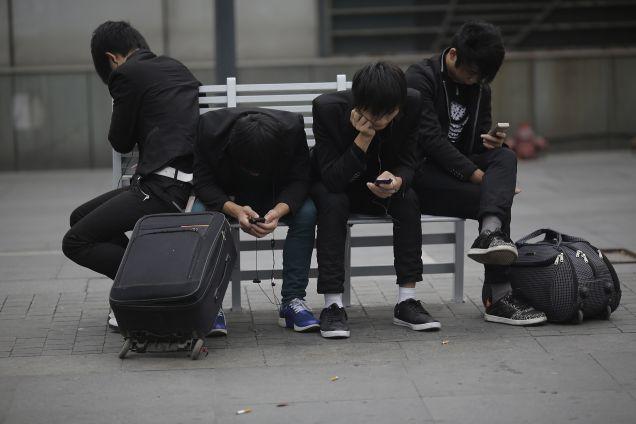
China_migran

Beijing, November 13: Top Communist Party of China (CPC) officials on Monday pledged to expand the construction of low-income housing and to provide more support to a job market facing pressures from a continuing slowdown, amid growing public concerns about widening social inequality in the country.

As the Party prepares for leadership change, how it grapples with surging real estate prices, shutting out an increasing number of Chinese from buying homes; and how it will ensure employment for the millions of graduates and migrant workers flooding cities every year, are among its most pressing challenges, say officials and scholars.

Jiang Weixin, who heads the Ministry of Housing and Urban-rural Development, told reporters on Monday at a briefing along the sidelines of the 18th National Congress, which will conclude on Wednesday, that the government plans to build at least five million units of homes next year, following the construction of more than seven million units this past year.

Mr. Jiang acknowledged the problems affecting the provision of housing, starting with widespread complaints about a lack of transparency in the allocation of low-income homes. China plans to build 36 million units under the correct Five-Year Plan (2011-15). In the first year of the plan, the government built 10 million units at a cost of around $ 200 billion.

Rising real estate prices, coupled with problems in the provision of homes, have fuelled anger about the housing sector in recent months. According to China Development Research Foundation report, an official think-tank, local governments were shirking their responsibilities of building low-income housing projects. Instead, they were pursuing more lucrative luxury projects. Recent audits conducted by the central government found that close to three billion Yuan allocated for low-income housing developments had been diverted for other projects.

Assuaging concerns about rising real estate prices, Mr. Jiang said the government would not relax recently enforced property restrictions, such as barring third-home purchases. He said it was also “actively studying” expanding an experimental property tax, the official Xinhua news agency reported.

According to October's figures, housing sales rose 5.6 per cent after 10 months of this year to 4.63 trillion Yuan ($ 735 billion). Property investment accounts for 13% of China's gross domestic output and one-fifth of fixed asset investment, presenting the government with a tough balancing act while introducing cooling measures.

Separately on Monday, a CPC official in charge of employment, Yang Zhiming, warned that the job market in China was “feeling the pressure from the country's economic downshift”. “The impact of economic slowdown on the job market is starting to emerge”, Mr. Yang, who is also the Vice Minister of Human Resources and Social Security, told reporters. He said the growth of newly added jobs had been narrowing since April, exerting pressure on the job market with seven million college graduates estimated to have entered the job market this year. “China will continue to face the problem of labour oversupply for a long time,” he said, with urban employment at 4.1 per cent, below the government's 4.6 per cent target limit. The government, he added, would take steps to “boost labour-intensive industries” and “strategic emerging industries” to accelerate job growth, and would also encourage students to work in less developed central and western China.

Comments

Add new comment

  • Coastaldigest.com reserves the right to delete or block any comments.
  • Coastaldigset.com is not responsible for its readers’ comments.
  • Comments that are abusive, incendiary or irrelevant are strictly prohibited.
  • Please use a genuine email ID and provide your name to avoid reject.
News Network
April 28,2020

Washington, Apr 28: After nearly three weeks in an intensive care unit in Los Angeles, doctors treating 41-year-old Broadway actor Nick Cordero for COVID-19 were forced to amputate his right leg.

The flow of blood had been impeded by a blood clot: yet another dangerous complication of the disease that has been bubbling up in frontline reports from China, Europe and the United States.

To be sure, so-called "thrombotic events" occur for a variety of reasons among intensive care patients, but the rates among COVID-19 patients are far higher than would be otherwise expected.

"I have had 40-year-olds in my ICU who have clots in their fingers that look like they'll lose the finger, but there's no other reason to lose the finger than the virus," Shari Brosnahan, a critical care doctor at NYU Langone said.

One of these patients is suffering from a lack of blood flow to both feet and both hands, and she predicts an amputation may be necessary, or the blood vessels may get so damaged that an extremity could drop off by itself.

Blood clots aren't just dangerous for our limbs, but can make their way to the lungs, heart or brain, where they may cause lethal pulmonary embolisms, heart attacks, and strokes.

A recent paper from the Netherlands in the journal Thrombosis Research found that 31 percent of 184 patients suffered thrombotic complications, a figure that the researchers called "remarkably high" -- even if extreme consequences like amputation are rare.

Behnood Bikdeli, a doctor at New York-Presbyterian Hospital, assembled an international consortium of experts to study the issue. Their findings were published in the Journal of The American College of Cardiology.

The experts found the risks were so great that COVID-19 patients "may need to receive blood thinners, preventively, prophylactically," even before imaging tests are ordered, said Bikdeli.

What exactly is causing it? The reasons aren't fully understood, but he offered several possible explanations.

People with severe forms of COVID-19 often have underlying medical conditions like heart or lung disease -- which are themselves linked to higher rates of clotting.

Next, being in intensive care makes a person likelier to develop a clot because they are staying still for so long. That's why for example people are encouraged to stretch and move around on long haul flights.

It's also now clear the COVID-19 illness is associated with an abnormal immune reaction called "cytokine storm" -- and some research has indicated this too is linked to higher rates of clotting.

There could also be something about the virus itself that is causing coagulation, which has some precedent in other viral illnesses.

A paper in the journal The Lancet last week showed that the virus can infect the inner cell layer of organs and of blood vessels, called the endothelium. This, in theory, could interfere with the clotting process.

According to Brosnahan, while thinners like Heparin are effective in some patients, they don't work for all patients because the clots are at times too small.

"There are too many microclots," she said. "We're not sure exactly where they are."

Autopsies have in fact shown some people's lungs filled with hundreds of microclots.

The arrival of a new mystery however helps solve a slightly older one.

Cecilia Mirant-Borde, an intensive care doctor at a military veterans hospital in Manhattan, told AFP that lungs filled with microclots helped explain why ventilators work poorly for patients with low blood oxygen.

Earlier in the pandemic doctors were treating these patients according to protocols developed for acute respiratory distress syndrome, sometimes known as "wet lung."

But in some cases, "it's not because the lungs are occupied with water" -- rather, it's that the microclotting is blocking circulation and blood is leaving the lungs with less oxygen than it should.

It has just been a little under five months since the virus emerged in Wuhan, China, and researchers are learning more about its impact every day.

"While we react surprised, we shouldn't be as surprised as we were. Viruses tend to do weird things," said Brosnahan.

While the dizzying array of complications may seem daunting, "it's possible there'll be one or a couple of unifying mechanisms that describe how this damage happens," she said.

"It's possible it's all the same thing, and that there'll be the same solution."

Comments

Add new comment

  • Coastaldigest.com reserves the right to delete or block any comments.
  • Coastaldigset.com is not responsible for its readers’ comments.
  • Comments that are abusive, incendiary or irrelevant are strictly prohibited.
  • Please use a genuine email ID and provide your name to avoid reject.
News Network
March 25,2020

Wellington, Mar 25: New Zealand has declared a state of emergency as it prepares to go into an unprecedented lockdown late Wednesday for about a month.

The declaration temporarily gives police and the military extra powers. And Prime Minister Jacinda Ardern says any New Zealanders returning home from overseas who show symptoms of COVID-19 will be put in isolation at an approved facility.

“I have one simple message for New Zealanders today as we head into the next four weeks: ‘stay at home,’” Ardern said. “It will break the chain of transmission and it will save lives.”

Ardern said exceptions include people working crucial jobs, those leaving to pick up essentials like groceries, and those engaging in solitary exercise.

The country has 205 reported cases of the virus, although Ardern said that number could rise into the thousands before it begins to recede even with the strict measures being taken.

Comments

Add new comment

  • Coastaldigest.com reserves the right to delete or block any comments.
  • Coastaldigset.com is not responsible for its readers’ comments.
  • Comments that are abusive, incendiary or irrelevant are strictly prohibited.
  • Please use a genuine email ID and provide your name to avoid reject.
Agencies
March 8,2020

Washington, Mar 8: An attendee at last week's Conservative Political Action Conference (CPAC), which also saw the participation of US President Donald Trump, has tested positive for COVID-19, the American Conservative Union (ACU) said.

The exposure occurred prior to the conference held in National Harbor, Maryland, just south of Washington D.C., Xinhua news agency quoted the ACU as saying in a statement on Saturday.

A New Jersey hospital tested the person, and the Centers for Disease Control and Prevention (CDC) confirmed the positive result, said the statement.

"The individual is under the care of medical professionals in the state of New Jersey, and has been quarantined," it said.

Trump and Vice President Mike Pence spoke at the gathering, which took place from February 26-29.

Also present at the event were a number of administration and cabinet officials, including Secretary of State Mike Pompeo, Health and Human Services Secretary Alex Azar, and newly-appointed White House Chief of Staff Mark Meadows.

White House Press Secretary Stephanie Grisham said in a statement Saturday that the White House was aware of the development.

"At this time there is no indication that either President Trump or Vice President Pence met with or were in close proximity to the attendee," Grisham said in a statement.

"The President's physician and US Secret Service have been working closely with White House Staff and various agencies to ensure every precaution is taken to keep the First Family and the entire White House Complex safe and healthy."

The news emerged as Washington D.C. and neighbouring state of Virginia respectively confirmed their first cases of COVID-19 on Saturday.

In a press conference on Saturday night, Washington D.C. Mayor Muriel Bowser said a resident in his 50s showed symptoms of a respiratory virus in February. He was admitted to a hospital in the District on March 5.

The patient had no history of recent international travel, nor had he been exposed to anyone who was confirmed to be infected, according to Bowser.

The Mayor said D.C. health authorities were investigating the man's contact with other people before he went to the hospital.

A US Marine assigned to Fort Belvoir in Fairfax County, Virginia, tested positive on Saturday for COVID-19 and is currently being treated at Fort Belvoir Community Hospital, according to a Pentagon spokesman.

"The Marine recently returned from overseas where he was on official business," tweeted Jonathan Rath Hoffman, adding that Secretary of Defence Mark Esper and the White House have been briefed.

As of Saturday night, more than 420 cases of COVID-19 were reported in the US with 17 deaths, according to the Center for Systems Science and Engineering at Johns Hopkins University.

Comments

Add new comment

  • Coastaldigest.com reserves the right to delete or block any comments.
  • Coastaldigset.com is not responsible for its readers’ comments.
  • Comments that are abusive, incendiary or irrelevant are strictly prohibited.
  • Please use a genuine email ID and provide your name to avoid reject.