



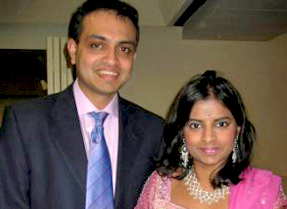
British-Indian dentist alleged being 'bullied and harassed' by National Health Service before suicide

August 12, 2013

British-Indian_dentistLondon, Aug 12: A British Indian dentist from Yorkshire committed suicide after allegedly being "bullied and harassed" by the National Health Service which threatened disciplinary action against him over keeping of records at his clinic, an inquest heard.

Dr Anand Kamath, 42, was under investigation by the National Health Service (NHS) over record-keeping at Rothwell Dental Surgery, which he ran with his wife and fellow dentist Dr Rajni Prasad in the city of Leeds.

An inquest heard last week that the father of three felt "bullied and harassed" and took his own life after receiving a letter from the NHS warning him that he could be reported to the General Dental Council.

"They behaved like bullies and drove a loyal NHS servant over the edge. He just couldn't take the anxiety," his 42-year-old wife told the inquest.

"When the letter came, that was the final straw. He gave everything to the NHS. His reward for caring for thousands of patients no other practice would take was to be threatened with the most severe disciplinary action over administrative matters which we agreed straightaway needed improvement," she added.

According to Sunday Mirror, Dr Kamath and his wife had for 10 years treated only NHS patients in an area of Leeds where there were no other NHS government-backed dentists.

The couple had taken on 10,000 patients, four times that of the average practice, to help out patients who could not afford the high costs of private dentistry.

Their record-keeping suffered in the process and Rajni Prasad found her husband with his wrists cut at their home in Pudsey, near Leeds, in December last year.

The British Dental Association has called for an inquiry into the circumstances behind the suicide of Dr Kamath.

Recording a verdict of suicide, Wakefield coroner David Hinchliff said,"There had been a complaint and an investigation, not about his ability as a dentist, but in relation to recordkeeping which had put him and his wife under an intolerable strain."

"It seems he was in grave danger of being removed from the list of practitioners which would have ended his career. It appears all of this just became too much and he had taken action to end his own life," he said.

Hinchliff added that unreasonable pressure exerted on Dr Kamath by the trust "pushed a good man over the edge".

"We are happy that the investigation into Dr Kamath being undertaken was following National Clinical Assessment service advice. Safety and quality of service is our priority and so we will always investigate when complaints are received. This can be stressful for some but we try to work with providers to ensure the process runs smoothly," an NHS England spokesperson said.

Comments

Add new comment

  • Coastaldigest.com reserves the right to delete or block any comments.
  • Coastaldigset.com is not responsible for its readers’ comments.
  • Comments that are abusive, incendiary or irrelevant are strictly prohibited.
  • Please use a genuine email ID and provide your name to avoid reject.
News Network
April 28,2020

Washington, Apr 28: After nearly three weeks in an intensive care unit in Los Angeles, doctors treating 41-year-old Broadway actor Nick Cordero for COVID-19 were forced to amputate his right leg.

The flow of blood had been impeded by a blood clot: yet another dangerous complication of the disease that has been bubbling up in frontline reports from China, Europe and the United States.

To be sure, so-called "thrombotic events" occur for a variety of reasons among intensive care patients, but the rates among COVID-19 patients are far higher than would be otherwise expected.

"I have had 40-year-olds in my ICU who have clots in their fingers that look like they'll lose the finger, but there's no other reason to lose the finger than the virus," Shari Brosnahan, a critical care doctor at NYU Langone said.

One of these patients is suffering from a lack of blood flow to both feet and both hands, and she predicts an amputation may be necessary, or the blood vessels may get so damaged that an extremity could drop off by itself.

Blood clots aren't just dangerous for our limbs, but can make their way to the lungs, heart or brain, where they may cause lethal pulmonary embolisms, heart attacks, and strokes.

A recent paper from the Netherlands in the journal Thrombosis Research found that 31 percent of 184 patients suffered thrombotic complications, a figure that the researchers called "remarkably high" -- even if extreme consequences like amputation are rare.

Behnood Bikdeli, a doctor at New York-Presbyterian Hospital, assembled an international consortium of experts to study the issue. Their findings were published in the Journal of The American College of Cardiology.

The experts found the risks were so great that COVID-19 patients "may need to receive blood thinners, preventively, prophylactically," even before imaging tests are ordered, said Bikdeli.

What exactly is causing it? The reasons aren't fully understood, but he offered several possible explanations.

People with severe forms of COVID-19 often have underlying medical conditions like heart or lung disease -- which are themselves linked to higher rates of clotting.

Next, being in intensive care makes a person likelier to develop a clot because they are staying still for so long. That's why for example people are encouraged to stretch and move around on long haul flights.

It's also now clear the COVID-19 illness is associated with an abnormal immune reaction called "cytokine storm" -- and some research has indicated this too is linked to higher rates of clotting.

There could also be something about the virus itself that is causing coagulation, which has some precedent in other viral illnesses.

A paper in the journal The Lancet last week showed that the virus can infect the inner cell layer of organs and of blood vessels, called the endothelium. This, in theory, could interfere with the clotting process.

According to Brosnahan, while thinners like Heparin are effective in some patients, they don't work for all patients because the clots are at times too small.

"There are too many microclots," she said. "We're not sure exactly where they are."

Autopsies have in fact shown some people's lungs filled with hundreds of microclots.

The arrival of a new mystery however helps solve a slightly older one.

Cecilia Mirant-Borde, an intensive care doctor at a military veterans hospital in Manhattan, told AFP that lungs filled with microclots helped explain why ventilators work poorly for patients with low blood oxygen.

Earlier in the pandemic doctors were treating these patients according to protocols developed for acute respiratory distress syndrome, sometimes known as "wet lung."

But in some cases, "it's not because the lungs are occupied with water" -- rather, it's that the microclotting is blocking circulation and blood is leaving the lungs with less oxygen than it should.

It has just been a little under five months since the virus emerged in Wuhan, China, and researchers are learning more about its impact every day.

"While we react surprised, we shouldn't be as surprised as we were. Viruses tend to do weird things," said Brosnahan.

While the dizzying array of complications may seem daunting, "it's possible there'll be one or a couple of unifying mechanisms that describe how this damage happens," she said.

"It's possible it's all the same thing, and that there'll be the same solution."

Comments

Add new comment

  • Coastaldigest.com reserves the right to delete or block any comments.
  • Coastaldigset.com is not responsible for its readers’ comments.
  • Comments that are abusive, incendiary or irrelevant are strictly prohibited.
  • Please use a genuine email ID and provide your name to avoid reject.
News Network
June 26,2020

Washington, Jun 26: The US is reviewing its global deployment of forces to ensure it is postured appropriately to counter the People's Liberation Army, given the increasing threat posed by China to Asian countries like India, Malaysia, Indonesia, and the Philippines, Secretary of State Mike Pompeo said on Thursday.

Mr Pompeo made those remarks in response to a question during the virtual Brussels Forum 2020 of the German Marshall Fund.

"We're going to make sure we're postured appropriately to counter the PLA. We think that the challenge of our times, and we're going to make sure we have resources in place to do that," Mr Pompeo said.
 
The force posture review is being done at the direction of President Donald Trump, as part of which the US is reducing the number of its troops in Germany from about 52,000 to 25,000, he said.

Mike Pompeo said that the force posture would be dictated by the ground realities.

"In certain places there will be fewer American resources. There'll be other places - I just talked about the threat from the Chinese Communist Party, so now threats to India, threats to Vietnam, threats to Malaysia, Indonesia, South China Sea challenges, the Philippines," he said.

"To the extent that that changed, the difference in what the US decided to do impacts adversely a threat some place, it may be that other nations need to step up and take responsibility for their own defense in ways that they hadn't done previously. So, we want to do this in full consultation with all of our partners all around the world, and certainly our friends in Europe," Mr Pompeo said.

President Trump is being criticised for reducing troops from Germany. His critics say that this will increase the threat from Russia to Europe.

Mike Pompeo, however, did not agree with that argument.

It has been a long time since there has been a strategic review of our force posture all across the world. The US undertook that starting about 2.5 years ago, whether that was our forces in Africa, our forces in Asia, the force we have in the Middle East and in Europe, he said.

"We began to say these are often decisions that were made in a different time. Should we reallocate those a different way? Should we have a different composition of those forces? Everyone always wants to talk about ground troops. I get it. I was a young tank officer. You described that. There's nothing I like as much as a good M1 tank.

"But it's often the case that the capacity to deter Russia or other adversaries isn''t determined any longer by just having a bunch of folks garrisoned someplace. So, we really went to back fundamentally relook, what is the nature of the conflict, what''s the nature of the threat, and how should we allocate our resources, whether that''s our resources in the intelligence community, our resources from the Air Force or the Marines and Army," Mr Pompeo said.

Last week, Mike Pompeo criticised the Chinese Army for "escalating" the border tension with India and militarising the strategic South China Sea. He also described the ruling Communist Party of China (CPC) as a "rogue actor".

"Our broad set of allocation of security apparatus, our ability to counter cyber threats, how do we allocate them? What''s the best way to do this? And the decision that you see the president made with respect to Germany is an outcome from a collective set of decisions about how we''re going to posture our resources around the world," said the top American diplomat on Thursday.

Changes in force posture is being taken in consultations with allies and friends, Mr Pompeo said.

"President Trump has spoken to this. (Defense) Secretary (Mark) Esper will be in London today and in Brussels tomorrow. We''ll talk about our plan and how we''re thinking about delivering it," he said.

"But you should understand this, and I hope our European partners will understand this as well. When you see what we ultimately conclude, how we ultimately deliver on the statements of the president made, that they''re aimed squarely at what we believe to be democracies'' fundamental interest and certainly America's most fundamental interest," Mr Pompeo said.

Earlier this month, Mike Pompeo had said that China's actions, be it on the India border, or in Hong Kong or in the South China Sea, were part of the behaviour of the ruling Communist Party in Beijing in the recent past.

China has been fast expanding military and economic influence in the Indo-Pacific region, triggering concern in various countries of the region and beyond.

China is engaged in hotly contested territorial disputes in both the South China Sea and the East China Sea. Beijing has built up and militarised many of the islands and reefs it controls in the region. Both areas are stated to be rich in minerals, oil and other natural resources and are vital to global trade.

Comments

Add new comment

  • Coastaldigest.com reserves the right to delete or block any comments.
  • Coastaldigset.com is not responsible for its readers’ comments.
  • Comments that are abusive, incendiary or irrelevant are strictly prohibited.
  • Please use a genuine email ID and provide your name to avoid reject.
Agencies
June 29,2020

Tehran, Jun 29: Iran has issued an arrest warrant and asked Interpol for help in detaining President Donald Trump and dozens of others it believes carried out the drone strike that killed a top Iranian general in Baghdad, a local prosecutor reportedly said Monday.

While Trump faces no danger of arrest, the charges underscore the heightened tensions between Iran and the United States since Trump unilaterally withdrew America from Tehran’s nuclear deal with world powers.

Tehran prosecutor Ali Alqasimehr said Trump and more than 30 others whom Iran accuses of involvement in the Jan. 3 strike that killed Gen. Qassem Soleimani in Baghdad face “murder and terrorism charges,” the semiofficial ISNA news agency reported.

Alqasimehr did not identify anyone else sought other than Trump, but stressed that Iran would continue to pursue his prosecution even after his presidency ends.

Interpol, based in Lyon, France, did not immediately respond to a request for comment.

Alqasimehr also was quoted as saying that Iran requested a “red notice” be put out for Trump and the others, which represents the highest level arrest request issued by Interpol. Local authorities end up making the arrests on behalf of the country that request it. The notices cannot force countries to arrest or extradite suspects, but can put government leaders on the spot and limit suspects’ travel.

After receiving a request, Interpol meets by committee and discusses whether or not to share the information with its member states. Interpol has no requirement for making any of the notices public, though some do get published on its website.

It is unlikely Interpol would grant Iran’s request as its guideline for notices forbids it from “undertaking any intervention or activities of a political” nature.

The U.S. killed Soleimani, who oversaw the Revolutionary Guard’s expeditionary Quds Force, and others in the January strike near Baghdad International Airport. It came after months of incidents raising tensions between the two countries and ultimately saw Iran retaliate with a ballistic missile strike targeting American troops in Iraq.

Comments

Add new comment

  • Coastaldigest.com reserves the right to delete or block any comments.
  • Coastaldigset.com is not responsible for its readers’ comments.
  • Comments that are abusive, incendiary or irrelevant are strictly prohibited.
  • Please use a genuine email ID and provide your name to avoid reject.