



US Senate closing in on deal to reopen government

October 15, 2013

Washington, Oct 15: Senate leaders were nearing a deal on Tuesday in talks to reopen the US government and prevent a default on American debt that economists say could tip the global economy back into recession.us
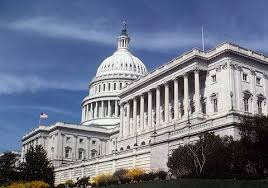
But an agreement in the Senate would only move the country halfway toward solving a bitter fight between Republicans and President Barack Obama's Democrats over government spending. Many conservatives in the House of Representatives were standing fast against the plan that would fund the government through January 15 and allow the treasury to borrow money to pay US bills until February.

With just two days left before the treasury department says it will run out of borrowing capacity, congressional aides predicted Senate majority leader Harry Reid and Republican leader Mitch McConnell could seal an agreement by midday, easing dual crises that have sapped confidence in the world's dominant economy and badly shaken support for Republicans. Both House and Senate Republican leaders scheduled private meetings with their rank-and-file Tuesday.

Obama telephoned McConnell on Monday to talk about the emerging deal, a McConnell aide said. Congressional leaders had been scheduled to meet with Obama at the White House on Monday, but the meeting was postponed to allow more time for negotiations.

With Republican poll numbers plummeting and Americans growing weary of a shutdown entering its third week, Senate Republicans in particular were eager to end the partial government shutdown, and avoid an even greater crisis if the government were to default later this month.

The US stock market turned positive on Monday on the bullish predictions about the outcome of the Senate negotiations. Stocks in Asia and Europe were tracking upward Tuesday.

The partial government shutdown, which has furloughed 350,000 federal workers, began on October 1 after Congress failed to pass a bill to temporarily funding the government. Separately, if Congress doesn't approve a measure increasing the amount of money the government is allowed to borrow, the Obama administration says it will not be able to pay America's bills on time, risking a default that analysts say could prove catastrophic for the economy. Both legislative measures are normally routine.

The plan under consideration by Reid and McConnell is far from the assault on Obama's signature health care reform law that conservative tea-party Republicans originally demanded as a condition for a short-term funding bill to keep the government fully operational. It also lacks the budget cuts demanded by Republicans in exchange for increasing the government's $16.7 trillion borrowing limit.

Instead, it appeared likely to tighten income verification requirements for individuals who qualify for federal subsidies under the health care law and may repeal a $63 fee that companies must pay for each person they cover beginning in 2014.

Any legislation backed by both Reid and McConnell can be expected to sail through the Senate, though any individual senator could delay it.

It's a different story in the Republican-controlled House of Representatives, where conservative backing is proving hard to find. That means House Speaker John Boehner could be forced into the awkward and risky position of allowing a vote that would rely heavily on minority Democrats for passage.

Republican Rep. Joe Barton signaled that conservative members of the House were deeply skeptical. He said plan to end the crisis must have deep spending cuts to win his vote and that he thought Obama and Treasury Secretary Jacob Lew had more flexibility than they had said publicly.

"No deal is better than a bad deal,'' Barton said.

Asked whether the emerging package contained any victories for Republicans, Rep. James Lankford, a member of the House Republican leadership, said, "Not that I've seen so far, no.''

As the Senate opened for business Monday, Reid said he was "very optimistic we will reach an agreement this week that's reasonable in nature.''

Moments later, McConnell seconded Reid's assessment.

"We have had an opportunity over the last couple of days to have some very constructive exchanges of views about how to move forward,'' McConnell said. ``Those discussions continue, and I share (the) optimism that we're going to get a result that will be acceptable to both sides.''

In addition to approving legislation to fund the government until late this year and avert a possible debt crisis later this week or month, the potential pact would set up broader budget negotiations between the Republican-controlled House and Democratic-led Senate with one goal being to ease automatic spending cuts that began in March and could deepen in January, when about $20 billion in further cuts are set to slam the defense department.

Democrats were standing against a Republican-backed proposal to suspend a medical device tax that was enacted to help fund the health care law.

Democrats also want to preserve the treasury department's ability to use extraordinary accounting measures to buy additional time after the government reaches any extended debt ceiling. Such measures have permitted treasury to avert a default for almost five months since the government officially hit the debt limit in mid-May, but wouldn't provide that much time next year, experts said.

Comments

Add new comment

  • Coastaldigest.com reserves the right to delete or block any comments.
  • Coastaldigset.com is not responsible for its readers’ comments.
  • Comments that are abusive, incendiary or irrelevant are strictly prohibited.
  • Please use a genuine email ID and provide your name to avoid reject.
News Network
May 15,2020

May 15: Global deaths linked to the novel coronavirus passed 300,000 on Thursday, while reported cases of the virus are approaching 4.5 million, according to a news agency tally.

About half of the fatalities have been reported by the United States, the United Kingdom and Italy.

The first death linked to the disease was reported on January 10 in Wuhan, China. It took 91 days for the death toll to pass 100,000 and a further 16 days to reach 200,000, according to the Reuters tally of official reports from governments. It took 19 days to go from 200,000 to 300,000 deaths.

By comparison, an estimated 400,000 people die annually from malaria, one of the world’s most deadly infectious diseases.

The United States had reported more than 85,000 deaths from the new coronavirus, while the United Kingdom and Italy have reported over 30,000 fatalities each.

While the current trajectory of COVID-19 falls far short of the 1918 Spanish flu, which infected an estimated 500 million people, killing at least 10% of patients, public health experts worry the available data is underplaying the true impact of the pandemic.

Comments

Add new comment

  • Coastaldigest.com reserves the right to delete or block any comments.
  • Coastaldigset.com is not responsible for its readers’ comments.
  • Comments that are abusive, incendiary or irrelevant are strictly prohibited.
  • Please use a genuine email ID and provide your name to avoid reject.
News Network
May 21,2020

Canberra, May 21: Australian Prime Minister Scott Morrison and his Indian counterpart, Narendra Modi, are looking forward to deepening the countries' strategic relationship, with both sides expected to sign a range of pacts from defence to trade in strategic sectors amid heightened tensions with China over Beijing's response to coronavirus pandemic.

During a virtual summit, scheduled to take place on June 4, both leaders are expected to ramp up efforts to diversify Australia's export markets and find trusted suppliers of vital products and components, a local newspaper, The Australian reported on Tuesday.

The new agreements will focus on reliable supply chains in key strategic sectors, including medical goods, technology and critical minerals, amid heightened tensions with China over Beijing's response to coronavirus pandemic.

The leaders will seal a new defence agreement allowing reciprocal access to bases and co-operation on military technology projects, while a new education partnership will be on the table to help overcome Australian university reliance on Chinese students.

The talks in terms of strategic convergence, now have greater significance as COVID-19 exacerbates the strategic contest between the US and China, and forces like-minded countries to seek out reliable partners.

Australian farmers could also benefit, with talks underway on expanding agricultural exports to India, including barley, as China throws up new trade barriers, media reports stated.

The virtual summit follows the cancellation of Morrison's planned state visit to India in January due to the bushfires.

Morrison said last year, ahead of his planned visit, that India was "a natural partner for Australia", referring to the countries' "shared values" -- a point of differentiation with China.

Former Department of Foreign Affairs and Trade secretary Peter Varghese, who wrote a landmark report on the bilateral relationship in 2018, was quoted by the newspaper as saying that India would be even more important to Australia in the post-COVID world. "If one of the lessons from COVID is that countries need to spread their risk, then finding new markets or building up existing markets is a crucial part of that," he added.

Varghese noted that India, a member of the Quadrilateral Security Dialogue along with Australia, Japan and the US, was a vital strategic partner to Australia in helping "constrain China's ambitions to be the predominant power".

"That shared objective between Australia and India of not wanting to see the region dominated by China is a key component of building up our geopolitical relationship," he told The Australian.

The summit also follows recent talks between Australian Foreign Minister Marise Payne and Indian counterpart Subrahmanyam Jaishankar on the pandemic response and Australia's call for an independent inquiry, which was overwhelmingly backed at the World Health Assembly on Tuesday.

Australia wants to support India to develop a domestic critical minerals processing industry, which would provide Western nations with an alternative to sourcing the materials from China.

Meanwhile, India has strong expertise as a manufacturer of drugs and medical equipment, while Australia is a centre of biomedical research, opening the possibility for closer co-operation in the key sector, the media reported further.

Comments

Add new comment

  • Coastaldigest.com reserves the right to delete or block any comments.
  • Coastaldigset.com is not responsible for its readers’ comments.
  • Comments that are abusive, incendiary or irrelevant are strictly prohibited.
  • Please use a genuine email ID and provide your name to avoid reject.
News Network
February 24,2020

Kuala Lumpur, Feb 24: Malaysian Prime Minister Mahathir Mohamad has submitted his resignation to the king, two sources with direct knowledge of the matter told Reuters on Monday, amid talks of forming a new coalition to govern the country.

Mahathir, 94, assumed office in May 2018 for his second stint as prime minister.

A spokesman from the prime minister's office declined to comment, saying only that a statement will be issued soon.

The sources declined to be named as they were not authorised to talk to the media.

Comments

Add new comment

  • Coastaldigest.com reserves the right to delete or block any comments.
  • Coastaldigset.com is not responsible for its readers’ comments.
  • Comments that are abusive, incendiary or irrelevant are strictly prohibited.
  • Please use a genuine email ID and provide your name to avoid reject.