


With $21-bn networth, Mukesh Ambani India's richest for 6th yr

October 29, 2013

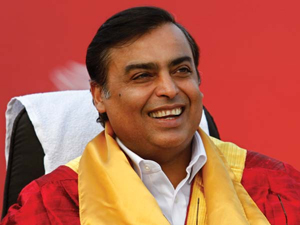
Mukesh_AmbaniNew York, Oct 29: With a networth of USD 21 billion, Mukesh Ambani has retained his title as India's wealthiest for sixth year in a row, while the country's 100 richest persons saw their collective wealth soar by a modest 3 per cent in a year.

NRI steel tycoon Lakshmi Mittal (USD 16 billion) also continues to hold the second position, while Sun Pharma's Dilip Shanghvi has jumped to third place with about 50 per cent surge in his wealth to USD 13.9 billion, pushing IT czar Azim Premji to fourth place (USD 13.8 billion).

As per US-based business magazine Forbes' annual list of India's 100 richest, released today, their total wealth grew by a modest 3 per cent from a year ago to USD 259 billion.

"Growth in wealth was lacklustre due to India's stumbling economy, which has been hit by inflation and a falling rupee," Forbes said.

Amid the sluggishness, Reliance Industries chief Mukesh Ambani and ArcelorMittal's Lakshmi Mittal saw no change in their respective networths, but pharmaceutical industry titan Shanghi managed to buck the trend with a surge of USD 4.7 billion in his wealth to USD 13.9 billion.

Premji's wealth also rose by USD 1.6 billion, but he could not retain his third slot.

Pallonji Mistry, patriarch of construction giant Shapoorji Pallonji Group which is the biggest shareholder in Tata Sons, has moved down one place to fifth rank with a networth of USD 12.5 billion. His younger son Cyrus Mistry last year succeeded Ratan Tata as new Tata group head.

NRI businessmen Hinduja brothers have moved up to sixth place (USD 9 billion), from their 9th position last year.

Shiv Nadar (USD 8.6 billion) have moved into top-ten at the 7th place, while Sunil Mittal has also returned to this league at 10th place (USD 6.6 billion). On the other hand, Essar group's Ruia brothers and Jindal group's Savitri Jindal have moved out from the group.

Adi Godrej has slipped two places to 8th rank (USD 8.3 billion), while Aditya Birla group Chairman Kumar Mangalam Birla has gained one position to 9th (USD 7.6 billion).

Anil Ambani has also retained his 11th rank, although his wealth rose to USD 6.2 billion, from USD 6 billion a year ago.

In the top-20, he is followed by Shashi and Ravi Ruia (USD 5.5 billion), Micky Jagtiani (USD 5 billion), Savitri Jindal (USD 4.9 billion), Uday Kotak (USD 4.1 billion), Cyrus Poonawalla (USD 4 billion), Anand Burman (USD 3.7 billion), Kushal Pal Singh (USD 3.4 billion), Desh Bandhu Gupta (USD 3.2 billion) and Bajaj Family (USD 3.1 billion).

There are a total of 65 billionaires on the list, four more than last year. Some of these have made their fortunes in the Middle East, including Bahrain resident Ravi Pillai (richest newcomer with USD 1.7 billion) of Saudi construction group, Nasser S Al-Hajri Corp, and retail mogul M A Yusuff Ali (USD 1.6 billion) of Abu Dhabi-based Lulu Group.

As many as 15 new members have entered the top-100 list even as more than half of last year's rich listers, including Savitri Jindal whose wealth declined by USD 3.3 billion, have seen a fall in their fortunes.

The minimum net worth to make to the list has increased to USD 635 million from USD 460 million last year.

Forbes said that the list has been compiled using shareholder and financial information obtained from families, individuals, stock exchanges, analysts and regulators.

The ranking lists family fortunes, including those shared among extended families such as the Bajaj family, while the wealth figures were calculated based on stock prices and exchange rates as of October 18, 2013.

Privately-held companies were valued based on the valuation of similar publicly-traded companies.

Others on the list include Vedanta group's Anil Agarwal at 21st position (USD 3 billion), Gautam Adani (22, USD 2.65 billion), Kalanithi Maran (23, USD 2.6 billion), Venugopal Dhoot (30, USD 1.8 billion), Ajay Piramal (41, USD 1.55 billion), Nandan Nilekani (50, USD 1.3 billion), Rakesh Jhunjhunwala (61, USD 1.15 billion) and Anu Aga (86, USD 730).

The youngest on the list is 38-year old Shivinder Mohan Singh, who along with his 40-year-old brother Malvinder Mohan Singh have been ranked at 26th place (USD 2.3 billion).

Besides, 40-year old Ranjan Pai of Manipal group is at 51st place (USD 1.25 billion).

Others aged below 50 include Glenn Saldanha ranked 57 with net worth of USD 1.19 billion, Nirav Modi (64, USD 1.01 billion) and Vikas Oberoi (79, USD 780 billion) among others.

Women on the list include Savitri Jindal, Anu Aga, Kiran Mazumdar-Shaw and Shobhana Bhartia.

Those aged above 80 years of age include Brij Mohan Lal Munjal (90 years), Samprada Singh (87 yrs), Pallonji Mistry (84 yrs), Devendra Jain (84 yrs) and Kushal Pal Singh (82 yrs).

On Mukesh Ambani, Forbes said he plans to invest USD 25 billion in his businesses over the next 3 years.

Regarding L N Mittal, the magazine said "no turnaround yet for troubled steel baron Lakshmi Mittal whose ArcelorMittal is facing weak demand amid supply glut."

Mittal has put one of three houses he owns on London's billionaires' row up for sale, the magazine said.

Meanwhile, his son-in-law Amit Bhatia's family has partnered Air Asia's Tony Fernandes and the Tata group, for a new budget airline.

The list forms part of Forbes India edition which would hit the stands on November 7.

Shanghvi, who moved into the top five last year, is the third richest for the first time. Despite the rise, Sun reported a USD 210 million loss in the last quarter, after making a provision for settling a patent dispute over Pfizer's acid-reflux drug Protonix.

"Wipro chairman Azim Premji, whose fortune is up USD 1.6 billion in past year, got boost after spinning off its (the company's) consumer products business in March," Forbes said.

Comments

Add new comment

  • Coastaldigest.com reserves the right to delete or block any comments.
  • Coastaldigset.com is not responsible for its readers’ comments.
  • Comments that are abusive, incendiary or irrelevant are strictly prohibited.
  • Please use a genuine email ID and provide your name to avoid reject.
Agencies
June 2,2020

Washington, Jun 2: There is no place for hate and racism in the society, Microsoft CEO Satya Nadella has said, asserting that empathy and shared understanding are a start, but more needs to be done. Nadella’s remarks come in the wake of the custodial death of George Floyd, a 46-year-old African-American man who was pinned to the ground in Minneapolis on May 25 by a white police officer who kneeled on his neck as he gasped for breath.

“There is no place for hate and racism in our society. Empathy and shared understanding are a start, but we must do more,” Nadella said in a tweet on Monday.

“I stand with the Black and African American community and we are committed to building on this work in our company and in our communities,” Nadella said.

A day earlier, Google CEO Sunder Pichai expressed solidarity with the African-American community.

“Today on US Google & YouTube homepages we share our support for racial equality in solidarity with the Black community and in memory of George Floyd, Breonna Taylor, Ahmaud Arbery & others who don’t have a voice,” Pichai wrote on Twitter on Sunday.

“For those feeling grief, anger, sadness & fear, you are not alone,” Pichai said, sharing a screenshot of the Google search home page which said, “We stand in support of racial equality, and all those who search for it.”

Nadella’s Microsoft also said they will be using the platform to amplify voices from the Black and African American community at the company.

Nadella had also spoken out a few months ago about the discriminatory Citizenship Amendment Act passed in his native country. Talking to BuzzFeed’s editor-in-chief, Ben Smith, in Manhattan, Nadella said what’s happening in the country is “sad.”

“I think what is happening is sad. I feel, and in fact quite frankly, now being informed (and) shaped by the two amazing American things that I’ve observed which is both, it’s technology reaching me where I was growing up and its immigration policy and even a story like mine being possible in a country like this.

“I think, it’s just bad, if anything, I would love to see a Bangladeshi immigrant who comes to India and creates the next unicorn in India or becomes the CEO of Infosys. That should be the aspiration. If I had to sort of mirror what happened to me in the US, I hope that’s what happens in India,” Microsoft’s India-born CEO was quoted as saying by BuzzFeed.

Comments

Add new comment

  • Coastaldigest.com reserves the right to delete or block any comments.
  • Coastaldigset.com is not responsible for its readers’ comments.
  • Comments that are abusive, incendiary or irrelevant are strictly prohibited.
  • Please use a genuine email ID and provide your name to avoid reject.
News Network
June 15,2020

Dubai, Jun 15: The global tally of Covid-19 coronavirus infections crossed the 8 million mark on Monday, with recoveries at 4.13 million, and deaths at nearly 436,000.

As of 11.40am UAE time, there were 3.43 active Covid-19 cases globally, of which 54,460 were serious or critical.

The United States still leads the charts with 2.16 million cases and 117,858 deaths. Behind US, at a distant No 2, is Brazil with 867,882 cases and 43,389 deaths.

Russia, India, the UK, Spain, Italy, Peru, Germany and Iran complete the top 10.

Comments

Add new comment

  • Coastaldigest.com reserves the right to delete or block any comments.
  • Coastaldigset.com is not responsible for its readers’ comments.
  • Comments that are abusive, incendiary or irrelevant are strictly prohibited.
  • Please use a genuine email ID and provide your name to avoid reject.
News Network
April 26,2020

Islamabad, Apr 26: Pakistan Prime Minister Imran Khan has been trumped by the country's powerful military yet again, this time over his government's inadequate steps and its poor response in curbing the coronavirus outbreak in the country, even as cases soared over 12,500.

In his address to the nation on March 22, Khan explained the reasons for not imposing a countrywide lockdown, asserting that millions would lose their jobs and affect families, who are below the poverty line, struggling to find enough food to eat. However, less than 24 hours later, Pakistan Army spokesperson Major General Babar Iftikhar announced the implementation of lockdown in the country having a population of over 200 million, contradicting the statements made by Imran Khan.

As lockdown was imposed, the military has deployed troops across Pakistan and is orchestrating the COVID-19 response through the National Core Committee, a body set up to coordinate policy between the national and provincial governments.

"The government left a big gap in its handling of the coronavirus. The army has tried to fill that gap, there was no choice," an unnamed retired general was quoted by Financial Times as saying.

The virus crisis in Pakistan has once again made things crystal clear about who is calling the shots -- the military, widely believed to bring Imran Khan to power in 2018.

The armymen have taken over the COVID-19 crisis as an opportunity to prove their competency in contrast to Imran Khan, who was mocked after urging youth to come forward and join Corona Relief Tigers Force, a volunteer body to wage "jihad" against the virus.

According to analysts, the military's seizure of the coronavirus response marks yet another policy failure for Imran Khan in the eyes of the generals, as per the Financial Times report.

The 67-year-old cricketer-turned-politician has repeatedly failed to gain international traction over the Kashmir issue and has struggled to convince the Financial Action Task Force (FATF) in getting his country removed from 'grey list' for terror funding.

In times of emergency, one has to take clear decisions and take them through. You can't dither. The whole world is advising strong lockdown. If the prime minister does not show that he is decisive, somebody else will," said Nafisa Shah, a Member of Parliament from the opposition Pakistan Peoples Party (PPP).

Even after the lockdown was imposed, Imran Khan continued to question the need for its implementation, raising eyebrows over the country's response in tackling the virus, as cases continue to rise. This comes even as such drastic measures are in place in many countries across the world, including neighbouring India.

According to The Dawn, the country has 12,657 confirmed cases of COVID-19, which includes 2,755 recoveries and 265 deaths. Punjab has the highest number of cases -- 5,326 --, followed by 4,232 in Sindh.

However, experts suggest that the actual numbers could be more given the low testing rates and inadequate supply of testing kits.

Doctors and nurses across the country have staged protests over the lack of personal protective equipment, as increasing numbers of health workers contract COVID-19.

"Because of the lack of resources, there is chaos among the doctors and healthcare workers. They know people are dying, they know the severity of the illness and they have to work without PPE," Shoaib Hasan Tarar, a doctor working in Rawalpindi, was quoted as saying.

As the coronavirus crisis continues to ravage Pakistan, the country's overwhelming health infrastructure has put a toll on its already floundering economy. The IMF said that the GDP will shrink 1.5 per cent in 2020. The cash-strapped nation is set to be the first major emerging economy to apply to a G-20 initiative to request debt repayment relief, according to Financial Times.

In early March, Pakistan saw a surge in coronavirus cases, when infected pilgrims and workers crossed the border from Qom, a religious city in Iran, which is a hotspot.

Pakistan's limited resources were exposed when quarantined pilgrims agitated against unhealthy conditions at Taftan camp on Pakistan-Iran border, where five people were living in a tent with no access to toilets.

While the lockdown is in place, authorities have been confronted by hardline clerics who have defied social distancing terms and downplayed the threat of the virus. During Friday prayers every week, worshippers violate the restrictions by gathering at various mosques.

Last week, Islamabad inked an agreement allowing mosques to stay open for Ramzan. It stipulated that people should follow 20 rules, including maintaining a six feet distance from each other.

"There is little consistency in terms of how the lockdown is being approached. Coronavirus has shown the disconnect between the national government, regional governments and the military. Imran Khan has been left behind as the cheerleader for keeping Pakistan's morale high. I think people are starting to ask, 'How long is he going to last?'", said Sajjan Gohel, South Asia expert and guest teacher at the London School of Economics.

Comments

Add new comment

  • Coastaldigest.com reserves the right to delete or block any comments.
  • Coastaldigset.com is not responsible for its readers’ comments.
  • Comments that are abusive, incendiary or irrelevant are strictly prohibited.
  • Please use a genuine email ID and provide your name to avoid reject.