


Wrestler Vinod Kumar on track for Rio Olympics after being thrown from train

June 3, 2016

Melbourne, Jun 3: The path to the Olympics is paved with potholes for many athletes but few can claim to have overcome hardship like wrestler Vinod Kumar, who was thrown from a speeding train by a rival's family in India before landing on his feet in Australia.
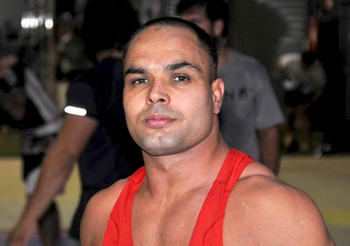
WrestlerMelbourne-based Kumar will compete for his adopted country in the 66 kg-class of Greco-Roman wrestling at the Rio de Janeiro Games, six years after landing Down Under with a suitcase in hand and a head full of troubled childhood memories. Winning the Olympic ticket was karma, according to Kumar, and a reward for forgiving the people who all but killed him when he was a teenager competing on India's wrestling circuit.

"Wrestling is big in India," the 31-year-old Kumar told Reuters in an interview at his Melbourne home. "Fathers all want their sons to win... I forgave them because I believe in karma and I believe in God."

Born in a small village near New Delhi and raised in a family of wrestlers, Kumar competed at junior national tournaments across the country from a young age.

In 2001, he boarded a long-haul train to an event in southern India with other young wrestlers but never arrived.

BROKEN BONES

As the night train coursed through coastal forests in Karnataka state, Kumar was handed a spiked soft-drink and immediately felt dizzy after taking a mouthful.

He went groggily to the carriage's doorway to get some air and two men, one the father of a rival wrestler, hurled him from the train before it sped into a tunnel.

Bones were broken in his arms and legs as his body careened off the tracks to settle by a body of water.

"The train was going very fast. Maybe 100-130 kilometres (per hour)," the shaven-headed wrestler said in halting English.

"My clothes were all torn, like I was just wearing my underwear."

Fifteen years later, Kumar lifts up his shirt and trouser leg to show deep scars along his chest and knee but can now chuckle about the absurdity of what happened.

He spent the night conscious and in searing pain, unable to move as mosquitoes bit him and flies buzzed around his wounds.

Kumar believes he would have died if he had not been discovered by rail workers in the morning, putting him on another train bound for a hospital that could treat him.

"No one knew where I was for 15 days, everybody thought I was dead," he laughed.

When returned to his family, police arrested five of the men who were on the carriage.

DIRT WRESTLER

His family launched legal action as Kumar lay bed-ridden for a year. One of his brothers refused a compensation payment from the boy-wrestler's father.

Kumar eventually returned to competition and although he appeared in court "two or three times", the case dragged on for years and he told his family to drop the lawsuit.

His forgiveness was not shared by his family, however, and caused a rift so deep that Kumar left home for good.

He then spent years roaming the country, competing for cash prizes in towns and villages in conventional freestyle events and in 'pehlwani', India's traditional dirt wrestling.

Australia promised a fresh start but it has been tough for Kumar since landing in 2010 with little English and no skills.

With no professional wrestling to speak of in Australia, Kumar has worked as a courier and a bouncer at nightclubs to earn money and says he owes friends up to A$15,000 ($10,800).

Both parents have died since he left India, his mother of a heart attack only two weeks before his interview with Reuters. "Sometimes I'm feeling very upset, thinking I am here and I have no money, nothing here," said Kumar, sitting on his bed with a clutch of medals hanging by the wall.

"I feel it's too hard here and I want to quit... Then I go to the club (to train) and have a better feeling."

After earning his ticket to Rio in April at a qualifying tournament in Algeria, Kumar feels the grind has been worth it. Melbourne's prominent Indian community have rallied to his cause and he will head to Brazil hoping to become Australia's first wrestling medallist in more than 60 years.

He said the boy-wrestler's father who threw him from the train is dead and that the man's wife had hanged herself. Their son has not succeeded in wrestling. "Now he's nothing and I'm an Olympian," Kumar said. "This is karma."

Comments

Add new comment

  • Coastaldigest.com reserves the right to delete or block any comments.
  • Coastaldigset.com is not responsible for its readers’ comments.
  • Comments that are abusive, incendiary or irrelevant are strictly prohibited.
  • Please use a genuine email ID and provide your name to avoid reject.
News Network
July 19,2020

Dubai, Jul 19: On hold for the past two months, the fate of this year's T20 World Cup will be up for a decisive round of deliberation when the ICC board meets virtually on Monday with the BCCI hoping for a postponement to ensure that the IPL can go ahead.

The global event is supposed to be held from October 18 to November 15 in Australia but the country's cricket board had, in May itself, expressed its inability to host amid a second surge of Covid-19 cases in the state of Victoria.

With India's case load also exceeding the 10 lakh mark, including more than 26,000 deaths, the IPL, if it is held, is likely to move to the UAE once the central government gives its go ahead.

"The first step was postponement of Asia Cup, which has happened. We can only start to move ahead with our plans after the ICC announces the postponement. They have been sitting on the decision even after Cricket Australia said that they are not too keen on hosting the event," a BCCI Apex Council member told PTI on conditions of anonymity.

This year's T20 World Cup will likely be held in Australia in 2022 as India doesn't want to swap its 2021 hosting rights with Cricket Australia as of now.

That Australia won't be hosting the mega event was clear after the cricket board told its players to prepare for a white-ball series against England scheduled for late September.

CA has even announced a 26-strong preliminary squad for that tour.

The ICC, on its part, has maintained that it wants to explore all possible "contingency" options before taking a call of such immense magnitude. And it is not unusual for the governing body to wait this long.

"Pakistan was supposed to host the Champions Trophy in 2009. After the terrorist attacks on the Sri Lankan team bus, everyone in their proper senses knew that PCB will never host a big event in distant future," said a source familiar with the functioning of the ICC.

"Yet, ICC deputed its employees in Pakistan for months when South Africa was already preparing to host the event. Everyone knew but a formal announcement of shift took months as threat assessment was part of protocol.

"The ICC couldn't have just postponed 9the T20 World Cup) immediately as initially, the top ministers of the Australian government expressed keenness to host," he added.

The Pakistan Cricket Board has also resigned itself to this outcome after vehemently opposing the Indian board.

The postponement of Asia Cup, which was supposed to be hosted by the PCB, to 2021 was a big blow to Ehsan Mani and his team.

"We have had a lot of discussions and the feeling is it (T20 World Cup) would not be possible this year. ICC has World Cups lined up in 2021 and 2023 so we have a gap year where we can adjust this event," Mani had recently said while talking to reporters in his country.

It has been learnt that PCB is contacting other boards in the hope of finalising some bilateral engagements as the national team has nothing lined up after its England tour.

Nomination process for Chairman's election:

The other issue that is likely to come up for discussion in Monday's meeting is the nomination process for the next independent chairman of the ICC after Shashank Manohar's resignation earlier this month.

It is learnt that there is no consensus on what should be the criteria in case multiple candidates join the fray.

"The board is not united on whether the usual 2/3rd majority to decide will be used (as its in case of policy decision) or the case of simple majority among the 17 board members," an ICC Board member said.

England and Wales Cricket Board's Colin Graves was considered the top contender with BCCI president Sourav Ganguly's name also being floated.

Ganguly's candidature will certainly depend on whether the Supreme Court waives off the cooling off period and allows him to continue as BCCI president beyond July 27 when he completes six years as an office-bearer in the Indian Board's state and national units.

When asked about the possibility of taking up the ICC job in a recent interview, the 48-year-old said he is young and and in no hurry for the position.

New Zealand's Gregor Barclay, Hong Kong's Imran Khawaja, who is currently the interim chairman, are also being talked about as potential candidates.

Comments

Add new comment

  • Coastaldigest.com reserves the right to delete or block any comments.
  • Coastaldigset.com is not responsible for its readers’ comments.
  • Comments that are abusive, incendiary or irrelevant are strictly prohibited.
  • Please use a genuine email ID and provide your name to avoid reject.
News Network
January 27,2020

Hamilton, Jan 27: In awe of Jasprit Bumrah, New Zealand wicketkeeper Tim Seifert says the Indian speedster's subtle variations have been difficult to pick in the ongoing T20 series and his side needs to a learn a thing or two about adapting from the visitors.

India beat New Zealand by seven wickets in the second T20 International in Auckland on Sunday to grab a 2-0 lead in the five-match series.

Bumrah returned with figures of 1-21 from his four overs as Indian skipper Virat Kohli changed his bowling plans from the first game.

"Even in the first game, Bumrah bowled slower balls that were going wider. Normally, death bowlers get into straighter lines, plus yorkers and mix it with chest height. He kind of changes things a lot and is tougher to play," Seifert said.

"...the ball was holding a lot more which made it tougher. So sometimes as a batsman you have to move away from the stumps and see if they bowl straight. I was backing myself to do something different instead of just standing there at the wicket," said the stumper, who remained unbeaten on 33 off 26 balls.

"It was tricky and the ball was holding a little bit. When Kane (Williamson) got out in the over against Yuzvendra Chahal, we knew it was the over to push because they had Bumrah coming back," he added.

He said New Zealand batsmen need to take a cue from their Indian counterparts on how to adapt to different conditions quickly.

"...Indian batsmen showed how to get under the ball and time it. They showed it a couple of times that and on the slower wickets you just have to keep it like that. Once you lose your shape, you are not in position," he said.

"Try to get them (bowlers) off line or off balance, try to get into that position to hit good balls. That's T20 cricket as well. Sometimes it's going 100 per cent but some times you have to take a breath and re-assess. Indian batters did that well."

Seifert believes New Zealand bowlers did reasonably well in the two games but they have been outplayed by the Indian batsmen.

"To be honest, in the first game they were 110-1 and they had wickets in hand. We didn't bowl too badly in that first game. In the second game, we only got 130 and it is tough to bowl at Eden Park (with that total)," he said.

"170 was the target in mind but once you get 130 on the board, that was going to be very hard at Eden Park against a team that is very strong and playing really well. But our spinners were outstanding. Good balls have gone to boundary.

He said coming into the T20 series on the back of a lost Test rubber in Australia also didn't help New Zealand's cause in the first two games.

"Boys are coming off a Test series (in Australia) and a lot of them haven't played T20 cricket for a while," he said.

"But for some like me, I have had the Super Smash for the last two months, so I have played a lot of T20 cricket. They have two games under their belt now so hopefully they will have a better understanding."

Asked if New Zealand would want to play on India's strength of chasing, Seifert replied, "Even in ODI cricket, India have chased down big totals but I think on that wicket it was going to get slower and slower.

"But with that small target on Eden Park, something special has to happen with top six (for a collapse). One batsman got fifty and the other was batting very well. We needed top five-six in the first 10 overs," he said.

The Black Caps are still confident of bouncing back in the series.

The third T20 will be played here on Wednesday before back-to-back matches in Wellington and Mt Maunganui. Seifert said they would like to replicate the 2019 tour of India, where New Zealand came out 2-1 victorious in the three-match series.

"We have lost the first two games but we haven't played badly. We definitely haven't played our best though while India has played very well. If we lose the series on Wednesday, it is not the end of the world. But if we can turn things around, and win, we will take things from there," he said.

"We won the series 2-1 last time, so we have to treat it like a three match series again. But we have to treat it like the first two are must-win games."

"We are not playing our best at the moment. There are 20-odd games before the World Cup, and that tournament is the pinnacle, so we will get there (in preparation),” he signed off.

Comments

Add new comment

  • Coastaldigest.com reserves the right to delete or block any comments.
  • Coastaldigset.com is not responsible for its readers’ comments.
  • Comments that are abusive, incendiary or irrelevant are strictly prohibited.
  • Please use a genuine email ID and provide your name to avoid reject.
News Network
May 10,2020

New Delhi, May 10: Former Australia captain Ian Chappell has proposed radical changes in the LBW laws, stating that a batsman should be given out leg before as long as the ball is hitting the stumps irrespective of the spot of its landing and impact.

Chappell also said captains should agree on one way of working up the ball which will encourage swing bowling, even as the ICC is considering the use of artificial substances to shine the ball instead of sweat and saliva in post-COVID-19 scenario.

"The new lbw law should simply say: 'Any delivery that strikes the pad without first hitting the bat and, in the umpire's opinion, would go on to hit the stumps is out regardless of whether or not a shot is attempted'," he wrote in a column for ESPNcricinfo.

"Forget where the ball pitches and whether it strikes the pad outside the line or not; if it's going to hit the stumps, it's out."

The 76-year-old said the change in lbw law would attract expected criticism from the batsmen but it would make the game more fair.

"There will be screams of horror - particularly from pampered batsmen - but there are numerous positives this change would bring to the game. Most important is fairness.

"If a bowler is prepared to attack the stumps regularly, the batsman should only be able to protect his wicket with the bat. The pads are there to save the batsman from injury not dismissal.

"It would also force batsmen to seek an attacking method to combat a wristspinner pitching in the rough outside the right-hander's leg stump," said Chappell.

He cited Sachin Tendulkar's example on how he negotiated Shane Warne's round the wicket tactic during the 1997-98 Test series in India.

"Contrast Sachin Tendulkar's aggressive and successful approach to Shane Warne coming round the wicket in Chennai in 1997-98 with a batsman who kicks away deliveries pitching in the rough and turning in toward the stumps. Which would you rather watch?

"The current law encourages "pad play" to balls pitching outside leg while this change would force them to use their bat. The change would reward bowlers who attack the stumps and decrease the need for negative wide deliveries to a packed off-side field," he said.

Chappell said his proposed change to the lbw law would also cut down "frivolous" DRS challenges.

"This change to the lbw law would also simplify umpiring and result in fewer frivolous DRS challenges. Consequently, it would speed up a game that has slowed drastically in recent times.

"It would also make four-day Tests an even more viable proposition as mind-numbing huge first-innings totals would be virtually non-existent."

On the substitute of shining the ball without sweat and saliva, Chappell said international captains should find out a way of working up the ball.

"With ball-tampering always a hot topic, in the past I've suggested that administrators ask international captains to construct a list (i.e. the use of natural substances) detailing the things bowlers feel will help them to swing the ball.

"From this list, the administrators should deem one method to be legal with all others being punishable as illegal," the cricketer-turned-commentator added.

Comments

Add new comment

  • Coastaldigest.com reserves the right to delete or block any comments.
  • Coastaldigset.com is not responsible for its readers’ comments.
  • Comments that are abusive, incendiary or irrelevant are strictly prohibited.
  • Please use a genuine email ID and provide your name to avoid reject.