



WWDC 2014: With iOS 8, Apple takes battle with Android to the next level

June 4, 2014

Jun 4: Apple is calling the iOS 8 the biggest release since the launch of the App Store and it does give users plenty of new features and developers the tools to create amazing new apps. But what does this mean for Android and Google? How do the two biggest competitors in the mobile OS market stack up against each other? How does this latest release change the game?
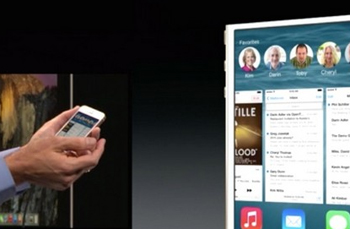
WWDC 2014

Apple CEO Tim Cook took some serious potshots at Android during the keynote address. When talking about users who switched from Android to iOS, he said: ”They had bought an Android phone, by mistake, and then sought a better experience. And a better life. And decided to check out iPhone and iOS.” He also pointed out how Android was the place where malware ruled.

Tim Cook"s jibes aside, an iOS 8 vs Android assessment is necessary and important, given that they are the biggest mobile players in the world. We"re looking at these comparison points in particular: Messages, Camera, Online Cloud Storage, Continuity, HomeKit and HealthKit app. The reason we"ve included HomeKit and HealthKit app is because these areas are going to experience massive growth in the mobile sector and there"s no way that Google hasn"t started working on these.

Messages: Apple has given iMessage a serious upgrade. Users can now name message threads, exit or enter a thread as they wish. There"s also a Do Not Disturb option to a group chat without having to leave it. Audio and video messages can be shared on Group chats and regular iMessaging. They also have a Snapchat-like self-destruct function that users can opt out of too.

Also SMSes, can be synced across Apple devices from Macs to iPads. iMessage now feels like a combination of WhatsApp, Snapchat and regular messaging.

No wonder that Jan Koum, WhatsApp"s CEO was unhappy and tweeted saying, “very flattering to see Apple “borrow” numerous WhatsApp features into iMessage in iOS 8 #innovation”

So how does Android"s SMS app compare to iMessage?

Google had merged Hangouts and the SMS app which meant that users could search across contacts, including Google accounts. All SMS and MMS messages come in this one place.

Of course, users who might be on devices such as Nexus 4 which had a native SMS app might not choose to merge the two given the privacy issues that plague Google.

Hangouts, of course, allows users to have groups chats, share videos, etc, but this SMS-Hangout marriage is an Android KitKat feature. Since only 9 percent users are on this build of Android, most people are still stuck on the boring SMS app.

Add to that the fragmented manufacturing scene that Android faces, users get different SMS apps in different devices. Unless it"s a pure Android phone.

In the short-term, Apple"s iMessage is winning purely because if you have an iPhone 4S and above — you have all access to all the features. In Android, getting the latest feature in SMS, depends on what build of smartphone you"re using.

Camera: In iOS 8, shooting and editing photos will definitely get better. Users can now take a picture, then modify it with a single touch. The new camera app will let users adjusts exposure, brightness, contrast, and more.

In fact as you make the changes to photo"s colour scheme, the smartphone will show how the levels are changing in real time. Interestingly third-party app developers can make their filters and editing tools also accessible in the Photos app directly.

There"s also a Time-lapse mode in Camera. Basically it can help users capture the sun setting, etc. iOS 8 will take the photos at selected intervals and stitch it together as video.

In Android, the Camera app in KitKat also offers features similar to iOS 8. Users can instantly edit pictures will filters, change exposure, contrast, crop a picture. Of course, unlike iOS 8, Android doesn"t allow third-party apps to provide their filters, but again the native Camera apps are pretty evenly matched.

Of course, OEMs tend to add their own modes to the camera app and thus Android has an advantage here that Apple doesn"t always offer.

HealthKit app: Let"s face it Google is far behind Apple in this area. There are APIs on Health from Google but no dedicated health app like Healthkit. Of course Google could announce its own native app for this at the upcoming Google I/O later this month (25-26 June) but for now Apple has the lead.

The HealthKit app can pull in data from other third-party apps and this can be accessed by healthcare professionals as well of course depending on how much access users give to this app.

Apple partnered with the world-renowned Mayo Clinic on this. With HealthKit, the iPhone will keep a tab on important health metrics on a daily basis, and over a longer period.

After Mayo Clinic, Nike is also partnering with Apple for HealthKit. Apple promises that the data on Health will have deep privacy protection in place to store these sensitive records safely.

Of course, Samsung is one Android manufacturer that has been taking the Health-Smartphone link seriously. The S5 comes with a heart-rate sensor, an improved S-Health app, but given that its not available on other Androids, it"s pretty much an S5 and Samsung feature.

HomeKit: Google might have bought Nest first but Apple showed that it leads in the smart home game by announcing HomeKit. Essentially Apple is hoping that users will trust their iPhones and sync it with other home products.

Users can connect their iPhone/iPad and control garage-door openers, lights, and security cameras, even thermostats and switches.

Users can just control these through Siri. For example, they could say “Get ready for bed” and the house lights will dim. Of course. you"ll need products that are certified for the HomeKit.

For Android, catching up to the competition will be tough. As this Mashable piece points out, “Google will have a tough time convincing consumers that Android will safeguard their privacy and security as well as iOS might (the stat that Tim Cook cited, that 99% of mobile malware targets Android, happens to be true).”

Cloud capability: Even with the new iCloud Drive, Apple is still playing catch with Google. Google Drive already lets you edit documents from inside and share links on Gmail via Google Drive.

iCloud Drive offers similar features to users and now allows them to arrange documents, photos by tags, folders etc. Apple will also let you share large files as well which is something that Google was already offering. Where iCloud Drive is concerned, this is nothing new and doesn"t really set iOS 8 apart from Android.

Also users can search for iCloud documents directly from the Spotlight bar, which means that you don"t actually have to save documents on the iPad or iPhone. Google Drive doesn"t yet offer this feature, where you can search directly for Google Drive docs from the Search bar on the Homepage.

Continuity: Continuity is where Apple"s advantage of being a hardware and software manufacturer is showcased. Documents from OS X can open seamlessly on iOS and vice-versa. You can also take calls from your iPhone on your MacBook or iPad or iMac.

To be fair, Motorola and Samsung have offered features similar to this. Also, Gmail lets users access the email via draft with its real-time saving capability. Google also offers browsing and tab sync via its Chrome browser extensions, features which are similar to Continuity.

The problem though for Google is that it doesn"t occupy an important part of the Desktop space or even the PC space and thus such syncing is only available at an account level on Google.

Apple has come very close to the idea of "one OS, one account but multiple devices" with Continuity.

It"s clear that despite Google"s dominance in the smartphone market, Apple has more than just a few tricks up it"s sleeve. It has also shown that it isn"t shy of taking the battle to the next level. iOS 8 allows Apple users to bring their devices together in a seamless manner — something that Android will be looking to do as well. The battle has been joined — just how will Google respond?

Comments

Add new comment

  • Coastaldigest.com reserves the right to delete or block any comments.
  • Coastaldigset.com is not responsible for its readers’ comments.
  • Comments that are abusive, incendiary or irrelevant are strictly prohibited.
  • Please use a genuine email ID and provide your name to avoid reject.
Agencies
June 19,2020

Denser places, assumed by many to be more conducive to the spread of the coronavirus that causes COVID-19, are not linked to higher infection rates, say researchers.

The study, led by Johns Hopkins University, published in the Journal of the American Planning Association, also found that dense areas were associated with lower COVID-19 death rates.

"These findings suggest that urban planners should continue to practice and advocate for compact places rather than sprawling ones, due to the myriad well-established benefits of the former, including health benefits," says study lead author Shima Hamidi from Johns Hopkins Bloomberg School of Public Health in the US.

For their analysis, the researchers examined SARS-CoV-2 infection rates and COVID-19 death rates in 913 metropolitan counties in the US.

When other factors such as race and education were taken into account, the authors found that county density was not significantly associated with county infection rate.

The findings also showed that denser counties, as compared to more sprawling ones, tended to have lower death rates--possibly because they enjoyed a higher level of development including better health care systems.

On the other hand, the research found that higher coronavirus infection and COVID-19 mortality rates in counties are more related to the larger context of metropolitan size in which counties are located.

Large metropolitan areas with a higher number of counties tightly linked together through economic, social, and commuting relationships are the most vulnerable to the pandemic outbreaks.

According to the researchers, recent polls suggest that many US citizens now consider an exodus from big cities likely, possibly due to the belief that more density equals more infection risk.

Some government officials have posited that urban density is linked to the transmissibility of the virus.

"The fact that density is unrelated to confirmed virus infection rates and inversely related to confirmed COVID-19 death rates is important, unexpected, and profound," said Hamidi.

"It counters a narrative that, absent data and analysis, would challenge the foundation of modern cities and could lead to a population shift from urban centres to suburban and exurban areas," Hamidi added.

The analysis found that after controlling for factors such as metropolitan size, education, race, and age, doubling the activity density was associated with an 11.3 per cent lower death rate.

The authors said that this is possibly due to faster and more widespread adoption of social distancing practices and better quality of health care in areas of denser population.

The researchers concluded that a higher county population, a higher proportion of people age 60 and up, a lower proportion of college-educated people, and a higher proportion of African Americans were all associated with a greater infection rate and mortality rate.

Comments

Add new comment

  • Coastaldigest.com reserves the right to delete or block any comments.
  • Coastaldigset.com is not responsible for its readers’ comments.
  • Comments that are abusive, incendiary or irrelevant are strictly prohibited.
  • Please use a genuine email ID and provide your name to avoid reject.
Agencies
July 24,2020

Pune, Jul 24: Agile and dexterous, 85-year-old Shantabai Pawar wields sticks with absolute ease as she displays 'lathi-kathi' on the streets of Pune.

A video of her, displaying her skills in the Indian martial art form for livelihood, has gone viral on social media.

Pawar told media persons that she learnt the art form when she was only eight and has been practising it since then. The ancient martial art s believed to be linked to Dombari community, a nomadic tribe in Maharashtra.

"I have been pursuing the art of lathi-kathi since I was eight. I have never left it. It is part of me and it is an honour to practice it. My father taught me this. He taught me to work hard," Pawar told media persons.

In the video, the sari-clad octogenarian takes a warrior-like stride and effortlessly rotates a stick several times in a second in her hand and around her head and then does it with two sticks together with a smile on her face. She also tosses a stick in the air and catches it with ease.

The assembled gathering is impressed and enthused.

"People come and say, 'Well done Daadi!' I practice it to earn money for my children and grandchildren," she said.

Pawar leaves her home in the morning in the conditions created by coronavirus and performs the art form on roads and streets.

"I go to various areas to perform the art form and people give money," she said.

The artiste also uses thali and stick to gather the attention of people as most of them are indoors due to conditions created by COVID-19.

Senior citizens have been advised against venturing out due to their greater susceptibility to coronavirus but Pawar said she is not afraid to step out.

"People do advise me to not go out due to fear of COVID-19 but I am not scared. Whenever I step out, I pray to my God and he has kept me safe so far," she said.

Aishwarya Kale, a dancer and the person who uploaded the video on social media, said that it is "only an artist who can understand what help another artist needs".

"I was in that area shopping for some items and it was then I saw her performing and thought that I should film her and upload her video on social media. But I never thought that the video would go viral and she would receive financial help not just from people in the country but overseas as well," Kale told media persons.

"She is now getting honour for her craft that she couldn't get in the last 85 years. I feel good that through my small video, her art form has become viral," she added. 

Comments

Add new comment

  • Coastaldigest.com reserves the right to delete or block any comments.
  • Coastaldigset.com is not responsible for its readers’ comments.
  • Comments that are abusive, incendiary or irrelevant are strictly prohibited.
  • Please use a genuine email ID and provide your name to avoid reject.
Agencies
April 17,2020

New Delhi, Apr 17: The Indian Railways turned 167 years old on Thursday and for the first time ever, its trains did not carry any passengers on its birthday and instead stood idle in the yards waiting for the nationwide lockdown to end.

On this day 167 years ago, the wheels of the first passenger train in the country from Mumbai to Thane started rolling.

In 1974, Indians experienced life without trains for the first time. In May 1974 during the strike of the railways that lasted for around three weeks, drivers, station masters, guards, track staff and many others went on 'chakka jam' demanding fixed working hours for train drivers and an across-the-board pay hike.

"I can recall those times vividly. I remember that our leader George Fernandes had almost secured a deal with the then railway minister, but it fell through when it was taken to the then Prime Minister Indira Gandhi," All India Railwaymens Federation General Secretary Shiv Gopal Mishra, who was an apprentice in the railways at that time, told PTI.

"Fernandes was arrested in Lucknow. The workers went through a lot at that time. But those were days that angry workers had refused to give in and took great risks to get their demands met," he said.

However, just like this time, four decades ago too freight trains carrying essential supplies were run and the unions agreed to let some passenger trains run on the trunk routes like the Kalka Mail from Howrah to Delhi.

"Never ever in its history, there has been such a long interruption of services. Not during the World Wars, not during the 1974 railway strike, or any other national calamity or natural disaster," a railway spokesperson said.

The first Indian Railways passenger train was flagged off on April 16, 1853, from Mumbai to nearby Thane.

On Thursday, the Railway Ministry wished the railways a happy birthday on Twitter - "Today, 167 years ago with the zeal of 'never to stop' the wheels of the first passenger train from Mumbai to Thane started rolling. For the first time, passenger services are stopped for your safety. Stay indoors & make the nation victorious," it said.

Railway has suspended all passenger services since March 25 till May 3 due to the coronavirus outbreak. Around 15,523 trains run by the railways have been affected including 9,000 passenger trains and 3,000 mail express services which are run daily. It caters to over 20 million passengers every day.

According to the Union health ministry, the death toll due to coronavirus rose to 414 and the number of cases to 12,380 in the country on Thursday.

Comments

Add new comment

  • Coastaldigest.com reserves the right to delete or block any comments.
  • Coastaldigset.com is not responsible for its readers’ comments.
  • Comments that are abusive, incendiary or irrelevant are strictly prohibited.
  • Please use a genuine email ID and provide your name to avoid reject.