



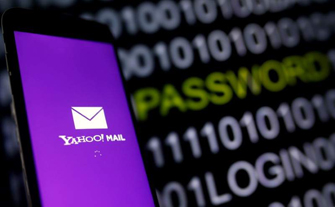
Yahoo says one billion accounts exposed in newly discovered security breach

December 15, 2016

Dec 15: Yahoo Inc (YHOO.O) warned on Wednesday that it had uncovered yet another massive cyber attack, saying data from more than 1 billion user accounts was compromised in August 2013, making it the largest breach in history.
yahooThe number of affected accounts was double the number implicated in a 2014 breach that the internet company disclosed in September and blamed on hackers working on behalf of a government. News of that attack, which affected at least 500 million accounts, prompted Verizon Communication Inc (VZ.N) to say in October that it might withdraw from an agreement to buy Yahoo's core internet business for $4.83 billion. Following the latest disclosure, Verizon said, "we will review the impact of this new development before reaching any final conclusions." A Yahoo spokesman told Reuters that the company has been in communication with Verizon during its investigation into the breach and that it is confident the incident will not affect the pending acquisition.Yahoo required all of its customers to reset their passwords - a stronger measure than it took after the previous breach was discovered, when it only recommended a password reset.

Yahoo also said Wednesday that it believes hackers responsible for the previous breach had also accessed the company"s proprietary code to learn how to forge "cookies" that would allow hackers to access an account without a password."Yahoo badly screwed up," said Bruce Schneier, a cryptologist and one of the world's most respected security experts. "They weren't taking security seriously and that's now very clear. I would have trouble trusting Yahoo going forward."Yahoo was tentative in its description of new problems, saying the incident was "likely" distinct from the one it reported in September and that stolen information "may have included" names, e-mail addresses, telephone numbers, dates of birth, hashed passwords and, in some cases, encrypted or unencrypted security questions and answers.

It said it had not yet identified the intrusion that led to the massive data theft and noted that payment-card data and bank account information were not stored in the system the company believes was affected.Yahoo said it discovered the breach while reviewing data provided to the company by law enforcement. FireEye Inc"s (FEYE.O) Mandiant unit and Aon Plc's (AON.N) Stroz Friedberg are assisting in the investigation, the Yahoo spokesman told Reuters.The breach is the latest setback for Yahoo, an internet pioneer that has fallen on hard times in recent years after being eclipsed by younger, fast-growing rivals including Alphabet Inc's (GOOGL.O) Google and Facebook Inc (FB.O).

Hours before it announced the breach on Wednesday, executives with Google, Facebook and other large U.S. technology companies met with President-elect Donald Trump in New York. Reflecting its diminished stature, Yahoo was not invited to the summit, according to people familiar with the meeting.The Yahoo spokesman said Chief Executive Marissa Mayer was at the company's Sunnyvale, California headquarters to assist in addressing the new breach. Yahoo shares were down 2.4 percent to $39.91 in extended trading. Verizon shares were little changed from their close at $51.63. (Reporting by Jim Finkle in Boston and Anya George Tharakan in Bengaluru; Additional reporting by Dustin Volz in Washington and Jessica Toonkel in New York; Editing by Savio D'Souza, Bernard Orr)

This story has not been edited by Firstpost staff and is generated by auto-feed.

Comments

Add new comment

  • Coastaldigest.com reserves the right to delete or block any comments.
  • Coastaldigset.com is not responsible for its readers’ comments.
  • Comments that are abusive, incendiary or irrelevant are strictly prohibited.
  • Please use a genuine email ID and provide your name to avoid reject.
News Network
April 17,2020

Paris, Apr 17: Even as virologists zero in on the virus that causes COVID-19, a very basic question remains unanswered: do those who recover from the disease have immunity?

There is no clear answer to this question, experts say, even if many have assumed that contracting the potentially deadly disease confers immunity, at least for a while.

"Being immunised means that you have developed an immune response against a virus such that you can repulse it," explained Eric Vivier, a professor of immunology in the public hospital system in Marseilles.

"Our immune systems remember, which normally prevents you from being infected by the same virus later on."

For some viral diseases such a measles, overcoming the sickness confers immunity for life.

But for RNA-based viruses such as Sars-Cov-2 -- the scientific name for the bug that causes the COVID-19 disease -- it takes about three weeks to build up a sufficient quantity of antibodies, and even then they may provide protection for only a few months, Vivier told AFP.

At least that is the theory. In reality, the new coronavirus has thrown up one surprise after another, to the point where virologists and epidemiologists are sure of very little.

"We do not have the answers to that -- it's an unknown," Michael Ryan, executive director of the World Health Organization's Emergencies Programme said in a press conference this week when asked how long a recovered COVID-19 patient would have immunity.

"We would expect that to be a reasonable period of protection, but it is very difficult to say with a new virus -- we can only extrapolate from other coronaviruses, and even that data is quite limited."

For SARS, which killed about 800 people across the world in 2002 and 2003, recovered patients remained protected "for about three years, on average," Francois Balloux director of the Genetics Institute at University College London, said.

"One can certainly get reinfected, but after how much time? We'll only know retroactively."

A recent study from China that has not gone through peer review reported on rhesus monkeys that recovered from Sars-Cov-2 and did not get reinfected when exposed once again to the virus.

"But that doesn't really reveal anything," said Pasteur Institute researcher Frederic Tangy, noting that the experiment unfolded over only a month.

Indeed,several cases from South Korea -- one of the first countries hit by the new coronavirus -- found that patients who recovered from COVID-19 later tested positive for the virus.

But there are several ways to explain that outcome, scientists cautioned.

While it is not impossible that these individuals became infected a second time, there is little evidence this is what happened.

More likely, said Balloux, is that the virus never completely disappeared in the first place and remains -- dormant and asymptomatic -- as a "chronic infection", like herpes.

As tests for live virus and antibodies have not yet been perfected, it is also possible that these patients at some point tested "false negative" when in fact they had not rid themselves of the pathogen.

"That suggests that people remain infected for a long time -- several weeks," Balloux added. "That is not ideal."

Another pre-publication study that looked at 175 recovered patients in Shanghai showed different concentrations of protective antibodies 10 to 15 days after the onset of symptoms.

"But whether that antibody response actually means immunity is a separate question," commented Maria Van Kerhove, Technical Lead of the WHO Emergencies Programme.

"That's something we really need to better understand -- what does that antibody response look like in terms of immunity."

Indeed, a host of questions remain.

"We are at the stage of asking whether someone who has overcome COVID-19 is really that protected," said Jean-Francois Delfraissy, president of France's official science advisory board.

For Tangy, an even grimmer reality cannot be excluded.

"It is possible that the antibodies that someone develops against the virus could actually increase the risk of the disease becoming worse," he said, noting that the most serious symptoms come later, after the patient had formed antibodies.

For the moment, it is also unclear whose antibodies are more potent in beating back the disease: someone who nearly died, or someone with only light symptoms or even no symptoms at all. And does age make a difference?

Faced with all these uncertainties, some experts have doubts about the wisdom of persuing a "herd immunity" strategy such that the virus -- unable to find new victims -- peters out by itself when a majority of the population is immune.

"The only real solution for now is a vaccine," Archie Clements, a professor at Curtin University in Perth Australia, told AFP.

At the same time, laboratories are developing a slew of antibody tests to see what proportion of the population in different countries and regions have been contaminated.

Such an approach has been favoured in Britain and Finland, while in Germany some experts have floated the idea of an "immunity passport" that would allow people to go back to work.

"It's too premature at this point," said Saad Omer, a professor of infectious diseases at the Yale School of Medicine.

"We should be able to get clearer data very quickly -- in a couple of months -- when there will be reliable antibody tests with sensitivity and specificity."

One concern is "false positives" caused by the tests detecting antibodies unrelated to COVID-19.

The idea of immunity passports or certificates also raises ethical questions, researchers say.

"People who absolutely need to work -- to feed their families, for example -- could try to get infected," Balloux.

Comments

Add new comment

  • Coastaldigest.com reserves the right to delete or block any comments.
  • Coastaldigset.com is not responsible for its readers’ comments.
  • Comments that are abusive, incendiary or irrelevant are strictly prohibited.
  • Please use a genuine email ID and provide your name to avoid reject.
Agencies
January 20,2020

Washington D.C., Jan 20: An American bride asked for money from her invitees so that they can be on the 'exclusive guest list'.

Weddings can be surely expensive. But is it feasible for one to charge the guests to make up for the expenses?

According to Fox News, that is exactly what happened in a recent American wedding. A 19-year-old shared on Reddit that her cousin was getting married on Sunday and announced that she would charge 50 dollars to those who wanted to attend her wedding.

"She said that they can Venmo her money so there won't be no [sic] problems and everyone who paid will be added onto the 'exclusive guest list' which basically means you won't have to wait in line while other guests pay," wrote the user named DaintySheep.

While she refused to pay for entry into her cousin's wedding the bride-to-be contacted the elders in the family which ended up in an embarrassing situation.

"She wanted to get the money she spent on her special day back. I told her I wouldn't be able to come because this was outrageous and that I wish her well on her special day. She contacted my aunt and my aunt called me cheap and rude. My parents offered to pay for my entry, but I refused," continued the disheartened girl.

While in almost every nook and cranny of the world gifting the bride-groom with money is a tradition, asking for money from friends and family to replenish the money spent on a wedding is can be said to be a rare scenario.

Comments

Add new comment

  • Coastaldigest.com reserves the right to delete or block any comments.
  • Coastaldigset.com is not responsible for its readers’ comments.
  • Comments that are abusive, incendiary or irrelevant are strictly prohibited.
  • Please use a genuine email ID and provide your name to avoid reject.
Agencies
March 15,2020

Cybercriminals continue to exploit public fear of rising coronavirus cases through malware and phishing emails in the guise of content coming from the Centers for Disease Control and Prevention (CDC) in the US and World Health Organisation (WHO), says cybersecurity firm Kaspersky.

In the APAC region, Kaspersky has detected 93 coronavirus-related malware in Bangladesh, 53 in the Philippines, 40 in China, 23 in Vietnam, 22 in India and 20 in Malaysia. 

Single-digit detections were monitored in Singapore, Japan, Indonesia, Hong Kong, Myanmar, and Thailand. 

Along with the consistent increase of 2019 coronavirus cases comes the incessant techniques cybercriminals are using to prey on public panic amidst the global epidemic, the company said in a statement. 

Kaspersky also detected emails offering products such as masks, and then the topic became more commonly used in Nigerian spam emails. Researchers also found scam emails with phishing links and malicious attachments.

One of the latest spam campaigns mimics the World Health Organisation (WHO), showing how cybercriminals recognise and are capitalising on the important role WHO has in providing trustworthy information about the coronavirus.

"We would encourage companies to be particularly vigilant at this time, and ensure employees who are working at home exercise caution. 

"Businesses should communicate clearly with workers to ensure they are aware of the risks, and do everything they can to secure remote access for those self-isolating or working from home," commented David Emm, principal security researcher.

Some malicious files are spread via email. 

For example, an Excel file distributed via email under the guise of a list of coronavirus victims allegedly sent from the World Health Organisation (WHO) was, in fact, a Trojan-Downloader, which secretly downloads and installs another malicious file. 

This second file was a Trojan-Spy designed to gather various data, including passwords, from the infected device and send it to the attacker.

Comments

Add new comment

  • Coastaldigest.com reserves the right to delete or block any comments.
  • Coastaldigset.com is not responsible for its readers’ comments.
  • Comments that are abusive, incendiary or irrelevant are strictly prohibited.
  • Please use a genuine email ID and provide your name to avoid reject.