



Yahoo says one billion accounts exposed in newly discovered security breach

December 15, 2016

Dec 15: Yahoo Inc (YHOO.O) warned on Wednesday that it had uncovered yet another massive cyber attack, saying data from more than 1 billion user accounts was compromised in August 2013, making it the largest breach in history.
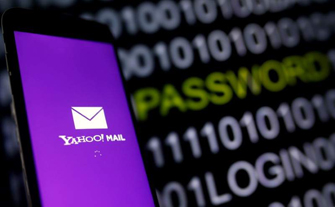
yahooThe number of affected accounts was double the number implicated in a 2014 breach that the internet company disclosed in September and blamed on hackers working on behalf of a government. News of that attack, which affected at least 500 million accounts, prompted Verizon Communication Inc (VZ.N) to say in October that it might withdraw from an agreement to buy Yahoo's core internet business for $4.83 billion. Following the latest disclosure, Verizon said, "we will review the impact of this new development before reaching any final conclusions." A Yahoo spokesman told Reuters that the company has been in communication with Verizon during its investigation into the breach and that it is confident the incident will not affect the pending acquisition.Yahoo required all of its customers to reset their passwords - a stronger measure than it took after the previous breach was discovered, when it only recommended a password reset.

Yahoo also said Wednesday that it believes hackers responsible for the previous breach had also accessed the company"s proprietary code to learn how to forge "cookies" that would allow hackers to access an account without a password."Yahoo badly screwed up," said Bruce Schneier, a cryptologist and one of the world's most respected security experts. "They weren't taking security seriously and that's now very clear. I would have trouble trusting Yahoo going forward."Yahoo was tentative in its description of new problems, saying the incident was "likely" distinct from the one it reported in September and that stolen information "may have included" names, e-mail addresses, telephone numbers, dates of birth, hashed passwords and, in some cases, encrypted or unencrypted security questions and answers.

It said it had not yet identified the intrusion that led to the massive data theft and noted that payment-card data and bank account information were not stored in the system the company believes was affected.Yahoo said it discovered the breach while reviewing data provided to the company by law enforcement. FireEye Inc"s (FEYE.O) Mandiant unit and Aon Plc's (AON.N) Stroz Friedberg are assisting in the investigation, the Yahoo spokesman told Reuters.The breach is the latest setback for Yahoo, an internet pioneer that has fallen on hard times in recent years after being eclipsed by younger, fast-growing rivals including Alphabet Inc's (GOOGL.O) Google and Facebook Inc (FB.O).

Hours before it announced the breach on Wednesday, executives with Google, Facebook and other large U.S. technology companies met with President-elect Donald Trump in New York. Reflecting its diminished stature, Yahoo was not invited to the summit, according to people familiar with the meeting.The Yahoo spokesman said Chief Executive Marissa Mayer was at the company's Sunnyvale, California headquarters to assist in addressing the new breach. Yahoo shares were down 2.4 percent to $39.91 in extended trading. Verizon shares were little changed from their close at $51.63. (Reporting by Jim Finkle in Boston and Anya George Tharakan in Bengaluru; Additional reporting by Dustin Volz in Washington and Jessica Toonkel in New York; Editing by Savio D'Souza, Bernard Orr)

This story has not been edited by Firstpost staff and is generated by auto-feed.

Comments

Add new comment

  • Coastaldigest.com reserves the right to delete or block any comments.
  • Coastaldigset.com is not responsible for its readers’ comments.
  • Comments that are abusive, incendiary or irrelevant are strictly prohibited.
  • Please use a genuine email ID and provide your name to avoid reject.
Agencies
May 10,2020

In the wake of the gas leak at a factory in Visakhapatnam, the National Disaster Management Authority (NDMA) has issued detailed guidelines for restarting industries after the lockdown and the precautions to be taken for the safety of the plants as well as the workers.

In a communication to all states and union territories, the NDMA said due to several weeks of lockdown and the closure of industrial units, it is possible that some of the operators might not have followed the established standard operating procedures.

As a result, some of the manufacturing facilities, pipelines, valves may have residual chemicals, which may pose risk. The same is true for the storage facilities with hazardous chemicals and flammable materials, it said.

The NDMA guidelines said while restarting a unit, the first week should be considered as the trial or test run period after ensuring all safety protocols.

Companies should not try to achieve high production targets. There should be 24-hour sanitisation of the factory premises, it said.

The factories need to maintain a sanitisation routine every two-three hours especially in the common areas that include lunch rooms and common tables which will have to be wiped clean with disinfectants after every single use, it added.

For accommodation, the NDMA said, sanitisation needs to be performed regularly to ensure worker safety and reduce the spread of contamination.

To minimise the risk, it is important that employees who work on specific equipment are sensitised and made aware of the need to identify abnormalities like strange sounds or smell, exposed wires, vibrations, leaks, smoke, abnormal wobbling, irregular grinding or other potentially hazardous signs which indicate the need for immediate maintenance or if required shutdown, it said.

At least 11 people lost their lives and about 1,000 others were exposed to a gas leak at a factory in Andhra Pradesh''s Visakhapatnam on May 7.

The incident took place after it restarted operations when the government allowed industrial activities in certain sectors following several weeks of lockdown.

The lockdown was first announced by Prime Minister Narendra Modi on March 24 for 21 days in a bid to combat the coronavirus threat. The lockdown was then extended till May 3 and again till May 17.

Comments

Add new comment

  • Coastaldigest.com reserves the right to delete or block any comments.
  • Coastaldigset.com is not responsible for its readers’ comments.
  • Comments that are abusive, incendiary or irrelevant are strictly prohibited.
  • Please use a genuine email ID and provide your name to avoid reject.
Agencies
July 24,2020

Pune, Jul 24: Agile and dexterous, 85-year-old Shantabai Pawar wields sticks with absolute ease as she displays 'lathi-kathi' on the streets of Pune.

A video of her, displaying her skills in the Indian martial art form for livelihood, has gone viral on social media.

Pawar told media persons that she learnt the art form when she was only eight and has been practising it since then. The ancient martial art s believed to be linked to Dombari community, a nomadic tribe in Maharashtra.

"I have been pursuing the art of lathi-kathi since I was eight. I have never left it. It is part of me and it is an honour to practice it. My father taught me this. He taught me to work hard," Pawar told media persons.

In the video, the sari-clad octogenarian takes a warrior-like stride and effortlessly rotates a stick several times in a second in her hand and around her head and then does it with two sticks together with a smile on her face. She also tosses a stick in the air and catches it with ease.

The assembled gathering is impressed and enthused.

"People come and say, 'Well done Daadi!' I practice it to earn money for my children and grandchildren," she said.

Pawar leaves her home in the morning in the conditions created by coronavirus and performs the art form on roads and streets.

"I go to various areas to perform the art form and people give money," she said.

The artiste also uses thali and stick to gather the attention of people as most of them are indoors due to conditions created by COVID-19.

Senior citizens have been advised against venturing out due to their greater susceptibility to coronavirus but Pawar said she is not afraid to step out.

"People do advise me to not go out due to fear of COVID-19 but I am not scared. Whenever I step out, I pray to my God and he has kept me safe so far," she said.

Aishwarya Kale, a dancer and the person who uploaded the video on social media, said that it is "only an artist who can understand what help another artist needs".

"I was in that area shopping for some items and it was then I saw her performing and thought that I should film her and upload her video on social media. But I never thought that the video would go viral and she would receive financial help not just from people in the country but overseas as well," Kale told media persons.

"She is now getting honour for her craft that she couldn't get in the last 85 years. I feel good that through my small video, her art form has become viral," she added. 

Comments

Add new comment

  • Coastaldigest.com reserves the right to delete or block any comments.
  • Coastaldigset.com is not responsible for its readers’ comments.
  • Comments that are abusive, incendiary or irrelevant are strictly prohibited.
  • Please use a genuine email ID and provide your name to avoid reject.
Agencies
July 18,2020

New Delhi, Jul 18: India's national cybersecurity agency CERT-in, has warned people of credit card skimming spreading across the world through e-commerce platforms.

Attackers are typically targeting e-commerce sites because of their wide presence, popularity and the environment LAMP (Linux, Apache, MySQL, and PHP), the Computer Emergency Response Team (CERT-In) said in a notice on Thursday.

Recently, attackers targeted sites which were hosted on Microsoft's IIS server running with the ASP.NET web application framework, it said.

Some of the sites affected by the attack were found to be running ASP.NET version 4.0.30319, which is no longer officially supported by Microsoft and may contain multiple vulnerabilities, CERT-In said.

The notice also included a list of best practices for website developers including the use of the latest version of ASP.NET web framework, IIS web server and database server.

The advisory is based on research by Malwarebytes which found that this skimming campaign likely began sometime in April this year.

Credit card skimming has become a popular activity for cybercriminals over the past few years, and the increase in online shopping during the pandemic means additional business for them, too, Malwarebytes said in a blog post, adding that attackers do not need to limit themselves to the most popular e-commerce platforms.

Researchers from global cybersecurity and anti-virus brand Kaspersky had warned in December last year that more cybercriminal groups will target online payment processing systems in 2020. 

It said that over the past couple of years, so-called JS-skimming (the method of stealing of payment card data from online stores), has gained immense popularity among attackers. 

Kaspersky researchers in their report said they are currently aware of at least 10 different actors involved in these type of attacks.

Their number will continue to grow during the next year, the report said, adding that the most dangerous attacks will be on companies that provide services such as e-commerce as-a-service, which will lead to the compromise of thousands of companies.

Comments

Add new comment

  • Coastaldigest.com reserves the right to delete or block any comments.
  • Coastaldigset.com is not responsible for its readers’ comments.
  • Comments that are abusive, incendiary or irrelevant are strictly prohibited.
  • Please use a genuine email ID and provide your name to avoid reject.