


Yoga can ease stress for pregnant women

May 13, 2014

London, May 13: Practicing yoga during pregnancy can help you reap health benefits like stress reduction and a decrease in a woman's fear of childbirth, according to researchers.

A new report from Manchester University researchers finds that it can ease stress and reduce women's fear of childbirth by a third, reports femalefirst.co.uk.
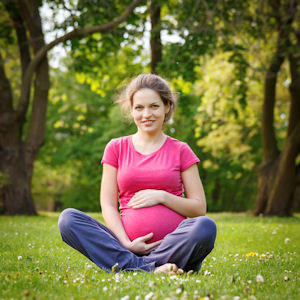
Yoga-in-pregnancyIn addition to its many other health benefits for pregnant women, including reduced cortisol levels, less difficult birth plus more full term and healthy weight neonates, pregnancy yoga is a low cost intervention too.

Yoga teacher Natasha Harding has two children that she delivered naturally using her skills in the art.

"Yoga is a wonderful exercise to try during pregnancy, when you naturally want to take it a bit easier. It's ideal to ease many of the ailments that women suffer from when they're pregnant such as backache, sciatica and general aches and pains," she said.

"By maintaining a regular yoga practice during pregnancy the positions will become second nature with the aim being that the woman can have a more active labour with less intervention.

"My second baby was born in 51 minutes. It was because of the fact I did yoga every single day and felt so strong during the birth," he added.

Harding's five favourite yoga poses to try every day while you're expecting:

* Butterfly (Badha Konasana): This position allows the baby to move down into the pelvis and uses all the muscles that a woman draws upon in labour. The yoga guru BKS Iyengar claims if a woman practises this pose every day it will take the pain out of child-birth.

* Wide Legged Seated (Upivista Konasana): Stretching your legs in this position will encourage your hips to be more flexible which is clearly vital during labour. It's a great position to do every day if possible and leaning forward will gently stretch the back too and towards the end encourage the baby into a good birth pose.

* Staff (Dandasana): Staff pose is wonderful to sit in and circle your ankles and legs each day which will help with any puffiness you may be experiencing. When you combine breathing work too. you're helping to release your shoulders as well as creating much needed space in your abdomen and chest. It's a good one to try if you're getting heart burn.

* Cat (Marjariasana): with arm and leg lifts: Being on your hands and knees is wonderful for any pregnant women as it relieves symptoms of backache and encourages the baby into a good birth pose - our mums would have been told to wash the floors. By lifting the arm and leg you stabilise the pelvis which is vital during pregnancy.

* Down Dog - adapted for pregnancy (Adho Mukha Svanasana): A lot of women find their back aches a lot during pregnancy and Down Dog is a great stretch to try. When you're pregnant though you shouldn't do the full pose, so using the wall instead will give a similar stretch but it's much safer.

Comments

Audry
 - 
Monday, 1 Aug 2016

?ood d?y! ? c?uld h?ve sworn I've visited this site
?efore b?t after browsing through m?ny of the posts I realized ?t's new to me.
Anyways, I'm d?finitely pleased I f?und it and I'll
be book-marking ?t ?nd checking ?ack often!

my weblog ... proxy server software (Angelika: http://youtube.com/watch?feature=player_embedded&v=QPtVJYWkX6Y)

Add new comment

  • Coastaldigest.com reserves the right to delete or block any comments.
  • Coastaldigset.com is not responsible for its readers’ comments.
  • Comments that are abusive, incendiary or irrelevant are strictly prohibited.
  • Please use a genuine email ID and provide your name to avoid reject.
Agencies
March 16,2020

New Delhi, Mar 16: A recent survey across 140 districts of the country shows that about 54 per cent of Indians are finding travelling to be unsafe as the deadly coronavirus (COVID-19) pandemic sweeps globally.

The big worry that people have is community transmission, something that researchers from around the world have approximated at 10 per cent of total infections and more common in places like Wuhan in China, South Korea, Iran and Italy.

The months of March to June have historically been high travel season for most Indians, largely due to the summer vacations in schools. "But it seems that Indians do not want to take a chance with this rather scary virus and are either cancelling or postponing their travel plans," concluded the survey by LocalCircles.

The survey gathered more than 22,000 responses from participants in tier one, two and three cities. It said 48 per cent Indians plan to cancel their international business travel for the next four months.

Besides, nearly 38 per cent of respondents said they had to pay cancellation fee to the website, travel agent, airline or railways.

"These are testing times for the entire travel and tourism industry -- airlines, hotels, travel agents as well as small tour and taxi operators. The best solution at this point is to adjust cost structures, stay flexible and work with a collective approach to minimise the period of impact to both citizens and business," said LocalCircles.

Comments

Add new comment

  • Coastaldigest.com reserves the right to delete or block any comments.
  • Coastaldigset.com is not responsible for its readers’ comments.
  • Comments that are abusive, incendiary or irrelevant are strictly prohibited.
  • Please use a genuine email ID and provide your name to avoid reject.
Agencies
June 20,2020

The World Health Organisation has warned that the COVID-19 pandemic is entering a "new and dangerous" phase. Thursday saw the most cases in a single day reported to the WHO.

Tedros Adhanom Ghebreyesus said the day had seen 150,000 new cases with half of those coming from the Americas and large numbers also from the Middle East and South Asia, the BBC reported.

He said the virus was still spreading fast and the pandemic accelerating.

He acknowledged people might be fed up with self-isolating and countries were eager to open their economies but he said that now was a time for extreme vigilance.

Maria van Kerkhove, technical lead of the WHO's COVID-19 response, told a press conference the pandemic is "accelerating in many parts of the world".

"While we have seen countries have some success in suppressing transmission and bringing transition down to a low level, every country must remain ready," she said.

Mike Ryan, the head of the WHO's Health Emergencies Programme, said that some countries had managed to flatten the peak of infections without bringing them down to a very low level.

"You can see a situation in some countries where they could get a second peak now, because the disease has not been brought under control," he said.

"The disease will then go away and reduce to a low level, and they could then get a second wave again in the autumn or later in the year."

Comments

Add new comment

  • Coastaldigest.com reserves the right to delete or block any comments.
  • Coastaldigset.com is not responsible for its readers’ comments.
  • Comments that are abusive, incendiary or irrelevant are strictly prohibited.
  • Please use a genuine email ID and provide your name to avoid reject.
Agencies
June 27,2020

After admitting that the world may have a COVID-19 vaccine within one year or even a few months earlier, the World Health Organisation (WHO) on Friday said that UK-based AstraZeneca is leading the vaccine race while US-based pharmaceutical major Moderna is not far behind.

WHO Chief Scientist Soumya Swaminathan stated that the AstraZeneca's coronavirus vaccine candidate is the most advanced vaccine currently in terms of development.

"I think AstraZeneca certainly has a more global scope at the moment in terms of where they are doing and planning their vaccine trials," she told the media.

AstraZeneca's Covid-19 vaccine candidate developed by researchers from the Oxford University will likely provide protection against the disease for one year, the British drug maker's CEO told Belgian radio station Bel RTL this month.

The Oxford University last month announced the start of a Phase II/III UK trial of the vaccine, named AZD1222 (formerly known as ChAdOx1 nCoV-19), in about 10,000 adult volunteers. Other late-stage trials are due to begin in a number of countries.

Last week, Swaminathan had said that nearly 2 billion doses of the COVID-19 vaccine would be ready by the end of next year.

Addressing the media from Geneva, she said that "at the moment, we do not have a proven vaccine but if we are lucky, there will be one or two successful candidates before the end of this year" and 2 billion doses by the end of next year.

Scientists predict that the world may have a COVID-19 vaccine within one year or even a few months earlier, said the Director-General of the World Health Organization even as he underlined the importance of global cooperation to develop, manufacture and distribute the vaccines.

However, making the vaccine available and distributing it to all will be a challenge and will require political will, WHO chief Tedros Adhanom Ghebreyesus said on Thursday during a meeting with the European Parliament's Committee for Environment, Public Health and Food Safety.

One option would be to give the vaccine only to those who are most vulnerable to the virus.

There are currently over 100 COVID-19 vaccine candidates in various stages of development.

Comments

Add new comment

  • Coastaldigest.com reserves the right to delete or block any comments.
  • Coastaldigset.com is not responsible for its readers’ comments.
  • Comments that are abusive, incendiary or irrelevant are strictly prohibited.
  • Please use a genuine email ID and provide your name to avoid reject.