



Your automated teller machine may be loaded with bacterias

November 19, 2016

New Delhi, Nov 19: The next time you visit a nearby automated teller machine (ATM) to take out cash, be carefully as the keypad may be full of germs, says a study.
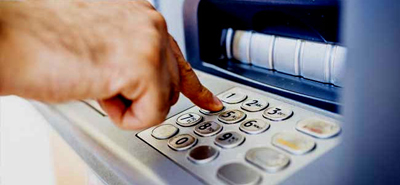
atmThe keypad may be loaded with bacterias from spoiled food to parasites that may also cause sexually transmitted disease (STDs), researchers say. Automated teller machine (ATM) keypads represent a specific and unexplored microhabitat for microbial communities.

“Our results suggest that ATM keypads integrate microbes from different sources, including the human microbiome, foods, and potentially novel environmental organisms adapted to air or surfaces,” said Jane Carlton, Professor at New York University, US.

“DNA obtained from ATM keypads may therefore provide a record of both human behaviour and environmental sources of microbes,” Carlton added.

The researchers in June and July 2014 took swabs of keypads from 66 ATM machines from Manhattan, Queens, and Brooklyn, in the US.

Specifically, the most common identified sources of microbes on the keypads were from household surfaces such as televisions, restrooms, kitchens and pillows, as well as from bony fish, mollusks and chicken.

Residual DNA from a meal may remain on a person"s hands and be transferred to the ATM keypad upon use, the researchers suggested.

ATM keypads located in laundromats and stores had the highest number of biomarkers with the most prominent being Lactobacillales (lactic acid bacteria), which is usually found in decomposing plants or milk products.In other samples, the researchers observed the biomarker Xeromyces bisporus, which is associated with spoiled baked goods.

In addition, the team found a parasite typically seen in the gut of humans and other mammals, along with a species closely related to the human parasite Trichomonas vaginalis, which can potentially cause STD.

However, there was no significant difference found in the keypads from ATMs located outdoors versus indoors, the researcher noted, in the paper published in the journal "mSphere."

Comments

Add new comment

  • Coastaldigest.com reserves the right to delete or block any comments.
  • Coastaldigset.com is not responsible for its readers’ comments.
  • Comments that are abusive, incendiary or irrelevant are strictly prohibited.
  • Please use a genuine email ID and provide your name to avoid reject.
Agencies
April 17,2020

New Delhi, Apr 17: The Indian Railways turned 167 years old on Thursday and for the first time ever, its trains did not carry any passengers on its birthday and instead stood idle in the yards waiting for the nationwide lockdown to end.

On this day 167 years ago, the wheels of the first passenger train in the country from Mumbai to Thane started rolling.

In 1974, Indians experienced life without trains for the first time. In May 1974 during the strike of the railways that lasted for around three weeks, drivers, station masters, guards, track staff and many others went on 'chakka jam' demanding fixed working hours for train drivers and an across-the-board pay hike.

"I can recall those times vividly. I remember that our leader George Fernandes had almost secured a deal with the then railway minister, but it fell through when it was taken to the then Prime Minister Indira Gandhi," All India Railwaymens Federation General Secretary Shiv Gopal Mishra, who was an apprentice in the railways at that time, told PTI.

"Fernandes was arrested in Lucknow. The workers went through a lot at that time. But those were days that angry workers had refused to give in and took great risks to get their demands met," he said.

However, just like this time, four decades ago too freight trains carrying essential supplies were run and the unions agreed to let some passenger trains run on the trunk routes like the Kalka Mail from Howrah to Delhi.

"Never ever in its history, there has been such a long interruption of services. Not during the World Wars, not during the 1974 railway strike, or any other national calamity or natural disaster," a railway spokesperson said.

The first Indian Railways passenger train was flagged off on April 16, 1853, from Mumbai to nearby Thane.

On Thursday, the Railway Ministry wished the railways a happy birthday on Twitter - "Today, 167 years ago with the zeal of 'never to stop' the wheels of the first passenger train from Mumbai to Thane started rolling. For the first time, passenger services are stopped for your safety. Stay indoors & make the nation victorious," it said.

Railway has suspended all passenger services since March 25 till May 3 due to the coronavirus outbreak. Around 15,523 trains run by the railways have been affected including 9,000 passenger trains and 3,000 mail express services which are run daily. It caters to over 20 million passengers every day.

According to the Union health ministry, the death toll due to coronavirus rose to 414 and the number of cases to 12,380 in the country on Thursday.

Comments

Add new comment

  • Coastaldigest.com reserves the right to delete or block any comments.
  • Coastaldigset.com is not responsible for its readers’ comments.
  • Comments that are abusive, incendiary or irrelevant are strictly prohibited.
  • Please use a genuine email ID and provide your name to avoid reject.
Agencies
June 28,2020

The US space agency has thrown open a challenge to win over Rs 26 lakh, calling the global community to send novel design concepts for compact toilets that can operate in both microgravity and lunar gravity.

NASA is preparing for return to the Moon and innumerable activities to equip, shelter, and otherwise support future astronauts are underway.

The astronauts will be eating and drinking, and subsequently urinating and defecating in microgravity and lunar gravity.

NASA said that while astronauts are in the cabin and out of their spacesuits, they will need a toilet that has all the same capabilities as ones here on Earth.

The public designs for space toilet may be adapted for use in the Artemis lunar landers that take humans back to the Moon.

"Although space toilets already exist and are in use (at the International Space Station, for example), they are designed for microgravity only," the US space agency said in a statement.

NASA's Human Landing System Programme is looking for a next-generation device that is smaller, more efficient, and capable of working in both microgravity and lunar gravity.

The new NASA challenge includes a Technical category and Junior category and the last date to send designs is August 17.

NASA's Artemis Moon mission will land the first woman and next man on the lunar surface by 2024.

The Artemis programme is part of America's broader Moon to Mars exploration approach, in which astronauts will explore the Moon and experience gained there to enable humanity's next giant leap, sending humans to Mars.

Comments

Add new comment

  • Coastaldigest.com reserves the right to delete or block any comments.
  • Coastaldigset.com is not responsible for its readers’ comments.
  • Comments that are abusive, incendiary or irrelevant are strictly prohibited.
  • Please use a genuine email ID and provide your name to avoid reject.
News Network
January 17,2020

Bengaluru, Jan 17: India’s latest communication satellite GSAT-30 was successfully launched from the Spaceport in French Guiana during the early hours on Friday.

In a press release, ISRO, has stated that the launch vehicle 'Ariane-5 VA-251' was blasted off from Kourou Launch Base, French Ginana at 0230 hours, carrying India’s GSA-30 and EUTELSAT KONNECT for Eutelasat, as per schedule.

The Ariane 5 upper stage in an elliptical Geosynchronous Transfer Orbit.

With a lift-off mass of 3,357 kg, GSAT-30 will provide continuity to operational services on some of the in-orbit satellites.

GSAT-30 derives its heritage from ISRO’s earlier INSAT/GSAT satellite series and will replace INSAT-4A in orbit.

“GSAT-30 has a unique configuration of providing flexible frequency segments and flexible coverage. The satellite will provide communication services to Indian mainland and islands through Ku-band and wide coverage covering Gulf countries, a large number of Asian countries and Australia through C-band," ISRO Chairman Dr K Sivan said.

Dr Sivan also said that “GSAT-30 will provide DTH Television Services, connectivity to VSATs for ATM, Stock-exchange, Television uplinking and teleport Services, Digital Satellite News Gathering (DSNG) and e-governance applications. The satellite will also be used for bulk data transfer for a host of emerging telecommunication applications.”

ISRO’s Master Control Facility (MCF) at Hassan in Karnataka took over the command and control of GSAT-30 immediately after its separation from the launch vehicle. Preliminary health checks of the satellite revealed its normal health.

In the days ahead, orbit-raising maneuvers will be performed to place the satellite in Geostationary Orbit (36,000 km above the equator) by using its onboard propulsion system.

During the final stages of its orbit raising operations, the two solar arrays and the antenna reflectors of GSAT-30 will be deployed. Following this, the satellite will be put in its final orbital configuration.

The satellite will be operational after the successful completion of all in-orbit tests.

Comments

Add new comment

  • Coastaldigest.com reserves the right to delete or block any comments.
  • Coastaldigset.com is not responsible for its readers’ comments.
  • Comments that are abusive, incendiary or irrelevant are strictly prohibited.
  • Please use a genuine email ID and provide your name to avoid reject.