2838 Pakistanis, 914 Afghans, 172 Bangladeshis given Indian citizenship in last 6 years: Fin Min

News Network
January 19, 2020

Chennai, Jan 19: Amid ongoing nationwide protests against Citizenship (Amendment) Act, 2019, finance minister Nirmala Sitharaman on Sunday said that as many as 2838 people from Pakistan were given citizenship during the last six years.

"In the last six years, as many as 2838 Pakistani refugees, 914 Afghan refugees, 172 Bangladeshi refugees including Muslims have been given Indian citizenship. From 1964 to 2008, more than 4,00,000 Tamils (from Sri Lanka) have been given Indian citizenship," Sitharaman said at 'Programme on Citizenship (Amendment) Act, 2019' event here.

She added, "Till 2014, over 566 Muslims from Pakistan, Bangladesh and Afghanistan were given Indian citizenship. During 2016-18 under Modi government, around 1595 Pakistani migrants and 391 Afghanistani Muslims were given Indian citizenship."

The minister, further, said, "It was also during the same period in 2016, that Adnan Sami was given Indian citizenship, this is an example."    

Sitharaman added that people who came from East Pakistan have been settled at various camps in the country.

"They are still there and it's been 50-60 years now. If you visit these camps, your heart will cry. The situation is the same with Sri Lankan refugees who continue to live in camps. They're barred from getting basic facilities," she said.

Asserting that the government is not snatching away anyone's citizenship, the BJP leader said: "This Citizenship (Amendment) Act is an attempt to provide people with a better life. We are not snatching away anyone's citizenship, we are only providing them that."

"The National Population Register (NPR) will be updated every 10 years and is not involved with the National Register of Citizens (NRC). Some are involved in raising false allegations and triggering people unnecessarily without any base," she added.

Comments

indian
 - 
Monday, 20 Jan 2020

Hello Madam,

What Are you ?? Are you a Finance Minister or External Affairs Minister ??

when someone asked about the economy which well related to your ministry you won't even open your mouth, 

but now you are talking about a matter which is not at all your business...

WellWisher
 - 
Sunday, 19 Jan 2020

What a pefect  figure  given by our short time  finance minister. Hope  she wil feed them from her person income wthout ONION.

Fairman
 - 
Sunday, 19 Jan 2020

Stupid, dont know even what they talk.


It is not snatching anybody's nationality. You dont have right to do it.


The subject is not snatching,    the subject is disccimination while giving nationality.


Add new comment

  • Coastaldigest.com reserves the right to delete or block any comments.
  • Coastaldigset.com is not responsible for its readers’ comments.
  • Comments that are abusive, incendiary or irrelevant are strictly prohibited.
  • Please use a genuine email ID and provide your name to avoid reject.
News Network
January 13,2020

Jan 13: For the first time in years, the government of India’s Prime Minister Narendra Modi is playing defense. Protests have sprung up across the country against an amendment to India’s laws — which came into effect on Friday — that makes it easier for members of some religions to become citizens of India. The government claims this is simply an attempt to protect religious minorities in the Muslim-majority countries that border India; but protesters see it as the first step toward a formal repudiation of India’s constitutionally guaranteed secularism — and one that must be resisted.

Modi was re-elected prime minister last year with an enhanced majority; his hold over the country’s politics is absolute. The formal opposition is weak, discredited and disorganized. Yet, somehow, the anti-Citizenship Act protests have taken hold. No political party is behind them; they are generally arranged by student unions, neighborhood associations and the like.

Yet this aspect of their character is precisely what will worry Modi and his right-hand man, Home Minister Amit Shah. They know how to mock and delegitimize opposition parties with ruthless efficiency. Yet creating a narrative that paints large, flag-waving crowds as traitors is not quite that easy.

For that is how these protests look: large groups of young people, many carrying witty signs and the national flag. They meet and read the preamble to India’s Constitution, into which the promise of secularism was written in the 1970’s.

They carry photographs of the Constitution’s drafter, the Columbia University-trained economist and lawyer B. R. Ambedkar. These are not the mobs the government wanted. They hoped for angry Muslims rampaging through the streets of India’s cities, whom they could point to and say: “See? We must protect you from them.” But, in spite of sometimes brutal repression, the protests have largely been nonviolent.

One, in Shaheen Bagh in a Muslim-dominated sector of New Delhi, began simply as a set of local women in a square, armed with hot tea and blankets against the chill Delhi winter. It has now become the focal point of a very different sort of resistance than what the government expected. Nothing could cure the delusions of India’s Hindu middle class, trained to see India’s Muslims as dangerous threats, as effectively as a group of otherwise clearly apolitical women sipping sweet tea and sharing their fears and food with anyone who will listen.

Modi was re-elected less than a year ago; what could have changed in India since then? Not much, I suspect, in most places that voted for him and his party — particularly the vast rural hinterland of northern India. But urban India was also possibly never quite as content as electoral results suggested. India’s growth dipped below 5% in recent quarters; demand has crashed, and uncertainty about the future is widespread. Worse, the government’s response to the protests was clearly ill-judged. University campuses were attacked, in one case by the police and later by masked men almost certainly connected to the ruling party.

Protesters were harassed and detained with little cause. The courts seemed uninterested. And, slowly, anger began to grow on social media — not just on Twitter, but also on Instagram, previously the preserve of pretty bowls of salad. Instagram is the one social medium over which Modi’s party does not have a stranglehold; and it is where these protests, with their photogenic signs and flags, have found a natural home. As a result, people across urban India who would never previously have gone to a demonstration or a political rally have been slowly politicized.

India is, in fact, becoming more like a normal democracy. “Normal,” that is, for the 2020’s. Liberal democracies across the world are politically divided, often between more liberal urban centers and coasts, and angrier, “left-behind” hinterlands. Modi’s political secret was that he was that rare populist who could unite both the hopeful cities and the resentful countryside. Yet this once magic formula seems to have become ineffective. Five of India’s six largest cities are not ruled by Modi’s Bharatiya Janata Party in any case — the financial hub of Mumbai changed hands recently. The BJP has set its sights on winning state elections in Delhi in a few weeks. Which way the capital’s voters will go is uncertain. But that itself is revealing — last year, Modi swept all seven parliamentary seats in Delhi.

In the end, the Citizenship Amendment Act is now law, the BJP might manage to win Delhi, and the protests might die down as the days get unmanageably hot and state repression increases. But urban India has put Modi on notice. His days of being India’s unifier are over: From now on, like all the other populists, he will have to keep one eye on the streets of his country’s cities.


Comments

Add new comment

  • Coastaldigest.com reserves the right to delete or block any comments.
  • Coastaldigset.com is not responsible for its readers’ comments.
  • Comments that are abusive, incendiary or irrelevant are strictly prohibited.
  • Please use a genuine email ID and provide your name to avoid reject.
Agencies
August 2,2020

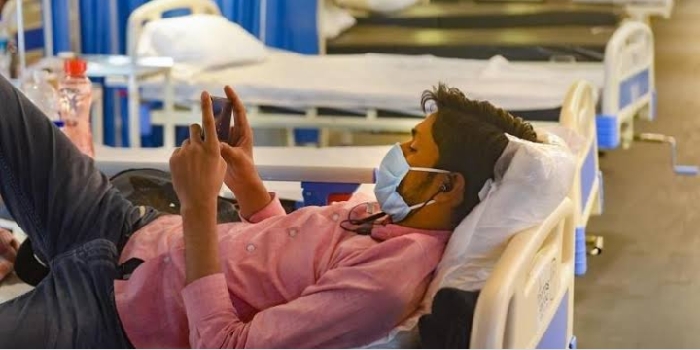
New Delhi, Aug 2: The Centre has written to all states and Union Territories stating that smartphones and tablet devices should be allowed for hospitalised Covid-19 patients so that they can interact with family and friends through video conferencing, which would provide them psychological support.

Though mobile phones are allowed in hospital wards, the missive was issued following some representation from the kin of patients alleging otherwise.

Director-General of Health Services (DGHS) in the Health Ministry Dr Rajiv Garg in the letter to the principal secretaries of health and medical education of states and Union territories said appropriate protocols for disinfecting devices and allotting timeslots can be developed by the hospital concerned to facilitate contact between patients and their family.

He underlined that administrative and medical teams should be responsive to the psychological needs of patients admitted in Covid-19 wards and ICUs of various hospitals.

"Social connection can calm down patients and also reinforce the psychological support given by the treating team. Please instruct all concerned that they should allow smartphones and tablet devices in patient areas so that the patient can video conference with their family and friends," stated the letter issued on July 29.

"Though mobile phones are allowed in the wards to enable a patient stay in touch with his or her family, we received representations from the patient families from some states stating mobile phones are not being allowed by hospital administrations because of which they were not being able to stay in contact with the patient," said Dr Garg.

Comments

Add new comment

  • Coastaldigest.com reserves the right to delete or block any comments.
  • Coastaldigset.com is not responsible for its readers’ comments.
  • Comments that are abusive, incendiary or irrelevant are strictly prohibited.
  • Please use a genuine email ID and provide your name to avoid reject.
News Network
January 14,2020

New Delhi, Jan 14: One of the four Nirbhaya gang rape convicts, who are scheduled to be hanged on January 22, moved a mercy plea before President Ram Nath Kovind to set aside the death sentence issued against him.

He also moved the Delhi High Court to set aside the death warrant issued by a trial court. This hearing is scheduled for Wednesday before a bench of Justices Manmohan and Sangita Dhingra Sehgal.

The petition, filed through advocate Vrinda Grover, seeks setting aside of the January 7 order issuing the warrant of his execution.

Comments

Add new comment

  • Coastaldigest.com reserves the right to delete or block any comments.
  • Coastaldigset.com is not responsible for its readers’ comments.
  • Comments that are abusive, incendiary or irrelevant are strictly prohibited.
  • Please use a genuine email ID and provide your name to avoid reject.