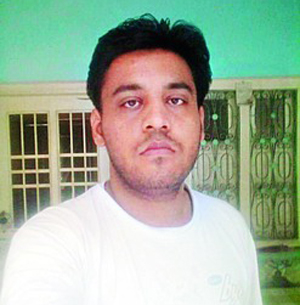
CBI team visits JNU to probe Najeeb's disappearance

Agencies
June 19, 2017

New Delhi, Jun 19: A CBI team today visited Jawaharlal Nehru University (JNU) to probe the disappearance of Najeeb Ahmed, a student who had gone missing from his hostel on October 16, 2016.

najeebThe team is looking into allegations of a scuffle between Ahmed and ABVP students in JNU's Mahi-Mandvi hostel and the circumstances that may have led to it as well as other events that preceded his disappearance.

It is likely to meet the suspects and people whose names have cropped up in the matter, sources said.

Najeeb's mother Fatima Nafees recently met CBI officers investigating the case. She gave details of the events before her son disappeared from his hostel.

Najeeb had returned to the university on October 13, 2016 after a holiday. On the intervening night of October 15-16, he called his mother to tell her that something was wrong. His roommate later told Fatima he had been injured in a fight, she had said.

Following the conversation, Fatima took a bus from Bulandshahr in Uttar Pradesh to reach Delhi in the afternoon. After reaching Anand Vihar, she spoke to him over the phone and asked him to meet her at the hotel.

She said in her complaint that there was no trace of Najeeb when she reached his room in Mahi Hostel room 106.

With Delhi Police failing to find her son, Fatima approached the Delhi High Court demanding a CBI probe.

On May 16, a bench of Justices G S Sistani and Rekha Palli handed over the investigation to the CBI with the direction that it has to be monitored by an officer not less than the rank of DIG. The matter has been posted for hearing on July 17.

The high court had time and again come down heavily on the police for failing to trace the student after several months of investigation and even remarked that it was looking for an "escape route" and was "beating around the bush".

The court had also questioned the conduct of the police saying that it was trying to sensationalise the matter as it was filing reports in sealed covers when "there was nothing confidential, damaging or crucial" in them.

Comments

Add new comment

  • Coastaldigest.com reserves the right to delete or block any comments.
  • Coastaldigset.com is not responsible for its readers’ comments.
  • Comments that are abusive, incendiary or irrelevant are strictly prohibited.
  • Please use a genuine email ID and provide your name to avoid reject.
News Network
February 10,2020

New Delhi, Feb 10: Former finance minister P Chidambaram on Monday tore into the Modi government's handling of the economy, saying it was close to collapse and was been attended by "very incompetent doctors."

Initiating the debate on the Union Budget for 2020-21, he said rising unemployment and falling consumption was making India poorer.

The economy, he said, is facing demand constraints and is investment starved. The economy is facing fall in consumption and rising unemployment.

"Fear and uncertainty prevails in the country," he added.

He said the chief economic advisor to the BJP government for four years, Arvind Subramanian has stated that the economy is in the ICU. But "I would say the patient has been kept out of ICU and incompetent doctors are looking at the patient," Chidambaram said.

"It is dangerous to have a patient out of ICU and being looked upon by incompetent doctors. What is the point standing around and chanting slogan 'Sab ka saath, sab ka vishwas'," he said, adding every competent doctor the Modi government could ever identify has left the country.

His said a list of such people included former RBI governor Raghurman Rajan, former CEA Arvind Subramanian, former RBI governor Urjit Patel and former NITI Aayog vice chairman Arvind Panagariya.

"Who are your doctors, I want to know," he said, adding the government considers Congress as untouchable and doesn't think of any good about the rest of the opposition and so doesn't consult them.

Chidambaram charged that instead of putting money in the hands of people, the Modi government "put money in hands of 200 corporates" by way of corporate tax.

He said Finance Minister Nirmala Sitharaman in her 160- minute budget speech did not talk of the economy and its management.

"You are living in echo chambers. You want to hear your own voice," he said.

Listing problems with the Modi government, Chidambaram said it refuses to admits in mistakes, lives in denial and has predispositions.

The demonetisation of old 1000 and 500 rupee notes, as well as the hurried implementation of the Goods and Services Tax (GST), are "monumental blunders" that ruined the economy, he said, adding the Modi regime is predisposed to protectionism, a 'strong' rupee and is against bilateral and multilateral agreements.

"It is living in denial," he said, adding the economic growth has fallen for hereto unseen six consecutive quarters.

He wondered on the narrative Finance Minister Nirmala Sitharaman was trying to give after reading out a 160-minute budget speech with few pages left unread.

Her budget neither made any reference to the Economic Survey nor picked up a single idea from it, he said.

Chidambaram, who is credited with presenting a 'dream budget' more than two decades back, said the GDP growth has declined for six consecutive quarters, agriculture is growing by just 2 per cent, while consumer price inflation has risen from 1.9 per cent in January 2019 to 7.4 per cent in a matter of 11 months.

Also, food inflation is at 12.2 per cent. Bank credit is growing 8 per cent with non-food credit rising by 7-8 per cent and credit to industry by just 2.7 per cent. Credit to agriculture has declined from 18.3 per cent to 5.3 per cent and that for MSMEs from 6.7 per cent to 1.6 per cent.

Overall industrial index showed just 0.6 per cent growth. "Every major industry is either near zero or in negative zone," he said, adding thermal power plants are operating at just 55 per cent of the capacity as factories have either closed or are on the verge of closure.

"That gives you a good picture of the state of economy. You don't require MRI," he said. "You are in management for six years. How long can you blame previous managers."

He charged the government with burying unfavourable reports such as the labour survey that put unemployment at 45 -year high of 6.1 per cent at end of 2017-18. Also, consumer expenditure has falling to 3.7 per cent between 2011-12 and 2017-18.

Drilling holes in Budget numbers, he said the 2019-20 budget projected a nominal GDP growth of 12 per cent but ended with just 8.5 per cent. Fiscal deficit was targeted to be shrunk to 3.3 per cent of the GDP but ended by at 3.8 per cent and in the next fiscal it is being targeted at 3.5 per cent.

Revenue deficit was targeted at 2.3 per cent in fiscal ending March 31, 2020 but ended up at 2.4 per cent and in the next it will rise to 2.8 per cent, he said, adding capital expenditure in the next fiscal will shrink to 0.7 per cent from 1.4 per cent in the current.

Net tax revenue in the current fiscal was targeted at Rs 16.49 lakh crore but only Rs 9 lakh crore was collected in first nine months till December 2019 and "you want us to believe this will rise to Rs 15 lakh crore by March 2020," he said.

Similarly, expenditure in 2019-20 was pegged at Rs 27.86 lakh crore but only Rs 11.78 lakh crore spent during April- December and by March this is projected to rise to Rs 27 lakh crore.

"You have no money to spend... and these are masked by numbers," he said. "Numbers are not easily acceptable or believable."

Chidambaram said the government is facing shortfall in all forms of taxes - Rs 1.56 lakh crore on corporate tax, Rs 10,000 crore on personal income tax, Rs 30,000 crore on customs, Rs 52,000 crore on excise and Rs 51,000 crore on GST.

This despite "the extraordinary powers" and "all kinds of power" given to lower level tax officials, he said.

He read of list of heads under which allocation has fallen - food subsidy, agriculture, PM-Kisan, rural roads, mid-day meal scheme, ICDS, skill development, Ayushman Bharat, rural development and MGNEGA.


Comments

Add new comment

  • Coastaldigest.com reserves the right to delete or block any comments.
  • Coastaldigset.com is not responsible for its readers’ comments.
  • Comments that are abusive, incendiary or irrelevant are strictly prohibited.
  • Please use a genuine email ID and provide your name to avoid reject.
News Network
April 24,2020

Apr 24: Kerala Chief Minister Pinarayi Vijayan on Friday sought Prime Minister Narendra Modi's intervention in bringing bodies of Keralites who died in the Gulf countries due to non-COVID-19 reasons to the state without any delay for performing last rites in their home towns.

In a letter, he wanted Modi to direct Indian embassies to issue necessary clearances without seeking individual approvals from the Ministry of Home Affairs and avoid any delay so that the remains reach Kerala early. It has been learnt that a 'clearance certificate' from the Indian embassies concerned was required to process the application for bringing home the bodies.

The embassies are insisting on production of no-objection certificate from the Union Ministry of Home Affairs, he said in the letter, a copy of which was released to the media here on Friday. The Centre had already agreed that in case the deaths are not COVID related, such certificates are not necessary.

The bodies are now being brought in the cargo planes as passenger flights are not being operated due to the lockdown. Chief Minister said he had received several grievances from the NRKs in Gulf Cooperation Council (GCC) countries on the delay in bringing home the bodies of those who died there. "They are already under tremendous stress and anxiety due to the lockdown imposed in those countries and the consequent stoppage of international flights", Vijayan said.

Comments

Add new comment

  • Coastaldigest.com reserves the right to delete or block any comments.
  • Coastaldigset.com is not responsible for its readers’ comments.
  • Comments that are abusive, incendiary or irrelevant are strictly prohibited.
  • Please use a genuine email ID and provide your name to avoid reject.
News Network
January 10,2020

Mumbai, Jan 10: India’s oil demand growth is set to overtake China by mid-2020s, priming the country for more refinery investment but making it more vulnerable to supply disruption in the Middle East, the International Energy Agency (IEA) said on Friday.

India’s oil demand is expected to reach 6 million barrels per day (bpd) by 2024 from 4.4 million bpd in 2017, but its domestic production is expected to rise only marginally, making the country more reliant on crude imports and more vulnerable to supply disruption in the Middle East, the agency said.

China’s demand growth is likely to be slightly lower than that of India by the mid-2020s, as per IEA’s China estimates given in November, but the gap would slowly become bigger thereafter.

“Indian economy is and will become even more exposed to risks of supply disruptions, geopolitical uncertainties and the volatility of oil prices,” the IEA said in a report on India’s energy policies.

Brent crude prices topped USD 70 a barrel on rising geopolitical tensions in the Middle East, putting pressure on emerging markets such as India. Like the rest of Asia, India is highly dependent on Middle East oil supplies with Iraq being its largest crude supplier.

India, which ranks No 3 in terms of global oil consumption after China and the United States, ships in over 80 per cent of its oil needs, of which 65 per cent is from the Middle East through the Strait of Hormuz, the IEA said.

The IEA, which coordinates release of strategic petroleum reserves (SPR) among developed countries in times of emergency, said it is important for India to expand its reserves.

REFINERY INVESTMENTS

India is the world’s fourth largest oil refiner and a net exporter of refined fuel, mainly gasoline and diesel.

India has drawn plans to lift its refining capacity to about 8 million bpd by 2025 from the current about 5 million bpd.

The IEA, however, forecasts India’s refining capacity to rise to 5.7 million bpd by 2024.

This would make “India a very attractive market for refinery investment,” IEA said.

Drawn to India’s higher fuel demand potential, global oil majors like Saudi Aramco, BP, Abu Dhabi National Oil Co and Total are looking at investing in India’s oil sector.

Saudi Aramco and ADNOC aim to own a 50 per cent stake in a planned 1.2-million bpd refinery in western Maharashtra state, for which land is yet to be acquired.

Comments

Add new comment

  • Coastaldigest.com reserves the right to delete or block any comments.
  • Coastaldigset.com is not responsible for its readers’ comments.
  • Comments that are abusive, incendiary or irrelevant are strictly prohibited.
  • Please use a genuine email ID and provide your name to avoid reject.