


China moving ahead, talking about temples and mosques will waste our time: Ex-Navy chief

Agencies
August 12, 2019

New Delhi, Aug 12: China is moving ahead in areas like artificial intelligence (AI) and robotics and it would be a waste of time if India distracts itself by talking about temples and mosques, former Navy chief Arun Prakash said on Sunday.

However, Arun Prakash expressed hope that the abrogation provision of Article 370 and the change in the status of Jammu and Kashmir will bring peace and help foster integration and economic development in the region.

"For our whole existence as an independent nation, we have seen and suffered from these fissures - linguistic, religious, caste, etc. These conflicts have continued throughout our independent existence," Admiral Arun Prakash (Retd), while delivering Prem Bhatia Memorial Lecture in New Delhi, said.

"What we need to do is to try and tamp them rather than to exploit them. China is talking about artificial intelligence, robotics and machine learning and all that. And if we are going to talk about temples and mosques and so on, then obviously we are going to waste time," Arun Prakash added.

Curious to know whether anyone from the 'Raghuvansha' (descendants of Lord Ram) was still residing in Ayodhya, the Supreme Court on Friday had put this query to 'Ram Lalla Virajman', the deity and one of the parties in the politically sensitive Ram Janmabhoomi-Babri Masjid land dispute case.

Fourteen appeals have been filed in the apex court against the 2010 Allahabad High Court judgment, delivered in four civil suits, that the 2.77-acre land in Ayodhya be partitioned equally among the three parties -- the Sunni Waqf Board, the Nirmohi Akhara and Ram Lalla.

Arun Prakash, who served as the chief of Naval staff from July 2004 to October 2006, said on Sunday, "It is in key interest of national security to ensure peace and tranquillity domestically before even looking outside."

"So to take away the half front, which the Army Chief [Bipin Rawat] mentions, we need to ensure domestic peace, harmony, etc. Therefore, the issues that are of a divisive nature need to be minimised rather than exploited," Arun Prakash added.

In June this year, Army Chief Bipin Rawat said that Indian armed forces are ready for a "two-and-a-half-front war". Bipin Rawat was referring to Pakistan and China as two fronts and internal security threats as the half front.

Arun Prakash said Sunday, "Our actual preparation should have been to ward off Chinese pressure. They don't have to fire a bullet. There are many other ways of pushing India. And if we prepare to counter China, then Pakistan would automatically be taken care of."

Talking about recent situation in Jammu and Kashmir, Arun Prakash said, "One hopes that the recent abrogation of Article 370 and the changes in the status of erstwhile J&K [Jammu and Kashmir] will bring peace and help foster integration and economic development."

Earlier this week, the government revoked provisions of Article 370 of the Constitution, withdrawing special status to Jammu and Kashmir, and split the state into two Union Territories -- Jammu and Kashmir, and Ladakh.

"If we are to debunk Jinnah's two-nation theory and convince the Muslim majority Union Territory (UT) of J&K that they made the right choice in 1947, then we need to reflect seriously on some larger issues," Arun Prakash said.

"One, whether the pursuit of majoritarianism of any kind is a good idea for a multi-religious, multi-ethnic and multi-lingual country like India. Two, whether in generating insecurity amongst any section of our people will enhance India's security or undermine it," Arun Prakash added.

Comments

Mr Frank
 - 
Tuesday, 13 Aug 2019

When china products in every field available globally India is lagging far behind filled with hate crime and polarisation and rapings..development remains only a slogan.

Add new comment

  • Coastaldigest.com reserves the right to delete or block any comments.
  • Coastaldigset.com is not responsible for its readers’ comments.
  • Comments that are abusive, incendiary or irrelevant are strictly prohibited.
  • Please use a genuine email ID and provide your name to avoid reject.
News Network
June 9,2020

Jun 9: Prime Minister Narendra Modi wants all 1.3 billion Indians to be “vocal for local” — meaning, to not just use domestically made products but also to promote them. As an overseas citizen living in Hong Kong, I’m doing my bit by very vocally demanding Indian mangoes on every trip to the grocery. But half the summer is gone, and not a single slice so far.

My loss is due to India’s COVID-19 lockdown, which has severely pinched logistics, a perennial challenge in the huge, infrastructure-starved country. But more worrying than the disruption is the fruity political response to it. Rather than being a wake-up call for fixing supply chains, the pandemic seems to be putting India on an isolationist course. Why?

Granted that the liberal view that trade is good and autarky bad isn’t exactly fashionable anywhere right now. What makes India’s lurch troublesome is that the pace and direction of economic nationalism may be set by domestic business interests. The Indian liberals, many of whom are Western-trained academics, authors and — at least until a few years ago — policy makers, want a more competitive economy. They will be powerless to prevent the slide.

Modi’s call for a self-reliant India has been echoed by Home Minister Amit Shah, the cabinet’s unofficial No. 2, in a television interview. If Indians don’t buy foreign-made goods, the economy will see a jump, he said. The strategy — although it’s too nebulous yet to call it that — has a geopolitical element. A military standoff with China is under way, apparently triggered by India’s completion of a road and bridge near the common border in the tense Himalayan region of Ladakh. It’s very expensive to fight even a limited war there. With India’s economy flattened by COVID, New Delhi may be looking for ways to restore the status quo and send Beijing a signal.

Economic boycotts, such as Chinese consumers’ rejection of Japanese goods over territorial disputes in the East China Sea, are well understood as statecraft. In these times, it’s not even necessary to name an enemy. An undercurrent of popular anger against China, the source of both the virus and India’s biggest bilateral trade deficit, is supposed to do the job. But is it ever that easy?

A hastily introduced policy to stock only local goods in police and paramilitary canteens became a farcical exercise after the list of banned items ended up including products by the local units of Colgate-Palmolive Co., Nestle SA, and Unilever NV, which have had significant Indian operations for between 60 and 90 years, as well as Dabur India Ltd., a New Delhi-based maker of Ayurveda brands. The since-withdrawn list demonstrates the practical difficulty of bureaucrats trying to find things in a globalized world that are 100% indigenous.

Free-trade champions fret that the prime minister, whom they saw as being on their side six years ago, is acting against their advice to dismantle statist controls on land, labor and capital to help make the country more competitive. Engage with the world more, not less, they caution. But Modi also has to satisfy the Rashtriya Swayamsevak Sangh, the umbrella Hindu organisation that gets him votes. Its backbone of small traders, builders and businessmen — the RSS admits only men — was losing patience with the anemic economy even before the pandemic. Now, they’re in deep trouble, because India’s broken financial system won’t deliver even state-guaranteed loans to them.

The U.S.-China tensions — over trade, intellectual property, COVID responsibility and Hong Kong’s autonomy — offer a perfect backdrop. A dire domestic economy and trouble at the border provide the foreground. Big business will dial economic nationalism up and down to hit a trifecta of goals: Block competition from the People's Republic; make Western rivals fall in line and do joint ventures; and tap deep overseas capital markets. The first goal is being achieved with newly placed restrictions on investment from any country that shares a land border with India. The second aim is to be realized by corporate lobbying to influence India's whimsical economic policies. As for the third objective, with the regulatory environment becoming tougher for U.S.-listed Chinese companies like Alibaba Group Holding Ltd., an opportunity may open up for Indian firms.

All this may bring India Shenzhen-style enclaves of manufacturing and trade, but it will concentrate economic power in fewer hands, something that worries liberals. They’re moved by the suffering of India’s low-wage workers, who have borne the brunt of the COVID shutdown. But when their vision of a more just society and fairer income distribution prompts them to make common cause with the ideological Left, they’re quickly repelled by the Marxist voodoo that all cash, property, bonds and real estate held by citizens or within the nation “must be treated as national resources available during this crisis.” Who will invest in a country that does that instead of just printing money?

At the same time, when liberals look to the business class, they see a sudden swelling of support for ideas like a universal basic income. They wonder if this isn’t a ploy by industry to outsource part of the cost of labor to the taxpayer. Slogans like Modi’s vocal-for-local stir the pot and thicken the confusion. The value-conscious Indian consumer couldn’t give two hoots for calls to buy Indian, but large firms will know how to exploit economic nationalism. One day soon, I’ll get my mangoes — from them.

Comments

Add new comment

  • Coastaldigest.com reserves the right to delete or block any comments.
  • Coastaldigset.com is not responsible for its readers’ comments.
  • Comments that are abusive, incendiary or irrelevant are strictly prohibited.
  • Please use a genuine email ID and provide your name to avoid reject.
Agencies
August 2,2020

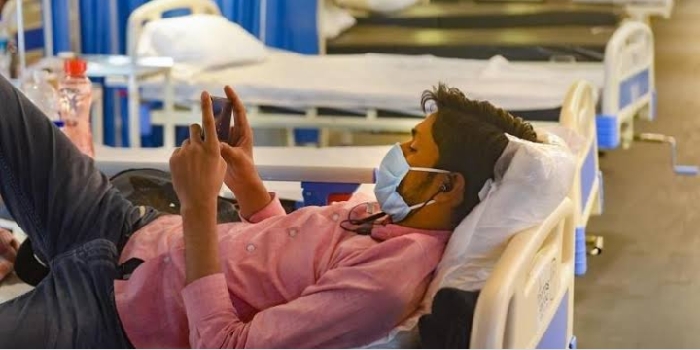
New Delhi, Aug 2: The Centre has written to all states and Union Territories stating that smartphones and tablet devices should be allowed for hospitalised Covid-19 patients so that they can interact with family and friends through video conferencing, which would provide them psychological support.

Though mobile phones are allowed in hospital wards, the missive was issued following some representation from the kin of patients alleging otherwise.

Director-General of Health Services (DGHS) in the Health Ministry Dr Rajiv Garg in the letter to the principal secretaries of health and medical education of states and Union territories said appropriate protocols for disinfecting devices and allotting timeslots can be developed by the hospital concerned to facilitate contact between patients and their family.

He underlined that administrative and medical teams should be responsive to the psychological needs of patients admitted in Covid-19 wards and ICUs of various hospitals.

"Social connection can calm down patients and also reinforce the psychological support given by the treating team. Please instruct all concerned that they should allow smartphones and tablet devices in patient areas so that the patient can video conference with their family and friends," stated the letter issued on July 29.

"Though mobile phones are allowed in the wards to enable a patient stay in touch with his or her family, we received representations from the patient families from some states stating mobile phones are not being allowed by hospital administrations because of which they were not being able to stay in contact with the patient," said Dr Garg.

Comments

Add new comment

  • Coastaldigest.com reserves the right to delete or block any comments.
  • Coastaldigset.com is not responsible for its readers’ comments.
  • Comments that are abusive, incendiary or irrelevant are strictly prohibited.
  • Please use a genuine email ID and provide your name to avoid reject.
Agencies
August 3,2020

New Delhi, Aug 3: Congress leader and Rajya Sabha MP Digvijaya Singh on Monday said that Prime Minister Narendra Modi should defer the foundation stone laying ceremony for Ram temple from August 5 as it will be an "inauspicious hour" for the event.

"I request Modi Ji again that the inauspicious occasion of August 5 (for foundation stone laying ceremony for Ram temple) should be deferred. The construction of Ram temple is to begin after hundreds of years of struggle and PM Modi should leave his stubbornness that may cause an obstruction in the process," Digvijaya tweeted (translated from Hindi).

The Congress leader went on to claim that several BJP leaders were falling sick due to COVID-19 as the result of ignoring the norms of Sanatan Dharma. "The results of ignoring the norms of Sanatan Dharma are - all priests of Ram temple tested positive for COVID-19, death of UP Minister Kamal Rani Varun due to corona, UP BJP chief tested COVID-19 positive, Home Minister Amit Shah tested positive for COVID-19, Madhya Pradesh CM Shivraj Singh Chouhan tested positive for COVID-19, Karnataka CM Yediyurappa tested positive for COVID-19," he added.

"Lord Ram is the epicentre of faith for crores of Hindus and the PM should not play with norms and traditions of Sanatan Dharma established across thousands of years," he added.

The Congress leader further questioned the urgency of holding the foundation stone laying event in times when COVID-19 spread is prevalent across the country.

"By laying the foundation stone for Ram temple at an inauspicious hour, how many people do you want to send to the hospital Modi Ji? Yogi Ji, please explain to Modi Ji. In your presence, why are the norms and traditions of Sanatan Dharma being broken? What is your compulsion that you are allowing this to happen?" he contended.

"One more question arises. A minister of the Uttar Pradesh government died due to coronavirus. Union Home Minister tested positive for COVID-19 and Uttar Pradesh BJP chief also tested positive. In these circumstances, whether Uttar Pradesh Chief Minister and India's Prime Minister should not be quarantined? Is being quarantined only mandated for common people? Not for Prime Minister and Chief Ministers? The time limit for quarantine is 14 days," he added.

He further said that the entire cabinet should go into quarantine otherwise they will infect the residents of Ayodhya.

"These people's religion is 'Hindutva' and not 'Sanatan Dharma'. hence they have nothing to do with Sanatan Dharma's traditions. They have broken all the norms. Now, Modi Ji will issue the muhurta and he will only lay the foundation stone," he tweeted.

The Prime Minister is scheduled to lay the foundation stone of the Ram temple in Ayodhya on August 5.

The construction of Ram temple will begin after the ceremony to lay the foundation stone in which Chief Ministers of several states, Ministers from the Union Cabinet and RSS chief Mohan Bhagwat are also likely to participate.

Comments

Add new comment

  • Coastaldigest.com reserves the right to delete or block any comments.
  • Coastaldigset.com is not responsible for its readers’ comments.
  • Comments that are abusive, incendiary or irrelevant are strictly prohibited.
  • Please use a genuine email ID and provide your name to avoid reject.