


Deendar Channabasaveshwara terror case: Beggar arrested after 16 years

[email protected] (CD Network)
August 10, 2016

Bengaluru, Aug 10: Sixteen years after Karnataka faced serial bombings by Deendar Channabasaveshwara Anjuman, the Criminal Investigation Department (CID) sleuths have arrested Sheikh Amir Ali, a beggar and prime suspect in the case.
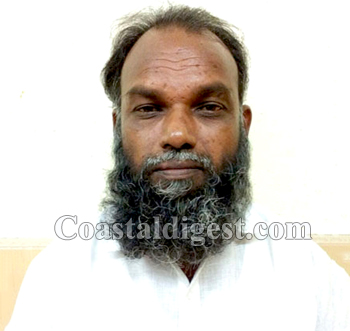
AmirAliPolice sources said that for the past couple of years, Ali had been living a mendicant's life and surviving on alms

The 50-year-old beggar is wanted in four blast cases in Karnataka and Maharashtra, police said. The Karnataka CID team picked him up from a hideout in Nalagonda, Andhra Pradesh.

The Ist Additional Chief Metropolitan Magistrate (ACMM) court in Bengaluru had issued a non-bailable warrant against Ali. The blasts were triggered by men owing allegiance to Deendar Channabasaveshwara Anjuman, a terror outfit banned in 1948.

The explosion in Bengaluru occurred in a church in JJ Nagar on the night of July 9, 2000, damaging it partly. Twenty-nine persons were arrested and the court convicted 23 of them. Eleven convicts were awarded death sentence, while 12 were sentenced to life imprisonment.

Similar blasts were triggered in Hubballi and Wadi around the same time and investigations proved the involvement of Ali and others. Of the seven fugitives, five are settled in Pakistan and one is absconding.

According to police sources, Ali had supplied explosive material to Hashim Ali from Andhra Pradesh, who assembled it to prepare the bombs.

Deendar Anjuman

Deendar Anjuman or Deendar Channabasaveshwara Anjuman was founded by Hazrath Moulana Siddique - alias Deendar Channabasaveshwara - at Bellampet, Gulbarga district, in 1924. Its head office was at Asif Nagar, Hyderabad. Though the organisation operated behind the façade of establishing religious equality, it had a hidden terror agenda, which is widely condemned by Muslims.

Terror track

1. On June 8, 2000, two crude bombs were set off at Saint Anne's Church in Wadi, Gulbarga District. The church was damaged and two persons were injured.

2. On July 9, 2000, bombs were set off at St Peter Paul Church in Jagajeevanaramnagar, Bengaluru.

3. On July 8, 2000, the group triggered off bombs blasts at the St John Luthern Church in Hubli. Sixteen persons faced trial in the case.

4. The final blast occurred when a bomb went off accidentally while the terrorists were transporting them in a Maruti van on July 9.

Comments

Satyameva jayate
 - 
Thursday, 11 Aug 2016

Viren go helpGO maataas dying.....and stinking....will God's stink after dying an need human help to be buried.....

Zakir
 - 
Wednesday, 10 Aug 2016

Muslims should know what exactly Holy Quran & Authentic Hadees says. Rather start following WRONG religious leaders though their life style or preaching against Quran & Hadees. Eventually innocent people loose their life and muslim community name gets spoiled bcoz of some BLACK SHEEP in the community.

Viren Kotian
 - 
Wednesday, 10 Aug 2016

Looks like CD editor's desperate bid to give saffron tinge to Muslim terror. poor fellow.

Add new comment

  • Coastaldigest.com reserves the right to delete or block any comments.
  • Coastaldigset.com is not responsible for its readers’ comments.
  • Comments that are abusive, incendiary or irrelevant are strictly prohibited.
  • Please use a genuine email ID and provide your name to avoid reject.
News Network
June 7,2020

Bengaluru, Jun 7: An eminent scientist on Sunday suggested a shift system in schools to prevent spread of the coronavirus and continuing with online classes with focus on project-based learning in a big way to promote creativity.

Former Director General of the Defence Research and Development Organisation (DRDO) V K Saraswat supported the idea of online teaching in the absence of regular classes in view of closure of schools due to the COVID-19 pandemic.

But, he said it should be organised in far better and more interactive ways so that delivery of knowledge can be better. The NITI Aayog member stressed the need for schools to have a strategy when they reopen keeping in mind the safety of students.

May be they will have to organise shifts so that within the same space they can handle the students; May be they will have to employ more teachers, and they can run two shifts. "May be half the strength in a class can come in the morning and others in the afternoon.

Or students of first to sixth standard can come in the morning and seventh to tenth can come in the afternoon, Saraswat told PTI. Reopening strategy will have to be worked out by the education department, added the former Chief Scientific Advisor to the Defence Minister.

Along with normal classes, online education should be continued as a regular system in future, and promoted in a big way because that is the way technology is going to help delivery of knowledge, he added. Saraswat also raised the pitch for reforms in the education sector, saying India is facing the problem of rote learning.

Rote learning has to give way for more project-based teaching, he underlined. Children should be made to work on projects at home and that can be done online. That will also support the changeover from rote learning to creative learning.

I personally believe the education delivery system -- primary, secondary and college levels -- has to be completely changed because creativity in India is less and creativity would come only if we replace rote learning with project-based learning, Saraswat said.

On some academics holding the view that the marks-based model is killing the education system in India as it does not promote creativity, he said evaluation of any outcome is important. Even when we perform in our normal way, evaluation cannot be replaced.

Otherwise, you cant find out how much you have succeeded in delivery. Certainly evaluation cannot be dispensed with. He did not agree with some experts, who favoured a single, uniform system for school education in India by dispensing with CBSE, ICSE and state boards. I am not for normalising everything in life.

I personally believe variety should be there. This concept of one kind of a system is okay for a Communist society, society which was trying to drive everybody like a herd, he said.

Creativity comes with variety, and there is nothing wrong in having different kinds of education system, but one thing which is important is we have to integrate vocational training as part of the education curriculum," Saraswat said. Vocational part cannot be kept away from the education system, he added.

Comments

Add new comment

  • Coastaldigest.com reserves the right to delete or block any comments.
  • Coastaldigset.com is not responsible for its readers’ comments.
  • Comments that are abusive, incendiary or irrelevant are strictly prohibited.
  • Please use a genuine email ID and provide your name to avoid reject.
News Network
January 25,2020

New Delhi, Jan 25: The latest edition of the Oxford Advanced Learner's Dictionary features 26 new Indian English words, including Aadhaar, chawl, dabba, hartal and shaadi.

The 10th edition of the dictionary, which was launched on Friday, has 384 Indian English words and incorporates over 1,000 new words such as chatbot, fake news and microplastic.

The dictionary focuses on language change and its evolution through the years, and has ensured that the language and examples used in the new edition are relevant and up to date with the times, Oxford University Press (OUP) said.

The new edition comes with interactive online support through the Oxford Learner's Dictionaries website and an app. The website includes advanced features such as audio-video tutorials, video walkthroughs, self-study activities and enhanced iWriter and iSpeaker tools.

"This edition has 26 new Indian English words of which 22 figure in the printed dictionary. The other four are in the digital version," said Fathima Dada, Managing Director (Education Division) at OUP.

Some of other new Indian words in the dictionary are auntie (while aunty already figures in the English dictionary, auntie is an Indianism), bus stand, deemed university, FIR, non-veg, redressal, tempo, tube light, veg and videograph.

The four new Indian English words in the online version of the dictionary are current (for electricity), looter, looting and upazila (one of the areas that a district is divided into for administration purposes).

According to OUP, the new edition provides better, more accurate and understandable definitions with examples, usage notes and additional resources to help the learner use the right word in the right context.

"Prevalence and common usage are the main criteria for enlisting new words. We scan the globe for words which are often used by people while speaking English. Then these words go through a rigorous testing process," Dada said.

"As OUP is the custodian of English language globally, these words have to go through its processes," she told PTI.

The Oxford Advanced Learner's Dictionary, she said, has been reinventing itself for nearly eight decades, anticipating the growing learning requirements of learners.

"The 10th edition also is equipped with a strong digital support system, including an app," she said.

It is equipped with several digital tools. With iSpeaker, learners can get help preparing for speaking exams and presentations. With iWriter, learners can plan, write and review their written work. Text Checker allows the teacher to check any text against the Oxford 3000, 5000, and OPAL (Oxford Phrasal Academic Lexicon) written word list.

Resources accessible through online premium access include lesson plans, worksheets, video walkthroughs, and classroom and self-study activities. With the OALD app one can find 86,000 words, 95,000 phrases, 112,000 meanings and 237,000 examples.

The dictionary, which spans 77 years, was originally published in Japan in 1942 and was first brought out by OUP in 1948. The learner's dictionary is based on the original values of its creator, Albert Sydney Hornby, whose aim was to help language learners worldwide understand the meaning of English words.

Comments

Add new comment

  • Coastaldigest.com reserves the right to delete or block any comments.
  • Coastaldigset.com is not responsible for its readers’ comments.
  • Comments that are abusive, incendiary or irrelevant are strictly prohibited.
  • Please use a genuine email ID and provide your name to avoid reject.
News Network
July 20,2020

Bengaluru, July 20: The Karnataka government has reiterated that no final decision has so far been taken on reopening of schools in the state.

The clarification comes after minutes of the July 15 HRD ministry meeting where Karnataka education department officials said schools are reopening on September 1 went viral on social media. 

“The state government has not decided yet on starting schools. That they will reopen in September was only a general opinion expressed by our officials at the meeting. At present, we have no plans to start schools unless there is a conducive environment. There’s no need for anxiety,” said primary and secondary minister S Suresh Kumar.

Kumar said the government is involved in meeting the education sector’s changed priorities in the current scenario.

The minutes were of a virtual conference on school-safety plans, with representatives of state governments and Union territories expressing views on reopening of schools. 

Against the name of Karnataka, “After September 1” was written. Similar datelines were given by Kerala, Ladakh, Manipur, Rajasthan, Odisha and Andhra Pradesh, while in case of many other states it said “no decision”.

An education department official said Karnataka submitted to MHRD that it will be able to take a decision only after September 1, depending on the situation in the state.

Comments

Add new comment

  • Coastaldigest.com reserves the right to delete or block any comments.
  • Coastaldigset.com is not responsible for its readers’ comments.
  • Comments that are abusive, incendiary or irrelevant are strictly prohibited.
  • Please use a genuine email ID and provide your name to avoid reject.