


Fidel Castro, who defied 10 US presidents in his 50 year rule, dies aged 90

November 26, 2016

Havana, Nov 26: Former President Fidel Castro, who led a rebel army to improbable victory in Cuba, embraced Soviet-style communism and defied the power of 10 US presidents during his half century rule, has died at age 90.
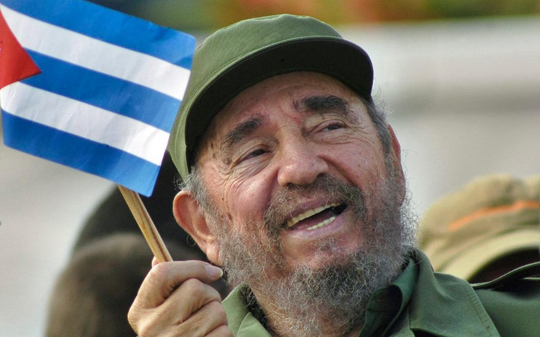
fc

With a shaking voice, his younger brother, Raul Castro, announced on state television that his brother died at 10:29 p.m. on Friday night.

Castro's reign over the island-nation 90 miles from Florida was marked by the US-backed Bay of Pigs invasion in 1961 and the Cuban Missile Crisis a year later that brought the world to the brink of nuclear war.

The bearded revolutionary, who survived a crippling US trade embargo as well as dozens, possibly hundreds, of assassination plots, died eight years after ill health forced him to formally hand power over to Raul.

Castro overcame imprisonment at the hands of dictator Fulgencio Batista, exile in Mexico and a disastrous start to his rebellion before triumphantly riding into Havana in January 1959 to become, at age 32, the youngest leader in Latin America. For decades, he served as an inspiration and source of support to revolutionaries from Latin America to Africa.

His commitment to socialism was unwavering, though his power finally began to fade in mid-2006 when a gastrointestinal ailment forced him to hand over the presidency to Raul in 2008, provisionally at first and then permanently.

His defiant image lingered long after he gave up his trademark Cohiba cigars for health reasons and his tall frame grew stooped. "Socialism or death" remained Castro's rallying cry even as Western-style democracy swept the globe and other communist regimes in China and Vietnam embraced capitalism, leaving this island of 11 million people an economically crippled Marxist curiosity.

He survived long enough to see Raul Castro negotiate an opening with US President Barack Obama on December 17, 2014, when Washington and Havana announced they would move to restore diplomatic ties for the first time since they were severed in 1961.

He cautiously blessed the historic deal with his lifelong enemy in a letter published after a month-long silence. "It's a tragedy," said Dayan Montalvo, a 22-year-old nurse. "We all grew up with him. I feel really hurt by the news that we just heard."

Fidel Castro Ruz was born August 13, 1926, in eastern Cuba's sugar country, where his Spanish immigrant father worked first recruiting labor for US sugar companies and later built up a prosperous plantation of his own.

Castro attended Jesuit schools, then the University of Havana, where he received law and social science degrees. His life as a rebel began in 1953 with a reckless attack on the Moncada military barracks in the eastern city of Santiago. Most of his comrades were killed and Fidel and his brother Raul went to prison.

Castro cobbled revolutionary groups together into the new Cuban Communist Party, with him as first secretary. Labor unions lost the right to strike. The Catholic Church and other religious institutions were harassed. Neighborhood "revolutionary defence committees" kept an eye on everyone.

Castro exported revolution to Latin American countries in the 1960s, and dispatched Cuban troops to Africa to fight Western-backed regimes in the 1970s. Over the decades, he sent Cuban doctors abroad to tend to the poor, and gave sanctuary to fugitive Black Panther leaders from the US.

But the collapse of the Soviet bloc ended billions in preferential trade and subsidies for Cuba, sending its economy into a tailspin. Castro briefly experimented with an opening to foreign capitalists and limited private enterprise.

As the end of the Cold War eased global tensions, many Latin American and European countries re-established relations with Cuba. In January 1998, Pope John Paul II visited a nation that had been officially atheist until the early 1990s.

Aided by a tourism boom, the economy slowly recovered and Castro steadily reasserted government control, stifling much of the limited free enterprise tolerated during harder times.

As flamboyant as he was in public, Castro tried to lead a discreet private life. He and his first wife, Mirta Diaz Balart, had one son before divorcing in 1956. Then, for more than four decades, Castro had a relationship with Dalia Soto del Valle. They had five sons together and were said to have married quietly in 1980.

By the time Castro resigned 49 years after his triumphant arrival in Havana, he was the world's longest ruling head of government, aside from monarchs. In retirement, Castro voiced unwavering support as Raul slowly but deliberately enacted sweeping changes to the Marxist system he had built.

His longevity allowed the younger brother to consolidate control, perhaps lengthening the revolution well past both men's lives. In February 2013, Raul announced that he would retire as president in 2018 and named newly minted Vice President Miguel Diaz-Canel as his successor.

"I'll be 90 years old soon," Castro said at an April 2016 communist party congress where he made his most extensive public appearance in years. "Soon I'll be like all the others.

The time will come for all of us, but the ideas of the Cuban Communists will remain as proof that on this planet, if one works with fervor and dignity, they can produce the material and cultural goods that human beings need and that need to be fought for without ever giving up."

Comments

Congi Shan
 - 
Saturday, 26 Nov 2016

The whole nation suffered because of this man. Not different from dictators Saddam, Gaddafi & Kim Kong Un

Fawad
 - 
Saturday, 26 Nov 2016

CIA tried 500 times to kill him .....Americans are real terrorists

Fedrick
 - 
Saturday, 26 Nov 2016

Red salute to fidel castro and his revolution!

karthik
 - 
Saturday, 26 Nov 2016

Indians can expect the biggest party in the world issuing membership to the expired revolutionary.

Kavya
 - 
Saturday, 26 Nov 2016

Real communism was followed by Karl Marx who envisaged an egalitarian society unlike the Ambanis and Mallyas of today.

Veerendra Hegde
 - 
Saturday, 26 Nov 2016

He kept an enviable and long record as the only leader who ruled a state for more than 50 years! He fought the mighty US and was recognised as one of the tall leaders in the world, with his demise, it is the end of an era! RIP comrade!

Jayaraj
 - 
Saturday, 26 Nov 2016

it is the end of a long innings.. made colorful by his continued anti US stance...... his cigar and the beard made him a recognizable figure who it is said has survived many number of attempts on his life ....MAY HIS SOUL REST IN PEACE......

Add new comment

  • Coastaldigest.com reserves the right to delete or block any comments.
  • Coastaldigset.com is not responsible for its readers’ comments.
  • Comments that are abusive, incendiary or irrelevant are strictly prohibited.
  • Please use a genuine email ID and provide your name to avoid reject.
News Network
March 6,2020

Mar 6: UK stocks fell again on Friday as growing economic risks from the coronavirus outbreak shattered investor confidence, with Britain recording its first death from the pathogen.

A 1.5% fall for the FTSE 100 erased the blue-chip index's gains from earlier this week. Export-heavy companies have now lost over $230 billion in value since the epidemic sparked a worldwide rout last week.

The domestically focussed mid-cap index was down 1.9%.

Cruise operator Carnival dropped 4.2% to its lowest level since 2012, a day after its Grand Princess ocean liner was barred from returning to its home port of San Francisco on virus fears.

Britain said an older person with underlying health problems had succumbed to the flu-like virus on Thursday, while the number of infections jumped to 115.

In company news, drug maker AstraZeneca fell 1% after it said its treatment for a form of bladder cancer failed to meet the main goal of improving overall survival in patients in a late-stage study.

Comments

Add new comment

  • Coastaldigest.com reserves the right to delete or block any comments.
  • Coastaldigset.com is not responsible for its readers’ comments.
  • Comments that are abusive, incendiary or irrelevant are strictly prohibited.
  • Please use a genuine email ID and provide your name to avoid reject.
News Network
May 25,2020

Karachi, May 25: The pilot of the Pakistan International Airlines (PIA)'s crashed plane ignored three warnings from the air traffic controllers about the aircraft's altitude and speed before the landing, saying he was satisfied and would handle the situation, according to a report on Monday.

The national flag carrier's PK-8303 tragedy on Friday, in which 97 people were killed and two miraculously survived, is one of the most catastrophic aviation disasters in the country's history.

The Airbus A-320 from Lahore to Karachi was 15 nautical miles from the Jinnah International Airport, flying at an altitude of 10,000 feet above the ground instead of 7,000 when the Air Traffic Control (ATC) issued its first warning to lower the plane's altitude, Geo News quoted an ATC report as saying.

Instead of lowering the altitude, the pilot responded by saying that he was satisfied. When only 10 nautical miles were left till the airport, the plane was at an altitude of 7,000 feet instead of 3,000 feet, it said.

The ATC issued a second warning to the pilot to lower the plane's altitude. However, the pilot responded again by stating that he was satisfied and would handle the situation, saying he was ready for landing, the report said.

The report said that the plane had enough fuel to fly for two hours and 34 minutes, while its total flying time was recorded at one hour and 33 minutes.

Pakistani investigators are trying to find out if the crash is attributable to a pilot error or a technical glitch.

According to a report prepared by the country's Civil Aviation Authority (CAA), the plane's engines had scraped the runway thrice on the pilot's first attempt to land, causing friction and sparks recorded by the experts.

When the aircraft scraped the ground on the first failed attempt at landing, the engine's oil tank and fuel pump may have been damaged and started to leak, preventing the pilot from achieving the required thrust and speed to raise the aircraft to safety, the report said.

The pilot made a decision "on his own" to undertake a "go-around" after he failed to land the first time. It was only during the go-around that the ATC was informed that landing gear was not deploying, it said.

"The pilot was directed by the air traffic controller to take the aircraft to 3,000 feet, but he managed only 1,800. When the cockpit was reminded to go for the 3,000 feet level, the first officer said 'we are trying'," the report said.

Experts said that the failure to achieve the directed height indicates that the engines were not responding. The aircraft, thereafter, tilted and crashed suddenly.

The flight crashed at the Jinnah Garden area near Model Colony in Malir on Friday afternoon, minutes before its landing in Karachi's Jinnah International Airport. Eleven people on the ground were injured.

The probe team, headed by Air Commodore Muhammad Usman Ghani, President of the Aircraft Accident and Investigation Board, is expected to submit a full report in about three months.

According to the PIA's engineering and maintenance department, the last check of the plane was done on March 21 this year and it had flown from Muscat to Lahore a day before the crash.

In the wake of the COVID-19 pandemic, the Pakistan government had allowed the limited domestic flight operations from five major airports - Islamabad, Karachi, Lahore, Peshawar and Quetta - from May 16.

After the plane tragedy, the PIA has called off its domestic operation.

Comments

Add new comment

  • Coastaldigest.com reserves the right to delete or block any comments.
  • Coastaldigset.com is not responsible for its readers’ comments.
  • Comments that are abusive, incendiary or irrelevant are strictly prohibited.
  • Please use a genuine email ID and provide your name to avoid reject.
Agencies
January 11,2020

New York, Jan 11: The United Nations Security Council (UNSC) on Friday renewed a six-year-long cross-border humanitarian aid deliveries mechanism into Syria.

According to Sputnik, the Security Council voted in favour of a resolution on Friday that allows cross border deliveries to be conducted via Turkey, preserving two checkpoints and excluding the Al-Yarubiyah border crossing with Iraq and the Al-Ramtha crossing with Jordan, until July 10, 2020.

Russia proposed to amend the adopted resolution by replacing a part of the draft which stipulates that humanitarian assistance into Syria should be delivered based on the principles of humanity, neutrality, impartiality and independence by the phrase that such aid should be provided "in accordance with the guiding principles of humanitarian emergency assistance, as contained in UNGA resolution 46/182."

The agreement was reached after Belgium and Germany decided to amend the original version of their joint resolution, which proposed keeping three points for cross-border deliveries into the Arab republic.

In December last year, the United Nations had said that over 235,000 people fled the Idlib region in the last two weeks after Russia and Syria launched airstrikes in a bid to take over the last major opposition bastion.

Russia backed Syria government launched a fresh assault to capture the province.

Syrian Bashar al-Assad regime, backed by Iran, has reportedly promised to take back the rebel-controlled area and broke a ceasefire that was announced in August.

They have since December 19 seized dozens of towns and villages from armed fighters amid clashes that have killed hundreds on both sides.

Comments

Add new comment

  • Coastaldigest.com reserves the right to delete or block any comments.
  • Coastaldigset.com is not responsible for its readers’ comments.
  • Comments that are abusive, incendiary or irrelevant are strictly prohibited.
  • Please use a genuine email ID and provide your name to avoid reject.