


Temple rape: Lawyer braves threats, says it’s a fight for her daughter too

News Network
April 15, 2018

Jammu, Apr 15: Deepika Singh Rajawat, an advocate in Jammu, who faced the wrath of Hindutva politics after taking up the case of temple gang-rape, says that her fight is not just for the 8-year-old child who was raped but for all children including her daughter.

“That is my daughter. She is five years old and her name is Ashtami. I am fighting this case also for her,” says Rajawat showing the framed photograph of a chubby, smiling girl on the desk in a small room of her house in Jammu.

Within days after Rajawat took up the case of the 8-year-old Bakarwal girl who was drugged and gang-raped for a week in a temple and murdered in January, she began getting threats to stay away. Many from the Bar took to the streets — some brandishing sticks — and shouted slogans against the state government, asking that the case be transferred from the J&K police’s crime branch to the CBI.

Not one to be cowed into silence, she went on Facebook a day after the incident on April 5 and wrote: “The president of the Jammu High Court Bar Association mistreated me. He used unparliamentary language and threatened me not to appear in cases during a strike by the lawyers.”

Showing the copy of a letter she received from the Jammu & Kashmir HC on Saturday that asks the in-charge of the security wing of the court to provide her protection during her appearances, she said, “But when I confronted the senior advocate and told him that I can fight any case I want, I was told there are ways to stop me. But this letter from the high court gives me strength even though there is a corner in my heart that is a little afraid. These are powerful people.”

Rajawat had earlier also filed a complaint on the issue with the Chief Justice of J&K HC and Chief Justice of the Supreme Court. She said she was not safe and she had no idea how long the protests by the lawyers’ body would go on.

The case, in the Kootah court right now as Rasana comes under its jurisdiction, saw a dramatic turn when recently lawyers tried to stop the chargesheet, which narrates in detail the crime against the Bakarwal girl, from being forwarded.

Asked if she is confident she will win as the crime branch, which is probing the rape-murder, has lost precious forensic evidence (the girl’s body was allegedly bathed and her clothes washed soon after she was found), she said, “It’s really messed up. The first few days after the crime was detected, some dreadful things happened. The local police station did not file an FIR. That happened only after 2-3 days. On January 17, her body was found. Then the ‘clean-up’ began. It was being hushed up. The policeman who did this is one of the eight accused.”

Rajawat, who said seriousness in the “pursuit for justice” came only after the HC intervened, asked why she should support seeking a CBI probe. “Does the CBI have a spotless record? I can rattle off cases that have been botched. I am happy with what the crime branch is doing. Though there have been setbacks, we have covered some ground. There are repairs being made. Just that the case now has to be transferred to some other part of the state. That is our only hope.”

Comments

angel of death
 - 
Monday, 16 Apr 2018

Great lady, i really appricate for your courage.. today is 8 year old muslim child tomorrow may be all indian child... so wake up all coward hindus... your religion has been hijaked by so called chutiya ram bakth & dickless desh bakth...before they come to your house asking for your daughter wake up... 

fabeen
 - 
Sunday, 15 Apr 2018

Please stand with this brave women lawer...we salute you sister....

A Father
 - 
Sunday, 15 Apr 2018

Dear Advocate, 


I salute you for the cause you are fighting.

Add new comment

  • Coastaldigest.com reserves the right to delete or block any comments.
  • Coastaldigset.com is not responsible for its readers’ comments.
  • Comments that are abusive, incendiary or irrelevant are strictly prohibited.
  • Please use a genuine email ID and provide your name to avoid reject.
Agencies
August 2,2020

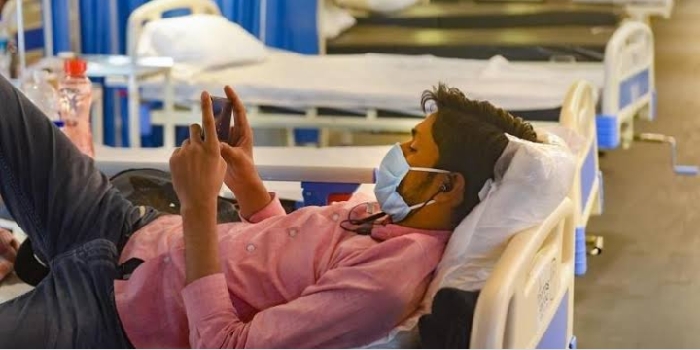
New Delhi, Aug 2: The Centre has written to all states and Union Territories stating that smartphones and tablet devices should be allowed for hospitalised Covid-19 patients so that they can interact with family and friends through video conferencing, which would provide them psychological support.

Though mobile phones are allowed in hospital wards, the missive was issued following some representation from the kin of patients alleging otherwise.

Director-General of Health Services (DGHS) in the Health Ministry Dr Rajiv Garg in the letter to the principal secretaries of health and medical education of states and Union territories said appropriate protocols for disinfecting devices and allotting timeslots can be developed by the hospital concerned to facilitate contact between patients and their family.

He underlined that administrative and medical teams should be responsive to the psychological needs of patients admitted in Covid-19 wards and ICUs of various hospitals.

"Social connection can calm down patients and also reinforce the psychological support given by the treating team. Please instruct all concerned that they should allow smartphones and tablet devices in patient areas so that the patient can video conference with their family and friends," stated the letter issued on July 29.

"Though mobile phones are allowed in the wards to enable a patient stay in touch with his or her family, we received representations from the patient families from some states stating mobile phones are not being allowed by hospital administrations because of which they were not being able to stay in contact with the patient," said Dr Garg.

Comments

Add new comment

  • Coastaldigest.com reserves the right to delete or block any comments.
  • Coastaldigset.com is not responsible for its readers’ comments.
  • Comments that are abusive, incendiary or irrelevant are strictly prohibited.
  • Please use a genuine email ID and provide your name to avoid reject.
News Network
April 23,2020

Washington, Apr 23: Air pollution over northern India has plummeted to a 20-year-low for this time of the year, according to satellite data published by US space agency National Aeronautics and Space Administration (NASA).
The US space agency's satellite sensors observed aerosol levels at a 20-year low post the countrywide lockdown, implemented to slow the spread of the novel coronavirus.

"We knew we would see changes in atmospheric composition in many places during the lockdown," said Pawan Gupta, a Universities Space Research Association (USRA) scientist at NASA''s Marshall Space Flight Center. "But I have never seen aerosol values so low in the Indo-Gangetic Plain at this time of year," added Mr Gupta.

Acting Assistant Secretary of State for South and Central Asia Alice G Wells tweeted, "These images from NASA were taken each spring starting in 2016 and show a 20-year low in airborne particle levels over India. When India and the world are ready to work and travel again, let's not forget that collaborative action can result in cleaner air."

The data published with maps show aerosol optical depth (AOD) in 2020 compared to the average for 2016-2019. Aerosol optical depth is a measure of how light is absorbed or reflected by airborne particles as it travels through the atmosphere.

If aerosols are concentrated near the surface, an optical depth of 1 or above indicates very hazy conditions. An optical depth, or thickness, of less than 0.1 over the entire atmospheric vertical column is considered "clean." The data were retrieved by the Moderate Resolution Imaging Spectroradiometer (MODIS) on NASA's Terra satellite.

In the first few days of the lockdown, it was difficult to observe a change in the pollution signature. "We saw an aerosol decrease in the first week of the shutdown, but that was due to a combination of rain and the lockdown," said Mr Gupta.

Around March 27, heavy rain poured over vast areas of northern India and helped clear the air of aerosols. Aerosol concentrations usually increase again after such heavy precipitation.

"After the rainfall, I was really impressed that aerosol levels did not go up and return to normal. We saw a gradual decrease and things have been staying at the level we might expect without anthropogenic emissions," Mr Gupta said.

On March 25, the Indian government placed its 1.3 billion citizens under a strict lockdown to reduce the spread of COVID-19. The countrywide mandate decreased activity at factories and severely reduced car, bus, truck and airplane traffic. Every year, aerosols from anthropogenic (human-made) sources contribute to unhealthy levels of air pollution in many Indian cities.

Aerosols are tiny solid and liquid particles suspended in the air that reduce visibility and can damage the human lungs and heart.

In southern India though, the story is a little hazier. Satellite data show aerosol levels have not yet decreased to the same extent. In fact, levels seem to be slightly higher than in the past four years. The reasons are unclear but could be related to recent weather patterns, agricultural fires, winds or other factors.

"This a model scientific experiment," Robert Levy, program leader for NASA's MODIS aerosol products, said about the lockdown and its effects on pollution.

"We have a unique opportunity to learn how the atmosphere reacts to sharp and sudden reductions in emissions from certain sectors. This can help us separate how natural and human sources of aerosols affect the atmosphere," Mr Levy added.

Comments

Add new comment

  • Coastaldigest.com reserves the right to delete or block any comments.
  • Coastaldigset.com is not responsible for its readers’ comments.
  • Comments that are abusive, incendiary or irrelevant are strictly prohibited.
  • Please use a genuine email ID and provide your name to avoid reject.
Agencies
March 3,2020

Kashmir, Mar 3: Four days after the National Investigation Agency made a major breakthrough in the Pulwama terror attack case over a year after the bombing, arresting one person who had sheltered the suicide bomber Adil Ahmad Dar, the NIA on Tuesday arrested two more people in the case - a father-daughter duo - who had also provided shelter to the bomber, officials said.

The NIA also claimed that the video of the suicide bomber was also recorded at their residence and released by the Jaish-e-Mohammad (JeM) terror group from Pakistan after the attack. An NIA spokesperson in Delhi said: "Two more persons have been arrested by the agency in the Pulwama terror attack case and they have been identified as Insha Jan, 23, and her father Tariq Ahmed Shah, 50, who works as a tipper driver."

The official said that the father-daughter duo have been arrested from Hakripora area in Pulwama for their involvement in the attack. The two were arrested on early Tuesday morning after senior officials of the NIA raided their house on Monday night.

A senior NIA official related to the probe told IANS: "The video of Dar, who attacked the CRPF convoy, was recorded at the home of the duo. And the same video was released soon after the Pulwama terror attack by the JeM terrorists from a Pakistani IP address."

He said, "The video was shared by them to their handlers in Pakistan."

The spokesperson further claimed that during the probe Tariq Ahmed Shah disclosed that his house in Hakripora area was used by Dar, Mohammad Umar Farooq, a Pakistani terrorist and IED maker, Kamran - another Pakistani terrorist (both were later killed in encounters with security forces), Sameer Ahmed Dar, a Jaish-e-Mohammad terrorist from Pulwama and Mohammad Ismail aka Ibrahim, a Pakistani terrorist.

The spokesperson said that Shah facilitated all the terrorists at his house for sheltering and for planning of the heinous attack on the CRPF convoy. He said Jan, daughter of Shah, facilitated the terrorists at their home and provided food and other logistics during their stay on more than 15 occasions for two to four days each time, in their house during the year 2018-2019.

"Initial interrogation has revealed that Jan was in constant touch with Farooq and was in communication with him over telephone and other social media applications," the spokesperson said. The fresh arrests of the two accused brings the total number of arrests in the case to three.

The arrests were made on the revelations of Shakir Bashir Magrey, who was arrested by the anti-terror probe agency on February 28. According to senior NIA officials, more arrests will be made in the coming days. Magrey, a resident of Hajibal, Kakapora in Pulwama district of Jammu & Kashmir, is an overground worker (OGW) of the Pakistan-based Jaish-e-Mohammad (JeM).

According to agency sources, Magrey allegedly provided shelter and other logistical assistance to the Pulwama suicide bomber. He was sent to 15 days' NIA custody by a special NIA court in Jammu & Kashmir on Friday. During interrogation, Magrey revealed that he had harboured Dar and Pakistan-based terrorist Mohammad Umar Farooq in his house from late 2018 till the attack in February 2019 and assisted them in the preparation of the Improvised Explosive Device (IED). His shop is located near Lethpora bridge, and as advised by Mohammad Umar, he started conducting reconnaissance of the movement of CRPF convoys on Jammu-Srinagar Highway in January 2019, and informed Mohammad Umar and Adil Ahmad Dar about it.

Magrey was also involved in modifying the Maruti Eeco car and fitting the IED into it in early February, 2019 and was introduced to Adil Ahmad Dar in mid-2018 by Mohammad Umar and he became a full-time OGW of JeM.

"During his initial interrogation, he disclosed that on several occasions, he collected and delivered arms, ammunition, cash and explosive material to JeM terrorists, including those involved in the Pulwama attack," the agency had said on February 28.

"During investigation, the make, model and number of the car used in the attack was quickly ascertained by NIA to be a Maruti Eeco through forensic examination of the tiny remnants of the car which were found at the spot during extended searches," the agency stated.

"This has been corroborated by accused Shakir Bashir Magrey. The explosives used in the attack were determined to be ammonium nitrate, nitro-glycerin and RDX, through forensic investigation," it said.

Comments

Add new comment

  • Coastaldigest.com reserves the right to delete or block any comments.
  • Coastaldigset.com is not responsible for its readers’ comments.
  • Comments that are abusive, incendiary or irrelevant are strictly prohibited.
  • Please use a genuine email ID and provide your name to avoid reject.