BJP will definitely not come to power in 2019: Naidu

Agencies
May 27, 2018

Vijayawada, May 27: Andhra Pradesh Chief Minister Chandrababu Naidu on Sunday attacked Prime Minister Narendra Modi, saying he is a "campaign PM who has failed to deliver on promises" and said the BJP would "definitely not come to power in 2019".

Inaugurating Mahanadu, the TDP's annual conclave here, he said the Telugu Desam Party played a key role in forming governments in the past and had the power to change the political narrative in the country, hinting that it would tie-up with like-minded parties to stop the BJP's juggernaut in 2019.

"The Congress is in the opposition. It cannot do much. But the BJP will definitely not come to power in 2019," he said.

Naidu said the BJP coming to power in 2019 was a "distant dream" and Prime Minister Narendra was a "campaign PM, who gives slogans only, and has failed to deliver on promises".

The party president said the TDP was key in forming the United Front government in 1996.

"The TDP has in the past played a key role in forming governments. It has the power to change the political narrative in the country. We won't step back," Naidu said.

He said the TDP withdrew support from the NDA government as the Centre had reneged on its promise to grant Andhra Pradesh Special Category status and to implement the AP Reorganisation Act.

Naidu accused the BJP of betraying the people of Andhra Pradesh and trying to create law and order problems in the state in collusion with the YSRCP.

During Mahanadu, the TDP would adopt resolutions against the economic decisions taken by the Centre "without proper thinking, their improper implementation, failure of the Goods and Services Tax and demonetisation, and about people losing faith in the banking system" Srinivasa Rao, the officer on special duty to the chief minister, had said earlier.

The party would pass a resolution against the Centre's "non-cooperation and non-fulfilment" of assurances made in the Rajya Sabha regarding the special category status and the provisions of the Andhra Pradesh Reorganisation Act, he had said.

At the conclave, detailed discussions would be held on the Centre's "betrayal and conspiracy politics".

Andhra Pradesh has been seeking special category status on the grounds that it is at a disadvantage, especially because of the loss of capital Hyderabad to Telangana.

When erstwhile Andhra Pradesh was being bifurcated in 2014, then prime minister Manmohan Singh, during a discussion on the AP Reorganisation Bill, had said, "Special category status will be extended to the successor state of Andhra Pradesh for a period of five years". 

But the BJP, which came to power at the Centre a few months later, has been saying that the 14th Finance Commission does not provide for such treatment to Andhra Pradesh.

The TDP had in March withdrawn support from the NDA government over the Centre's refusal to grant special category status to the state.

Naidu and his party have in the past accused Prime Minister Narendra Modi of reneging on his election promise made in 2014 to accord special category status to Andhra Pradesh.

Naidu had earlier said that after the state's bifurcation, it was given a "raw deal".

Comments

ahmed ali k
 - 
Sunday, 27 May 2018

We will come to power again in 2019 

We have EVM

Add new comment

  • Coastaldigest.com reserves the right to delete or block any comments.
  • Coastaldigset.com is not responsible for its readers’ comments.
  • Comments that are abusive, incendiary or irrelevant are strictly prohibited.
  • Please use a genuine email ID and provide your name to avoid reject.
News Network
January 9,2020

Mumbai, Jan 9: India's weddings are famously lavish -- lasting days and with hundreds if not thousands of guests -- but this season many families are cutting costs even if it risks their social standing.

It is symptomatic of a sharp slowdown in the world's fifth-largest economy, with Indians spending less on everything from daily essentials to once-in-a-lifetime celebrations.

Growth has hit a six-year low and unemployment a four-decade high under Prime Minister Narendra Modi. Prices are rising too, squeezing spending on everything from shampoo to mobile data.

Chartered accountant Palak Panchamiya, for example, has already slashed the budget on her upcoming Mumbai nuptials by a third, trimming spending on clothing and the guest list.

"Initially I chose a dress that cost 73,000 rupees ($1,000)," Panchamiya told news agency as she picked through outfits at a recent marriage trade fair.

"But my partner felt it was too expensive, and so now I am here reworking my options and looking for something cheaper."

India's massive wedding industry is worth an estimated $40-50 billion a year, according to research firm KPMG.

The celebrations can last a week and involve several functions, a dazzling variety of cuisines, music and dance performances, and lots of gifts.

Foreigners can even buy tickets to some events.

But these days, except for the super-rich -- a recent Ambani family wedding reportedly cost $100 million -- extravagance is out and frugality is in as families prioritise saving.

"Earlier Indian weddings were like huge concerts, but now things have changed," said Maninder Sethi, founder of Wedding Asia, which organises marriage fairs around the country.

Cracks emerged in 2016 when the Indian wedding season, which runs from September to mid-January, was hit by the government's shock withdrawal of vast amounts of banknotes from circulation in a bid to crack down on undeclared earnings.

Mumbai-based trousseau maker Sapna Designs Studio shut for months as the economy was turned on its head by Modi's move.

"No exhibitions were happening and there were no avenues for us to sell either," said Vishal Hariyani, owner of the clothing studio.

Hopes for a recovery proved short-lived when the cash ban was followed by a botched rollout of a nationwide goods and services tax (GST) in 2017 that saw many small-scale businesses close.

Since then, keeping his studio afloat has been a challenge, with consumers increasingly reluctant to spend too much, says Hariyani.

"We customise our clothes as per their budgets, and now week-long weddings have been converted to just a 36-hour ceremony," he told news agency.

"We have to pay GST, pay workers and even offer discounts to customers," he added.

"The whole economy has slowed down and reduced spending on weddings is a by-product of that. Everyone except the super-rich are affected," Pradip Shah from IndAsia Fund Advisors told news agency.

"It is reflective of how sombre the mood is," he said.

In a country where families traditionally spend heavily on weddings -- including taking on debt in some cases -- the downturn is also a source of sadness and shame, with elaborate celebrations often seen as a measure of social status.

"We haven't even invited our neighbours. It is embarrassing but the current situation doesn't offer us much respite," 52-year-old Tara Shetty said ahead of her son's wedding.

"In my era, we always spent a lot and had thousands of people attending the weddings," she explained.

"My wedding was supremely grand, and now my son's is the polar opposite."

Comments

Add new comment

  • Coastaldigest.com reserves the right to delete or block any comments.
  • Coastaldigset.com is not responsible for its readers’ comments.
  • Comments that are abusive, incendiary or irrelevant are strictly prohibited.
  • Please use a genuine email ID and provide your name to avoid reject.
Agencies
February 6,2020

Bijnor, Feb 6: Apprehensions over the Citizenship Amendment Act (CAA) and the National Register of Citizens (NRC) are now so strong that a team of economic enumerators were allegedly manhandled in Uttar Pradesh's Bijnor district and faced stiff resistance from the people.

A team of the economic census enumerators in Bijnor, on Wednesday, sent a letter to the District Magistrate narrating the difficulties they are facing in some parts "due to misinformation".

District magistrate Ramakant Pandey, when contacted, said that he had asked the department concerned to complete the work on time. "If teams are facing any problems, we will sort it out at once. No hurdle in economic census will be tolerated," he said.

According to District Economic and Statistics Officer, Harendra Malik: "Our teams are facing protests in minority-dominated areas as people are linking it to the NRC. Some team members were manhandled.

"We have now asked village heads and municipality chairmen to help our teams in the survey and convince the people. Our teams are trying to convince them that it is a routine work which is being carried out for years. It has nothing to do with the NRC or CAA."

He further said that they plan to hold a series of meetings with people's representatives, including village heads and chairmen, so that they could put an end to this confusion.

The seventh economic census was flagged off in Bijnor by District Magistrate Ramakant Pandey on January 6. There are around 3,000 enumerators and 569 supervisors engaged in the census being carried out under the supervision of economic and statistics department. It is expected to be completed by March 31.

The economic census is aimed at collecting data about the financial status of people engaged in unorganised sector.

Meanwhile, the areas where the enumerators are facing stiff resistance include Kalhari village in Najibabad block, Amipur Narain village in Mohammadpur Devmal block, Anisa Nangli village in Dwarka block and the Mirzapur Bella village in Jalilpur block.

Comments

Add new comment

  • Coastaldigest.com reserves the right to delete or block any comments.
  • Coastaldigset.com is not responsible for its readers’ comments.
  • Comments that are abusive, incendiary or irrelevant are strictly prohibited.
  • Please use a genuine email ID and provide your name to avoid reject.
Agencies
August 2,2020

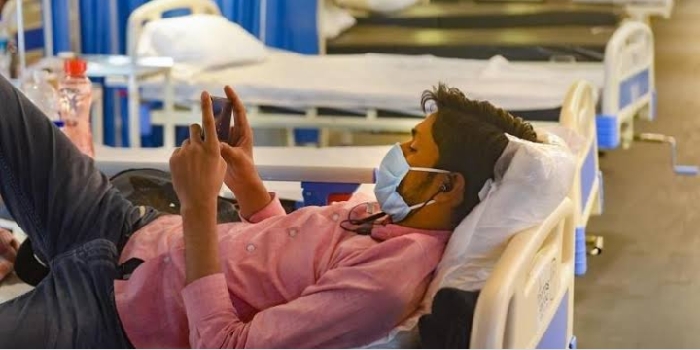
New Delhi, Aug 2: The Centre has written to all states and Union Territories stating that smartphones and tablet devices should be allowed for hospitalised Covid-19 patients so that they can interact with family and friends through video conferencing, which would provide them psychological support.

Though mobile phones are allowed in hospital wards, the missive was issued following some representation from the kin of patients alleging otherwise.

Director-General of Health Services (DGHS) in the Health Ministry Dr Rajiv Garg in the letter to the principal secretaries of health and medical education of states and Union territories said appropriate protocols for disinfecting devices and allotting timeslots can be developed by the hospital concerned to facilitate contact between patients and their family.

He underlined that administrative and medical teams should be responsive to the psychological needs of patients admitted in Covid-19 wards and ICUs of various hospitals.

"Social connection can calm down patients and also reinforce the psychological support given by the treating team. Please instruct all concerned that they should allow smartphones and tablet devices in patient areas so that the patient can video conference with their family and friends," stated the letter issued on July 29.

"Though mobile phones are allowed in the wards to enable a patient stay in touch with his or her family, we received representations from the patient families from some states stating mobile phones are not being allowed by hospital administrations because of which they were not being able to stay in contact with the patient," said Dr Garg.

Comments

Add new comment

  • Coastaldigest.com reserves the right to delete or block any comments.
  • Coastaldigset.com is not responsible for its readers’ comments.
  • Comments that are abusive, incendiary or irrelevant are strictly prohibited.
  • Please use a genuine email ID and provide your name to avoid reject.