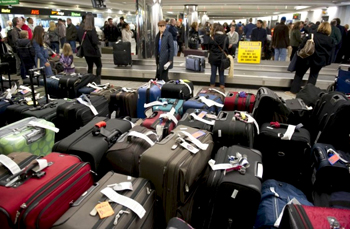
Compensation for air travellers in case of death, injury, lost baggage hiked

March 12, 2016

New Delhi, Mar 12: A Bill providing for enhanced compensation to air travellers in case of death, injury, lost baggage or even inordinate delay in flights, was passed by Parliament on Friday.

baggageThe Carriage by Air (Amendment) Bill was passed in Lok Sabha on December 2015 and by the Rajya Sabha, with certain amendments, on March 2. The Bill, along with the amendments, came back to the Lower House on Friday and was adopted by a voice vote.

Once it gets the nod of the President and becomes an Act, the law would require Indian carriers to pay compensation amount that is equivalent to the rates paid by their global counterparts.

It would allow the government to revise the liability limits of airlines in line with the Montreal Convention, which was acceded to by India in May 2009.

Among others, the compensation for death in an air accident and the amount would be calculated on the basis of SDR (Special Drawing Rights). The Bill intends to raise the liability limit for damage in case of death or bodily injury for each person from 1,00,000 SDR to 1,13,100 SDR.

The currency value of the SDR is based on market exchange rates of a basket of major currencies — US dollar, euro, Japanese yen and pound sterling.

According to the Bill, the liability for delay in carriage for each person was proposed to be raised from 4,150 SDR to 4,694 SDR, while the liability in case of destruction, loss, damage or delay of baggage is proposed to be raised from 1,000 SDR to 1,131 SDR.

The liability in case of destruction, loss or delay in relation to the carriage of cargo has been raised from 17 SDR to 19 SDR.

The liability limits are revised once every five years by the International Civil Aviation Organisation (ICAO) on the basis of a determined inflation factor of 13.1 percent, triggering an adjustment in the limits.

Comments

Wellwicher
 - 
Saturday, 12 Mar 2016

In INDIA it was accepted long back in parliament there was TWO leading MP form MANGALORE was in the panel. Unfortunately they never came to support dirty air INDIA crash victims family. Their appointed commercial mind law firm also not ready to follow MONTREAL CONVENTION or they abide. Most of the compensation they settled in a LOW GRADE policy.
The cause was proven 100% fault by air INDIA and even based on few sound proof which dirty air INDIA management and aviation authority jointly kept under the carpet. From that ONE main evidence raised arguments and fight between on board Pilot and Co-pilot.

Now ONE case seems in supreme court for interpretation of article 13. Subject to supreme courts judgement it will be implemented all over the word. And it is a right step taken by the MANGALORE crash victims association on humanitarian ground.

Hope they will succeed in their rights and take step. Let we all to pray for their success.

Add new comment

  • Coastaldigest.com reserves the right to delete or block any comments.
  • Coastaldigset.com is not responsible for its readers’ comments.
  • Comments that are abusive, incendiary or irrelevant are strictly prohibited.
  • Please use a genuine email ID and provide your name to avoid reject.
Agencies
May 8,2020

Washington D.C., May 8: The prime time for brain development in a child's life is the first year, where the infant spends most of the time asleep. It is the time when neural connections form and sensory memories are encoded.

However, when sleep is disrupted, as occurs more often among children with autism, brain development may be affected, too.

New research led by the University of Washington finds that sleep problems in a baby's first 12 months may not only precede an autism diagnosis but also may be associated with altered growth trajectory in a key part of the brain, the hippocampus.

The study, which was published in the American Journal of Psychiatry, researchers report that in a sample of more than 400 taken of 6- to 12-month-old infants, those who were later diagnosed with autism were more likely to have had difficulty falling asleep.

It also states that this sleep difficulty was associated with altered growth trajectories in the hippocampus.

"The hippocampus is critical for learning and memory, and changes in the size of the hippocampus have been associated with poor sleep in adults and older children.

As many as 80 per cent of the children with autism spectrum disorder have sleep problems," said Annette Estes, director of the UW Autism Center and senior author of the study.

"In our clinical experience, parents have a lot of concerns about their children's sleep, and in our work on early autism intervention, we observed that sleep problems were holding children and families back," added Estes, who is also a UW professor of speech and hearing sciences.

"It could be that altered sleep is part-and-parcel of autism for some children. One clue is that behavioural interventions to improve sleep don't work for all children with autism, even when their parents are doing everything just right. This suggests that there may be a biological component to sleep problems for some children with autism," said Estes.

To consider links among sleep, brain development, and autism, researchers at the IBIS Network looked at MRI scans of 432 infants, surveyed parents about sleep patterns, and measured cognitive functioning using a standardized assessment.

At the outset of the study, infants were classified according to their risk for developing autism: Those who were at higher risk of developing autism -- about two-thirds of the study sample -- had an older sibling who had already been diagnosed.

Infant siblings of children with autism have a 20 per cent chance of developing autism spectrum disorder -- a much higher risk than children in the general population.

In the current study, 127 of the 432 infants were identified as "low risk" at the time the MRI scans were taken because they had no family history of autism.

They later evaluated all the participants at 24 months of age to determine whether they had developed autism. Of the roughly 300 children originally considered "high familial risk," 71 were diagnosed with autism spectrum disorder at that age.

Problems with sleep were more common among the infants later diagnosed with an autism spectrum disorder, as were larger hippocampi. No other subcortical brain structures were affected, including the amygdala, which is responsible for certain emotions and aspects of memory, or the thalamus, a signal transmitter from the spinal cord to the cerebral cortex.

The authors note that while parents reported more sleep difficulties among infants who developed autism compared to those who did not, the differences were very subtle and only observed when looking at group averages across hundreds of infants.

Sleep patterns in the first years of life change rapidly as infants transition from sleeping around the clock to a more adult-like sleep/wake cycle. Until further research is completed, Estes said, it is not possible to interpret challenges with sleep as an early sign of increased risk for autism.


Comments

Add new comment

  • Coastaldigest.com reserves the right to delete or block any comments.
  • Coastaldigset.com is not responsible for its readers’ comments.
  • Comments that are abusive, incendiary or irrelevant are strictly prohibited.
  • Please use a genuine email ID and provide your name to avoid reject.
coastaldigest.com news network
April 13,2020

Mangaluru: The Karnataka-Kerala border closure at Talapady amidst nationwide Covid-19 lockdown has not only prevented the movement of vehicles and people from Kasaragod to Mangaluru but also stopped the supply of life-saving drugs from Karnataka’s medical hub to its bordering district.

Hundreds of people from Kasaragod and Kannur districts who were treated in hospitals of Mangaluru for past several years are still dependent on some of the medicines that are available only in Mangaluru. Such medicines have become inaccessible for Keralites following the border closure. Every day, a number of people from Kerala call their acquaintances in Mangaluru to see if there is a way to get medicine.

In fact, Karnataka government has blocked all 23 roads that connect the state with Kerala. The reason given was, Kasaragod is the hotbed of coronavirus and allowing traffic even in emergency cases might lead to spread of Covid-19 in border districts of Dakshina Kannada, Kodagu and Mysuru. The attitude has resulted in the death of around a dozen people in Kasaragod district in last couple of weeks.

Even after the intervention of the Supreme Court a few days ago, the authorities in Karnataka are facing the allegation of being hostile either by blocking the way ahead or turning a deaf ear to the patients reaching their border. 

At this juncture, three Good Samaritans – P K G Anoop Kumar of Canara Engineering College, Mangaluru, Satheesh Shetty of Kasaragod Patla and P Jayaprakash of Ponnangala – have come to the aid of the Malayalee patients who are dependent on medicines from Mangaluru. 

The three activists who are currently staying (in fact stranded amidst lockdown) in Mangaluru, are delivering life-saving medicines to patients in Kerala through Kerala fire servicemen and policemen posted at the Talapady border. 

Anoop Kumar says that took the initiative after a woman, Maria Augustine from Chemberi (Taliparamba) Nellikkutty, contacted him for a medicine. He managed to buy it from a medical store in the port city and handed it over to a Kerala fire serviceman at Talapady border. 

All three are activists of Communist Party of India (Marxist). After moving to Mangaluru, they set up ‘We Donate Charitable Society’ to donate blood. The activists say that they are ready to dispatch medicines from Mangaluru to any person in Kerala. Those Keralites who are in need of medicines from may contact: 888471344 - Anoop, 9895135881 - Jayaprakash

Comments

abdullah
 - 
Sunday, 21 Jun 2020

Salute to you dears.  May God bless you.  HOpe public and Govt will appreciate your sacrifice and support you.

Add new comment

  • Coastaldigest.com reserves the right to delete or block any comments.
  • Coastaldigset.com is not responsible for its readers’ comments.
  • Comments that are abusive, incendiary or irrelevant are strictly prohibited.
  • Please use a genuine email ID and provide your name to avoid reject.
News Network
February 19,2020

Chikkamagaluru, Feb 19: A 31-year-old homemaker was murdered and valuables, including 100gm of gold and 2kg of silver, were reported missing from her house in Kadur town of Chikkamagaluru district late Monday evening. Her 11-month-old son, who was with her at the time of the attack, had a miraculous escape.

Police said Kavita's husband Dr Revath was away in his clinic in the town's Kadur-Birur road along with their first son, 5. Kavita, who has done MA and from Udupi, and the dentist married seven years ago.

District superintendent of police Harish Pandey has formed a special team to probe the incident that took place in Lakshmish Nagar in the town.

According to police, Kavita spoke to her husband around 6.45pm on Monday and didn't answer his subsequent calls, triggering a strong suspicion in him that something was amiss. He called his relatives living nearby to check on his wife. The relatives rushed to the house only to find the main door locked.

Since Kavita didn't answer the doorbell, they force-entered the house from the rear door and found her in a pool of blood. She was taken to a private clinic where doctors declared her brought dead.

Police said the woman was killed by a sharp weapon by slitting her throat between 6.45pm and 8.15pm. The rooms and almirahs had been found ransacked. At least 100gm gold ornaments, 2kg of silver and cash were missing from the house.

Comments

Add new comment

  • Coastaldigest.com reserves the right to delete or block any comments.
  • Coastaldigset.com is not responsible for its readers’ comments.
  • Comments that are abusive, incendiary or irrelevant are strictly prohibited.
  • Please use a genuine email ID and provide your name to avoid reject.