


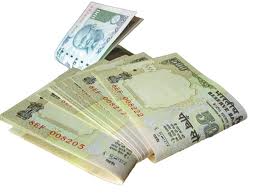
Currency notes issued before to 2005 to be withdrawn

January 22, 2014

New Delhi, Jan 22: The Reserve Bank of India (RBI) on Wednesday decided to withdraw all currency notes issued prior to 2005, including Rs 500 and Rs 1,000 denominations, after March 31 in a move apparently aimed at curbing black money and fake currencies.

currency

"After March 31, 2014, it (RBI) will completely withdraw from circulation all bank notes issued prior to 2005. From April 1, 2014, the public will be required to approach banks for exchanging these notes," the RBI said in a statement.

The public can easily distinguish the currency notes issued before 2005 as they do not have the year of printing on reverse side. The year of printing in a small font is visible at the middle of the bottom row in notes issued after 2005.

Asking people not to panic and cooperate in the withdrawal process, the RBI said old notes will continue to be legal and can be exchanged in any bank after April 1.

"From April 1, 2014, the public will be required to approach banks for exchanging these notes. Banks will provide exchange facility for these notes until further communication," the RBI said.

From July 1, 2014, persons seeking exchange of more than 10 pieces of Rs 500 and Rs 1,000 notes will have to furnish proof of identity and residence to the bank.

Although the RBI did not give any reason for withdrawal of pre-2005 currency notes, the move is expected to unearth black money held in cash.

As the new currency notes have added security features, they would help in curbing the menace of fake currency.

At present, currency notes in denominations of Rs 5, Rs 10, Rs 20, Rs 50, Rs 100, Rs 500 and Rs 1,000 are issued.

Comments

Add new comment

  • Coastaldigest.com reserves the right to delete or block any comments.
  • Coastaldigset.com is not responsible for its readers’ comments.
  • Comments that are abusive, incendiary or irrelevant are strictly prohibited.
  • Please use a genuine email ID and provide your name to avoid reject.
coastaldigest.com news network
February 28,2020

Mangaluru, Feb 28: Two labourers lost their lives as they were buried alive in a landslip at Karangalpady Junction near Bunts Hostel in the city today.

The landslip occurred when a compound wall collapsed burying at least five persons under the debris. It is feared that three people are still under the debris.

The deceased have been identified as Mohammad Masood (20) from West Bengal and Bhimappa (25) from Bagalkote.

Local police and fire fighters are carrying out rescue operation.

Comments

Add new comment

  • Coastaldigest.com reserves the right to delete or block any comments.
  • Coastaldigset.com is not responsible for its readers’ comments.
  • Comments that are abusive, incendiary or irrelevant are strictly prohibited.
  • Please use a genuine email ID and provide your name to avoid reject.
Agencies
January 1,2020

Kanpur, Jan 1: In a seemingly bizarre development, the IIT in Kanpur has set up a panel to decide whether the poem "Hum dekhenge lazim hai ki hum bhi dekhenge", penned by Faiz Ahmad Faiz, is anti-Hindu.

The panel has been set up in response to complaints filed by a faculty member who claimed that the students, during a protest, sang this poem which was anti-Hindu.

The poem reads thus -- "Lazim hai ke hum bhi dekhenge. Jab arz-e-Khuda ke kaabe se. Sab bhut uthwaye jayenge, Hum ahl-e-safa mardood-e-harm. Masnad pe bithaye jayenge. Sab taaj uchale jaenge. Sab takht giraye jayenge. Bas naam rahega Allah ka. Hum dekhenge."

It was the last line that has turned into a bone of contention. Translated into English, it means, 'When thrones will vanish, only Allah's name will remain' -- implying the misleading translation by the professor.

The poem had been written by Faiz in reference to military dictator Zia-ul-Haq in 1979 and was against the military rule in Pakistan. Faiz had left leanings and was an atheist. He was known for his revolutionary writings that kept him in jail for several years.

It may be recalled that the IIT-Kanpur students had taken out a peaceful march on the campus on December 17 in support of the students of Jamia Millia Islamia and during the march, the students sang the Faiz poem.

According to IIT Deputy director Manindra Agarwal: "In the video, the students are seen reciting the Faiz poem which can also be perceived as being anti-Hindu.

The IIT faculty member, in his complaint, has alleged that the students made anti-India and communal statements during their demonstration in solidarity with the Jamia students.

The complaint was based on two lines of the poem, which have obviously been misinterpreted -- "When all idols will be removed, only Allah's name will remain."

The faculty member has stated that "organisers and masterminds must be identified and expelled immediately."

Fifteen other students have also signed the complaint filed by the professor against the protesting students.

Meanwhile, IIT students have said that the faculty member who lodged the complaint has been banned on a social networking site for posting communal content.

In an article published on the IIT-Kanpur student media portal, the students clarified what exactly happened on the day of protest and how their chant was given a 'communal and misleading' turn. They stated that they had recited a few lines of the Faiz poem in reference to the police crackdown on the Jamia students.

Comments

Add new comment

  • Coastaldigest.com reserves the right to delete or block any comments.
  • Coastaldigset.com is not responsible for its readers’ comments.
  • Comments that are abusive, incendiary or irrelevant are strictly prohibited.
  • Please use a genuine email ID and provide your name to avoid reject.
News Network
February 21,2020

Bengaluru, Feb 21: The Supreme Court in its interim order on Thursday allowed the plea of the Karnataka government for implementation of the final award by a tribunal for sharing of water between Goa, Karnataka and Maharashtra from the Mahadayi river.

The interim order was passed by a bench comprising Justice D Y Chandrachud and Justice Hemant Gupta after hearing the counsel from the three states. The bench said the final hearing in the matter will take place in July.

It also said the interim order is subject to the final outcome of the petitions filed by the three states against the tribunal's award.

The Mahadayi Water Dispute tribunal had passed the order on August 14, 2018, allocating 13.42 TMC ( Thousand Million Cubic Feet.) water (including 3.9 TMC for diversion into the depleted Malaprabha river basin) from the Mahadayi river basin to Karnataka.

Maharashtra was allotted 1.33 TMC water while Goa was given 24 TMC in the final decision of the tribunal. The UPA-2 government had constituted Mahadayi Water Disputes Tribunal in 2010.

Karnataka government, which has locked horns with the neighbouring Goa on the larger issue of sharing Mahadayi River water between both the states, had petitioned the tribunal seeking the release of 7.56 tmcft of water for the Kalasa-Banduri Nala project.

The Kalasa-Banduri Nala (diversion) project, which will utilise 7.56 tmcft of water from the inter-state Mahadayi river, is being undertaken by Karnataka to improve drinking water supply to the twin cities of Hubballi-Dharwad and the districts of Belagavi and Gadag.

It involves building barrages across Kalasa and Banduri, the tributaries of the Mahadayi River, to divert 7.56 tmc water to the Malaprabha river which fulfils the drinking water needs of the twin cities.

Comments

Add new comment

  • Coastaldigest.com reserves the right to delete or block any comments.
  • Coastaldigset.com is not responsible for its readers’ comments.
  • Comments that are abusive, incendiary or irrelevant are strictly prohibited.
  • Please use a genuine email ID and provide your name to avoid reject.