Dakshina Kannada, Udupi to get lightning sensor systems soon

coastaldigest.com news network
October 7, 2017

The heavy toll of lighting deaths in the rural and coastal areas of the Karnataka has prompted the state government to import lightning sensor systems from United States of America. 

According to sources, the Karnataka State Natural Disaster Monitoring Centre (KSNDMC) has issued orders to procure 12 sensors to be installed in Dakshina Kannada, Udupi, Mysuru and other districts of Karnataka.

The systems will be capable of detecting thunderstorms and predicting lightning strikes within 1 sq km radius. Lightning activity can be forecast up to an hour ahead, giving residents time to be safe.

“We have placed orders and depending on customs clearances, it can be set up in two months and we can be prepared before the next thunderstorm activities in pre-monsoon showers,” said G.S. Srinivasa Reddy, Director, KSNDMC. The project costs around than Rs 50 lakh.

“Our established call centre has the numbers of officials and even over 200 farmers in every village in the State. Once a lightning warning comes, information can be disseminated easily,” he said, adding that the warnings would be linked to an app for officials and citizens to view.

As many as 73 people have lost their lives owing to lightning across Karnataka this year. The National Crime Records Bureau states that between 2010 and 2015 over 708 people died from lightning, while floods claimed 66 lives in Karnataka.

Comments

Arif
 - 
Monday, 9 Oct 2017

Well, it is good to have this kind of systems which can save lives, but we also require good roads and traffic signal systems, particularly at the major junctions like Hampankatta, Nanthoor circle, Pumpwell circle and Kankanady circle. I request the authorities to look into these for the benefit of the motor drivers and the pedestrians.

Add new comment

  • Coastaldigest.com reserves the right to delete or block any comments.
  • Coastaldigset.com is not responsible for its readers’ comments.
  • Comments that are abusive, incendiary or irrelevant are strictly prohibited.
  • Please use a genuine email ID and provide your name to avoid reject.
News Network
February 28,2020

Mangaluru, Feb 28: Sleuths of Bajpe police station have busted a counterfeit currency racket and arrested two persons on charge of printing and circulating fake currency notes of Rs 500 and Rs 200.

The arrested have been identified as Dheerendra (45), a resident of Kanjilakody House in Bantwal taluk, and Sudheer Poojary (44), a resident of Adyar Volabail. Both of them said to be activists of Hindutva groups and had campaigned for BJP during last Lok Sabha polls.

Apart from counterfeit currencies, the cops have recovered a colour printer, two mobile phones and a motor bike from the accused.

According police, on February 23 the miscreants went to a petty shop owned by one Abdul Salam near Suralpady and purchased a Gillette blade costing Rs 20. They handed over Rs 200 currency note to Abdul Salam and took Rs 180 back from him.

However, the shop keeper grew suspicious about the genuineness of Rs 200 note. When he went in search of the duo, he came to know that they had purchased mustard seeds from a nearby provision store belonging to one Muhammad Arif. There too, they had handover Rs 200 fake note and got change.

The duo then took fake notes back from Abdul Salam and Muhammad Arif and escaped. The next day, Abdul Salam filed a complaint with Bajpe police station.

Comments

Add new comment

  • Coastaldigest.com reserves the right to delete or block any comments.
  • Coastaldigset.com is not responsible for its readers’ comments.
  • Comments that are abusive, incendiary or irrelevant are strictly prohibited.
  • Please use a genuine email ID and provide your name to avoid reject.
News Network
August 2,2020

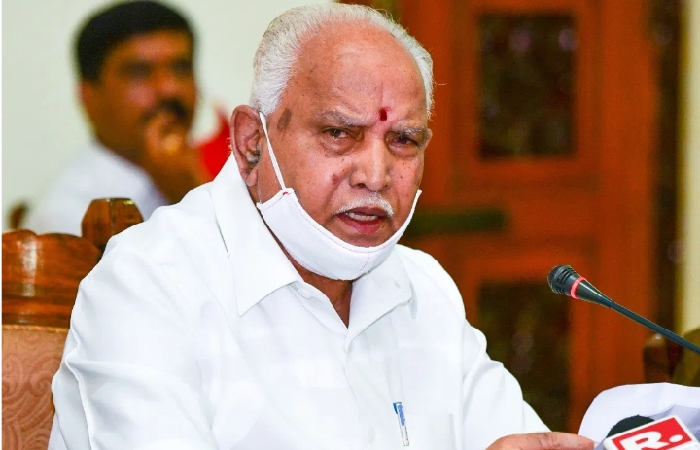
Bengaluru, Aug 2: Within a year of returning to power for the fourth time as Chief Minister in Karnataka, septuagenarian B.S. Yediyurappa has consolidated his position in the ruling BJP to stay the course till the next Assembly elections in mid-2023.

"A combination of factors helped Yediyurappa to consolidate and stay the course for the remaining term of his office to ensure the saffron party retains power in the state though he is unlikely to stake claim for the chief minister's post again as he would be 80 years old by 2023," a party source told news agency here.

Since the 77-year-old seasoned politician assumed office on July 26, 2019, the first year has been tumultuous for him, as he had go through a "trial by fire" what with the party's mighty high command and detractors testing his patience in the face of natural calamities like drought, floods and the Covid pandemic.

The first 7-8 months of the term were spent in tackling drought and floods, winning 12 of the 15 by-elections in December to secure a majority for the ruling party in the lower house and expanding the cabinet in February.

Even as Yediyurappa was settling down to seriously govern after presenting the state budget for fiscal 2020-21 in early March, the coronavirus outbreak overwhelmed him, as the pandemic spread and wreaked havoc, disrupting life, livelihood, economic growth and development.

"While the emphatic victory in the by-elections ensured the government's stability till the assembly term up to mid-2023, the second cabinet expansion on February 6 posed a challenge to Yediyurappa, as he could induct only 10 of the 12 MLAs who defected from the Congress and the Janata Dal-Secular (JD-S) and won the by-elections, triggering a revolt in the party by the loyalists left out of the ministry," the source recalled.

Though Yeddiyurappa has been leading the battle against the virus from day 1 and initially succeeded in controlling it from spreading during the extended lockdown till May 31, reopening the state under Unlock since June has undone the gains, as positive cases shot up to 1,29,287 so far, including 73,219 in Bengaluru after 53,648 recovered from across the state till date, while 2,412 succumbed to the deadly disease since March 9.

"For a state of 7 crore population, the data reveals that the pandemic has been fought on war-footing to contain it from spreading in all the 30 districts, although there are no signs of it going away till a vaccine is found. The chief minister has been trying to balance unlocking the state and containing the infection," a member of the health task force told IANS.

With six cabinet posts in the 34-member ministry being vacant, filling them will be a daunting task for Yediyurappa, as at least 20 legislators, including 5-6 newly elected turncoats and party's veterans are lobbying to become ministers at any cost.

By appointing 20 party legislators as heads of state-run board and corporations, nominating 5 as members of the state legislative council, including JD-S defector A.H. Vishwanath in July and getting 2 Congress defectors R. Shankar and M.T.B. Nagaraj elected as MLCs in June with 2 others, Yediyurappa ensured that these lawmakers would not be in the reckoning for the 6 cabinet posts, as dozen MLAs are already pitching for them.

Nagaraj and Vishwanath lost in the December 5 by-elections, while Shankar was not given a ticket to contest in the by-poll but was assured of making him an MLC with another disgruntled member C.P. Yogeshwar, who lost in the 2018 May assembly polls to JD-S leader and former chief minister H.D. Kumaraswamy of the 14-month-old JD-S and Congress coalition government from May 23, 2018 to July 23, 2019.

Resignations of 17 rebels, including 14 from the Congress and 3 from the JD-S led to the fall of the coalition government, as Kumaraswamy lost the majority in the 225-member assembly on July 23, 2019 in their absence.

Though Yediyurappa led the party to win 105 seats in the 2018 assembly elections and formed a government on May 17, 2018, he resigned 3 days later on May 19, 2018, as he fell 8-9 seats short of the halfway mark (113) for a simple majority in the lower house.

In a post-poll alliance, the JD-S and the Congress formed the coalition government to keep the BJP out of power in May 2018, after the assembly elections gave split verdict and the Congress lost power then.

"The record victory of the ruling party in the May 2019 general elections, when 25 of its 27 contestants won out of 28 Lok Sabha seats from the state, reinforced the popular belief that Yediyurappa is the party's mascot in winning elections and an unquestionable leader of the politically dominant Lingayats in the state," the source pointed out.

When Yediyurappa left the BJP and floated a regional outfit (Karnataka Janata Party) in January 2013, he delivered a body blow to the BJP in the May 2013 state assembly polls, as the votes got split and was defeated by then Congress.

"Besides the party's high command, everyone in the party's state unit, including leaders and cadres are aware of Yediyurappa's popularity across the state, as has the wherewithal to connect with masses and win elections," the source added.


Comments

Add new comment

  • Coastaldigest.com reserves the right to delete or block any comments.
  • Coastaldigset.com is not responsible for its readers’ comments.
  • Comments that are abusive, incendiary or irrelevant are strictly prohibited.
  • Please use a genuine email ID and provide your name to avoid reject.
News Network
January 25,2020

New Delhi, Jan 25: The latest edition of the Oxford Advanced Learner's Dictionary features 26 new Indian English words, including Aadhaar, chawl, dabba, hartal and shaadi.

The 10th edition of the dictionary, which was launched on Friday, has 384 Indian English words and incorporates over 1,000 new words such as chatbot, fake news and microplastic.

The dictionary focuses on language change and its evolution through the years, and has ensured that the language and examples used in the new edition are relevant and up to date with the times, Oxford University Press (OUP) said.

The new edition comes with interactive online support through the Oxford Learner's Dictionaries website and an app. The website includes advanced features such as audio-video tutorials, video walkthroughs, self-study activities and enhanced iWriter and iSpeaker tools.

"This edition has 26 new Indian English words of which 22 figure in the printed dictionary. The other four are in the digital version," said Fathima Dada, Managing Director (Education Division) at OUP.

Some of other new Indian words in the dictionary are auntie (while aunty already figures in the English dictionary, auntie is an Indianism), bus stand, deemed university, FIR, non-veg, redressal, tempo, tube light, veg and videograph.

The four new Indian English words in the online version of the dictionary are current (for electricity), looter, looting and upazila (one of the areas that a district is divided into for administration purposes).

According to OUP, the new edition provides better, more accurate and understandable definitions with examples, usage notes and additional resources to help the learner use the right word in the right context.

"Prevalence and common usage are the main criteria for enlisting new words. We scan the globe for words which are often used by people while speaking English. Then these words go through a rigorous testing process," Dada said.

"As OUP is the custodian of English language globally, these words have to go through its processes," she told PTI.

The Oxford Advanced Learner's Dictionary, she said, has been reinventing itself for nearly eight decades, anticipating the growing learning requirements of learners.

"The 10th edition also is equipped with a strong digital support system, including an app," she said.

It is equipped with several digital tools. With iSpeaker, learners can get help preparing for speaking exams and presentations. With iWriter, learners can plan, write and review their written work. Text Checker allows the teacher to check any text against the Oxford 3000, 5000, and OPAL (Oxford Phrasal Academic Lexicon) written word list.

Resources accessible through online premium access include lesson plans, worksheets, video walkthroughs, and classroom and self-study activities. With the OALD app one can find 86,000 words, 95,000 phrases, 112,000 meanings and 237,000 examples.

The dictionary, which spans 77 years, was originally published in Japan in 1942 and was first brought out by OUP in 1948. The learner's dictionary is based on the original values of its creator, Albert Sydney Hornby, whose aim was to help language learners worldwide understand the meaning of English words.

Comments

Add new comment

  • Coastaldigest.com reserves the right to delete or block any comments.
  • Coastaldigset.com is not responsible for its readers’ comments.
  • Comments that are abusive, incendiary or irrelevant are strictly prohibited.
  • Please use a genuine email ID and provide your name to avoid reject.

