Dalits warned against misuse of atrocity law, false complaints

[email protected] (CD Network)
September 1, 2014

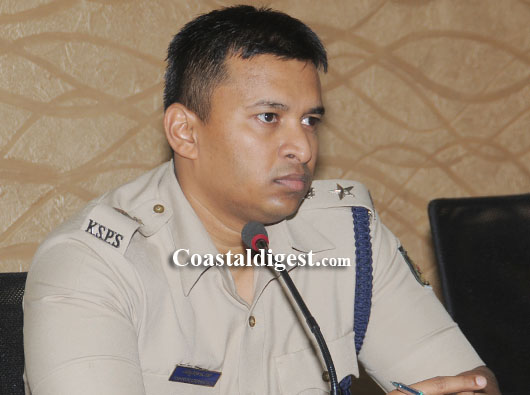
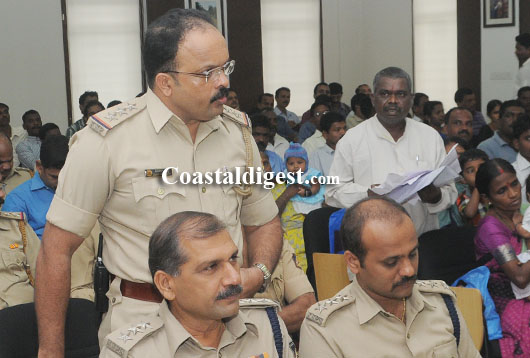
Mangalore, Sep 1: Those who file fake complaints among SC/ST communities will face stringent action in future, warned Deputy Commissioner of Police K V Jagadish.

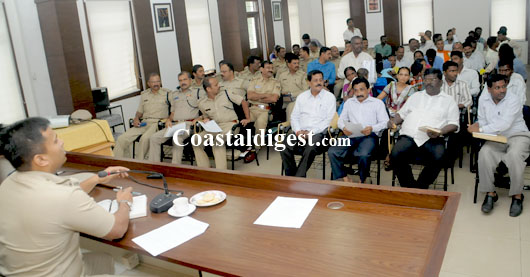
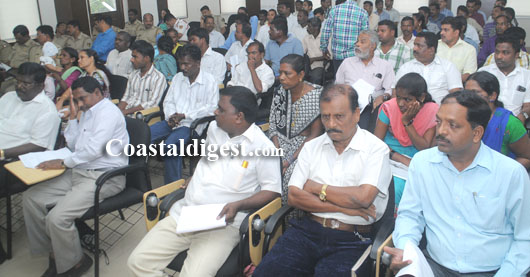
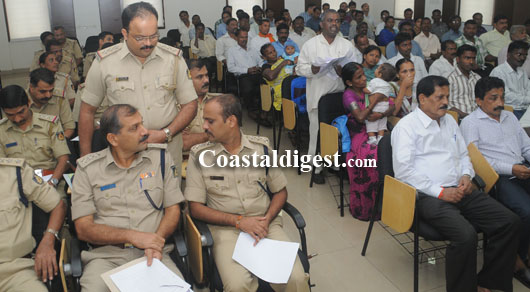
He was chairing the SC/ST monthly grievances meeting, at Police Commissioner's office in the city on Sunday.

After hearing many allegations and counter allegations among Dalits, the DCP said that the SC/ST Act is one of the best Acts designed to bring SC/ST community to social mainstream.

If anyone files false complaint, it means misuse of the Act and accused will be punished. The real intention of the Act can't be achieved if one starts using laws for personal benefit without having social concern, he said.

Earlier, Dakshina Kannada DSS District Organising Convenor Ananda Bellare said that a complaint given by S P Anand against Shwetha, Sadashiva and Girish Kumar is false and FIR has been filed because of his pressure.

The case was investigated by Pandeshwara women police and Civil Rights Enforcement Directorate regarding cheating of Rs 3 lakh and rape attempt case filed by Shwetha. S?P?Anand filed this counter complaint to take revenge, Bellare alleged. Shwetha, who was also present in the meeting, repeated the same.

In another similar case, Dalita Mahila Okkuta Taluk Convenor Ramya alleged that she had to wait for three days to get FIR filed in Ullal police station against Shashikanth, Girish Kumar and Jayanth Kumar for harassing her.

However, Shashikanth said that Ramya is supporting Fatima to build house at his land in Permannur. For questioning her, she has filed a false complaint against all three, he said. He also produced the title deeds, sketch of his house given by Ullal town municipal council. Deputy Commissioner of Police, N Vishnuvardhana ordered the police officers concerned to complete all the investigations by September 15.

Dalit leader Sadashiv Urwa Store said that few Dalit leaders are causing injustice to Dalits themselves. Many have left organisation because of them. The Social welfare department gives Rs 25,000 to the victims of atrocity cases.

Few leaders are misusing it to make money. They have filed atrocity cases even against Dalits, he said. Narayana Punchame also requested all Dalits to be united.

Misusing of Dalit atrocity law should be stopped and police should not entertain such individuals, he said.

sc st meeting 31 1

sc st meeting 31 1

sc st meeting 31 1

sc st meeting 31 1

sc st meeting 31 1

Comments

Km Lata
 - 
Thursday, 19 Apr 2018

Mai ek Dalit hu. Plz sir hme bhi us trh ka mahaol Milne ka adhikar hai, jha PR hm apna growth kr PAYE. Mere ghr ke Charo trf kuchh log gndgi faelate hain...wo isliye ki mai dlit hu,mna krna pr drate hain..kya hmara bhart isi trh swatchh bnega.Mom ko preshan dekhkr bht bura lgta hai.Mentally disturb hone ki wjh se pdhai ka bhi nuksan hota hai.Kya hmara hk nhi hai ki hm bhi kuchh bn ske...kuchh achha kr ske?.Logo ki soch jatiwad tk hi kb tk simit rhegi??

Darshan revankar
 - 
Friday, 23 Feb 2018

Sir, 

Ek dalit dost ke mobile pe mene apne fb account pe log in kiya aur usne Likh ki "scst wale bhikari se kam nahi hai na? " karke aur jake mere upar complaint kardi. Mujhe bohot maara peeta daath tod Diy mera

kale srinivas
 - 
Saturday, 1 Oct 2016

plese change in sc/st atracity case becuse atracity case miss use in village level some sc st broker [pleswe red in hindi] aj ise act ka durupyog ho raha rahi sc st ke kouch kamchor employee apne adhikariko dhamke deker us per balparverthan karthehai chote chote bothoper muzhe kouch nahi bolana nahitho atracity case karounga black mail karrahi hai garib samaj ke ladkeyonper rep karke mardal deyaz ja rahahai desh ke bhalayee ke leya es kanun me badlav kerna jarure hai dr babasheb ne ess act 10 year ke leya banaya aj samaj me badlav aya hai dalit log es act ka durpyog karrhai hai plese change in this act

LAKSHMI NARAYAN
 - 
Thursday, 29 Sep 2016

Dear Sirs,

I am Lakshmi Narayan S/o Late Shri Chhote Lal Patel, Village-Kabir Uddinpur, PO- Bhopat Pur (Handia), Police Station- Utraon, Distt.- Allahabad (UP). My family is living in this village. Some peoples of SCs communities living in the village are un-necessary harassing my entire family since last 2 months and trying to misuse of SC/ST Acts. Kindly look into this and help us.

Regards
Lakshmi Narayan

Add new comment

  • Coastaldigest.com reserves the right to delete or block any comments.
  • Coastaldigset.com is not responsible for its readers’ comments.
  • Comments that are abusive, incendiary or irrelevant are strictly prohibited.
  • Please use a genuine email ID and provide your name to avoid reject.
News Network
June 1,2020

Bengaluru, Jun 1: Karnataka's Department of Health and Family Welfare on Sunday released the protocol for inter-state travellers to the State during phased reopening --#Unlock1.

Five points protocol in this regard are: 1. Mandatory Self- Registration on Seva Sindhu Portal by all travellers before entering Karnataka:

a. Name, Address and Mobile Number to be provided

b. No approval required

c. Use of same Mobile number for multiple registrations not allowed except in the case of a family.

d. Business visitors to give details (name, mobile and address of persons in Karnataka they intend to meet).

e. Transit travellers to provide an address in destination state and indicate exit check post from Karnataka.

2. Health Screening of all incoming persons at entry points.

a. Border Check-posts, Airports, Railway stations and Bus stand

b. Home Quarantine hand-stamping on hand for 14-days period as per quarantine norms

3. Quarantine norms are based on three parameters

I. Symptomatic on arrival from any State: 7 days of Hospital isolation at COVID Care Centre(CCC)/Dedicated COVID Health Centre (DCHC) followed by 7 days of home quarantine or manage as per symptoms.

II. Test immediately on arrival: If positive, shift to Dedicated COVID-19 Hospital (DCH). If negative, no further test required

III. Asymptomatic on arrival:

* For persons coming from Maharashtra

a) 7 days of institutional quarantine followed by 7 days of home quarantine

b) Test if they develop symptoms during the quarantine period

c) Exceptions for Special Category Asymptomatic persons--14-days home quarantine (one attendant to be permitted) and Special category passengers--Death in the family, Pregnant Women, Children aged below 10 years, Elderly aged above 60 years, Serious illness, Human Distress

d) Business travellers from Maharashtra: To establish that one is a business traveller, a person should show confirmed return flight/train ticket which should not be more than 7 days later from the date of arrival.

In case one is coming by road, he/she should provide the address proof of person in Karnataka he intends to meet. In addition, the person should produce -- one having COVID-19 negative test certificate, which is not more than two days old -- exempted from quarantine.

One does not have a COVID-19 negative test certificate, such a person should go for institutional quarantine of two days within which COVID-19 test should be conducted at his/her own cost. After the test result is negative, the person is exempted from quarantine. No hand stamping of the business visitor is required.

e) All travellers from Maharashtra who come with COVID-19 negative test certificate from an ICMR approved lab, which is not more than two days old from the date of arrival, are exempted from seven days of institution quarantine. They can be asked to go for 14 days of home quarantine.

f) Transit traveller from Maharashtra: To establish that one is a transit traveller, a person should show flight/ train ticket for the onward journey which should not be more than 1 day later from the date of arrival. In case one is travelling by road, he/she should provide the identity proof and address proof in the destination state. Such traveller should be hand stamped if travelling by road as "Transit Traveller."

*For persons coming from other States

a) 14 days of home quarantine

b) Test if they develop symptoms during the home quarantine period

c) For persons where home quarantine is not possible, then institutional quarantine should be done, especially when we have a large family or no separate room for home quarantine, slum or overcrowded areas where home quarantine can not be followed.

d) Business visitors from the Other States: To establish that one is a business traveller, a person should show confirmed return flight/train ticket which should not be more than 7 days later from the date of arrival. In case one is coming by road, he/she should provide the address proof of the native State. No quarantine, and no hand stamping for business visitors from other states.

e) Transit traveller from the other States: To establish that one is a transit traveller, the person should show flight/train ticket for the onward journey which should not be more than one day later from the date of arrival. In case one is travelling by road, he/she should provide the identity proof and address proof in the destination state. Such traveller should be hand stamped if travelling by road as "Transit Traveller."

4. Home Quarantine: Home quarantine follow-up for all incoming persons except business visitors and transit travellers

A. For Rural Areas--

* Home quarantine poster on the home door.

* Information to two neighbours

* Gram Panchayat Task Force to carry an overall responsibility of Home Quarantine

* 3-Member team in every village to monitor

* Flying Squad: FIR against violation of home quarantine and shift to institutional quarantine

* IVRS Call-centre outbound calls

* Quarantine watch App-daily self-monitoring upload-Temperature, Finger-tip pulse-oximetry for elderly and persons with co-morbidity

B. For BBMP and other Urban Areas--

* Home Quarantine Poster on the home door.

* Information to two neighbours and resident welfare/apartment owner's association.

* Ward level team to carry an overall responsibility of home quarantine

* 3-member team at booth level to monitor along with the involvement of Resident Welfare/Apartment Owners' Associations

* Flying Squad: FIR against violation of home quarantine and shift to institutional quarantine

* IVRS Call-centre outbound calls

* Quarantine watch App: Daily self-monitoring upload- temperature, finger-tip pulse-oximetry for elderly and persons with co-morbidity

Karnataka government on Sunday issued guidelines, which will come into force from June 1 and continue till June 30.

According to the new guidelines, religious places and places of worship for the public, hotels, restaurants and other hospitality services, and shopping malls will be permitted to open from June 8.

Union Ministry of Home Affairs (MHA) on Saturday announced new guidelines for phased re-opening of "all activities outside containment zones for the next one month beginning June 1.

In an order, Karnataka government said that phased re-opening of areas outside the containment zones, all activities will be permitted, except the following, which will be allowed, with the stipulation of following Standard Operating Procedures (SOPs) to be prescribed by the Ministry of Health and Family Welfare (MoHFW).

According to the Union Health Ministry, there are 2,922 confirmed COVID-19 cases in the State including 1,877 active cases, 997 recovered and 48 deaths.


Comments

Add new comment

  • Coastaldigest.com reserves the right to delete or block any comments.
  • Coastaldigset.com is not responsible for its readers’ comments.
  • Comments that are abusive, incendiary or irrelevant are strictly prohibited.
  • Please use a genuine email ID and provide your name to avoid reject.
Ram Puniyani
February 10,2020

Noam Chomsky is one of the leading peace workers in the world. In the wake of America’s attack on Vietnam, he brought out his classic formulation, ‘manufacturing consent’. The phrase explains the state manipulating public opinion to have the public approve of it policies—in this case, the attack of the American state on Vietnam, which was then struggling to free itself from French colonial rule.

In India, we are witness to manufactured hate against religious minorities. This hatred serves to enhance polarisation in society, which undermines India’s democracy and Constitution and promotes support for a Hindu nation. Hate is being manufactured through multiple mechanisms. For example, it manifests in violence against religious minorities. Some recent ghastly expressions of this manufactured hate was the massive communal violence witnessed in Mumbai (1992-93), Gujarat (2002), Kandhamal (2008) and Muzaffarnagar (2013). Its other manifestation was in the form of lynching of those accused of having killed a cow or consumed beef. A parallel phenomenon is the brutal flogging, often to death, of Dalits who deal with animal carcasses or leather.

Yet another form of this was seen when Shambhulal Regar, indoctrinated by the propaganda of Hindu nationalists, burned alive Afrazul Khan and shot the video of the heinous act. For his brutality, he was praised by many. Regar was incited into the act by the propaganda around love jihad. Lately, we have the same phenomenon of manufactured hate taking on even more dastardly proportions as youth related to Hindu nationalist organisations have been caught using pistols, while police authorities look on.

Anurag Thakur, a BJP minster in the central government recently incited a crowd in Delhi to complete his chant of what should happen to ‘traitors of the country...” with a “they should be shot”. Just two days later, a youth brought a pistol to the site of a protest at Jamia Millia Islamia university and shouted “take Azaadi!” and fired it. One bullet hit a student of Jamia. This happened on 30 January, the day Nathuram Godse had shot Mahatma Gandhi in 1948. A few days later, another youth fired near the site of protests against the CAA and NRC at Shaheen Bagh. Soon after, he said that in India, “only Hindus will rule”.

What is very obvious is that the shootings by those associated with Hindu nationalist organisations are the culmination of a long campaign of spreading hate against religious minorities in India in general and against Muslims in particular. The present phase is the outcome of a long and sustained hate campaign, the beginning of which lies in nationalism in the name of religion; Muslim nationalism and Hindu nationalism. This sectarian nationalism picked up the communal view of history and the communal historiography which the British introduced in order to pursue their ‘divide and rule’ policy.

In India what became part of “social common sense” was that Muslim kings had destroyed Hindu temples, that Islam was spread by force, and that it is a foreign religion, and so on. Campaigns, such as the one for a temple dedicated to the Hindu god Rama to be built at the site where the Babri masjid once stood, further deepened the idea of a Muslim as a “temple-destroyer”. Aurangzeb, Tipu Sultan and other Muslim kings were tarnished as the ones who spread Islam by force in the subcontinent. The tragic Partition, which was primarily due to British policies, and was well-supported by communal streams also, was entirely attributed to Muslims. The Kashmir conflict, which is the outcome of regional, ethnic and other historical issues, coupled with the American policy of supporting Pakistan’s ambitions of regional hegemony, (which also fostered the birth of Al-Qaeda), was also attributed to the Muslims.

With recurring incidents of communal violence, these falsehoods went on going deeper into the social thinking. Violence itself led to ghettoisation of Muslims and further broke inter-community social bonds. On the one hand, a ghettoised community is cut off from others and on the other hand the victims come to be presented as culprits. The percolation of this hate through word-of-mouth propaganda, media and re-writing of school curricula, had a strong impact on social attitudes towards the minorities.

In the last couple of decades, the process of manufacturing hate has been intensified by the social media platforms which are being cleverly used by the communal forces. Swati Chaturvedi’s book, I Am a Troll: Inside the Secret World of the BJP’s Digital Army, tells us how the BJP used social media to spread hate. Whatapp University became the source of understanding for large sections of society and hate for the ‘Other’, went up by leaps and bounds. To add on to this process, the phenomenon of fake news was shrewdly deployed to intensify divisiveness.

Currently, the Shaheen Bagh movement is a big uniting force for the country; but it is being demonised as a gathering of ‘anti-nationals’. Another BJP leader has said that these protesters will indulge in crimes like rape. This has intensified the prevalent hate.

While there is a general dominance of hate, the likes of Shambhulal Regar and the Jamia shooter do get taken in by the incitement and act out the violence that is constantly hinted at. The deeper issue involved is the prevalence of hate, misconceptions and biases, which have become the part of social thinking.

These misconceptions are undoing the amity between different religious communities which was built during the freedom movement. They are undoing the fraternity which emerged with the process of India as a nation in the making. The processes which brought these communities together broadly drew from Gandhi, Bhagat Singh and Ambedkar. It is these values which need to be rooted again in the society. The communal forces have resorted to false propaganda against the minorities, and that needs to be undone with sincerity.

Combating those foundational misconceptions which create hatred is a massive task which needs to be taken up by the social organisations and political parties which have faith in the Indian Constitution and values of freedom movement. It needs to be done right away as a priority issue in with a focus on cultivating Indian fraternity yet again.

Comments

Add new comment

  • Coastaldigest.com reserves the right to delete or block any comments.
  • Coastaldigset.com is not responsible for its readers’ comments.
  • Comments that are abusive, incendiary or irrelevant are strictly prohibited.
  • Please use a genuine email ID and provide your name to avoid reject.
News Network
March 14,2020

Bengaluru, Mar 14: Following the footsteps of the neighbouring state Kerala, the state government has decided to deliver groceries to the mid-day meal scheme beneficiaries at the anganwadis.

The state govt has also declared one-week holiday for anganwadis, as a precautionary measure to control the spread of COVID-19 among children.

The respective district administrations have been directed to take necessary steps to ensure that the groceries are delivered to the students’ homes as well.

Comments

Add new comment

  • Coastaldigest.com reserves the right to delete or block any comments.
  • Coastaldigset.com is not responsible for its readers’ comments.
  • Comments that are abusive, incendiary or irrelevant are strictly prohibited.
  • Please use a genuine email ID and provide your name to avoid reject.