



Demonetization: Govt refuses to give another chance to exchange old notes

Agencies
July 18, 2017

New Delhi, Jul 18: The Central government on Monday refused to give another opportunity to exchange demonetised currency notes of Rs 500 and 1,000 to those who couldn't do it by the deadline of December 30, 2016, saying this would defeat the very objective of eliminating black money.ban 2
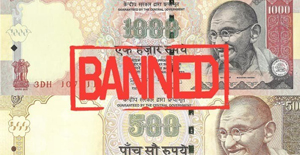
In an affidavit filed in the Supreme Court, Finance Ministry Under Secretary T. Narasimha said: "The very object of demonetisation and elimination of black money will be defeated if a window is opened for a further period as people in possession of the SBNs (specified bank notes) would have had sufficient time and opportunity to carefully plan the reasons and executed for not depositing the SBNs within the permitted period of December 30, 2016.

"Any number of 'benami' transactions and proxy users for the purpose of producing and depositing the old notes would then arise and the departments would have great difficulty in deciding any genuine case from the numerous bogus ones, it said, and sought dismissal of petitions seeking another chance.

The government on Monday also said that even possessing the demonetised currency notes was an offence.

The Union Finance Ministry's stand came in response to the top court asking the Central government on July 4 to consider giving another opportunity to those who couldn't exchange their demonetised currency notes.

Even in the earlier hearings, the government had resisted the suggestion to give another opportunity to people who could not deposit their demonitised currency notes by December 30 saying t hat it has taken a "conscious decision" not to extend the period except for NRIs, and security personnel posted in remote areas, which ended on March 31.

The government had also said it was not legally bound to come out with a fresh notification to grant grace period or window for depositing scrapped currency notes.

The top court is hearing a batch of petitions challenging the government's decision not to allow the public at large to deposit demonetised currency notes till March 31 as promised by Prime Minister Narendra Modi and others as the window ended on December 30 last year.

The petitioner have also referred to Modi's speech on November 8, 2016 and subsequent notification of the Reserve Bank of India, holding that people may deposit demonetised currency notes at specific RBI branches up to March 31, 2017 after complying with certain procedural requirements.

Comments

Add new comment

  • Coastaldigest.com reserves the right to delete or block any comments.
  • Coastaldigset.com is not responsible for its readers’ comments.
  • Comments that are abusive, incendiary or irrelevant are strictly prohibited.
  • Please use a genuine email ID and provide your name to avoid reject.
News Network
May 1,2020

Bengaluru, May 1: Karnataka government has assigned State Nodal Officers after the Ministry of Home Affairs (MHA) order regarding the inter-state movement of stranded migrant workers, tourists, pilgrims and students during the lockdown period.

The Nodal officers have also been appointed for coordination with 11 different states.

In an order issued on Thursday, Karnataka Government wrote, "To facilitate smooth and orderly movement of persons across State borders as per SOPs, the undersigned, in the exercise of powers conferred under the Disaster Management Act, 2005, and in the capacity as Chairman, State Executive Committee, hereby appoint the following officers as Nodal officers to coordinate with Nodal Officers of States/Union Territories (UTs) mentioned against their names."

Dr Rajkumar Khatri, IAS and Arun Jeji Chakravarthy, IPS will be overall in charge of the movement of stranded people from outside States/UTs to Karnataka.

N Manjunatha Prasad, IAS and P S Sandhu, IPS will be overall in charge of the movement of stranded people from Karnataka to other States/UTs.

Comments

Add new comment

  • Coastaldigest.com reserves the right to delete or block any comments.
  • Coastaldigset.com is not responsible for its readers’ comments.
  • Comments that are abusive, incendiary or irrelevant are strictly prohibited.
  • Please use a genuine email ID and provide your name to avoid reject.
IBTimes
June 3,2020

A pregnant elephant in Kerala ate a pineapple, which was filled with country-made bombs or dynamites. It led to a painful death as the elephant was pregnant and died standing in the Velliyar River in Palakkad in Kerala. People are venting out their anger and concerns all over social media about the gruesome incident.

Yesterday, it was reported that the pregnant elephant was killed after locals allegedly fed her a pineapple stuffed with crackers.

However, when International Business Times, India, reached out to Dr Ab Qayoom, who is an Indian Forest Service Officer, for his comments about what actually must have happened, we got to know that no one have fed the pineapple to the elephant.

Snares used for keeping animals away

Dr Qayoom stated that pineapples filled with firecrackers are used as a snare for catching wild boars. He said, "No one would have fed the pineapple to the elephant. The animal must have found it lying somewhere and must have consumed it herself not knowing what lies ahead for her."

He also stated a second possibility. He said, "Some people actually do such insane things as they consider wild animals as a threat to their property and life. Such incidents do happen at places where wild animals create problems for human beings."

Snares are often found around farms, coffee plantations

He added that wild boars often spoil crops and people use snares as a way to protect their farms and crops. This year, it was reported that the government would soon permit farmers with licensed firearms to shoot wild boars that wander into their lands. The problem is that people do not limit their snares to only wild boars and there have been several incidents when tigers, leopards and other animals have fallen prey to these haphazardly placed snares around farms, coffee farms and wildlife corridors.

Elephant kept standing in water before dying

The pregnant wild elephant originally belonged to Silent Valley National Park (SVNP), Palakkad. As the elephant died, she remained calm despite being in excruciating pain. The elephant kept standing and died at Velliyar River, Malappuram, with its trunk in the water.

The elephant was 15-years-old and was probably getting some relief as it stood in the water after her tongue and mouth exploded. Mohan Krishnan, Section Forest Officer, Nilambur, shared the sad incident on his Facebook page where he had acted as the Rapid Response Team official to rescue the elephant, which was in distress.

When a postmortem examination was carried out, it was learnt that the reason for the elephant's death was due to asphyxia where water had got into her lungs and trachea. Dr David Abraham, Assistant Forest Veterinary Officer, Thrissur, carried out the postmortem.

Dr David said, "I have so far done more than 250 postmortems of elephants alone in my more than two decades career. But this was the first time I was so moved as I could hold the foetus of the baby in my hands. Initially, none of us was aware that the elephant was pregnant. After seeing her heart, I spotted the amniotic fluid and realized that she was pregnant."

Claim reviewed :

Fact checking Palakkad elephant death

Claimed By :

Twitter, Facebook and Youtube posts.

Fact Check :

False

https://t.co/uR4p7rDUli

Comments

Peta
 - 
Thursday, 4 Jun 2020

Still killed by human, what this media want to justify the killing will be filing suit on this media soon...u will be in trouble soon.

MOHAMMED MOOLU…
 - 
Wednesday, 3 Jun 2020

A very cruel, henious and inhumen act. This culprit should be with murder and punished sevierly. 

Add new comment

  • Coastaldigest.com reserves the right to delete or block any comments.
  • Coastaldigset.com is not responsible for its readers’ comments.
  • Comments that are abusive, incendiary or irrelevant are strictly prohibited.
  • Please use a genuine email ID and provide your name to avoid reject.
Agencies
July 8,2020

The Central Board of Secondary Education (CBSE) has rationalised by up to 30 per cent the syllabus for classes 9 to 12 for the academic year 2020-21 to reduce course load on students amid the COVID-19 crisis, Union HRD Minister Ramesh Pokhriyal 'Nishank' announced on Tuesday.

The curriculum has been rationalised while retaining the core elements, the Human Resource Development said.

Among the chapters dropped after the rationalisation exercise are lessons on democracy and diversity, demonetisation, nationalism, secularism, India's relations with its neighbours and growth of local governments in India, among others.

"Looking at the extraordinary situation prevailing in the country and the world, CBSE was advised to revise the curriculum and reduce course load for the students of classes 9 to 12.

"To aid the decision, a few weeks back I also invited suggestions from all educationists on the reduction of syllabus for students and I am glad to share that we received more than 1.5K suggestions. Thank you, everyone, for the overwhelming response," Nishank tweeted.

"Considering the importance of learning achievement, it has been decided to rationalise syllabus up to 30 per cent by retaining the core concepts," he added.

The Union minister said the changes made in the syllabi have been finalised by the respective course committees with the approval of the curriculum committee and the Governing Body of the Board.

"The heads of schools and teachers have been advised by the board to ensure that the topics that have been reduced are also explained to the students to the extent required to connect different topics. However, the reduced syllabus will not be part of the topics for internal assessment and year-end board examination.

"Alternative academic calendar and inputs from the NCERT on transacting the curriculum using different strategies shall also be part of the teaching pedagogy in the affiliated schools," a senior official of the HRD ministry said.

For classes 1 to 8, the National Council of Education Research and Training (NCERT) has already notified an alternative calendar and learning outcomes.

According to the updated curriculum, among the chapters deleted from class 10 syllabus are-- democracy and diversity, gender, religion and caste, popular struggles and movement, challenges to democracy

For class 11, the deleted portions included chapters on federalism, citizenship, nationalism, secularism, growth of local governments in India.

Similarly, class 12 students will not be required to study chapters on India's relations with its neighbours, changing nature of India's economic development, social movements in India and demonetisation, among others.

Universities and schools across the country have been closed since March 16 when the central government announced a nationwide classroom shutdown as one of the measures to contain the COVID-19 outbreak.

A nationwide lockdown was announced on March 24, which came into effect the next day. While the government has eased several restrictions, schools and colleges continue to remain closed.

Comments

Add new comment

  • Coastaldigest.com reserves the right to delete or block any comments.
  • Coastaldigset.com is not responsible for its readers’ comments.
  • Comments that are abusive, incendiary or irrelevant are strictly prohibited.
  • Please use a genuine email ID and provide your name to avoid reject.